
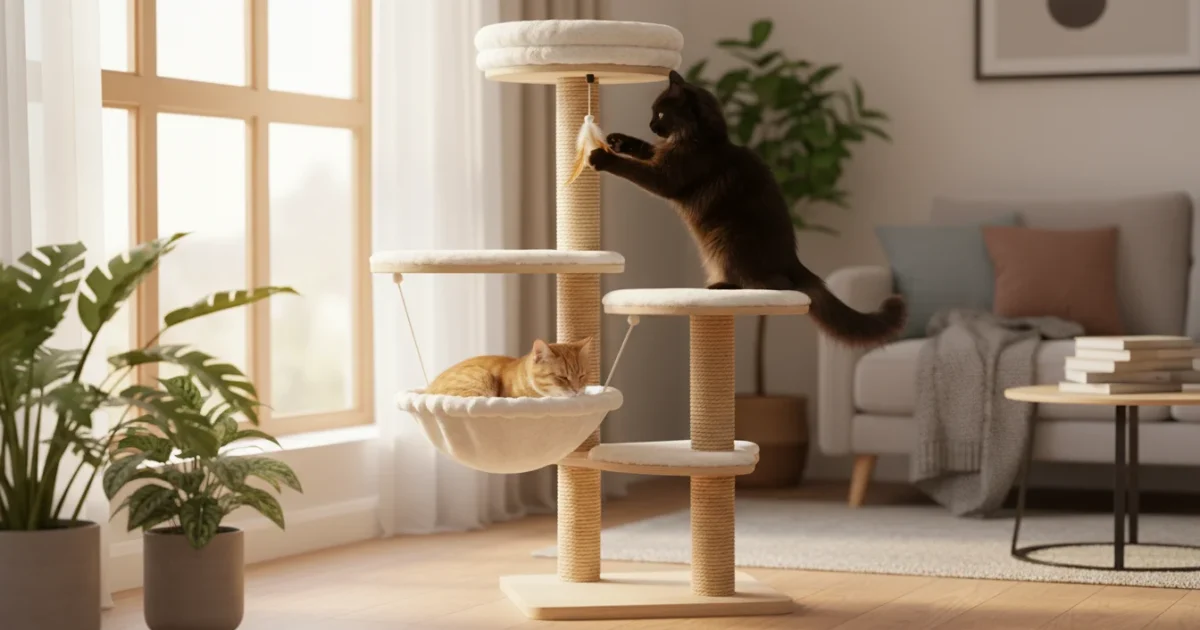
Living in a small apartment presents unique challenges and opportunities for pet owners. For your feline companion, maximizing vertical space transforms a compact living area into a stimulating, enriching environment. A well-chosen cat tree provides essential outlets for climbing, scratching, and perching, directly impacting your cat’s happiness and overall well-being. It also protects your furniture, giving your cat an appropriate place to fulfill natural instincts. You want a solution that serves your cat’s needs without overwhelming your limited square footage.
As pet product specialists at EverydayWithPets.com, we understand the importance of balancing pet welfare with practical living solutions. We research, test, and compare pet gear to help you make informed decisions. This guide explores the best space-saving cat trees designed to fit seamlessly into smaller homes, offering your cat the vertical territory it craves and giving you peace of mind.
Why Your Apartment Cat Needs Vertical Space (and How It Helps You Too)
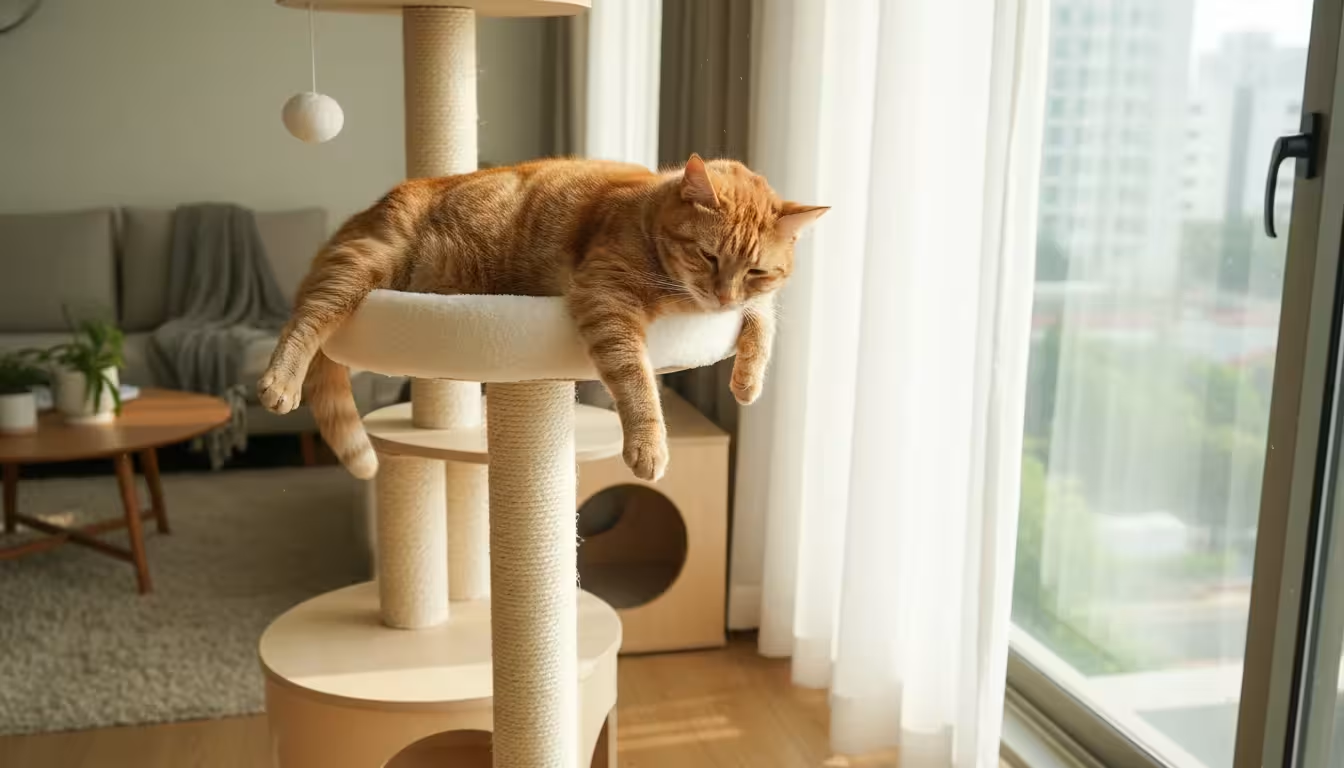
Cats are natural climbers and observers. In the wild, they use high vantage points for hunting, safety, and surveying their territory. Your apartment cat retains these innate behaviors. Providing vertical space, like a cat tree, directly addresses these needs, significantly improving your cat’s quality of life. Research from the Cat Fanciers’ Association (CFA) highlights the importance of environmental enrichment, including verticality, for indoor cats’ physical and mental health. A cat tree offers multiple benefits for both you and your feline friend.
For your cat, vertical territory reduces stress. It creates a personal zone where your cat feels secure and confident, away from floor-level disruptions, other pets, or young children. It also provides essential exercise, allowing your cat to stretch, climb, and jump, which helps maintain a healthy weight and strong muscles. High perches satisfy your cat’s natural curiosity, offering a safe lookout spot to observe the world outside or activities within your home without feeling threatened. Furthermore, built-in scratching posts divert your cat’s natural urge to scratch away from your beloved furniture, carpets, and walls.
For you, the pet owner, a cat tree translates into a more harmonious home. When your cat’s needs are met, you experience fewer behavioral issues. Your couch remains intact, and your cat has a dedicated space that adds to the aesthetic appeal of your home, especially with the modern, space-saving designs available today. By providing an appropriate outlet for natural behaviors, you foster a happier, healthier, and better-adjusted pet, enhancing the bond you share.
Understanding Your Cat’s Needs: What Makes a Great Cat Tree?
Before exploring specific options, consider your cat’s individual personality and physical needs. What makes a great cat tree for one cat might not suit another. A shy cat might prefer enclosed cubbies for hiding, while an adventurous climber seeks multiple levels and perches. An older cat or one with mobility issues needs ramps or lower, easily accessible platforms. Always prioritize stability, quality materials, and engaging features.
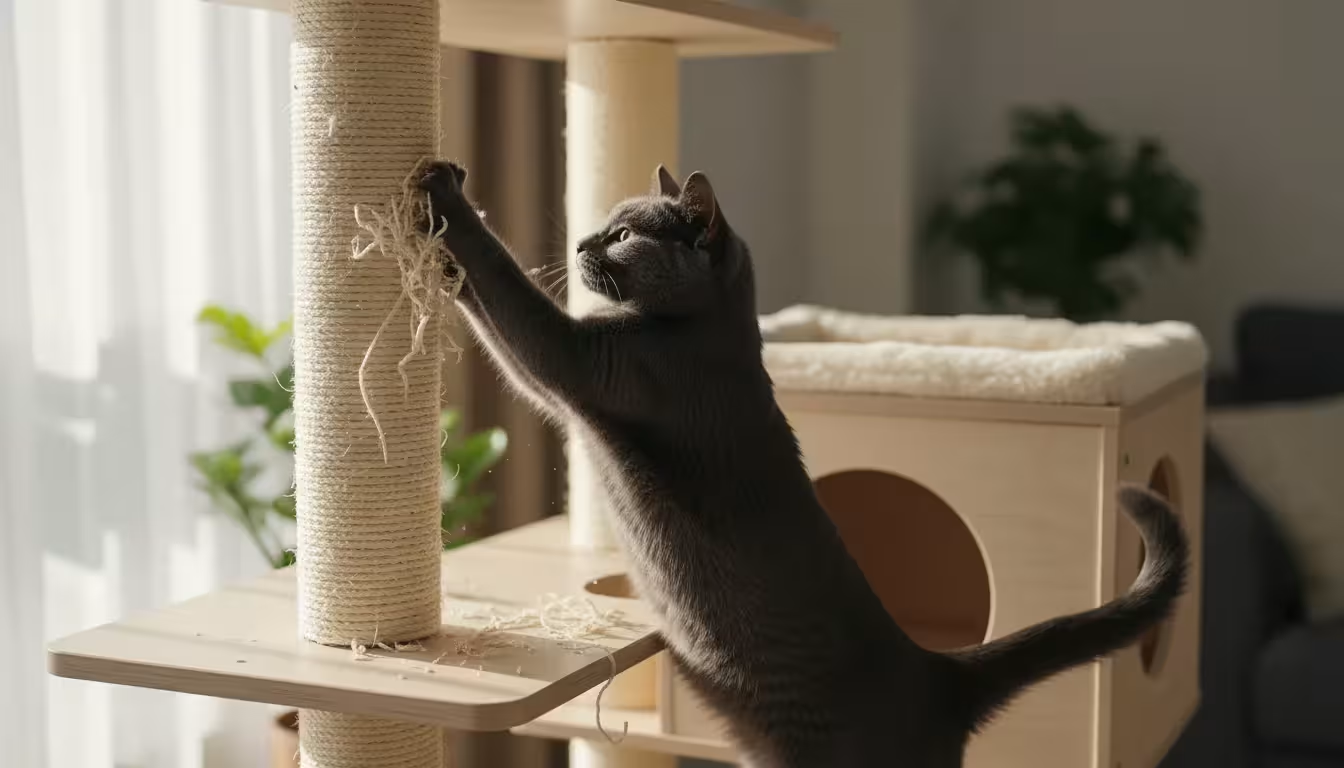
A great cat tree must offer ample opportunities for scratching. Cats scratch to sharpen their claws, stretch their bodies, and mark their territory. Look for trees with sisal rope or cardboard scratching surfaces. The material should be durable enough to withstand vigorous scratching over time. Multiple scratching surfaces at different angles or heights cater to various preferences.
Cats also need comfortable spots for napping and resting. Soft, plush perches or hammocks provide cozy retreats. Consider the size of these resting spots; they should comfortably accommodate your cat, allowing it to fully stretch out. Some cats prefer enclosed boxes or tunnels, offering a sense of security and warmth.
Finally, consider the overall construction. A stable base prevents tipping, a crucial safety feature. Inspect the materials for quality: solid wood components offer more durability and stability than particle board. Ensure all fabrics are securely attached and do not pose a choking hazard. According to experts at the ASPCA, a stimulating environment, including safe climbing structures, is vital for preventing boredom and promoting positive behaviors in cats.
Key Features to Look for in Space-Saving Cat Trees
When selecting a cat tree for a small apartment, specific design features become paramount. Your goal is to maximize functionality and cat enrichment while minimizing the footprint. Here are the key attributes to prioritize:
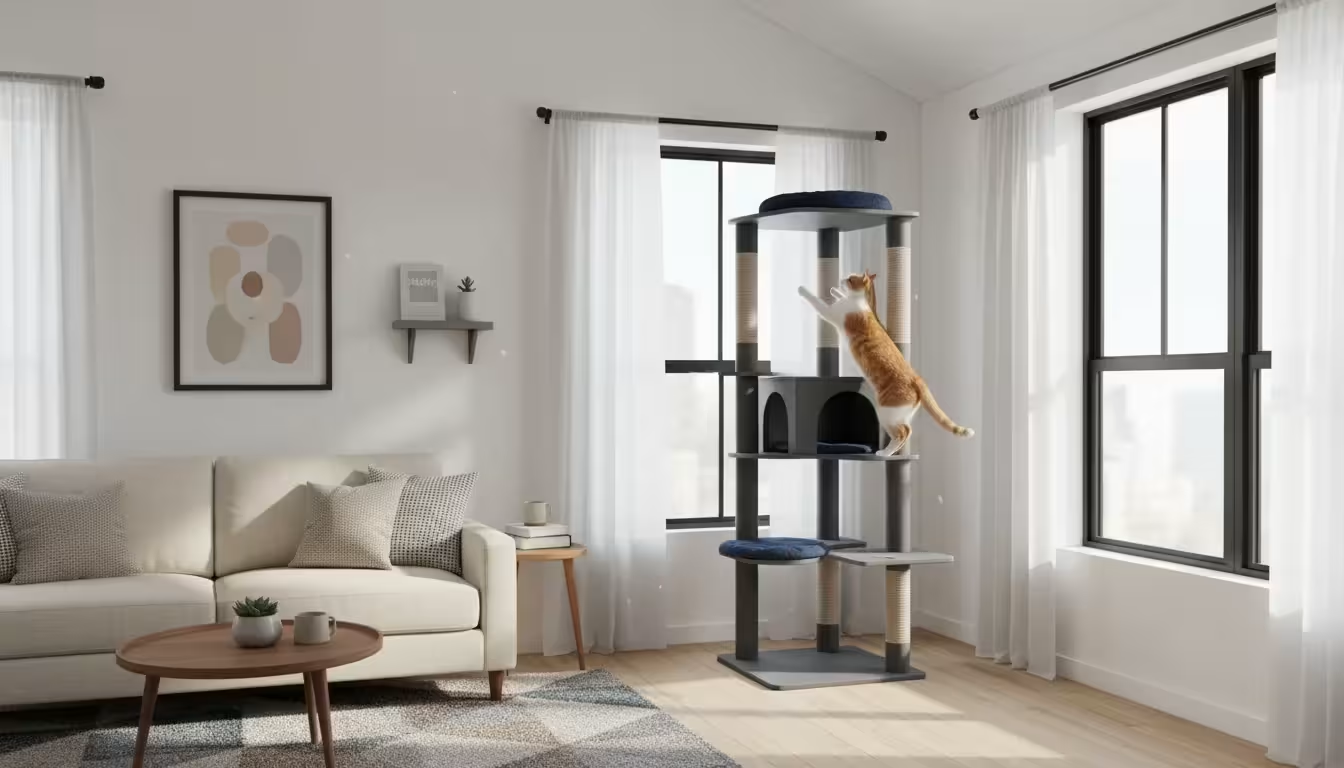
- Slim and Tall Design: Prioritize vertical space over horizontal. Look for trees with a narrow base but considerable height. Floor-to-ceiling cat trees are excellent examples, utilizing the entire height of your room without taking up much floor area.
- Corner Placement: Designs that fit snugly into a corner make efficient use of often-underutilized space. These triangular or L-shaped bases can blend seamlessly into your room’s layout.
- Wall-Mounted Solutions: For the ultimate floor space saver, consider wall-mounted shelves, perches, and scratching posts. These systems create an elevated cat highway, freeing up your floor entirely. Ensure you have sturdy walls and proper installation.
- Window Perches and Hammocks: These attach directly to your window frame or sill, providing a coveted sunbathing and bird-watching spot. They offer vertical enrichment without occupying any floor space.
- Multi-functional Designs: Seek out cat trees that combine features. A tree with scratching posts, perches, and perhaps a small toy or two offers more value. Some designs integrate into human furniture, like end tables with built-in cat condos or bookshelves with cat shelves.
- Durable, Easy-to-Clean Materials: Opt for materials that withstand regular use and are simple to clean. Sisal rope for scratching posts is excellent. Plush coverings should be vacuumable or spot-cleanable. Solid wood construction provides superior stability and longevity compared to pressed wood or particle board.
- Sturdy Construction: Regardless of size, stability remains non-negotiable. A wobbly tree is dangerous and discourages your cat from using it. Check for a wide, heavy base, secure connections, and quality hardware.
- Aesthetic Integration: Modern cat trees come in various styles and colors. Choose one that complements your existing decor, ensuring it feels like an intentional part of your home, not just an eyesore.
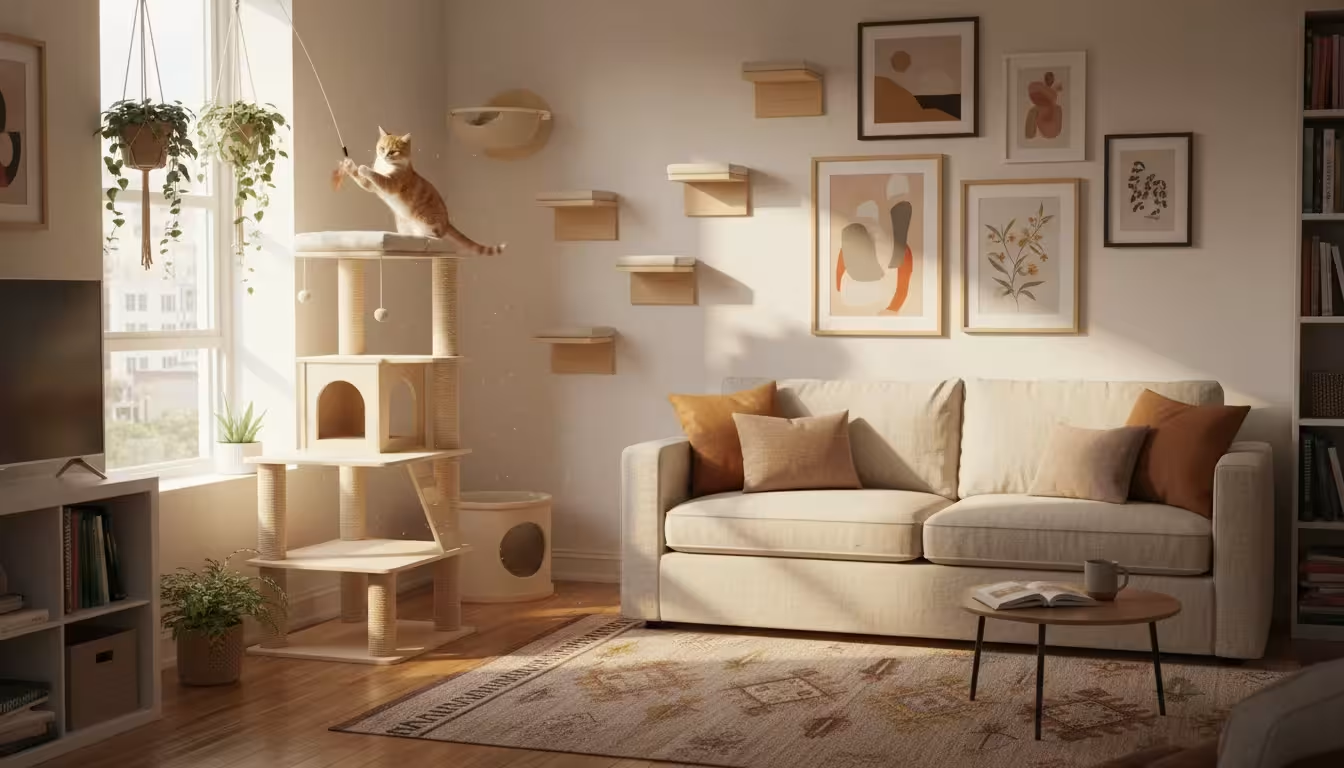
Types of Space-Saving Cat Trees: Our Top Picks
Our product review insights categorize space-saving cat trees into distinct types, each offering unique benefits for apartment living. We evaluate their potential to provide enrichment, ensure safety, and integrate into compact homes.
Slim Vertical Towers
These towers offer significant verticality with a minimal floor footprint. They typically feature multiple levels, perches, and often a small enclosed cubby. Their narrow base means they fit well in tight corners or alongside furniture. Ideal for active cats who love to climb and observe. Look for models with a heavy, stable base or those that come with wall-anchoring straps for added security. For example, a 6-foot tall tower with an 18×18 inch base offers far more usable vertical space than a wider, shorter tree.
Window Perches and Hammocks
These are ingenious space savers. They attach directly to windows, sills, or walls, providing your cat with prime real estate for sunbathing and watching the world outside. These are excellent for cats who enjoy quiet observation spots. They take up no floor space at all. We recommend checking the suction cup quality or mounting hardware thoroughly. Some models accommodate heavier cats, while others suit smaller, lighter felines. Ensure the attachment method is secure and designed for repeated use. A strong, stable window perch can become your cat’s favorite spot, offering visual stimulation and a sense of connection to the outdoors.
Wall-Mounted Cat Shelves and Systems
For ultimate floor space conservation, wall-mounted systems are unparalleled. These allow you to create a customized climbing and perching playground using your wall space. They come as individual shelves, steps, scratching posts, and even hammocks that you can arrange to suit your cat’s agility and your apartment’s layout. This solution is particularly good for highly active and adventurous cats. Safety is paramount here; proper installation into wall studs is crucial. Always verify weight limits and ensure the shelves are spaced appropriately for your cat’s jumping ability. Investing in quality hardware and following installation instructions meticulously ensures a secure and long-lasting system.
Compact Multi-Level Trees
These are smaller versions of traditional cat trees, designed with a reduced footprint. They might feature two or three levels, a scratching post, and a small sleeping area. They work well for cats who enjoy a bit of climbing but do not need extreme heights, or for apartments where even a slim tower is too much. They often blend more easily into a room as a piece of furniture. When comparing these, focus on the stability of the base and the size of the platforms to ensure your cat can comfortably use each level. Many offer a good balance of features for the space they occupy.
Furniture-Integrated Options
These innovative designs cleverly combine cat-friendly features with human furniture. Examples include end tables with hidden cat condos, bookshelves with integrated cat ramps and perches, or scratching posts disguised as stylish furniture legs. They offer dual functionality, making them excellent choices for small apartments where every item must earn its place. The benefit here is seamless integration into your decor. We assess these for both human usability and cat comfort, ensuring the cat-specific features are genuinely practical and safe for your pet.
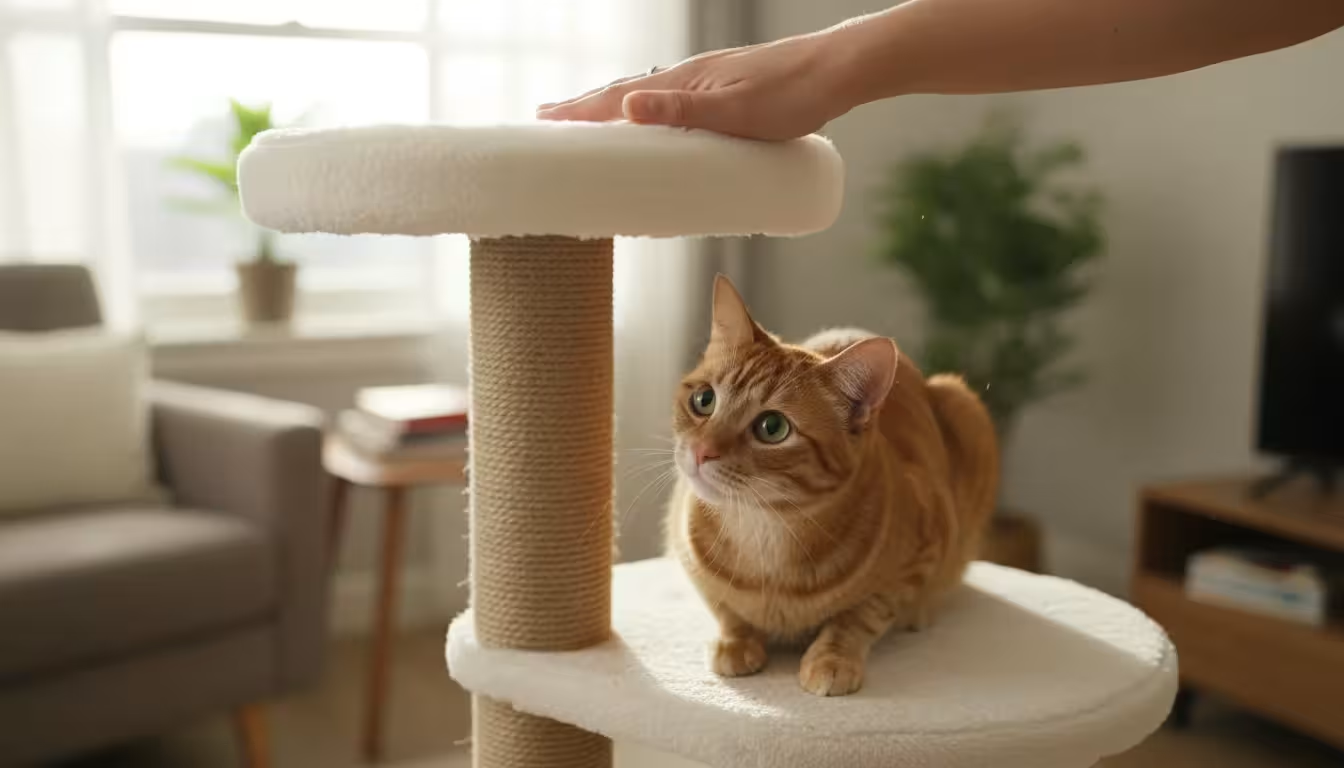
Detailed Reviews: Value, Safety, and Longevity
Our comprehensive product review approach emphasizes value, safety, and longevity, ensuring your investment in a space-saving cat tree pays off for both you and your cat. We break down the critical aspects of evaluating these pet products.
Safety Evaluation
Regardless of the cat tree type, safety remains the top priority. We thoroughly examine design stability. For floor-standing units, we look for a wide, heavy base that resists tipping, even with an energetic cat’s leaps. Many quality slim towers now include anti-toppling straps you can secure to a wall. For wall-mounted systems, we prioritize robust mounting hardware and clear instructions for securing to wall studs. Materials must be non-toxic; check for certifications if possible. Plush fabrics should be firmly attached, avoiding loose threads or small embellishments that could pose a choking hazard. Perch edges should be smooth and free of sharp points. Ultimately, a safe cat tree prevents accidents and encourages your cat to use it confidently. Cornell University College of Veterinary Medicine frequently emphasizes the importance of a safe home environment for pets, including secure enrichment structures.
Value for Money Analysis
Value extends beyond the initial purchase price. It encompasses durability, material quality, and the cost-per-use over its lifespan. A cheap cat tree that falls apart in six months offers poor value compared to a more expensive, well-constructed one that lasts for years. We recommend investing in models featuring solid wood or high-density particle board over flimsy cardboard or low-density pressed wood. Sisal rope should be tightly wound and durable for scratching. Consider the ease of replacing worn parts, such as sisal posts. Some manufacturers offer replacement parts, extending the life of the entire unit. We look at whether the tree provides sufficient enrichment for its cost, offering multiple features like scratching surfaces, perches, and hiding spots, which maximizes its functional value.
Longevity Testing
Longevity is a direct result of material quality and construction. Trees made from solid wood or marine-grade plywood typically outlast those made from particle board. Check the quality of the connectors and fasteners; metal hardware generally performs better than plastic. The durability of scratching surfaces is crucial. Tightly woven sisal rope withstands aggressive scratching longer than loosely wound sisal or carpeted posts. We also consider how well the materials hold up to cleaning and general wear. A tree with easily replaceable components, like screw-on scratching posts, demonstrates better long-term usability and value. Our testing focuses on how these products stand up to active feline use, ensuring they remain sturdy and appealing over time.
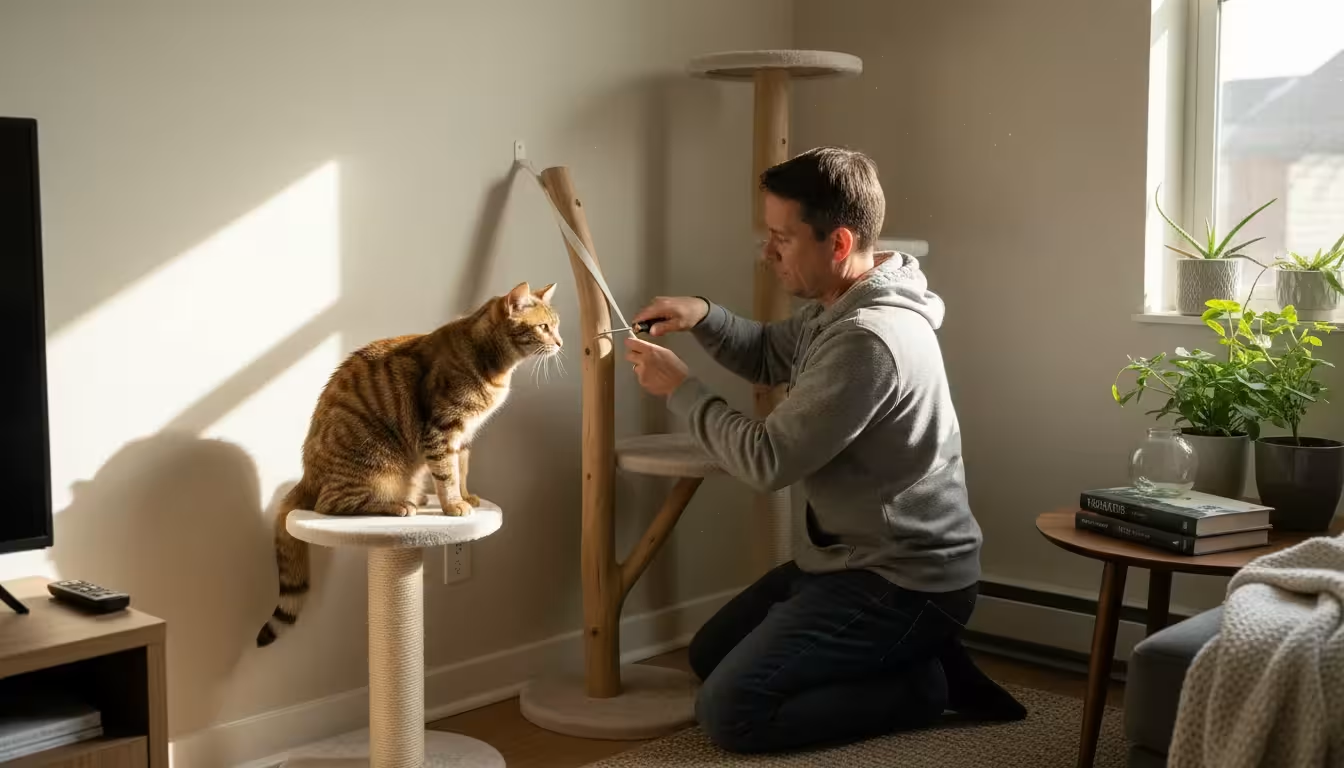
Installation Tips and Placement Strategies for Small Spaces
Proper installation and strategic placement make all the difference in whether your cat tree becomes a beloved fixture or an unused obstacle. Especially in small apartments, thoughtful placement maximizes both its utility for your cat and its integration into your living space.
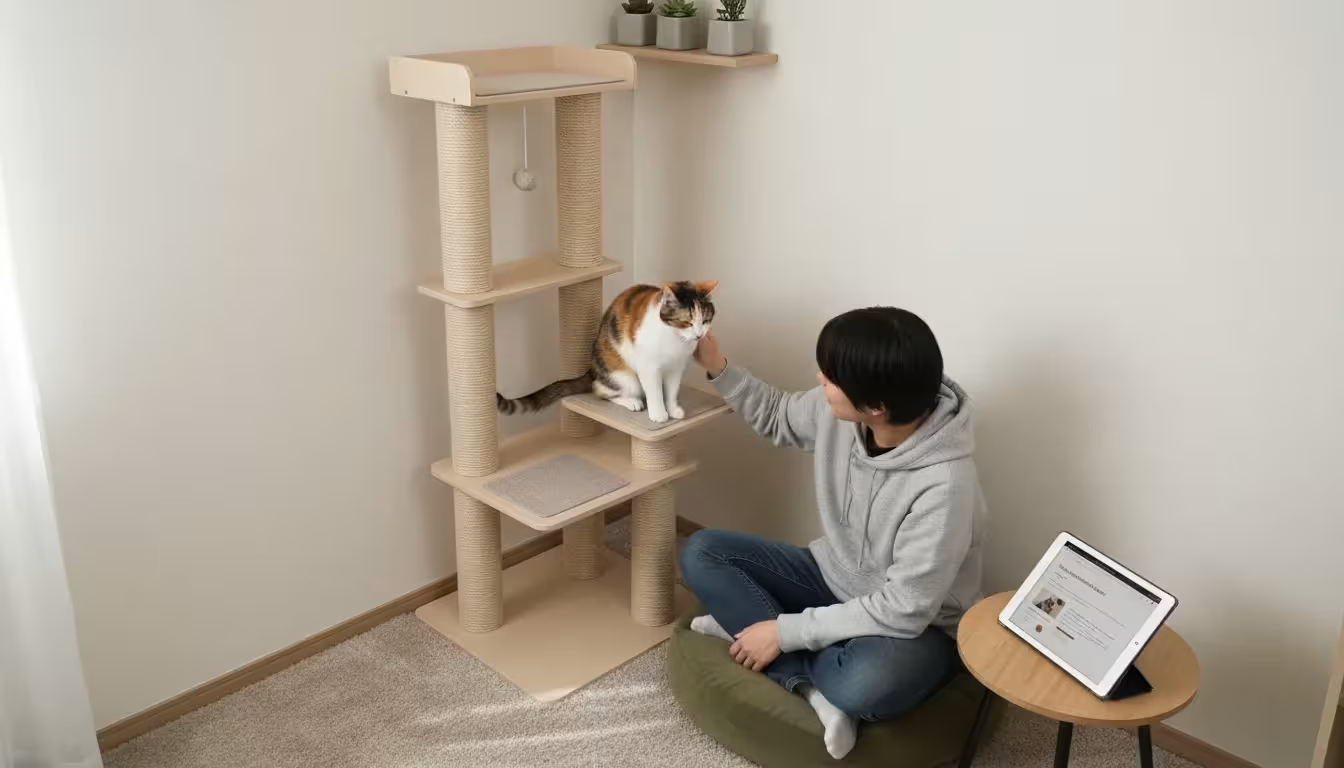
For floor-standing cat trees, always follow the assembly instructions meticulously. Ensure all screws are tightened, and components are securely fitted. If your tree includes wall-anchoring straps, use them. This simple step significantly enhances stability and prevents accidental tipping, especially important for taller units or homes with energetic cats. Place the tree against a wall or in a corner to minimize obstruction of walkways. Avoid placing it in the middle of a room where it can feel intrusive and block natural flow.
When installing wall-mounted shelves or perches, locate wall studs for secure attachment. Using wall anchors designed for drywall is acceptable for lighter items, but for anything that supports your cat’s full weight, attaching directly to a stud provides superior stability. Measure carefully to ensure shelves are spaced appropriately for your cat’s jumping ability. Too far apart, and your cat cannot use them; too close, and they do not offer enough challenge or height difference.
Strategic placement in your apartment enhances your cat’s experience. Cats love vantage points near windows, allowing them to watch birds, squirrels, and outdoor activity. A tree placed here provides mental stimulation. Consider a quiet corner of the living room or bedroom where your cat can retreat for undisturbed naps. Avoid high-traffic areas if your cat is shy or easily startled. Introduce the tree gradually. Place treats on the lower levels, use a favorite toy to encourage exploration, and offer praise when your cat engages with it. Never force your cat onto the tree; let it discover the new addition on its own terms.
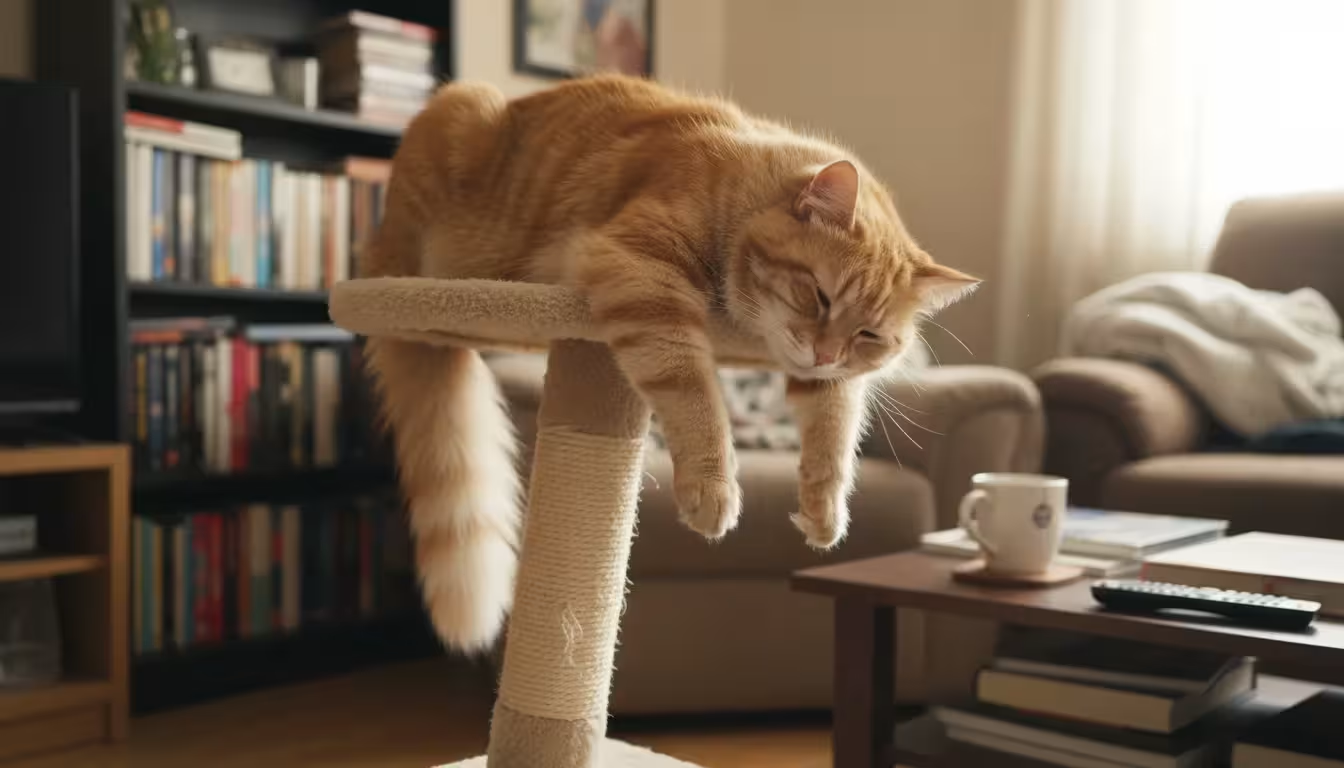
Common Mistakes to Avoid When Choosing a Cat Tree
Even with the best intentions, pet owners sometimes make common errors when selecting a cat tree for a small apartment. Avoiding these pitfalls ensures you choose a product your cat will love and use.
First, buying too small or unstable. A common misconception is that a small apartment requires a minuscule cat tree. While a compact footprint is essential, the tree must still be tall enough to provide a sense of elevation and stable enough to support your cat’s weight and activity. A flimsy or short tree offers little enrichment and can quickly become neglected. Always check the weight capacity and consider your cat’s size and energy level.
Second, ignoring material quality. Opting for the cheapest option often results in a tree made from inferior materials like thin particle board, weak cardboard tubes, or loosely attached carpet. These structures quickly become wobbly, fray, and lose their appeal. This creates a safety hazard and a wasted investment. Prioritize durable materials like solid wood and tightly wound sisal rope, which ensure longevity and safety.
Third, placing it in an undesirable location. A cat tree hidden away in a seldom-used room or a dark corner might not attract your cat’s attention. Cats prefer to be part of the household action, even if from a distance. Place the tree where your cat naturally spends time, preferably near a window or in a central living area, ensuring it receives sunlight and offers a good view.
Fourth, forgetting about your cat’s specific preferences. Each cat has a unique personality. Some cats love enclosed spaces, while others prefer open perches. Some are avid climbers, while others enjoy simply stretching and scratching. Observing your cat’s existing habits—where it likes to nap, climb, or scratch—guides your selection. A tree that does not cater to these natural inclinations will likely go unused.
Finally, not considering ease of cleaning and maintenance. Cat trees can collect fur, dust, and odors. A design that is difficult to vacuum or spot-clean will quickly become unhygienic. Look for materials that can be easily maintained, ensuring a fresh and inviting space for your cat.
Maintaining Your Cat Tree: Longevity and Hygiene
Proper maintenance extends the life of your cat tree and keeps it a clean, inviting space for your feline friend. A well-maintained cat tree continues to provide essential enrichment and prevents odors from building up in your small apartment.
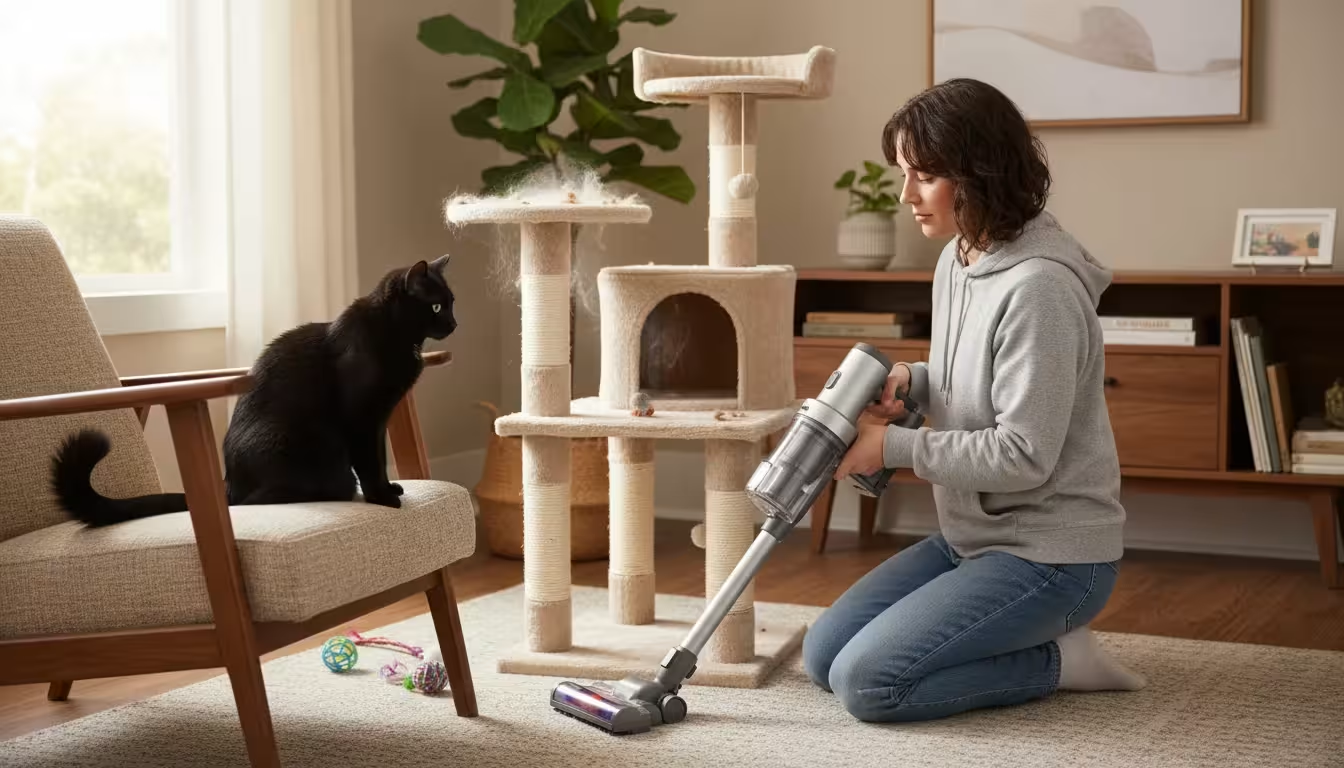
Regular cleaning is crucial. Use a vacuum cleaner with a brush attachment to remove loose fur, dust, and dander from all carpeted or plush surfaces. Aim for at least once a week, more frequently if your cat sheds heavily. For spot cleaning, use a pet-safe enzymatic cleaner to tackle any accidents or lingering odors. Avoid harsh chemicals, which can be irritating to your cat’s sensitive nose and paws.
Inspect the scratching posts periodically. Sisal rope can fray and wear down over time. If the sisal is heavily damaged, consider if replacement parts are available from the manufacturer. Some cat trees allow you to re-wrap posts with new sisal rope, which is a cost-effective way to extend the tree’s lifespan. Replace severely worn scratching surfaces to ensure your cat always has a satisfying place to sharpen its claws.
Regularly check all connections, screws, and bolts for tightness. Over time, enthusiastic climbing and jumping can loosen hardware, compromising stability. Tightening these components ensures the tree remains safe and sturdy. Inspect the base and platforms for any signs of wear, splintering, or damage that could pose a risk to your cat. Addressing minor issues promptly prevents them from becoming major safety concerns. By committing to routine maintenance, you ensure your space-saving cat tree remains a safe, clean, and enjoyable fixture in your apartment for years.
Frequently Asked Questions
How tall should a cat tree be for a small apartment?
For a small apartment, prioritize height over width. A cat tree should be as tall as possible without becoming unstable, ideally reaching near the ceiling or offering multiple high vantage points. This utilizes vertical space efficiently and satisfies your cat’s climbing instincts without consuming valuable floor area. Many floor-to-ceiling tension-rod models are excellent for maximizing height in a compact footprint.
Are wall-mounted cat trees safe?
Yes, wall-mounted cat trees are very safe when installed correctly. Securely attach them to wall studs, not just drywall, using appropriate hardware. Always check the manufacturer’s weight limits and ensure shelves are spaced at safe jumping distances for your cat’s size and agility. Proper installation guarantees a stable and durable climbing structure.
Can a cat tree help reduce scratching furniture?
Absolutely. A well-placed and appropriate cat tree with quality scratching surfaces provides a designated, appealing alternative for your cat’s natural scratching behaviors. Cats scratch to mark territory and maintain claw health. By offering a desirable scratching post, you redirect this instinct away from your furniture. Ensure the scratching material, usually sisal, is sturdy and the post is tall enough for your cat to stretch fully.
What materials are best for a durable cat tree?
For durability, prioritize cat trees made from solid wood or high-quality plywood. These materials offer superior stability and longevity compared to particle board or cardboard. For scratching surfaces, tightly wound sisal rope is highly durable. Plush coverings should be securely attached and easy to clean, resisting wear and tear from active use.
How do I introduce my cat to a new cat tree?
Introduce a new cat tree gradually and positively. Place it in an area where your cat already feels comfortable. Encourage exploration by placing favorite treats, toys, or catnip on the lower levels and gradually higher up. Play with your cat near the tree. Never force your cat onto it; allow them to investigate and become comfortable at their own pace. Praise and reward any interaction with the tree.
Choosing the best cat tree for your small apartment means carefully balancing your cat’s natural needs with your living space constraints. By focusing on space-saving designs, prioritizing safety, evaluating value, and maintaining your chosen product, you provide your feline companion with a stimulating environment that enhances their well-being and enriches your shared life. Your cat gains a personal sanctuary, and you enjoy a harmonious home.
For expert pet care guidance, visit
Cornell University College of Veterinary Medicine, UC Davis School of Veterinary Medicine, American Animal Hospital Association (AAHA) and Association of Professional Dog Trainers (APDT).
Disclaimer: This article is for informational purposes only and is not a substitute for professional veterinary advice, diagnosis, or treatment. Always consult with a licensed veterinarian for medical concerns about your pet.




Leave a Reply