
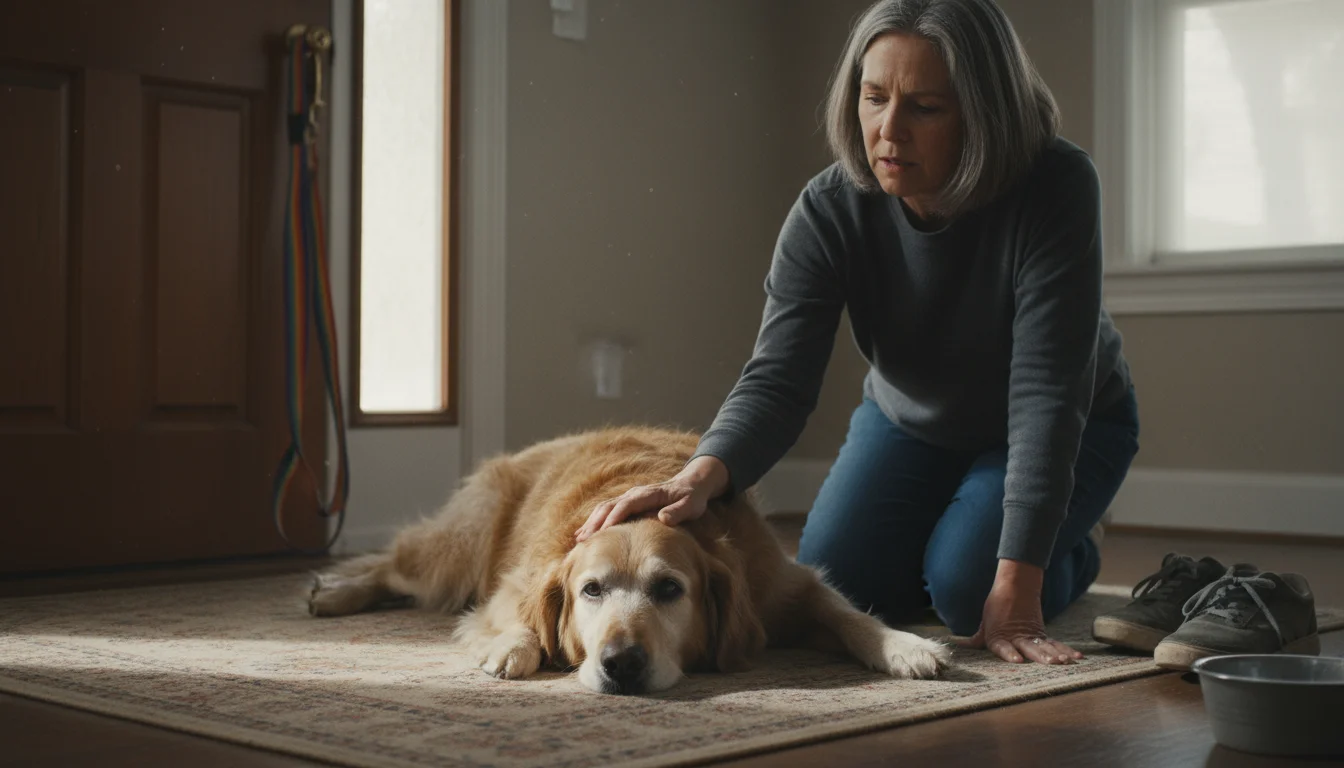
2. Lethargy or Decreased Activity
Lethargy means more than just a pet enjoying an extra nap. It describes a profound lack of energy, reduced responsiveness, and general sluggishness. Your pet may seem uninterested in activities they normally enjoy, such as walks, playtime, or interacting with family members. A normally active dog who now struggles to get up or shows no enthusiasm for a walk, or a playful cat who spends all day hiding, shows signs of lethargy.
Because reduced energy is often a response to discomfort, being aware of other 8 signs your pet is in pain can help you identify a problem sooner.
This symptom is incredibly non-specific, meaning it can point to almost any illness, from a mild fever or pain to severe heart disease, internal bleeding, or neurological problems. For instance, a cat experiencing lethargy may also refuse food and hide, indicating significant discomfort. In older pets, owners sometimes mistake lethargy for “just getting old,” but even senior pets should maintain a reasonable level of engagement and activity. A sudden, unexplained decrease in activity warrants concern regardless of age.
Actionable Insight: Observe your pet’s overall demeanor. Do they respond to their name? Do they lift their head when you enter the room? How long has the lethargy lasted? A brief period of sluggishness after a very active day might be normal, but prolonged or severe lethargy is a red flag for their pet health. Research from Cornell University College of Veterinary Medicine emphasizes that lethargy is a key indicator requiring professional assessment.









Leave a Reply