🐢🐱 Everyday With Pets.com
  • Dog Care
  • Cat Care
  • Pet Health
  • Lifestyle & Fun
  • Training & Behavior
  • Product Reviews

12 Signs Your Dog Needs Professional Training Help

December 27, 2025 Β· Training & Behavior
12 Signs Your Dog Needs Professional Training Help - comprehensive guide

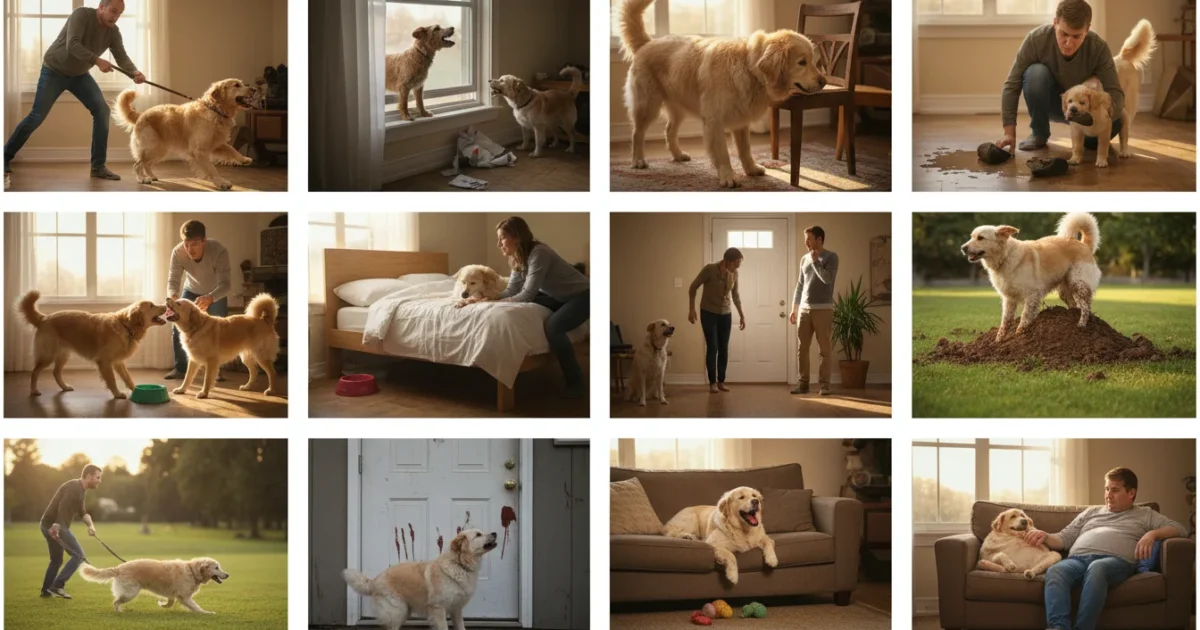
Observing your dog’s behavior provides valuable insights into their well-being and needs. While many common dog behaviors are normal, certain patterns can signal underlying issues requiring professional intervention. Recognizing these signs early allows you to address challenges proactively, fostering a stronger bond and a happier, healthier life for your canine companion. As pet owners, you play a critical role in interpreting these signals and seeking the right support.

Table of Contents

  • Understanding Your Dog’s Behavior Signals
  • Aggression and Reactivity Concerns
  • Anxiety and Destructive Behaviors
  • House Soiling and Basic Manners
  • Why Positive Reinforcement Training Works
  • Choosing the Right Training Professional
  • Frequently Asked Questions
  • Taking the Next Step for Your Dog
A woman observes her golden retriever mix dog on a leash, whose body language shows subtle tension during a walk on a park path.
Noticing the subtle ways your dog communicates is key to understanding them.

Understanding Your Dog’s Behavior Signals

Your dog communicates constantly through their actions, postures, and vocalizations. Understanding these signals forms the foundation of responsible pet care. Behavior is complex, influenced by genetics, environment, early experiences, and training history. Sometimes, what appears to be “bad” behavior is simply your dog attempting to communicate a need, an emotion, or a response to an uncomfortable situation. For example, a dog that lunges and barks on walks might not be aggressive, but fearful or overstimulated.

Early intervention is key. Addressing problematic behaviors when they first appear can prevent them from escalating into more serious issues. Ignoring subtle cues can lead to frustration for both you and your dog, potentially straining your relationship. Positive reinforcement training, which focuses on rewarding desired behaviors, serves as the most effective and humane approach to shaping a dog’s actions and responses. When you consistently reward the behaviors you want to see, your dog learns to repeat them, building a strong foundation of trust and cooperation.

A worried woman kneels beside her small terrier mix dog, which appears tense and anxious, on a park path.
When your dog’s anxiety shows, it’s a moment of concern for you both.

Aggression and Reactivity Concerns

Aggressive and reactive behaviors are among the most serious issues dog owners face. They pose safety risks to people and other animals and significantly impact your dog’s quality of life. These behaviors often stem from fear, anxiety, resource guarding, pain, or a lack of appropriate socialization. Addressing them requires a careful, systematic approach, usually best guided by a professional.

1. Aggression Towards People or Other Animals

Aggression manifests in various forms, including growling, snarling, snapping, lunging, or biting. This behavior indicates your dog feels threatened, is in pain, is defending territory or resources, or has a history of negative experiences. A single instance of aggression warrants immediate attention. Ignoring aggression escalates the risk of serious injury and can lead to legal complications. According to the American Veterinary Medical Association (AVMA), it is crucial to rule out any underlying medical conditions, such as pain or neurological issues, before assuming the problem is purely behavioral. A veterinary check-up is always the first step.

What to look for: Unprovoked growling, snapping, or biting. Freezing, hard staring, or a stiff body posture before an incident. These signs are often precursors to more severe aggression.

When to seek help: Immediately, if your dog shows any signs of aggression. A certified professional dog trainer (CPDT-KA) specializing in aggression or a board-certified veterinary behaviorist (DACVB) can develop a safety plan and behavior modification program. Never attempt to punish aggression, as this often intensifies fear and makes the behavior worse.

2. Leash Reactivity and Excessive Pulling

Does walking your dog feel like a wrestling match? Leash reactivity involves behaviors like barking, lunging, growling, or pulling intensely when your dog sees other dogs, people, bikes, or cars. While common, it makes walks stressful and potentially dangerous. This behavior often stems from excitement, frustration, fear, or overstimulation. A reactive dog is not necessarily aggressive, but their reactions can be misinterpreted and cause problems. Persistent pulling, even without reactivity, indicates a lack of leash manners that can strain your dog’s neck and your arm.

What to look for: Tense body language, high tail, stiff gait, frantic pulling, barking, or lunging at specific triggers while on a leash.

When to seek help: If your dog’s leash manners make walks unpleasant or unsafe. A professional trainer can teach you techniques like “engage-disengage,” counter-conditioning, and desensitization to help your dog develop positive associations with triggers and walk calmly. They also help establish proper loose-leash walking techniques using positive reinforcement.

3. Resource Guarding

Resource guarding occurs when your dog protects valued possessions, such as food, toys, sleeping spots, or even you, from perceived threats. This protective behavior can range from subtle body blocking and growling to snapping or biting. While a natural instinct, unchecked resource guarding can lead to dangerous confrontations, especially in multi-pet households or homes with children. It indicates your dog feels insecure about maintaining possession of something important to them.

What to look for: Stiffening, growling, staring, snapping, or biting when someone approaches their food bowl, a favorite toy, a bed, or a person.

When to seek help: If you observe any signs of resource guarding. A professional trainer can guide you through specific protocols to teach your dog that human presence near their resources predicts good things, reducing the need to guard. This process requires careful management and consistent positive reinforcement.

Anxious brindle pitbull mix huddled tightly in a living room corner near a heavily chewed chair leg and scattered cushion stuffing.
When anxiety turns into destructive behaviors like chewing.

Anxiety and Destructive Behaviors

Anxiety in dogs can manifest in various ways, often leading to destructive behaviors that impact your home and your dog’s peace of mind. Identifying the root cause of anxiety is crucial for effective intervention. These behaviors are not acts of defiance but rather symptoms of underlying stress or unmet needs.

4. Severe Anxiety and Fear

Anxiety can stem from many sources, including separation from owners, loud noises (thunder, fireworks), unfamiliar people or places, or past traumatic experiences. Symptoms include excessive panting, pacing, drooling, trembling, hiding, inappropriate urination/defecation, destructive behavior, or constant vocalization when left alone or exposed to triggers. Separation anxiety is particularly common and distressing for both dogs and owners. It often leads to dogs feeling genuine panic when alone.

What to look for: Excessive drooling, destructive chewing, persistent barking or howling when left alone, shaking, tucking tail, hiding during storms, or intense fear reactions to specific stimuli.

When to seek help: If your dog exhibits signs of severe or persistent anxiety. A veterinary behaviorist (DACVB) or a certified professional dog trainer (CPDT-KA) experienced in behavior modification can help diagnose the specific type of anxiety and develop a comprehensive plan. This plan might include medication from your vet, desensitization, counter-conditioning, and management strategies to reduce stress. The American College of Veterinary Behaviorists (ACVB) offers a directory of board-certified veterinary behaviorists who can provide specialized care.

5. Destructive Chewing or Digging

While puppies chew and some breeds dig by nature, excessive or destructive chewing and digging beyond normal parameters signals a problem. This behavior can damage your home, create safety hazards for your dog (ingesting foreign objects), and indicates boredom, anxiety, lack of appropriate outlets, or an underlying medical issue like dental pain. A dog who chews through drywall or furniture may be trying to relieve significant stress or has pent-up energy.

What to look for: Chewing on inappropriate objects (furniture, shoes, walls), persistent digging in yards or carpets, especially when unsupervised or left alone.

When to seek help: If destructive behaviors persist despite providing appropriate chew toys, exercise, and mental stimulation. A professional trainer can help identify the root cause, recommend enrichment strategies, proper toy rotation, and teach your dog what is appropriate to chew. They can also guide you on managing your dog’s environment to prevent access to undesirable chewing targets.

Infographic showing routine tasks schedule or checklist.

6. Excessive and Uncontrolled Barking

All dogs bark, but constant, uncontrolled barking becomes disruptive and points to an underlying issue. Reasons for excessive barking include boredom, attention-seeking, anxiety (especially separation anxiety), territoriality, fear, or frustration. A dog that barks at every passerby, constantly demands attention with barking, or howls for hours when alone is sending a clear message that something is amiss. This behavior not only strains your relationship but can also lead to complaints from neighbors.

What to look for: Non-stop barking that doesn’t subside, barking at everything outside, barking for extended periods when alone, or barking to demand attention or resources.

When to seek help: If you cannot quiet your dog’s barking through consistent training or environmental adjustments. A trainer can help you determine the cause of the barking and implement a plan using positive reinforcement to teach your dog alternative, quieter behaviors. This might involve teaching a “quiet” cue, increasing mental and physical exercise, or addressing underlying anxiety.

A dog owner looks down at a small wet spot on a rug, while their Beagle mix dog sits nearby with a slightly hesitant expression.
Dealing with house training challenges can be tough.

House Soiling and Basic Manners

Issues with house training and basic obedience can be incredibly frustrating. While some incidents are normal, persistent problems indicate a need for professional guidance to re-establish boundaries and communication.

7. Persistent House Soiling (After Being House-Trained)

If a previously house-trained dog suddenly begins to urinate or defecate indoors, this is a significant red flag. While it can be a behavioral issue (e.g., anxiety, marking, not being let out often enough), it is imperative to rule out medical causes first. Conditions like urinary tract infections, kidney disease, diabetes, or cognitive dysfunction (in older dogs) can all lead to accidents. Only after a clean bill of health from your veterinarian should you address the problem as purely behavioral.

What to look for: Repeated urination or defecation inside the house, especially after your dog was reliably house-trained.

When to seek help: After a veterinary examination confirms no medical issues. A professional trainer or behaviorist can help you identify behavioral triggers, implement a strict house-training regimen, and address any anxiety or marking behaviors. They will emphasize positive reinforcement for appropriate elimination outdoors and proper cleanup techniques indoors.

8. Unmanageable Jumping on People

Jumping up is a common dog greeting behavior, but it becomes problematic when it’s excessive, harms people (especially children or the elderly), or creates an uncomfortable environment for guests. While often stemming from excitement or a desire for attention, it signifies a lack of impulse control and understanding of appropriate greetings. Your dog has learned that jumping gets results, even if those results are negative attention.

What to look for: Consistently jumping on you, family members, or visitors, often with enthusiasm and ignoring cues to stop.

When to seek help: If your dog’s jumping is out of control and you struggle to teach them polite greetings. A professional trainer can teach your dog alternative behaviors like “sit to greet” using positive reinforcement, making sure that all four paws on the floor lead to the desired attention.

9. Failure to Respond to Recalls

A reliable recall, or “come” command, is arguably the most critical safety cue you can teach your dog. If your dog ignores you when called, especially in an unfenced area, they risk running into traffic, getting lost, or encountering dangerous situations. A lack of recall indicates your dog finds the environment more rewarding than coming back to you, or they do not understand the command reliably. This is a severe safety concern that requires immediate attention.

What to look for: Your dog consistently ignoring your “come” command, especially outdoors, or only responding when there are no distractions.

When to seek help: Immediately, if your dog’s recall is unreliable. A professional trainer can help you build a strong, reliable recall using high-value rewards and systematic training methods, gradually introducing distractions in a controlled manner. They emphasize making coming to you the most rewarding choice your dog can make.

10. Persistent Mouthing or Nipping

Puppies explore the world with their mouths, and play-biting is a normal part of their development. However, persistent mouthing or nipping that continues into adulthood, or becomes harder, indicates a need for professional guidance. This can be painful and frightening, especially for children. It often signifies a lack of bite inhibition training during puppyhood, overstimulation, or a way to seek attention. This behavior can also be a precursor to more serious issues if not addressed correctly.

What to look for: Hard nipping, prolonged mouthing during play, or mouthing that hurts or breaks skin, especially outside of puppyhood.

When to seek help: If your dog’s mouthing or nipping is painful, persistent, or causes concern. A professional trainer can help you teach appropriate bite inhibition, redirect mouthing to toys, and manage play to prevent overstimulation. They will guide you in effectively communicating boundaries to your dog.

11. Constant Demand Behaviors

Does your dog constantly nudge you, bark for attention, paw at you, or bring you toys incessantly? While a certain level of interaction is healthy, constant demand behaviors can become overwhelming and indicate your dog has learned that persistent actions get them what they want. This often stems from inadvertently rewarding these behaviors in the past or a lack of clear communication about when interaction is appropriate. It can also point to insufficient mental or physical stimulation.

What to look for: Relentless pawing, barking, nudging, or bringing toys to you, often escalating until you respond, even negatively.

When to seek help: If your dog’s demand behaviors disrupt your daily life or make it difficult to relax. A professional trainer can help you establish clear boundaries, teach your dog to settle, and show you how to reward calm, independent behavior. They will also assess if your dog needs more appropriate outlets for their energy and intelligence.

12. General Lack of Basic Obedience or Control

If your dog seems to ignore your cues, struggles with basic commands like sit, stay, or down, or generally lacks impulse control, professional training can make a significant difference. A dog that is difficult to manage in everyday situations, such as at the vet, when guests arrive, or during walks, benefits greatly from foundational obedience work. This lack of control can lead to stress for both of you and limit your dog’s ability to safely participate in various activities. Effective pet training improves safety and enhances your shared life.

What to look for: Inconsistent responses to known commands, ignoring cues in distracting environments, difficulty settling, or generally being unruly in public or at home.

When to seek help: If you feel overwhelmed by your dog’s behavior, struggle to implement basic obedience, or find that your dog consistently does not listen to you. A professional trainer can help you build a solid foundation of basic obedience, strengthen your communication, and teach you how to motivate your dog effectively using positive reinforcement techniques.

When in doubt, remember that seeking professional advice is a sign of responsible pet ownership, not a failure. Professionals possess the expertise and tools to guide you effectively.

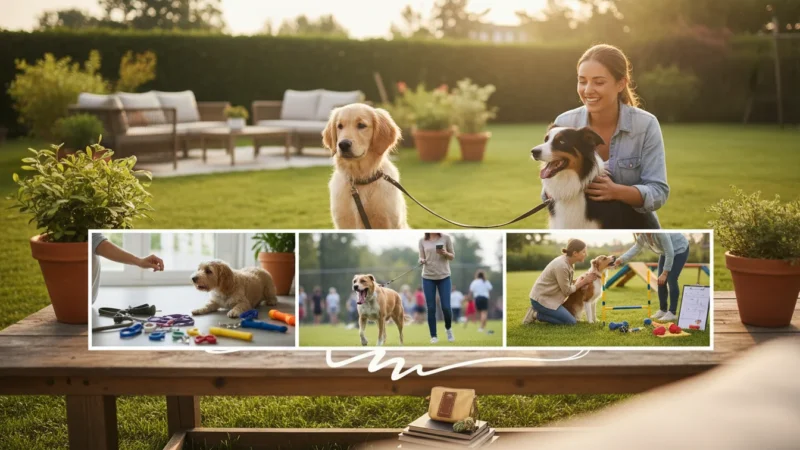
A contented mixed-breed dog with perked ears looks happily at a human's hand offering a treat during positive reinforcement training outdoors.
Training becomes a joyful experience with positive reinforcement and tasty rewards.

Why Positive Reinforcement Training Works

Positive reinforcement is the cornerstone of modern, humane, and effective pet training. This method focuses on adding something desirable (a reward) after your dog performs a desired behavior, increasing the likelihood that they will repeat that behavior. It builds a strong, trusting relationship between you and your dog, as they learn that performing certain actions leads to positive outcomes. Unlike punishment-based methods, which can create fear, anxiety, and aggression, positive reinforcement makes learning fun and stress-free.

Key components include:

  • Marker Training: Using a verbal marker (such as ‘yes!’) or a clicker to precisely pinpoint the exact moment your dog performs the desired behavior. This clear communication helps your dog understand what earned the reward.
  • Reward Timing: Delivering the reward immediately (within 1-3 seconds) after the marker. Timely rewards reinforce the connection between the action and the positive outcome.
  • Motivation: Using rewards your dog truly values, such as high-value treats, favorite toys, or enthusiastic praise. The higher the value of the reward, the stronger the motivation for your dog to learn.

Research consistently shows that positive reinforcement is more effective for long-term behavioral change and less likely to cause adverse side effects compared to aversive methods. According to the Association of Professional Dog Trainers (APDT), reward-based methods are not only more humane but also lead to dogs who are more enthusiastic learners and less prone to anxiety during training sessions. This approach prioritizes animal welfare and strengthens the human-animal bond.

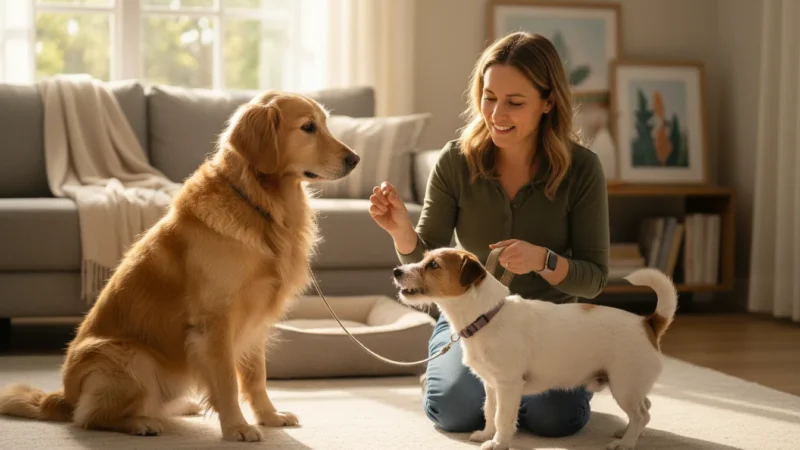
A professional dog trainer kneels on a grassy park lawn, offering a treat to a calmly sitting mixed-breed dog.
Good training uses kindness and rewards to help your dog learn.

Choosing the Right Training Professional

Selecting the right professional is a critical step. The pet training industry lacks universal regulation, meaning titles can be misleading. Always look for individuals with recognized certifications and a commitment to positive reinforcement methods. Avoid any trainer who advocates for punitive tools or techniques, such as shock collars, prong collars, or physical corrections that instill fear.

Here are the main types of professionals and what to look for:

  • Certified Professional Dog Trainer (CPDT-KA): These trainers have passed an independent certification exam and must meet continuing education requirements. They specialize in teaching obedience, manners, and addressing common behavioral issues using positive reinforcement. You can find certified trainers through organizations like the Certification Council for Professional Dog Trainers (CCPDT).
  • Veterinary Behaviorist (DACVB): A Diplomat of the American College of Veterinary Behaviorists is a veterinarian who has completed extensive post-doctoral training and board certification in animal behavior. They are qualified to diagnose and treat complex behavioral disorders, often incorporating medication management alongside behavior modification plans. Consult a DACVB for severe aggression, intense phobias, or generalized anxiety disorders.
  • Certified Applied Animal Behaviorist (CAAB/ACAAB): These individuals hold master’s or doctorate degrees in animal behavior. They also specialize in diagnosing and treating behavioral problems, primarily using behavior modification techniques. They do not prescribe medication.
  • What to ask: Inquire about their methods (ensure positive reinforcement), experience with your specific issue, references, and continuing education. A good professional prioritizes your dog’s welfare and clearly explains their approach.
A man sits on a porch step, thoughtfully watching his energetic border collie mix dog playfully tugging on a leash.
He’s probably wondering, “What’s the best way to help you, buddy?”

Frequently Asked Questions

My dog only misbehaves when I’m not around. How can a trainer help with that?

Many behavioral issues, such as separation anxiety or destructive chewing, occur primarily when you are absent. A professional trainer or veterinary behaviorist can help you identify the triggers and implement management strategies and behavior modification protocols. This often involves setting up cameras to observe behavior, designing specific desensitization exercises, and structuring your dog’s environment to promote calm and appropriate choices while you are away. They can also advise on enrichment tools to keep your dog mentally stimulated.

Is it ever too late to train an older dog?

No, it is never too late to train a dog, regardless of age. While puppies may learn some concepts faster due to critical socialization periods, older dogs are fully capable of learning new behaviors and modifying existing ones. Their brains remain plastic, meaning they can form new associations. Older dogs often come with their own unique challenges and histories, but with patience, consistency, and positive reinforcement, significant progress is achievable. A professional trainer can tailor methods to suit an older dog’s physical abilities and learning style.

How long does professional training take to see results?

The timeline for seeing results varies significantly depending on the specific behavior, its severity, your dog’s temperament, and your commitment to the training plan. Simple obedience cues might show improvement in weeks, while complex behavioral issues like aggression or severe anxiety could require months of consistent work. A good professional will provide realistic expectations and monitor progress, adjusting the plan as needed. Remember, training is an ongoing journey that requires dedication from you as the owner.

What if I cannot afford a high-cost trainer or behaviorist?

Budget constraints are a valid concern. Start by discussing behavioral issues with your regular veterinarian, as they can rule out medical causes and offer basic advice or refer you to lower-cost resources. Some humane societies or animal shelters offer affordable group classes or behavior consultations. Online courses or reputable books by certified professionals can provide guidance, though they lack personalized feedback. Prioritize addressing severe issues first; even a single consultation with a certified professional can provide a foundational plan you can then implement yourself, or you might find professionals who offer sliding scales or payment plans. Focus on behavior modification for dangerous behaviors first, then address less urgent issues.

A person sits on a rug, gently petting a medium-sized mixed-breed dog that leans against their leg, looking up with soft eyes.
A loving bond between a person and their contented dog.

Taking the Next Step for Your Dog

Recognizing the signs that your dog needs professional training help is a testament to your commitment as a responsible pet owner. Whether it’s persistent aggression, crippling anxiety, or simply a struggle with basic manners, experts are available to guide you. Embracing positive reinforcement methods and seeking out qualified professionals not only resolves specific behavioral issues but also enriches the relationship you share with your dog. You are giving your dog the best chance at a happy, well-adjusted life, transforming challenges into opportunities for growth and deeper connection.

For expert pet care guidance, visit
The Humane Society of the United States,
Cornell University College of Veterinary Medicine,
UC Davis School of Veterinary Medicine and
American Animal Hospital Association (AAHA).

Disclaimer: This article is for informational purposes only and is not a substitute for professional veterinary advice, diagnosis, or treatment. Always consult with a licensed veterinarian for medical concerns about your pet.

Share this article

Facebook Twitter Pinterest LinkedIn Email

Leave a Reply Cancel reply

Your email address will not be published. Required fields are marked *

Recent Posts

  • Understanding Cat Aggression and Reducing It
  • 8 Common Training Mistakes and How to Avoid Them
  • How to Train Multiple Dogs at Once
  • Litter Box Problems: Causes and Solutions
  • How to Socialize Your Puppy: A Week-by-Week Plan
  • 15 Fun Tricks to Teach Your Dog
  • Understanding Dog Aggression: Types and Solutions
  • How to Train Your Cat to Use a Scratching Post
  • Cat Behavior Problems: When to Call a Behaviorist
  • How to Stop Excessive Barking: A Positive Approach

Related Articles

How to Housetrain Your Puppy in 7 Days - comprehensive guide

How to Housetrain Your Puppy in 7 Days

Learn how to housetrain your puppy in 7 days with this comprehensive, step-by-step guide using…

Read More β†’
Positive Reinforcement Training: A Complete Beginner’s Guide - comprehensive guide

Positive Reinforcement Training: A Complete Beginner’s Guide

Learn positive reinforcement training for your pet with this complete beginner's guide, covering fundamentals, socialization,…

Read More β†’
How to Stop Excessive Barking: A Positive Approach - comprehensive guide

How to Stop Excessive Barking: A Positive Approach

Learn how to stop excessive barking in your pet with positive reinforcement. Get actionable insights,…

Read More β†’
10 Essential Commands Every Dog Should Know - comprehensive guide

10 Essential Commands Every Dog Should Know

Learn 10 essential commands every dog should know using positive reinforcement, enhancing safety, communication, and…

Read More β†’
Litter Box Problems: Causes and Solutions - comprehensive guide

Litter Box Problems: Causes and Solutions

Learn common causes of litter box problems for pets and find actionable solutions to restore…

Read More β†’
Cat Behavior Problems: When to Call a Behaviorist - comprehensive guide

Cat Behavior Problems: When to Call a Behaviorist

Learn when to call a cat behaviorist for common problems like litter box issues, aggression,…

Read More β†’
Understanding and Managing Dog Separation Anxiety - comprehensive guide

Understanding and Managing Dog Separation Anxiety

Learn to understand and manage dog separation anxiety with practical, evidence-based training tips, positive reinforcement,…

Read More β†’
How to Train Multiple Dogs at Once - comprehensive guide

How to Train Multiple Dogs at Once

Learn how to train multiple dogs at once with science-backed, positive reinforcement methods for a…

Read More β†’
Clicker Training 101: Getting Started the Right Way - comprehensive guide

Clicker Training 101: Getting Started the Right Way

Learn clicker training for your pet with this comprehensive guide, covering setup, techniques, troubleshooting, and…

Read More β†’
🐢🐱 Everyday With Pets.com

Making Pet Care Simple, Every Day

TechTonic Team, L.L.C-FZ
Dubai, UAE

contact@simplegardenjoy.com

Explore

  • Home
  • About Us
  • Contact Us
  • Editorial Policy
  • Privacy Policy
  • Terms and Conditions
  • Subscribe
  • Unsubscribe

Categories

  • Cat Care
  • Dog Care
  • Lifestyle & Fun
  • Pet Health
  • Product Reviews
  • Training & Behavior

© 2026 🐢🐱 Everyday With Pets.com. All rights reserved.