
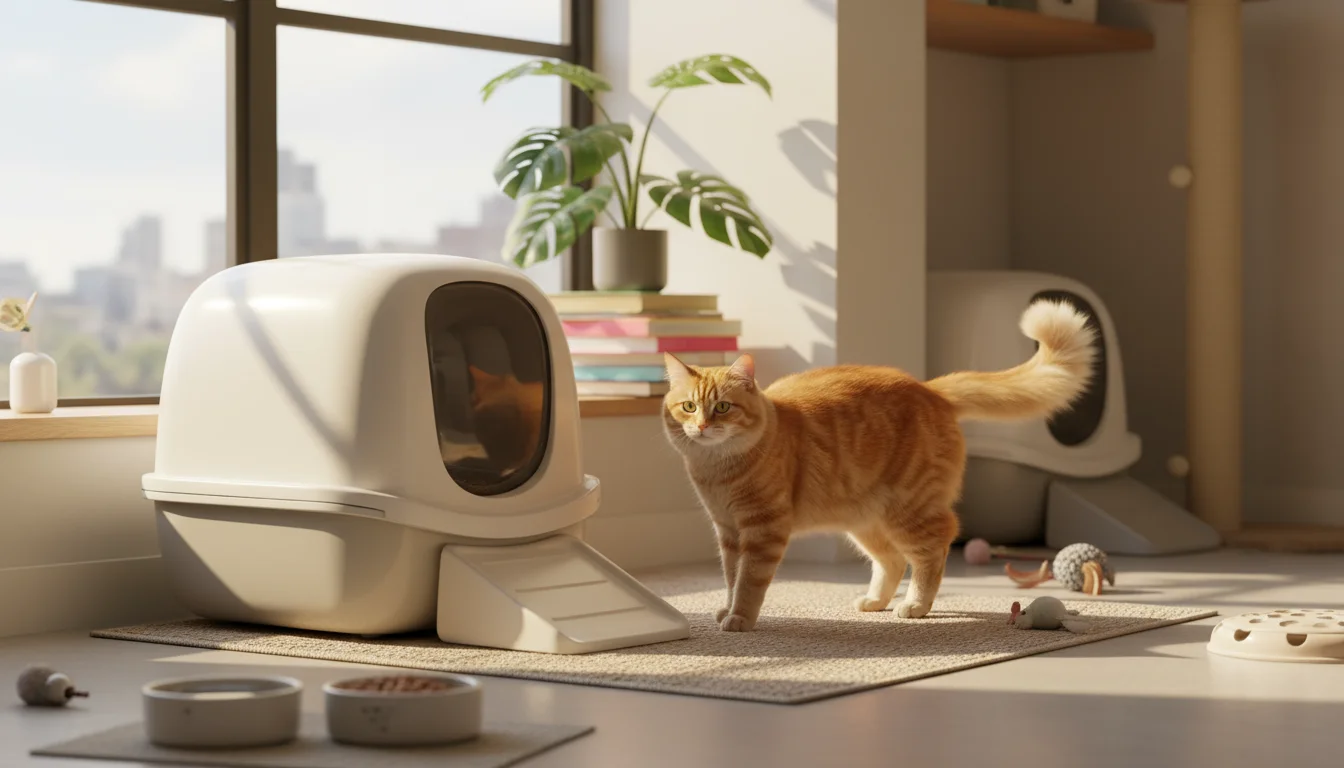
Myth 6: One Litter Box Per Cat Is Sufficient
This myth is a common cause of litter box aversion and inappropriate elimination, which is one of the top reasons cats are surrendered to shelters. While the “one litter box per cat plus one” rule may seem excessive to some, it is a critical guideline for ensuring feline comfort, hygiene, and preventing behavioral issues, especially in multi-cat households. Ignoring this rule often leads to significant stress for your cats and frustration for you.
Understanding Feline Litter Box Preferences and Needs
Cats are highly particular about their bathroom habits. They prefer clean, accessible litter boxes and may develop an aversion if boxes are dirty, too few, or poorly located. In a multi-cat household, individual cats may not want to share a box that another cat has used, or a dominant cat may “guard” a box, preventing others from using it. This can lead to stress, territorial disputes, and accidents outside the box. The universally recommended guideline for litter box numbers is: N + 1, where N is the number of cats. So, if you have two cats, you ideally need three litter boxes placed in different locations.
Optimal Litter Box Management: Beyond Just the Numbers
Beyond the sheer number of boxes, several factors significantly contribute to good litter box management and your cat’s willingness to use them:
- Strategic Placement: Place litter boxes in quiet, easily accessible, and private locations. Avoid high-traffic areas, noisy appliances (like washing machines or furnaces), or places where your cat might feel trapped or ambushed. In multi-cat homes or multi-level homes, ensure boxes are available on different floors or in different rooms to offer choices and prevent resource guarding. Do not place food and water bowls right next to a litter box.
- Appropriate Size: Choose large litter boxes. Many commercial boxes are simply too small for an adult cat to comfortably turn around, dig, and squat. Your cat should be able to move freely inside. Large storage totes with an entrance cut out can be repurposed as cost-effective, spacious alternatives.
- Preferred Type of Litter: Most cats prefer unscented, clumping clay litter, which is soft on their paws and allows for easy scooping. Experiment to find what your cat prefers. Avoid strongly scented litters, perfumes, or liners, as these can deter sensitive feline noses.
- Rigorous Cleaning Frequency: Scoop litter boxes at least once, and ideally twice, daily. This is paramount for hygiene and acceptance. Completely empty and scrub the box with mild, unscented soap and water weekly or bi-weekly. Dirty boxes are a primary reason for inappropriate elimination.
- Adequate Litter Depth: Maintain 3-4 inches of litter. Cats enjoy digging and burying their waste, and sufficient depth allows them to do this naturally.
Troubleshooting Litter Box Issues: When to Seek Professional Help
If your cat suddenly stops using the litter box, never assume it is out of spite or misbehavior. This change in behavior often signals an underlying medical issue or significant stress. Consult your veterinarian immediately to rule out urinary tract infections, kidney disease, painful arthritis, or other health problems. If medical causes are excluded, then methodically evaluate environmental factors like litter box count, placement, cleanliness, type of litter, and any recent changes in the home or household dynamics. A certified cat behaviorist can offer tailored solutions for complex behavioral issues.
Leave a Reply