

Positive Reinforcement: The Foundation of Success
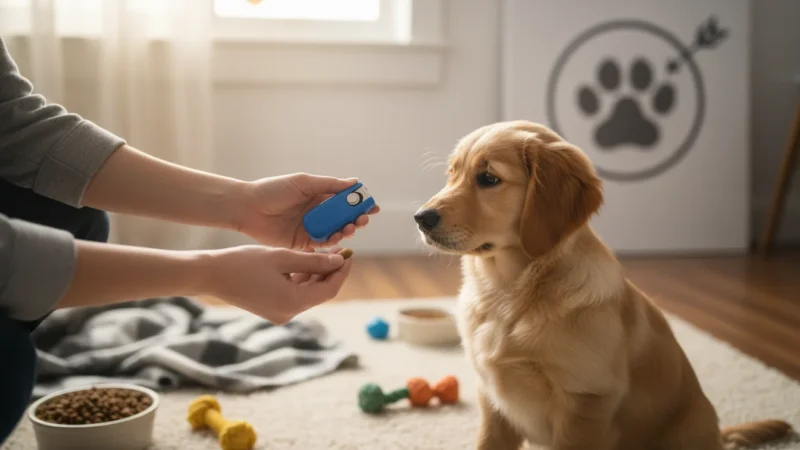
Positive reinforcement training is the cornerstone of successful, ethical pet training. This method focuses on rewarding behaviors you want your dog to repeat, making learning a positive and enjoyable experience for both of you. You strengthen your relationship with your dog, encouraging them to think and offer behaviors willingly.
To ensure your sessions remain effective, it is helpful to review 8 common training mistakes and how to avoid them early in the process.
Key elements of effective positive reinforcement include:
- Marker Training: A marker is a signal, usually a clicker or a specific word like “Yes,” that tells your dog the exact moment they performed the desired behavior. The marker immediately precedes the reward. It creates a precise communication bridge.
- Reward Timing: Deliver the reward within 1-3 seconds of the desired behavior. This immediate feedback helps your dog understand exactly what they did to earn the treat or praise.
- High-Value Motivation: Use rewards your dog truly values. This might include small, soft, smelly treats, a favorite toy, enthusiastic praise, or a quick game of tug. Rotate rewards to keep your dog engaged and motivated.
- Short, Frequent Sessions: Dogs learn best in short, focused bursts, typically 5-10 minutes, several times a day. This prevents boredom and frustration, keeping training fun and effective.
- Consistency: Everyone in the household should use the same commands, hand signals, and training methods. Consistency avoids confusion for your dog and speeds up their learning.
- Management: While training, manage your dog’s environment to prevent them from practicing unwanted behaviors. For instance, use a leash indoors to prevent jumping on guests until “Off” is well-learned.








Leave a Reply