
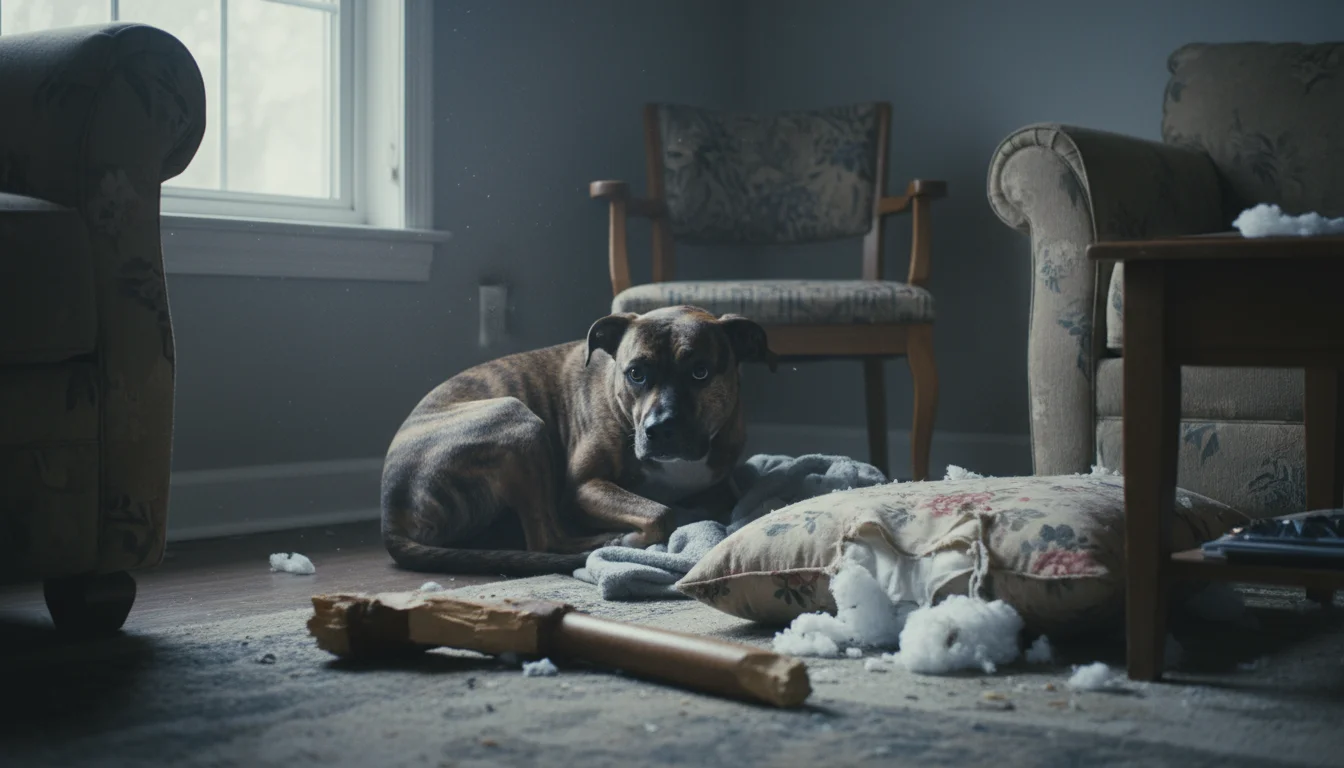
Anxiety and Destructive Behaviors
Anxiety in dogs can manifest in various ways, often leading to destructive behaviors that impact your home and your dog’s peace of mind. Identifying the root cause of anxiety is crucial for effective intervention. These behaviors are not acts of defiance but rather symptoms of underlying stress or unmet needs.
When stress is the root cause, engaging your dog with fun indoor games can help lower their arousal levels.
4. Severe Anxiety and Fear
Anxiety can stem from many sources, including separation from owners, loud noises (thunder, fireworks), unfamiliar people or places, or past traumatic experiences. Symptoms include excessive panting, pacing, drooling, trembling, hiding, inappropriate urination/defecation, destructive behavior, or constant vocalization when left alone or exposed to triggers. Separation anxiety is particularly common and distressing for both dogs and owners. It often leads to dogs feeling genuine panic when alone.
What to look for: Excessive drooling, destructive chewing, persistent barking or howling when left alone, shaking, tucking tail, hiding during storms, or intense fear reactions to specific stimuli.
When to seek help: If your dog exhibits signs of severe or persistent anxiety. A veterinary behaviorist (DACVB) or a certified professional dog trainer (CPDT-KA) experienced in behavior modification can help diagnose the specific type of anxiety and develop a comprehensive plan. This plan might include medication from your vet, desensitization, counter-conditioning, and management strategies to reduce stress. The American College of Veterinary Behaviorists (ACVB) offers a directory of board-certified veterinary behaviorists who can provide specialized care.
5. Destructive Chewing or Digging
While puppies chew and some breeds dig by nature, excessive or destructive chewing and digging beyond normal parameters signals a problem. This behavior can damage your home, create safety hazards for your dog (ingesting foreign objects), and indicates boredom, anxiety, lack of appropriate outlets, or an underlying medical issue like dental pain. A dog who chews through drywall or furniture may be trying to relieve significant stress or has pent-up energy.
What to look for: Chewing on inappropriate objects (furniture, shoes, walls), persistent digging in yards or carpets, especially when unsupervised or left alone.
When to seek help: If destructive behaviors persist despite providing appropriate chew toys, exercise, and mental stimulation. A professional trainer can help identify the root cause, recommend enrichment strategies, proper toy rotation, and teach your dog what is appropriate to chew. They can also guide you on managing your dog’s environment to prevent access to undesirable chewing targets.









Leave a Reply