

Frequently Asked Questions
Is my dog too old to learn new tricks?
No, dogs of all ages can learn new tricks! While puppies may pick things up quickly, older dogs possess better focus and patience. You might need to adjust your approach for senior dogs, choosing gentler tricks and keeping sessions shorter, but their capacity for learning and enjoying new challenges remains. It is never too late to engage your dog’s mind.
How often should I train my dog?
Aim for several short training sessions daily rather than one long one. Two to three sessions of 5-10 minutes each are generally more effective than a single 30-minute session. This keeps your dog engaged, prevents boredom, and helps them retain information better. Consistency is more important than duration.
What if my dog is not food motivated?
If treats do not motivate your dog, explore other high-value rewards. Some dogs prefer toys, such as a favorite squeaky ball or a tug rope. Others respond best to vigorous praise, a quick game of fetch, or a belly rub. Experiment to find what your dog truly values and use that as your primary reinforcement.
Can I teach multiple dogs tricks at the same time?
You can, but it is often more effective to train each dog individually, especially when they are learning a new trick. Training them separately minimizes distractions and allows you to focus on each dog’s specific needs and learning pace. Once they master a trick individually, you can practice it with them together.
How do I make sure my dog retains the tricks they learn?
Practice regularly and incorporate learned tricks into your daily routine. Ask for a “Shake” before dinner or a “Bow” before a walk. Randomly review older tricks to keep them fresh in your dog’s memory. This practice keeps their skills sharp and reinforces the joy of learning.
For expert pet care guidance, visit
Certification Council for Professional Dog Trainers (CCPDT),
International Association of Animal Behavior Consultants (IAABC),
American College of Veterinary Behaviorists (ACVB),
Pet Poison Helpline and
FDA Center for Veterinary Medicine.
Disclaimer: This article is for informational purposes only and is not a substitute for professional veterinary advice, diagnosis, or treatment. Always consult with a licensed veterinarian for medical concerns about your pet.
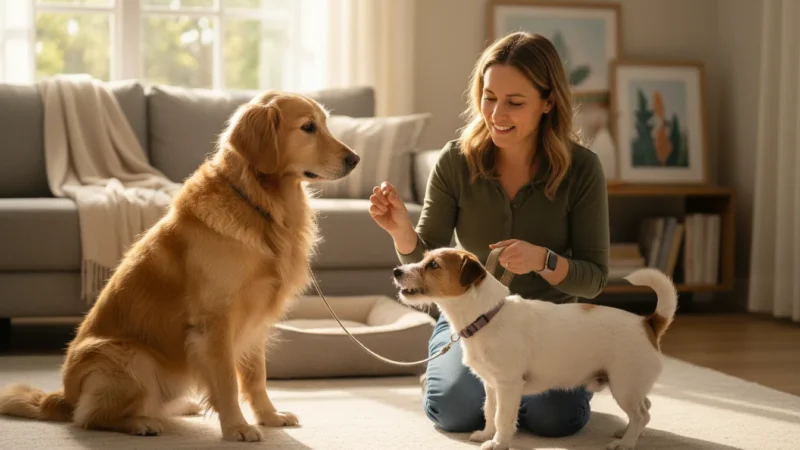
In multi-pet households, learning how to train multiple dogs at once can help you manage distractions and ensure every dog gets a chance to learn.








Leave a Reply