
Urinary Tract Health: Recognizing Feline Lower Urinary Tract Disease (FLUTD)
Feline Lower Urinary Tract Disease (FLUTD) is a common and often painful condition affecting a cat’s bladder and urethra. It can manifest in various ways, from bladder inflammation (cystitis) to life-threatening urethral obstruction. Male cats are particularly susceptible to obstructions.
Because stress is a major trigger for urinary issues, identifying complex cat behavior problems can sometimes help resolve physical symptoms.
What it is:
In emergency situations such as a total urinary blockage, knowing how to administer first aid to your pet while en route to the clinic is vital.
FLUTD is a general term for conditions that affect the bladder and urethra. These can include urinary stones (urolithiasis), bacterial infections, or most commonly, Feline Idiopathic Cystitis (FIC), where the cause of inflammation is unknown but often linked to stress.
Warning Signs of FLUTD:
- Frequent Urination: Your cat goes to the litter box more often than usual.
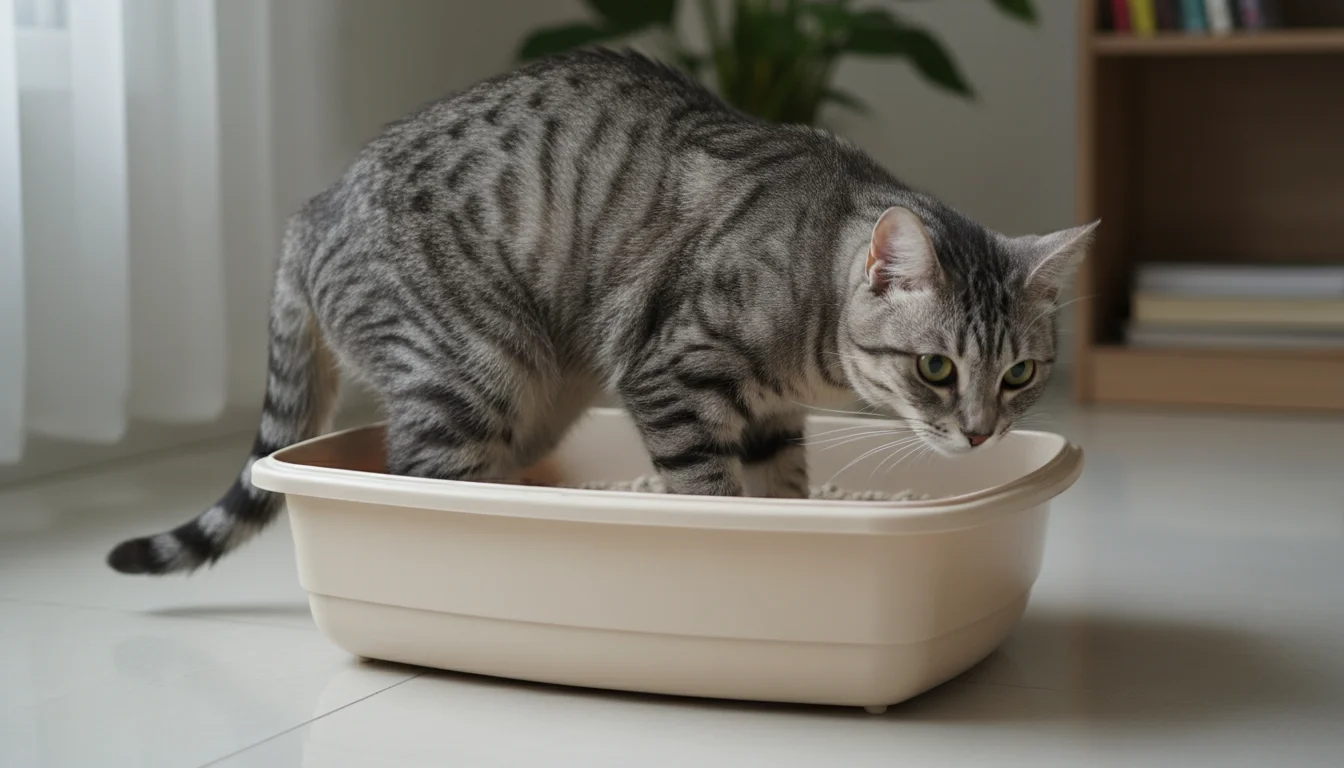
- Straining to Urinate (Stranguria): Your cat squats in the litter box for prolonged periods, often without producing much urine, or cries out while attempting to urinate.
- Painful Urination (Dysuria): Meowing or crying during urination.
- Urination Outside the Litter Box (Periuria): Urinating in unusual places, which is often a behavioral sign of pain or discomfort.
- Blood in Urine (Hematuria): Urine may appear pinkish or reddish.
- Excessive Licking: Licking their genital area more than usual due to discomfort.
- Vocalization: Increased meowing or unusual sounds, indicating pain.
- Lethargy or Hiding: Changes in energy level or social behavior.
- Urethral Obstruction (Emergency): If your male cat is straining, vocalizing, and producing little to no urine, or no urine at all, this is a life-threatening emergency. His bladder may be blocked, preventing him from eliminating toxins. This requires immediate veterinary intervention. According to Cornell University College of Veterinary Medicine, urethral obstruction is a serious condition that can be fatal if not treated promptly.
Home Monitoring: Keep a close eye on your cat’s litter box habits. Note the frequency of urination, volume of urine, and any signs of discomfort. Consider using multiple litter boxes and ensure they are always clean. Provide ample fresh water and consider a drinking fountain to encourage hydration.





Leave a Reply