🐶🐱 Everyday With Pets.com
  • Dog Care
  • Cat Care
  • Pet Health
  • Lifestyle & Fun
  • Training & Behavior
  • Product Reviews

Common Cat Health Issues and Their Warning Signs

January 15, 2026 · Pet Health

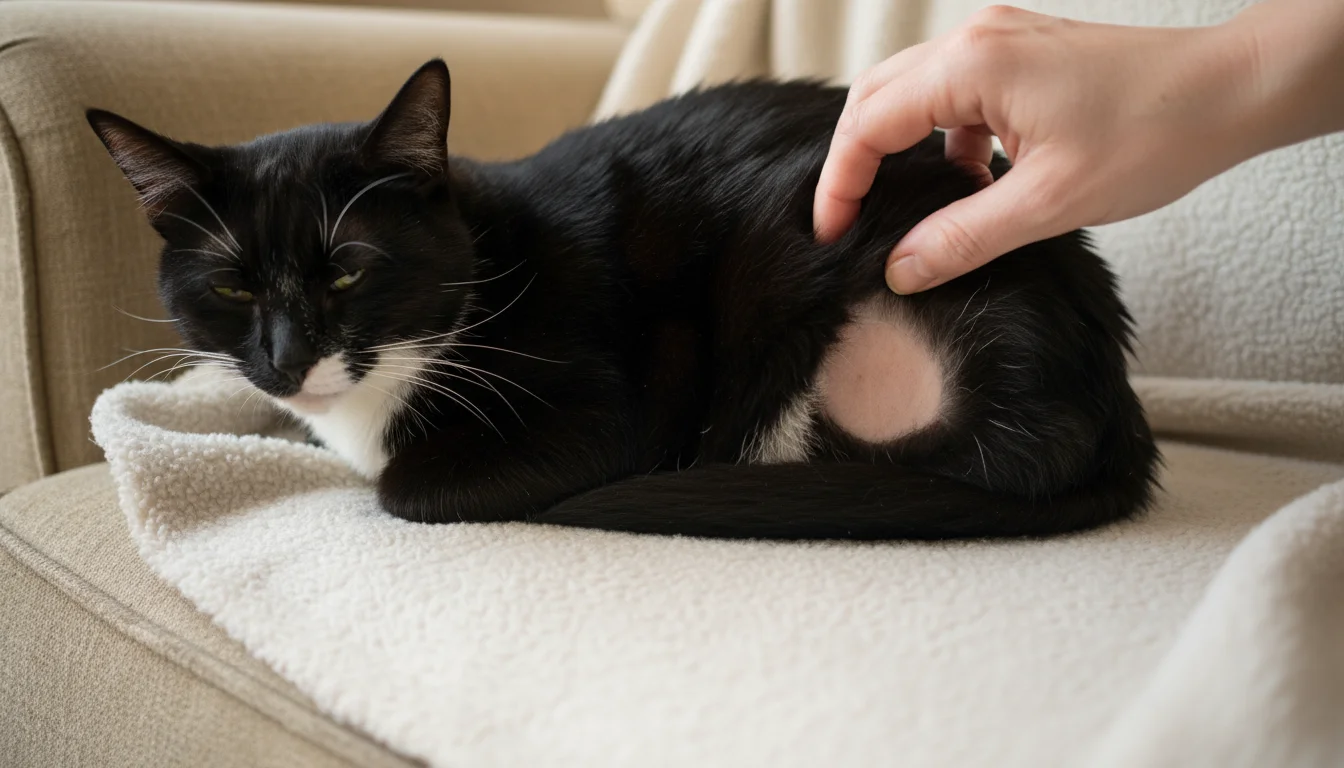
A person's hand gently parts the dark fur on a tuxedo cat's back, revealing a small pink patch of skin being examined.
Gently checking your cat’s fur and skin is key to spotting early signs of trouble.

Skin and Coat Problems: Allergies, Parasites, and More

A healthy coat is a good indicator of overall health. Changes in your cat’s skin or fur can signal underlying issues, from external parasites to allergies or systemic diseases.

Common Skin Issues:

  • Fleas: Even a few fleas can cause intense itching, especially in sensitive cats. You might see flea dirt (tiny black specks, which are flea feces) on your cat’s skin.
  • Allergies: Cats can develop allergies to food, environmental allergens (pollen, dust mites), or flea bites (flea allergy dermatitis). This leads to intense itching.
  • Ringworm: A fungal infection causing patchy hair loss and scaly lesions, often circular. It is zoonotic, meaning it can spread to humans.
  • Mange: Caused by microscopic mites, leading to hair loss, scabs, and severe itching.
  • Dermatitis: General inflammation of the skin, often caused by self-trauma from over-grooming due to itchiness.

Warning Signs:

  • Excessive Scratching, Licking, or Chewing: Concentrated on specific areas or generalized.
  • Hair Loss (Alopecia): Patches of thin or missing fur.
  • Redness or Inflammation of the Skin.
  • Scabs, Bumps, or Lesions.
  • Dandruff or Flaky Skin.
  • Matted or Oily Coat: Especially if your cat stops grooming due to pain or illness.

When to See a Vet: Any persistent skin issue warrants a vet visit. Your veterinarian can perform diagnostic tests to identify the cause, which might include skin scrapings, fungal cultures, or allergy testing. Timely intervention prevents further discomfort and secondary infections.

Condition Primary Symptoms Common Causes
Flea Allergy Dermatitis Intense itching, hair loss, scabs (especially on hindquarters, tail base) Flea bites (even just a few)
Ringworm Circular patches of hair loss, scaling, crusting Fungal infection
Environmental Allergies Generalized itching, excessive grooming, skin inflammation Pollen, dust mites, mold
Food Allergies Chronic itching (often around head/neck), gastrointestinal upset Specific food proteins (e.g., chicken, beef, fish)
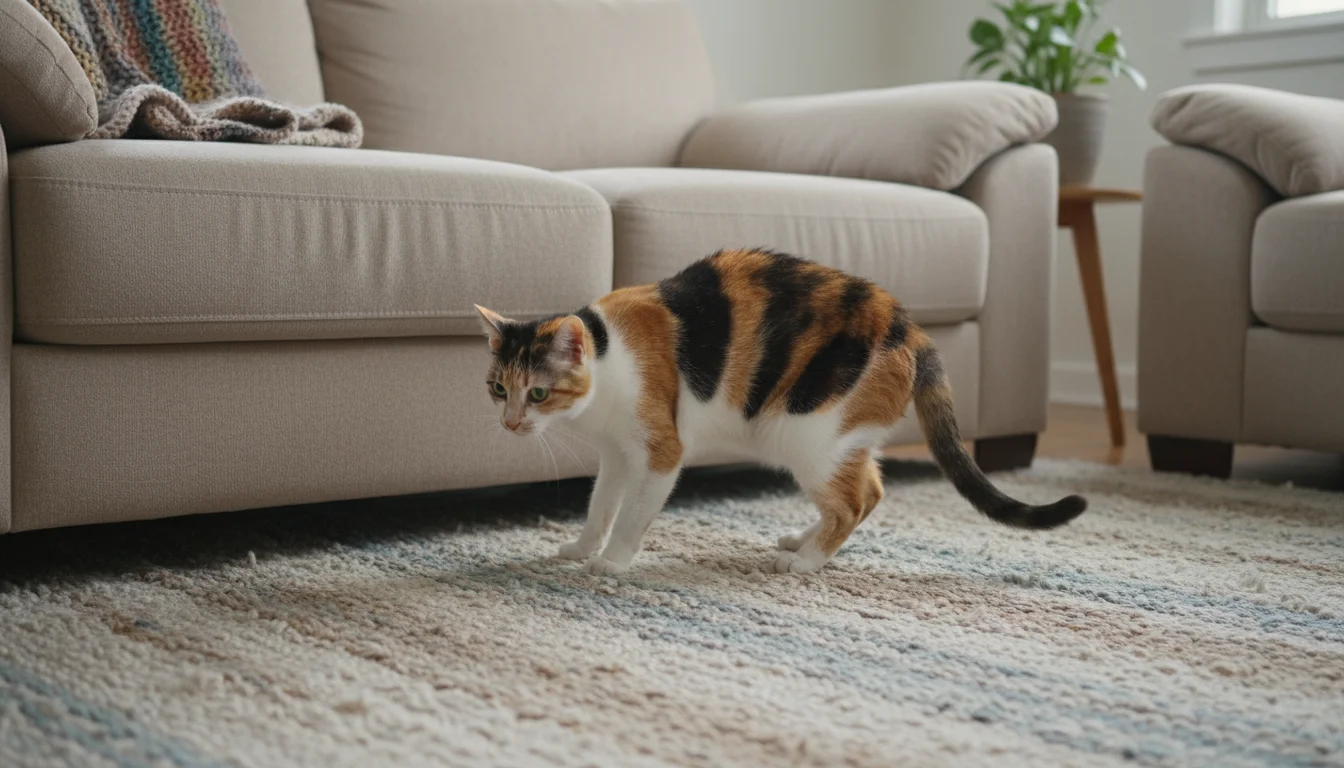
An older calico cat with a slightly stiff posture carefully steps down from a low beige sofa onto a rug, observed by a person sitting nearby.
Observing an older cat’s subtle movements can reveal discomfort.

Recognizing Pain and Mobility Issues

Cats are notoriously stoic, making pain recognition challenging. Changes in mobility or behavior can be subtle but are critical indicators of discomfort or underlying musculoskeletal problems, particularly in older cats. Early intervention can significantly improve your cat’s quality of life.

Subtle Signs of Pain:

  • Changes in Gait: Limping, stiffness, difficulty jumping onto furniture they once easily accessed, or favoring a limb.
  • Reluctance to Move: Less active, sleeping more, avoiding play, or hesitating to use stairs.
  • Difficulty with Grooming: Matted or unkempt fur, especially in areas they can no longer reach, such as the back or hindquarters.
  • Changes in Litter Box Habits: Difficulty getting into or out of the litter box, leading to accidents outside.
  • Vocalization: Increased meowing, growling, or hissing when touched or moving.
  • Hiding or Increased Irritability: Seeking isolation, becoming aggressive when handled, or reacting defensively.
  • Altered Posture: Hunching, holding a limb abnormally, or a generally tense body posture.
  • Loss of Appetite or Weight Loss: Pain can suppress appetite.

Common Causes of Pain and Mobility Issues:

  • Arthritis (Osteoarthritis): Degenerative joint disease, common in older cats. It causes chronic pain and stiffness in joints.
  • Injuries: Sprains, fractures, or soft tissue injuries from falls or trauma.
  • Neurological Conditions: Disc disease, nerve damage, or other spinal problems.
  • Dental Disease: As discussed, severe dental pain can manifest as general discomfort and reluctance to eat.
  • Organ Disease: Kidney disease, pancreatitis, or cancer can cause generalized discomfort and lethargy.

When to See a Vet: If you notice any of these signs, even subtle ones, schedule a veterinary examination. Your vet can perform a thorough physical assessment, possibly recommending X-rays or other diagnostics to identify the cause of pain. Management may involve pain medication, joint supplements, weight management, environmental modifications, or physical therapy. The goal is to make your cat as comfortable as possible and improve their overall pet health.


Pages: 1 2 3 4 5 6 7 8 9 10

Share this article

Facebook Twitter Pinterest LinkedIn Email

Leave a Reply Cancel reply

Your email address will not be published. Required fields are marked *

Search

Latest Posts

  • 15 Most Obedient Dog Breeds 15 Most Obedient Dog Breeds
  • A candid photograph of a woman hugging a well-groomed apricot Standard Poodle on the floor of a sunlit living room. 10 Dog Breeds Suitable for People With Allergies
  • A golden-mix dog sits on a wooden floor in a sunlit living room, receiving a gentle pat from its owner. 10 Signs Your Dog Is Overweight
  • A fluffy white Persian cat sits on a navy blue velvet chair with loose fur floating in a sunbeam. Top 10 Cat Breeds That Shed the Most
  • Risograph illustration of a modern dog sitting in a living room, casting a shadow of its ancestor retrieving a duck. 10 Dog Breeds and What They Were Originally Bred To Do
  • A veterinarian sitting on her living room floor, sharing a warm, gentle moment with her wire-haired terrier dog in soft morning light. 10 Things I Would Never Do As a Veterinarian With My Dog
  • A German Shepherd search and rescue dog stands alert on a mossy log in a misty forest while its handler walks in the background. 10 Best Search and Rescue Dog Breeds
  • A retired man reading a book in a cozy armchair while his senior dog rests its head on his knee in a sunlit living room. 8 Reasons More Retirees Are Adopting Older Dogs
  • A close-up photograph of a tabby cat headbutting a woman's cheek in a warm, sunlit living room. If Your Cat Headbutts You, This Is What It Really Means
  • A ginger cat leans its head against a person's hand on a wooden table in a sunlit, cozy living room. 10 Pet Habits That Reveal Hidden Feelings

Newsletter

Get the latest posts delivered to your inbox.

Related Articles

A veterinarian sitting on her living room floor, sharing a warm, gentle moment with her wire-haired terrier dog in soft morning light.

10 Things I Would Never Do As a Veterinarian With My Dog

Discover the top 10 things a veterinarian would never do with their own dog to…

Read More →
Senior Pet Health: What to Watch For as They Age - comprehensive guide

Senior Pet Health: What to Watch For as They Age

Learn what to watch for as your senior pet ages, with practical insights on health…

Read More →
12 Human Foods That Are Dangerous for Pets - comprehensive guide

12 Human Foods That Are Dangerous for Pets

Learn which 12 human foods are dangerous for your pets. Get actionable advice on prevention,…

Read More →
How to Give Your Dog Medication: Pills, Liquids, and More - comprehensive guide

How to Give Your Dog Medication: Pills, Liquids, and More

Learn how to give your dog medication effectively and safely. Master techniques for pills, liquids,…

Read More →
Essential Vaccinations for Dogs: A Complete Schedule - comprehensive guide

Essential Vaccinations for Dogs: A Complete Schedule

Learn about essential vaccinations for dogs, including complete puppy and adult schedules, core and non-core…

Read More →
A golden-mix dog sits on a wooden floor in a sunlit living room, receiving a gentle pat from its owner.

10 Signs Your Dog Is Overweight

Learn how to identify the hidden physical and behavioral signs of canine obesity and discover…

Read More →
Spaying and Neutering: What Every Pet Owner Should Know - comprehensive guide

Spaying and Neutering: What Every Pet Owner Should Know

Learn about spaying and neutering, its health and behavioral benefits, ideal timing, recovery, and affordable…

Read More →
How to Administer First Aid to Your Pet - comprehensive guide

How to Administer First Aid to Your Pet

Learn essential pet first aid techniques and how to prepare for emergencies to protect your…

Read More →
10 Warning Signs Your Pet Needs a Vet Visit - comprehensive guide

10 Warning Signs Your Pet Needs a Vet Visit

Learn 10 warning signs your pet needs a vet visit to ensure their health. Recognize…

Read More →
🐶🐱 Everyday With Pets.com

Making Pet Care Simple, Every Day

Inedit Agency S.R.L.
Bucharest, Romania

contact@everydaywithpets.com

Trust & Legal

  • Home
  • About Us
  • Contact Us
  • Editorial Policy
  • Privacy Policy
  • Terms and Conditions
  • Subscribe
  • Unsubscribe
  • Request to Know
  • Request to Delete
  • CA Private Policy

Categories

  • Cat Care
  • Dog Care
  • Lifestyle & Fun
  • Pet Health
  • Product Reviews
  • Training & Behavior

© 2026 🐶🐱 Everyday With Pets.com. All rights reserved.