🐶🐱 Everyday With Pets.com
  • Dog Care
  • Cat Care
  • Pet Health
  • Lifestyle & Fun
  • Training & Behavior
  • Product Reviews

Common Cat Health Issues and Their Warning Signs

January 15, 2026 · Pet Health

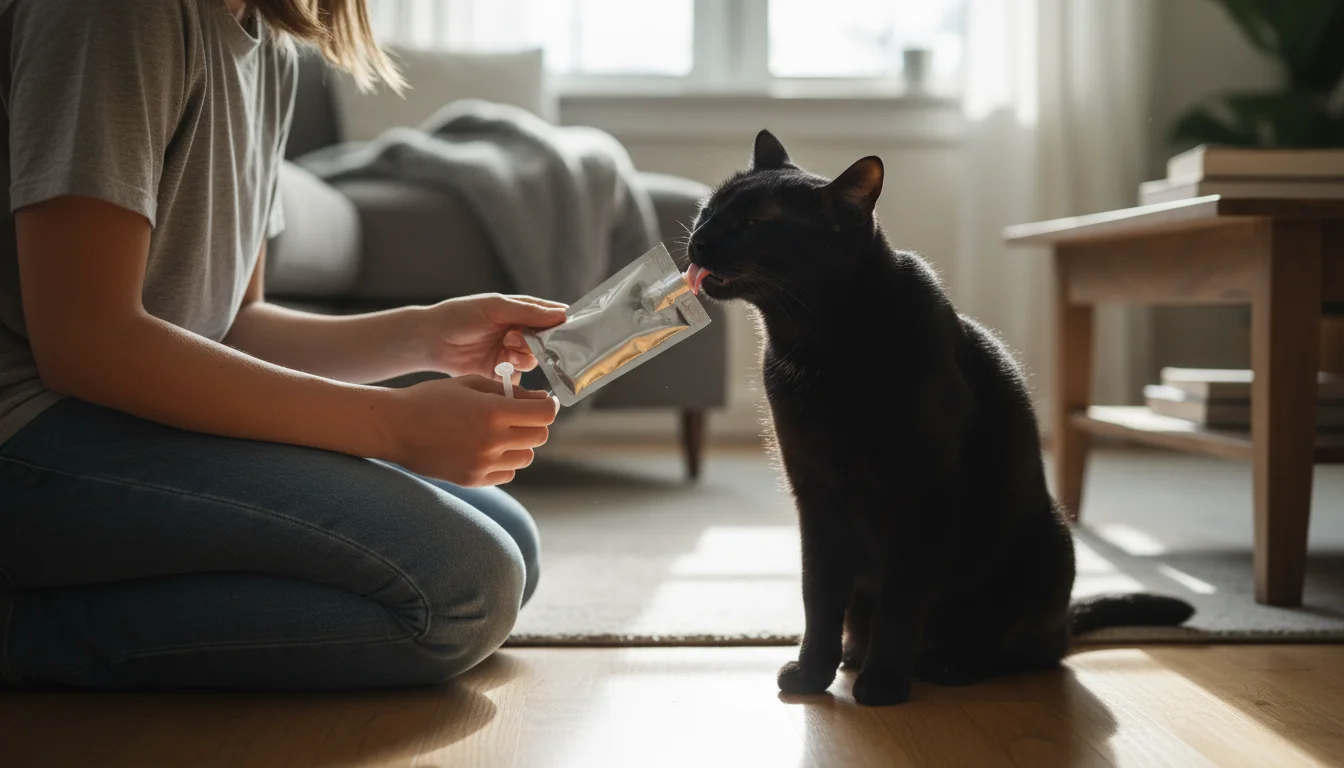
A person on the floor offers a lickable treat to a black cat, who is calmly licking it, with an empty oral syringe subtly held nearby.
Making medication time a positive experience for your feline friend.

Medication Administration Tips for Cats

Giving medication to cats can be a challenge, but with the right approach, you can make it a less stressful experience for both of you. Positive reinforcement is key.

Administering Pills:

  1. Pill Pockets or Treats: Many cats readily take pills hidden in special pill pockets or a small amount of their favorite wet food, cheese, or tuna.
  2. Pillers: A pill popper or piller device allows you to quickly and safely deliver the pill to the back of your cat’s throat, reducing the risk of being bitten.
  3. Direct Administration:
    1. Gently hold your cat’s head, tilting it slightly upward.
    2. Use your thumb and forefinger to open their mouth by placing them at the corners of the upper jaw.
    3. With your other hand, quickly place the pill on the back of the tongue.
    4. Close their mouth and gently stroke their throat or blow lightly on their nose to encourage swallowing.
    5. Follow with a treat and praise to create a positive association.
  4. Compounded Medications: Ask your vet if the medication can be compounded into a liquid, chewable, or transdermal gel (applied to the skin) if direct pilling is too difficult.

Administering Liquids:

  1. Use a Syringe: Most liquid medications come with a small syringe.
  2. Positioning: Hold your cat securely.
  3. Deliver Slowly: Insert the syringe into the side of their mouth, between their cheek and gums. Slowly dispense small amounts of liquid, allowing them to swallow between doses. Administering too quickly can cause choking.
  4. Positive Reinforcement: Always follow with a treat and praise.

Administering Topicals:

For creams, ointments, or spot-on flea treatments, ensure your cat cannot immediately lick off the product. Apply it to an area they cannot reach, such as the back of the neck for spot-ons. Distract them with food or play immediately after application.

Compliance Tips:

  • Stay Calm: Your cat will pick up on your stress. A calm, confident approach works best.
  • Be Prepared: Have everything ready before you start.
  • Positive Association: Always reward with a favorite treat, petting, or playtime immediately after. This helps build a positive association with medication time.
  • Seek Vet Advice: If you consistently struggle, ask your vet for a demonstration or alternative options. They can often provide the best pet health tips for medication compliance.


Pages: 1 2 3 4 5 6 7 8 9 10

Share this article

Facebook Twitter Pinterest LinkedIn Email

Leave a Reply Cancel reply

Your email address will not be published. Required fields are marked *

Search

Latest Posts

  • A retired man reading a book in a cozy armchair while his senior dog rests its head on his knee in a sunlit living room. 8 Reasons More Retirees Are Adopting Older Dogs
  • A close-up photograph of a tabby cat headbutting a woman's cheek in a warm, sunlit living room. If Your Cat Headbutts You, This Is What It Really Means
  • A ginger cat leans its head against a person's hand on a wooden table in a sunlit, cozy living room. 10 Pet Habits That Reveal Hidden Feelings
  • Close-up macro photograph of a vibrant Panther Chameleon with turquoise and red scales on a mossy branch. 10 Most Beautiful Color Changing Animals
  • A senior yellow Labrador Retriever resting on a rug in a sunlit room, looking slightly tired, captured in a candid home setting. 6 Symptoms of Insulin Deficiency in Dogs
  • A senior dog rests its head on a woman's knee in a sun-drenched room, symbolizing a deep, secure bond. 9 Behaviors That Reveal Strong Pet-Owner Bonds
  • A dog and a cat sitting together in a sunlit living room, subtly communicating through body language and proximity. 10 Ways Pets Quietly Communicate with Owners
  • Close-up of an elderly Golden Retriever with a grey muzzle resting on a cushion in warm, natural morning light. 9 Changes Senior Pets Often Go Through
  • A fluffy Ragdoll cat with blue eyes relaxes on a grey sofa in a sunlit, cozy living room during golden hour. 10 Cat Breeds Known for Affectionate Personalities
  • A large Greyhound and a small Cavalier King Charles Spaniel resting together on a rug in a sun-filled living room. 9 Dog Breeds Known for Calm Personalities

Newsletter

Get the latest posts delivered to your inbox.

Related Articles

Understanding Pet Insurance: What’s Really Covered? - comprehensive guide

Understanding Pet Insurance: What’s Really Covered?

Learn what pet insurance covers, comparing policy types, exclusions, and terms to choose the best…

Read More →
How to Give Your Dog Medication: Pills, Liquids, and More - comprehensive guide

How to Give Your Dog Medication: Pills, Liquids, and More

Learn how to give your dog medication effectively and safely. Master techniques for pills, liquids,…

Read More →
How to Prepare for Your Pet’s First Vet Visit - comprehensive guide

How to Prepare for Your Pet’s First Vet Visit

Prepare for your pet's first vet visit with our comprehensive guide. Learn what to bring,…

Read More →
10 Warning Signs Your Pet Needs a Vet Visit - comprehensive guide

10 Warning Signs Your Pet Needs a Vet Visit

Learn 10 warning signs your pet needs a vet visit to ensure their health. Recognize…

Read More →
How to Check Your Pet’s Vital Signs at Home - comprehensive guide

How to Check Your Pet’s Vital Signs at Home

Learn how to check your pet's vital signs at home, including heart rate, breathing, temperature,…

Read More →
Flea and Tick Prevention: A Year-Round Guide - comprehensive guide

Flea and Tick Prevention: A Year-Round Guide

Protect your pet from fleas and ticks year-round with this comprehensive guide on prevention methods,…

Read More →
How to Administer First Aid to Your Pet - comprehensive guide

How to Administer First Aid to Your Pet

Learn essential pet first aid techniques and how to prepare for emergencies to protect your…

Read More →
8 Signs Your Pet Is in Pain - comprehensive guide

8 Signs Your Pet Is in Pain

Learn 8 crucial signs your pet is in pain, from behavioral changes to physical cues.…

Read More →
Senior Pet Health: What to Watch For as They Age - comprehensive guide

Senior Pet Health: What to Watch For as They Age

Learn what to watch for as your senior pet ages, with practical insights on health…

Read More →
🐶🐱 Everyday With Pets.com

Making Pet Care Simple, Every Day

Inedit Agency S.R.L.
Bucharest, Romania

contact@everydaywithpets.com

Trust & Legal

  • Home
  • About Us
  • Contact Us
  • Editorial Policy
  • Privacy Policy
  • Terms and Conditions
  • Subscribe
  • Unsubscribe
  • Request to Know
  • Request to Delete
  • CA Private Policy

Categories

  • Cat Care
  • Dog Care
  • Lifestyle & Fun
  • Pet Health
  • Product Reviews
  • Training & Behavior

© 2026 🐶🐱 Everyday With Pets.com. All rights reserved.