
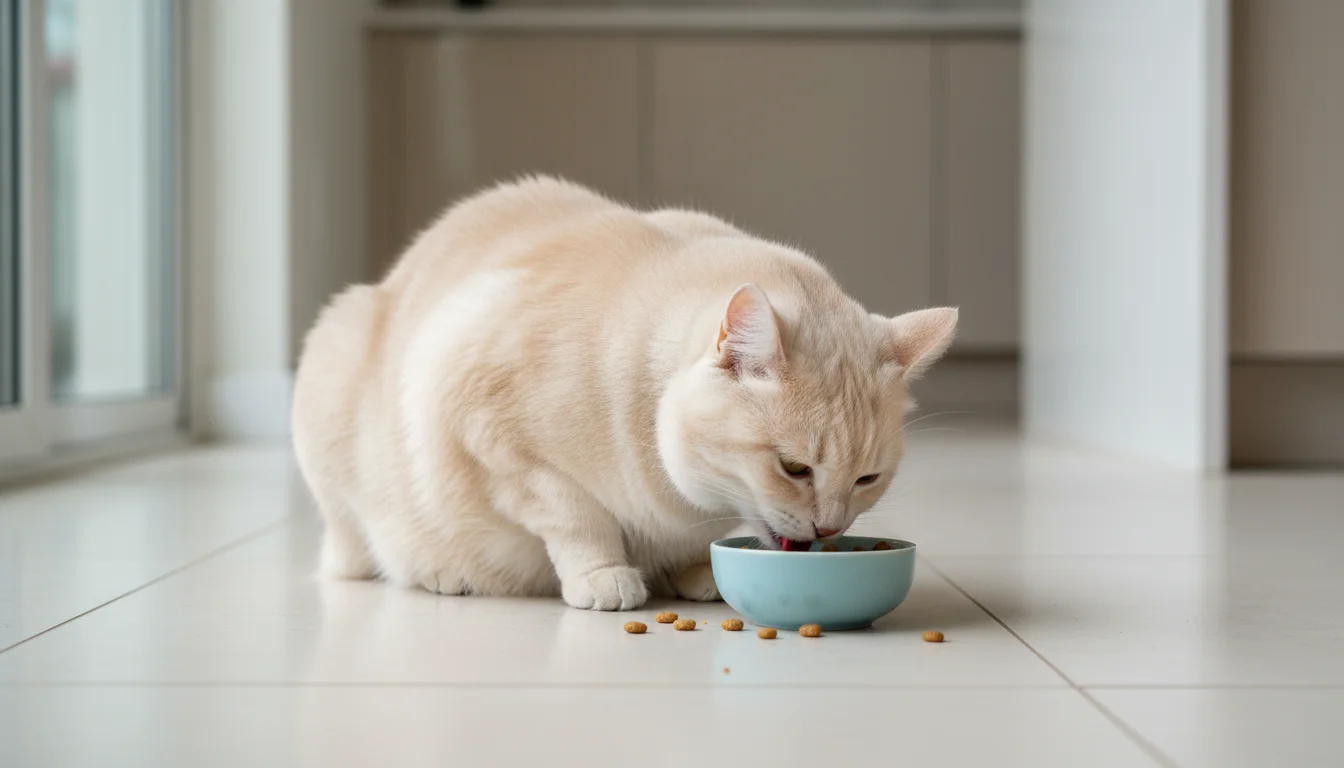
Weight Management and Feline Diabetes
Obesity is a widespread problem in domestic cats, with significant health implications. Overweight cats face an increased risk of serious conditions, including diabetes mellitus.
Obesity in Cats
What it is: Obesity occurs when a cat’s body weight exceeds its ideal weight by 20% or more. It’s often the result of consuming more calories than are expended through activity.
Risks of Obesity:
- Diabetes Mellitus: The most common endocrine disease in cats, often linked to excess weight.
- Joint Problems: Extra weight puts strain on joints, exacerbating conditions like arthritis.
- Urinary Tract Issues: Obese cats are more prone to FLUTD.
- Skin Problems: Difficulty grooming can lead to matted fur and skin infections.
- Reduced Life Span: Studies show overweight pets live shorter lives.
- Surgical Risks: Increased anesthetic and surgical complications.
Home Monitoring: Regularly assess your cat’s body condition score. You should be able to feel their ribs easily without seeing them, and they should have a discernible waist when viewed from above. Weigh your cat periodically.
Actionable Tips:
- Portion Control: Measure your cat’s food accurately based on their ideal weight and activity level.
- Appropriate Diet: Choose a high-quality, protein-rich diet. Your vet can recommend specific weight management formulas.
- Increase Activity: Encourage play with toys, laser pointers, and climbing structures.
- Scheduled Feedings: Avoid free-feeding, which allows constant grazing.
Feline Diabetes Mellitus
What it is: Feline diabetes is a condition where the cat’s body either doesn’t produce enough insulin or can’t properly use the insulin it produces, leading to high blood sugar (glucose) levels.
Warning Signs of Diabetes:
- Increased Thirst (Polydipsia): You’ll notice your cat drinking much more water.
- Increased Urination (Polyuria): More frequent and larger volumes of urine.
- Increased Appetite (Polyphagia): Despite eating more, your cat may still be losing weight.
- Weight Loss: Paradoxically, despite increased eating.
- Lethargy: Reduced energy levels.
- Weakness in Hind Legs: In advanced cases, neuropathy can affect nerve function.
If you observe these symptoms, schedule a vet visit immediately. Early diagnosis and management are crucial for controlling the disease and preventing complications.









Leave a Reply