
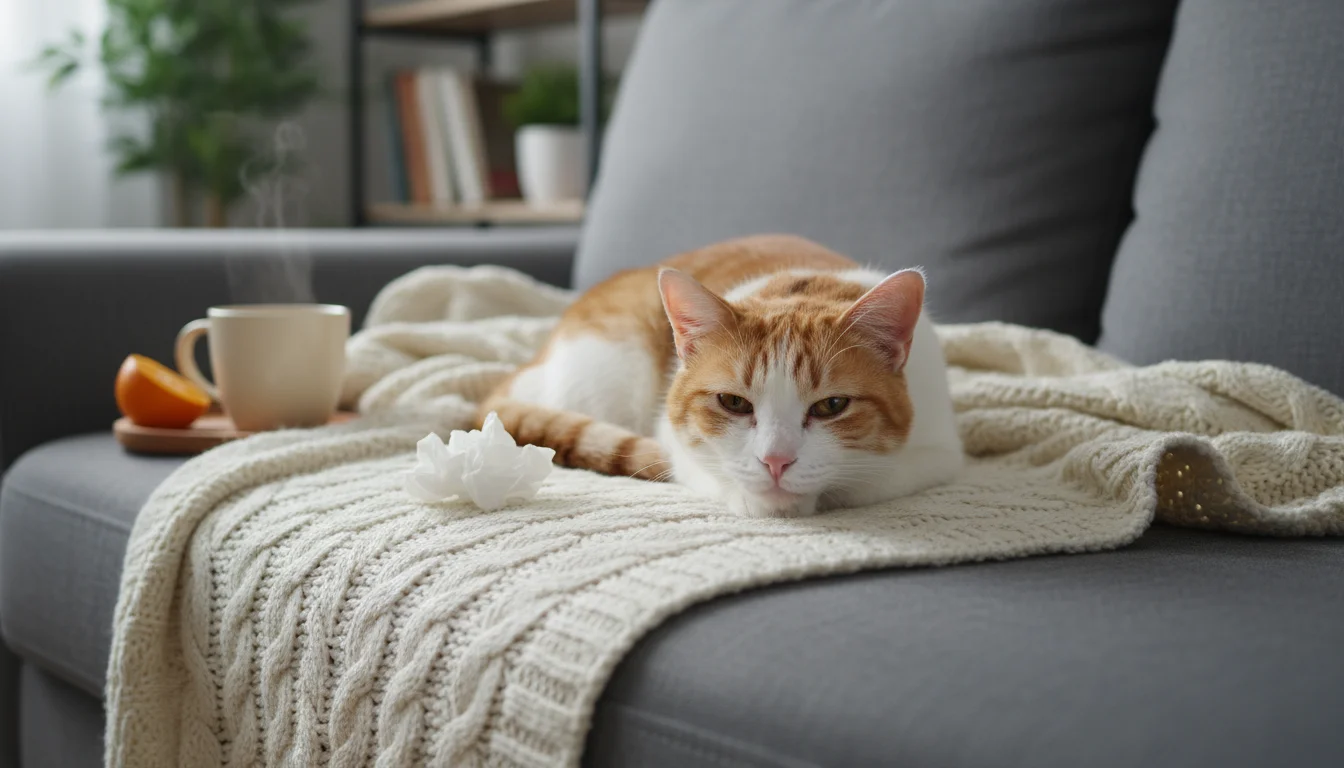
Respiratory Infections: The Sneezing Cat
Upper respiratory infections (URIs), often called “cat flu,” are common in cats, particularly in multi-cat households or shelter environments. Viruses like Feline Herpesvirus (FHV-1) and Feline Calicivirus (FCV) are the most frequent causes, though bacteria can also play a role.
Warning Signs of a URI:
- Sneezing: Often frequent and sometimes forceful.
- Nasal Discharge: Can be clear, cloudy, yellow, or green.
- Ocular Discharge: Watery, red, or swollen eyes, sometimes with colored discharge.
- Conjunctivitis: Inflammation of the pink tissues around the eyes.
- Coughing: Though less common than sneezing, it can occur.
- Lethargy: Reduced energy levels.
- Anorexia (Loss of Appetite): Due to difficulty smelling food with a blocked nose.
- Fever: Your cat may feel warm to the touch.
- Oral Ulcers: Especially with Feline Calicivirus, painful sores in the mouth can make eating difficult.
When to See a Vet: While mild URIs can sometimes resolve on their own, a vet visit is recommended if symptoms are severe, persist for more than a few days, or if your cat stops eating, becomes very lethargic, or has trouble breathing. Kittens and senior cats are especially vulnerable to complications.
Home Monitoring & Support:
- Keep Nose and Eyes Clean: Gently wipe away discharge with a warm, damp cloth.
- Humidity: Use a humidifier or take your cat into a steamy bathroom to help clear nasal passages.
- Encourage Eating: Offer strong-smelling, warmed, or palatable wet food to entice a sick cat to eat.
- Reduce Stress: Provide a quiet, comfortable resting place.







Leave a Reply