
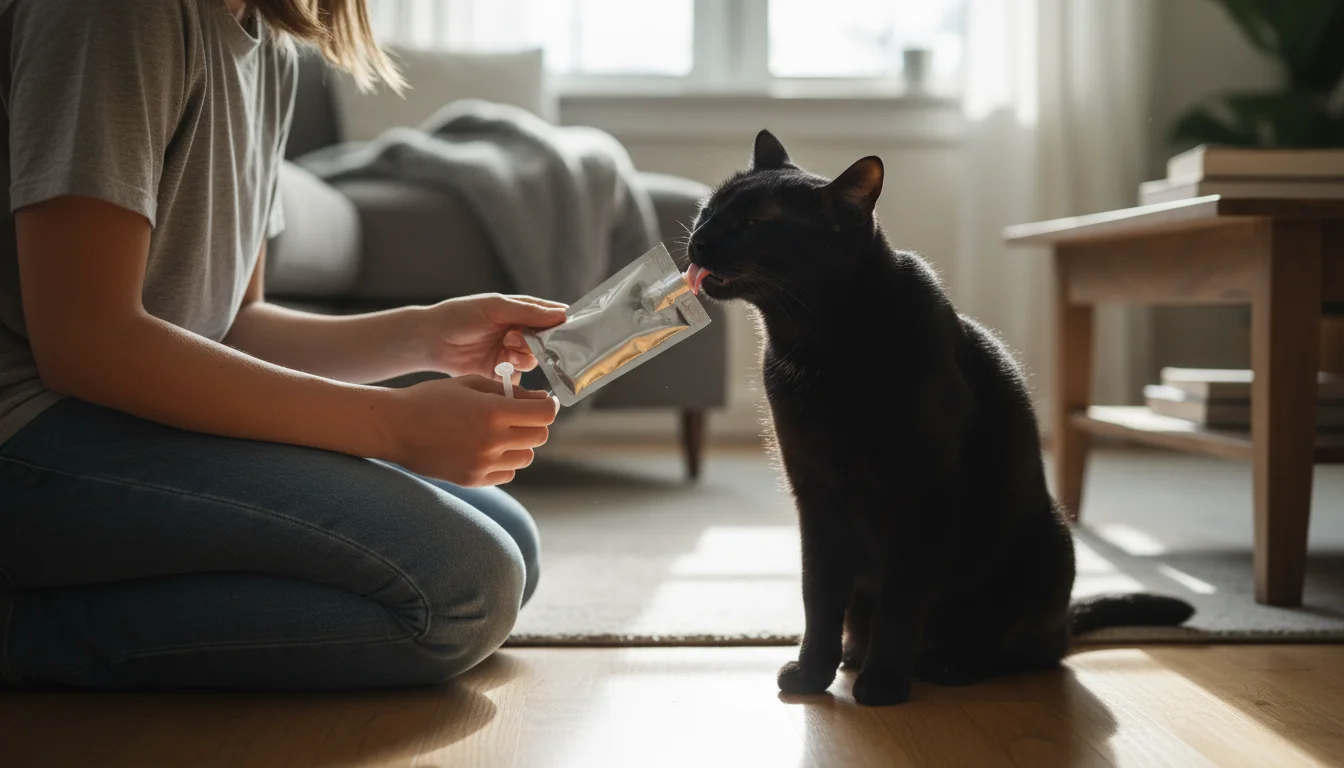
Medication Administration Tips for Cats
Giving medication to cats can be a challenge, but with the right approach, you can make it a less stressful experience for both of you. Positive reinforcement is key.
Administering Pills:
- Pill Pockets or Treats: Many cats readily take pills hidden in special pill pockets or a small amount of their favorite wet food, cheese, or tuna.
- Pillers: A pill popper or piller device allows you to quickly and safely deliver the pill to the back of your cat’s throat, reducing the risk of being bitten.
- Direct Administration:
- Gently hold your cat’s head, tilting it slightly upward.
- Use your thumb and forefinger to open their mouth by placing them at the corners of the upper jaw.
- With your other hand, quickly place the pill on the back of the tongue.
- Close their mouth and gently stroke their throat or blow lightly on their nose to encourage swallowing.
- Follow with a treat and praise to create a positive association.
- Compounded Medications: Ask your vet if the medication can be compounded into a liquid, chewable, or transdermal gel (applied to the skin) if direct pilling is too difficult.
Administering Liquids:
- Use a Syringe: Most liquid medications come with a small syringe.
- Positioning: Hold your cat securely.
- Deliver Slowly: Insert the syringe into the side of their mouth, between their cheek and gums. Slowly dispense small amounts of liquid, allowing them to swallow between doses. Administering too quickly can cause choking.
- Positive Reinforcement: Always follow with a treat and praise.
Administering Topicals:
For creams, ointments, or spot-on flea treatments, ensure your cat cannot immediately lick off the product. Apply it to an area they cannot reach, such as the back of the neck for spot-ons. Distract them with food or play immediately after application.
Compliance Tips:
- Stay Calm: Your cat will pick up on your stress. A calm, confident approach works best.
- Be Prepared: Have everything ready before you start.
- Positive Association: Always reward with a favorite treat, petting, or playtime immediately after. This helps build a positive association with medication time.
- Seek Vet Advice: If you consistently struggle, ask your vet for a demonstration or alternative options. They can often provide the best pet health tips for medication compliance.
Leave a Reply