
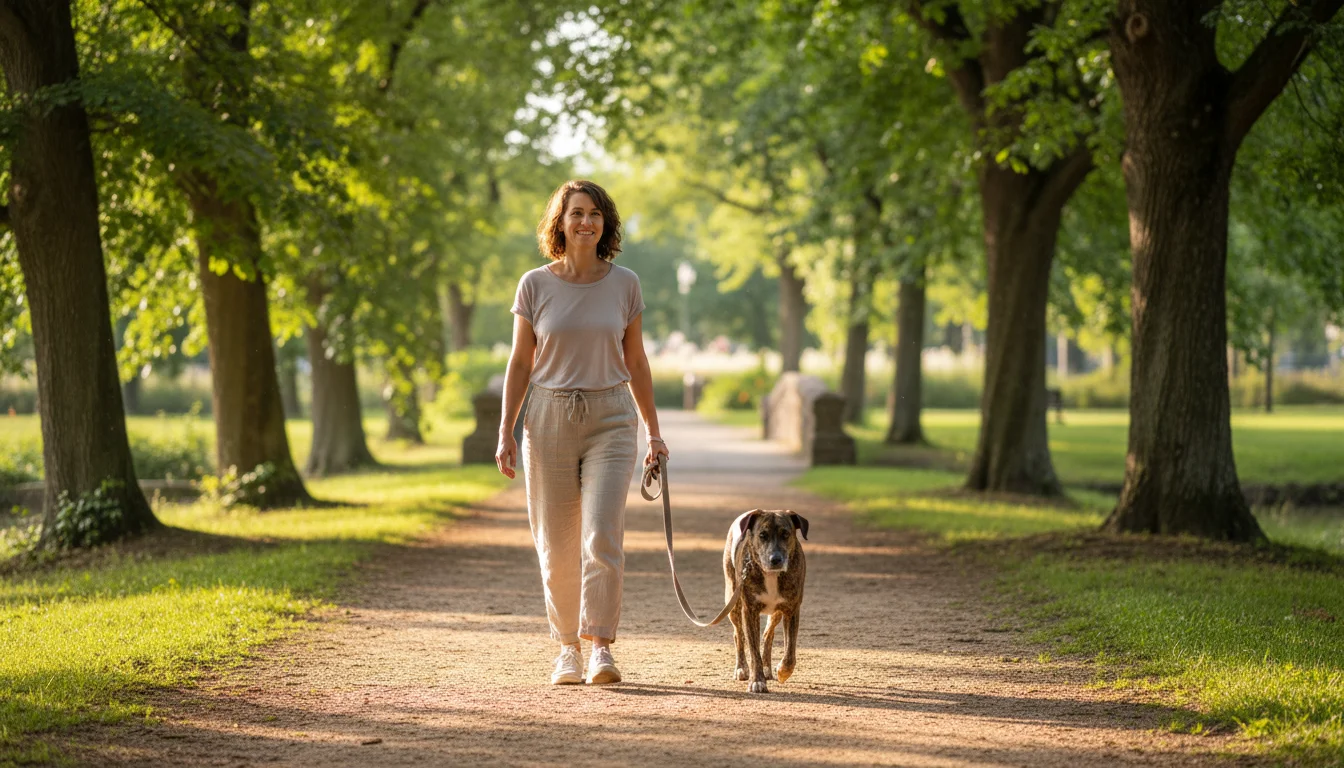
Command 7: Loose-Leash Walking (Heel)
Loose-leash walking teaches your dog to walk calmly beside you without pulling on the leash. This makes walks enjoyable for both of you and prevents potential injuries from pulling.
Why Loose-Leash Walking Matters
Proper leash manners:
- Prevent discomfort and injury to your dog’s neck and your arm.
- Allow for pleasant walks in public.
- Build good habits for future training.
How to Teach Loose-Leash Walking
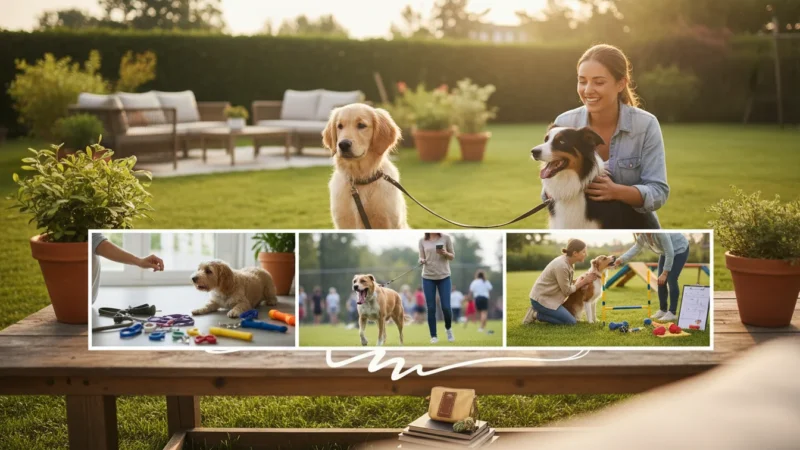
- Start in a Quiet Area: Begin in a low-distraction environment, like your backyard.
- Reward for Proximity: Hold a treat at your hip, keeping your dog close to your side. As you start walking, every time your dog takes a few steps beside you without pulling, mark (“Yes” or click) and reward.
- Stop When Pulling: The moment your dog pulls ahead, stop walking immediately. Stand still like a tree.
- Restart When Slack: Only resume walking when the leash goes slack and your dog looks back at you or moves closer. Mark and reward the slack leash.
- Change Direction: Frequently change direction. If your dog gets ahead, turn and walk the other way. This teaches them to pay attention to your movements.
- Consistency is Key: Never allow pulling. If you sometimes let them pull, you confuse them. Consistent practice in varied environments builds a reliable loose-leash walker.
Troubleshooting: Use a front-clip harness or head halter if your dog pulls heavily. These tools provide better control without causing discomfort. Avoid retractable leashes during training, as they teach your dog that pulling extends their range.

Leave a Reply