
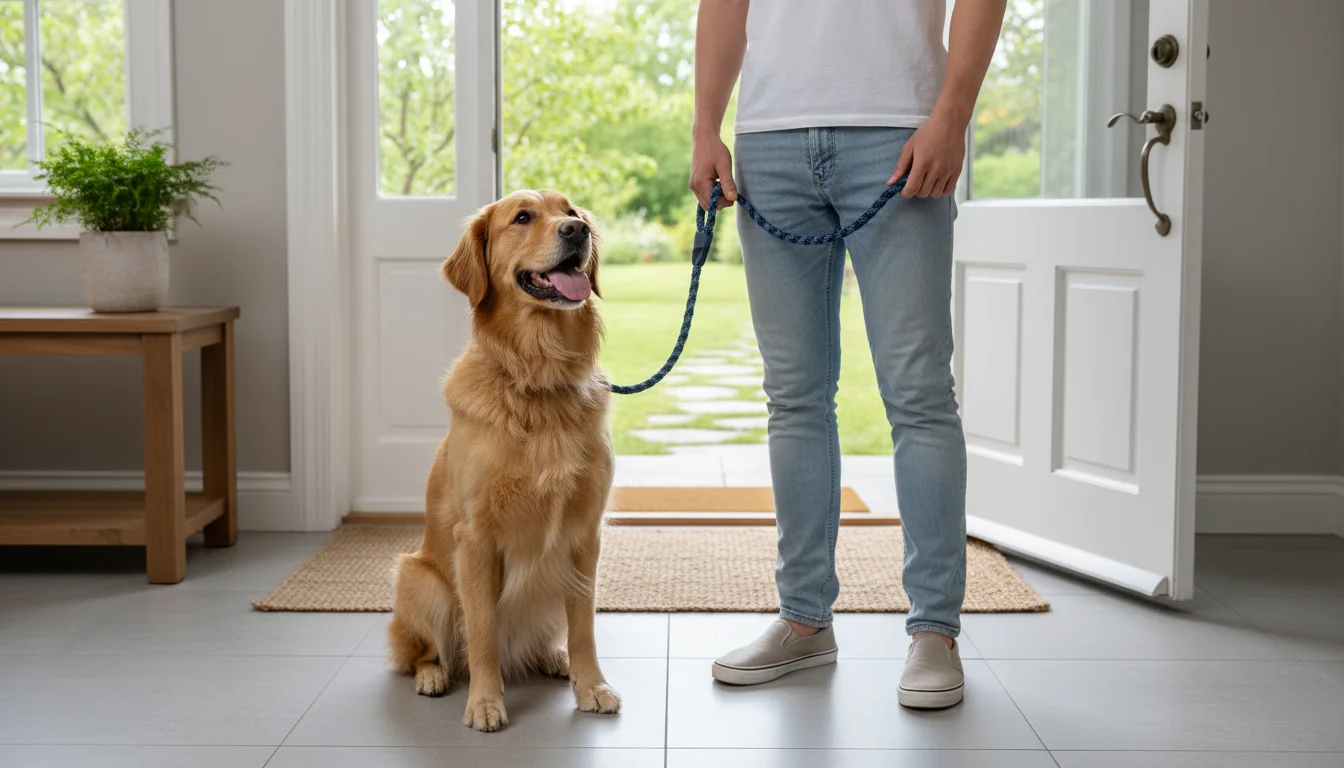
Command 1: Sit
The “Sit” command is often the first behavior most dogs learn, serving as a foundational skill for managing excitement, greeting people politely, and initiating other commands. It teaches impulse control and provides a calm default behavior.
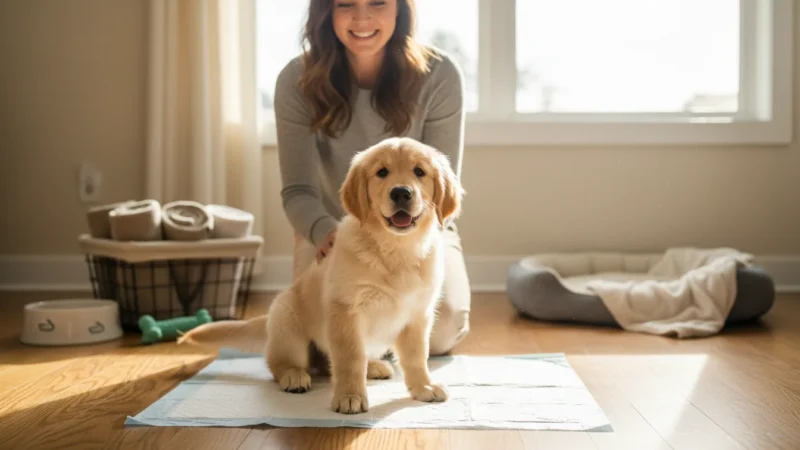
While ‘Sit’ helps with impulse control, owners of younger pets should also prioritize learning how to housetrain a puppy efficiently.
Once your dog has mastered the basics, you can expand their repertoire with 15 fun tricks to teach your dog.
Why “Sit” Matters
A reliable “Sit” allows you to:
- Prevent jumping on guests.
- Ask for polite greetings.
- Calm your dog before opening doors.
- Prepare for feeding time.
- Set the stage for more complex behaviors like “Stay.”
How to Teach “Sit”
- Lure Method: Hold a high-value treat near your dog’s nose. Slowly move the treat up and back over their head, towards their tail.
- Body Mechanics: As your dog’s nose follows the treat, their rear end will naturally lower into a sit position.
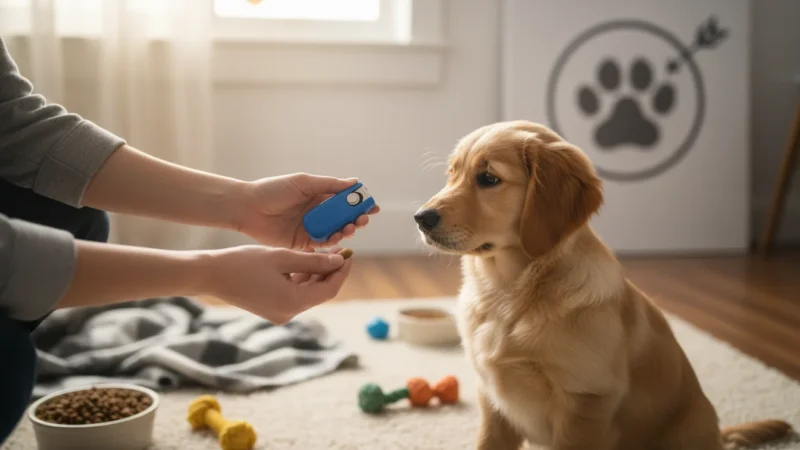
- Mark and Reward: The instant their rear touches the ground, mark the behavior with “Yes” or a clicker, and immediately give the treat.
- Add the Cue: After a few successful repetitions, introduce the verbal cue “Sit” just as their rear is about to touch the ground.
- Practice: Repeat in various locations and with different distractions once your dog reliably sits in a quiet environment.
Troubleshooting: If your dog jumps up or backs away, you are moving the treat too far or too fast. Adjust the lure to guide their nose without them losing balance.
Leave a Reply