
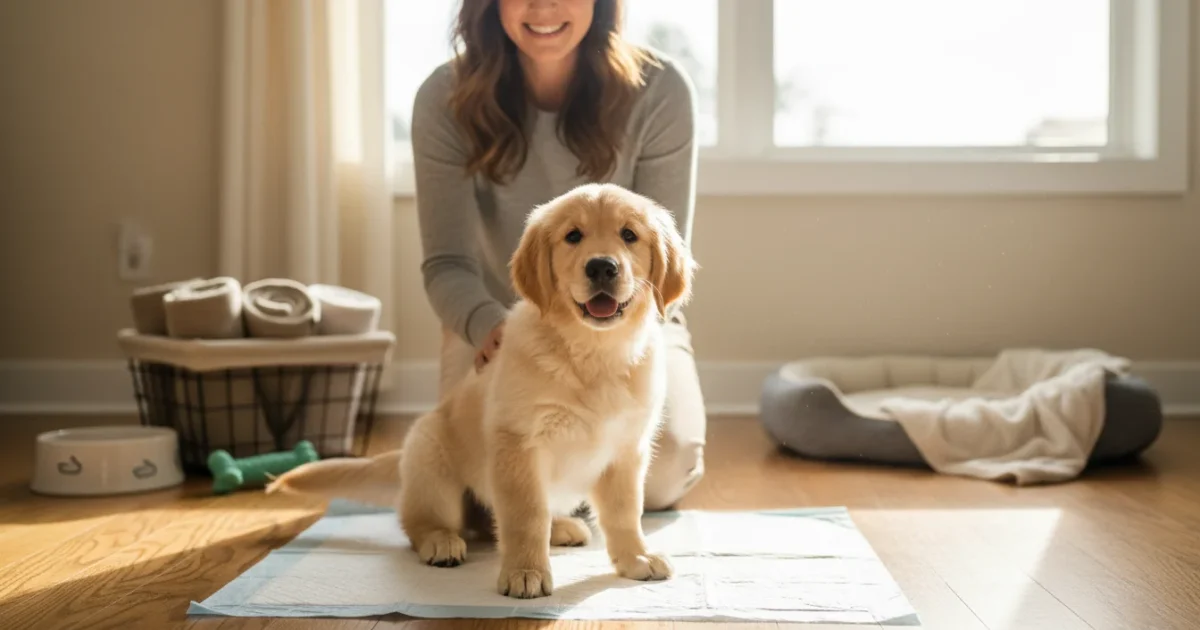
Bringing a new puppy into your home brings immense joy, but it also introduces the responsibility of teaching them appropriate house manners. Housetraining, often called potty training, stands as one of the most critical early training goals. A well-housetrained puppy lives a happier, healthier life, and you enjoy a cleaner, less stressful home environment.
Many new pet owners wonder if they can effectively housetrain their puppy quickly. With a strategic, consistent, and positive approach, you can significantly progress toward a fully housetrained puppy in as little as seven days. This guide provides actionable steps, foundational principles, and practical tips to help you establish excellent potty habits for your new companion.
This comprehensive guide offers detailed instructions for successful pet training, helping you build a strong foundation for your puppy’s future behavior.
Understanding Puppy Potty Habits
To effectively housetrain your puppy, you must first understand their natural instincts and physiological needs. Puppies have small bladders and limited bladder control. They cannot “hold it” for long periods like adult dogs. A general rule of thumb indicates that a puppy can hold their bladder for approximately one hour per month of age. For example, a three-month-old puppy can typically hold it for about three hours.
Along with monitoring their physical cues, you should prepare for your pet’s first vet visit to ensure their digestive health is on the right track.
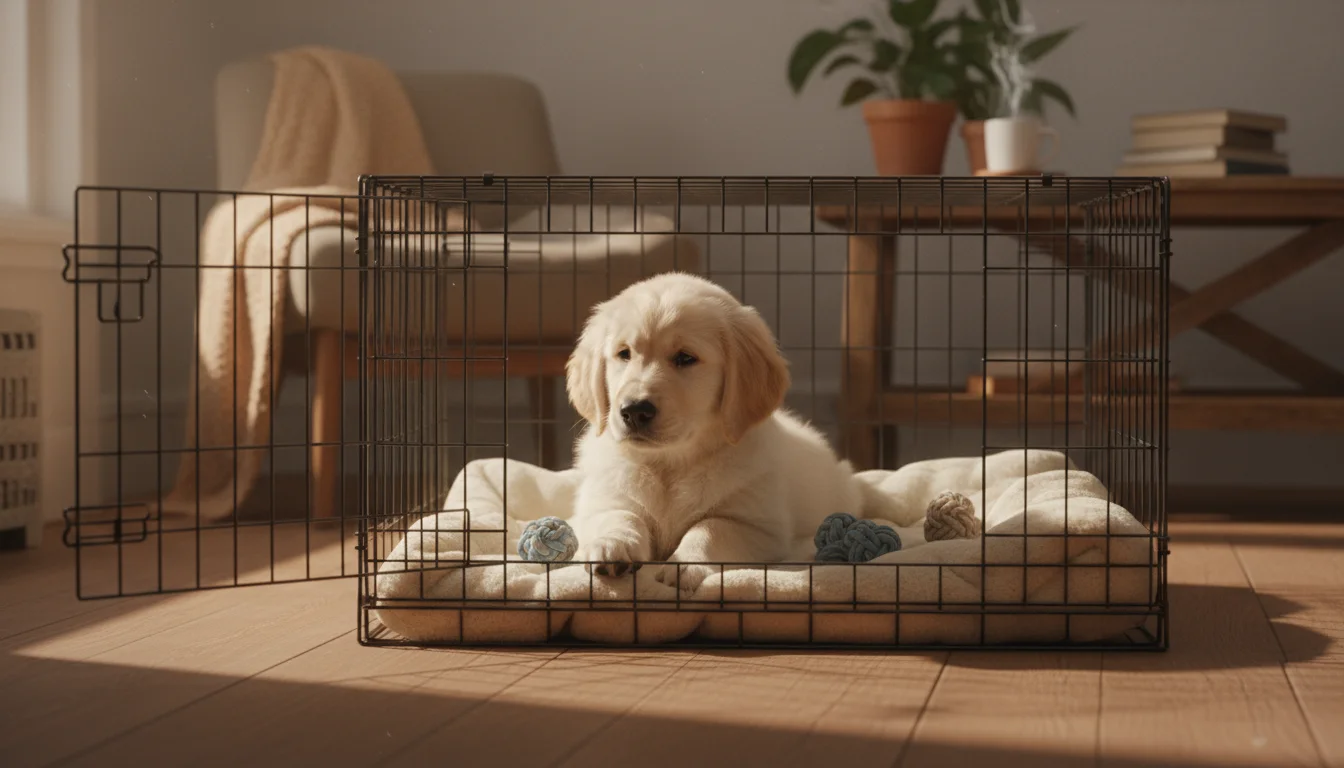
Puppies also instinctively avoid soiling their sleeping areas. This natural inclination forms the basis of successful crate training, a cornerstone of rapid housetraining. They learn to associate their “den” with a clean space, encouraging them to eliminate outside when given the opportunity.
Recognizing your puppy’s pre-potty signals is crucial. These often include sniffing the ground intently, circling, whining, or suddenly heading toward a doorway. Learning these cues allows you to interrupt the behavior before an accident occurs and redirect your puppy to their designated outdoor potty spot. Early intervention prevents the establishment of undesirable indoor elimination patterns.
The Essentials of Housetraining Success
Achieving rapid housetraining requires more than just taking your puppy outside. It demands a structured approach built on consistency, positive reinforcement, and effective management. Implementing these core elements establishes clear expectations for your puppy, making the learning process faster and less confusing.
On days when rain or extreme heat makes the potty spot less appealing, knowing how to exercise your dog indoors can help keep them calm between breaks.
Establish a Consistent Schedule
Puppies thrive on routine. A predictable schedule helps their bodies adapt and anticipate when they will go outside. This schedule should include potty breaks immediately upon waking, after eating and drinking, after playtime, before bedtime, and at least once during the night for very young puppies. Sticking to this schedule consistently, even on weekends, prevents accidents and reinforces good habits.
Crate Training for Management
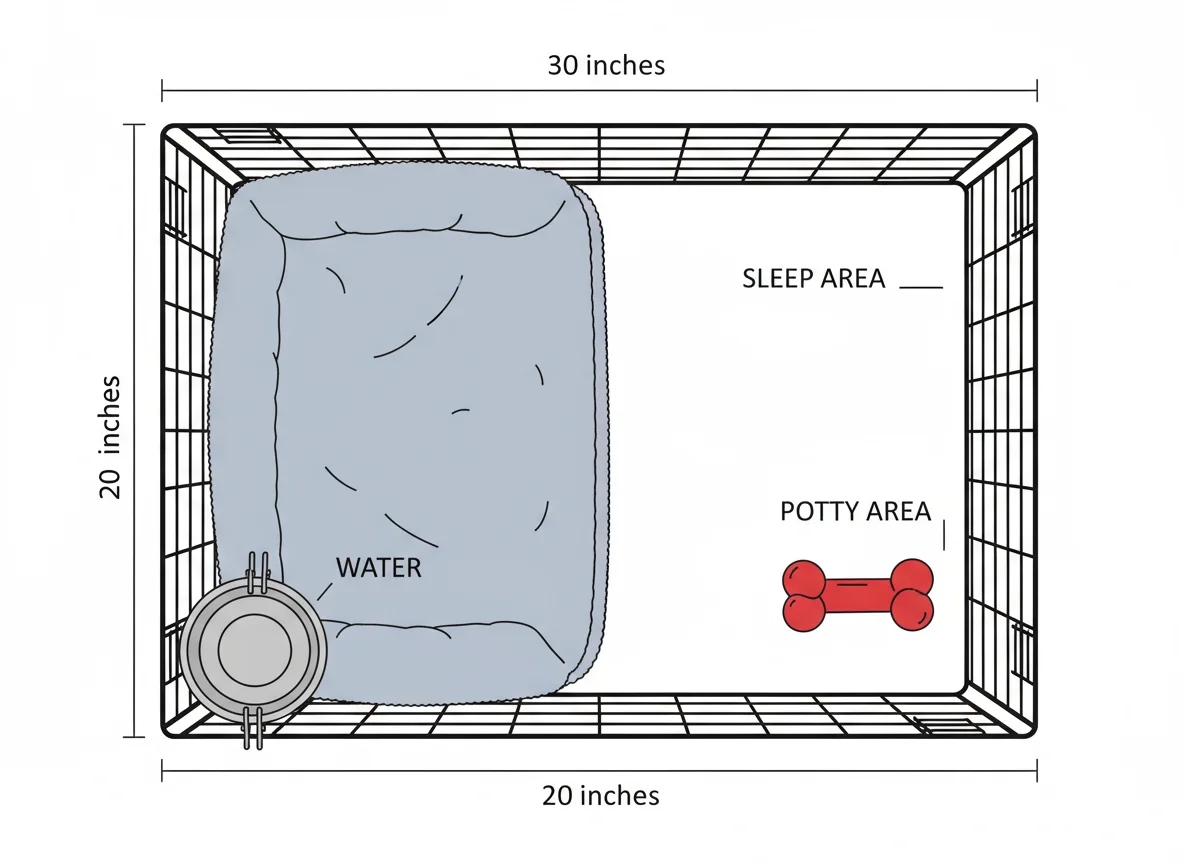
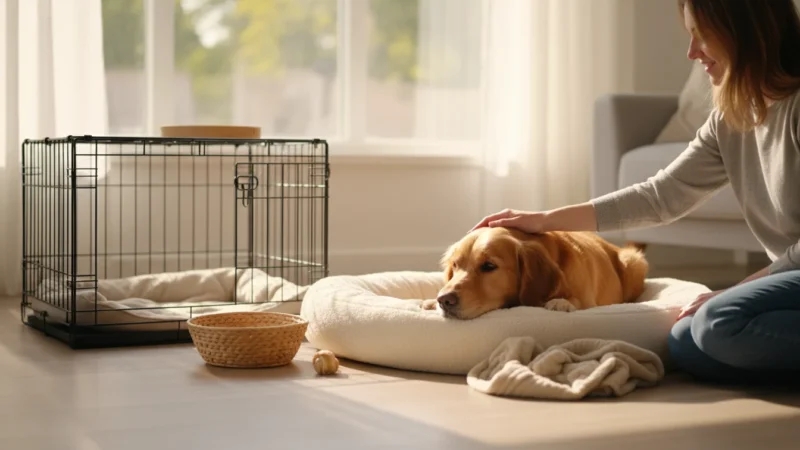
A properly sized crate becomes an invaluable tool in your housetraining efforts. As noted by experts at The Humane Society of the United States, using a crate capitalizes on a puppy’s natural desire to keep their den clean. The crate should be just large enough for your puppy to stand up, turn around, and lie down comfortably. If the crate is too large, your puppy may use one end as a potty area and sleep in the other.
Never use the crate as punishment. It should remain a safe, positive space. Place comfortable bedding and a safe chew toy inside. Your puppy will learn to hold their bladder and bowels while in the crate, then eagerly eliminate when you take them out. This makes the training process much more efficient and reduces the likelihood of indoor accidents.
Designate an Outdoor Potty Spot
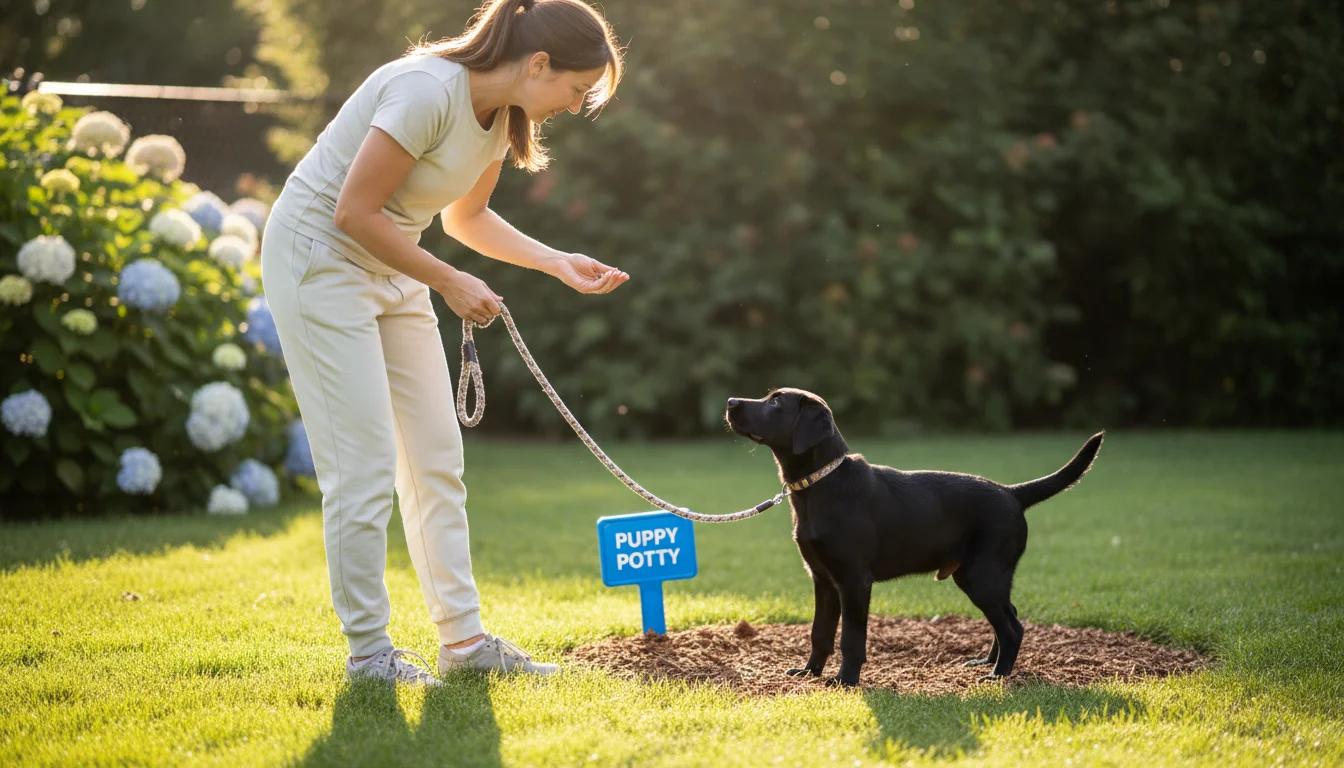
Choose a specific area in your yard or near your home where you want your puppy to relieve themselves. Always take them to this exact spot on a leash. This helps your puppy associate that particular location with elimination. Consistency in the potty spot helps your puppy understand what you expect from them when they are outside.
Supervision and Management
Constant supervision is paramount, especially during the initial housetraining phase. When your puppy is not in their crate, keep them on a leash attached to you, or confine them to a puppy-proofed area like a playpen. This allows you to monitor their behavior closely and intervene immediately if they show signs of needing to go. If you cannot supervise your puppy, place them in their crate.
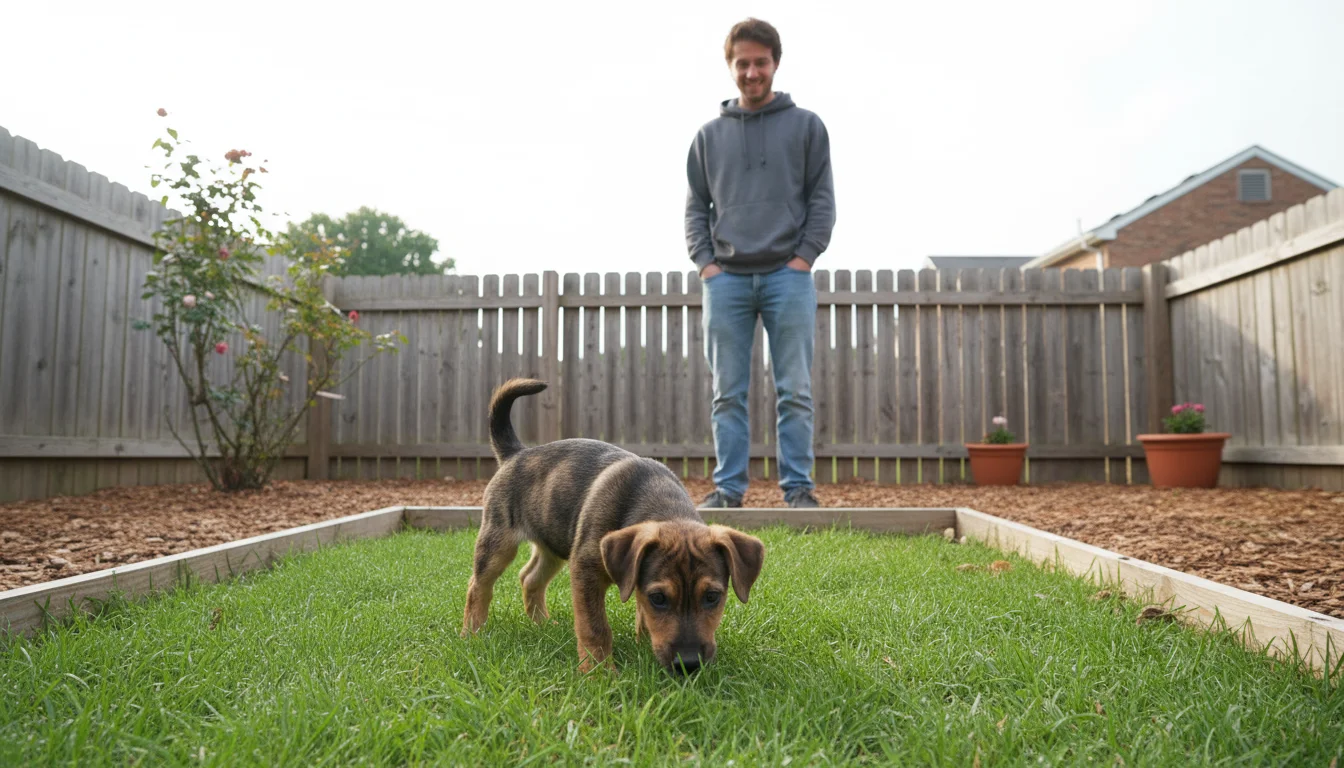
The 7-Day Housetraining Schedule: A Step-by-Step Guide
This intensive 7-day schedule provides a framework for how to housetrain your puppy in 7 days for pets by establishing good habits quickly. Remember that every puppy learns at their own pace, so adjust as needed while maintaining consistency.
Beyond bathroom habits, it is important to start teaching 10 essential commands early to ensure a well-behaved adult dog.
Day 1: Foundation and Observation
- Morning: Take your puppy outside immediately upon waking. Stay with them until they relieve themselves. Praise and reward enthusiastically.
- Throughout the Day: Take your puppy out every 30-60 minutes, after eating, drinking, waking from naps, and playing. Use their crate when you cannot actively supervise.
- Evening: Last potty break right before bedtime.
- Observation: Pay close attention to your puppy’s pre-potty signals.
Day 2-3: Reinforce the Routine
- Consistency is Key: Continue the rigorous schedule established on Day 1. The more consistent you are, the faster your puppy will catch on.
- Reward Heavily: Increase the value of your rewards for outdoor elimination. Use high-value treats and enthusiastic praise.
- Supervision: Maintain vigilant supervision when your puppy is out of their crate.
- Night Potty Breaks: For young puppies (under 4 months), set an alarm for one or two night-time potty breaks. Carry them directly to the spot, let them go, no play, then back to the crate.
Day 4-5: Increasing Awareness
- Introduce a Potty Cue: As your puppy eliminates, start saying a consistent phrase like “Go potty” or “Do your business.” This helps them associate the phrase with the action.
- Slightly Longer Intervals: If your puppy has been accident-free, you can try extending the indoor time between potty breaks by 15-30 minutes, but only if they consistently show good bladder control. Do not push them too far.
- Handling Accidents: Refer to the “Handling Accidents Gracefully” section below if an accident occurs.
Day 6-7: Solidifying Habits
- Confidence Building: Your puppy should now be initiating trips to the door or showing clear signals when they need to go. Respond immediately to these cues.
- Environmental Exposure: Continue positive socialization experiences, ensuring your puppy remains comfortable eliminating in their designated spot even with mild distractions.
- Continued Praise: Never stop praising and rewarding successful outdoor elimination. This reinforces the learned behavior.
- Future Planning: Think about your schedule after the 7 days. Can you maintain similar consistency, or do you need to arrange for dog walkers or puppy-sitters?
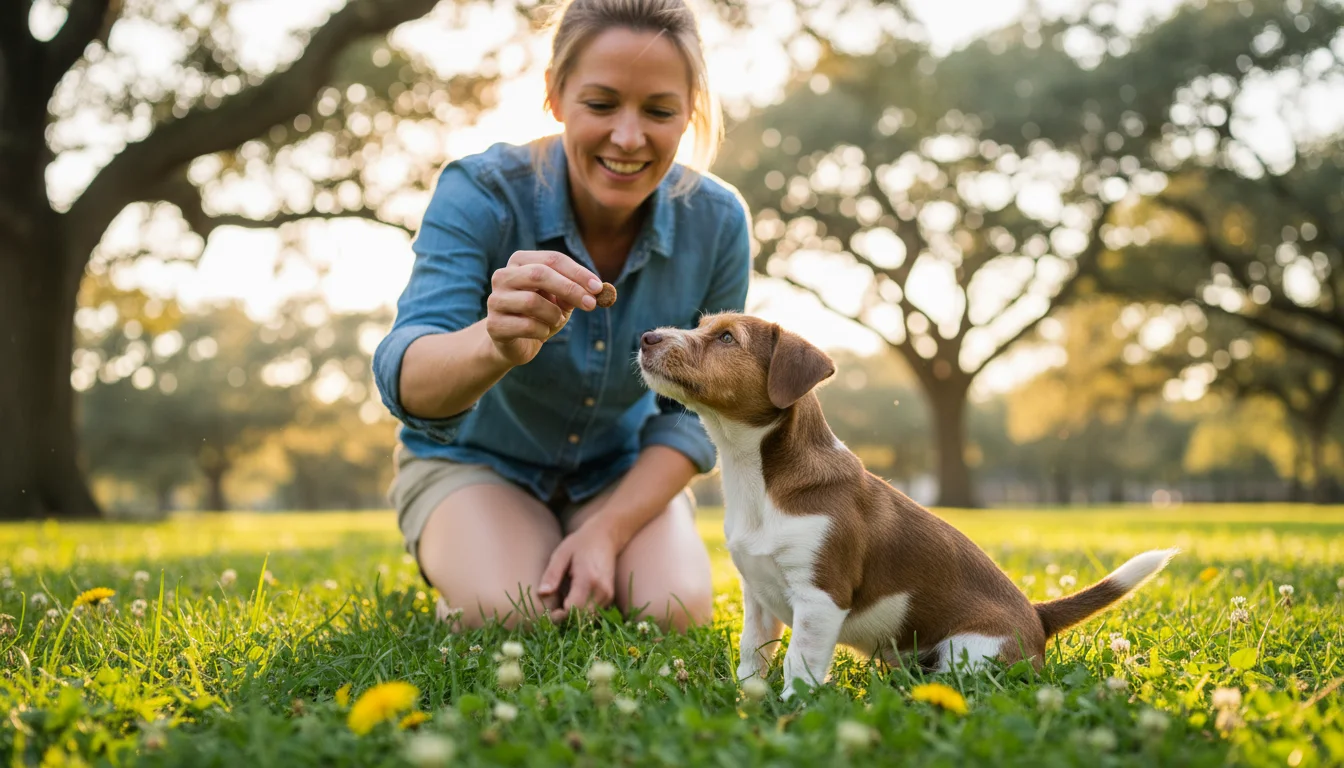
Positive Reinforcement: Your Best Tool
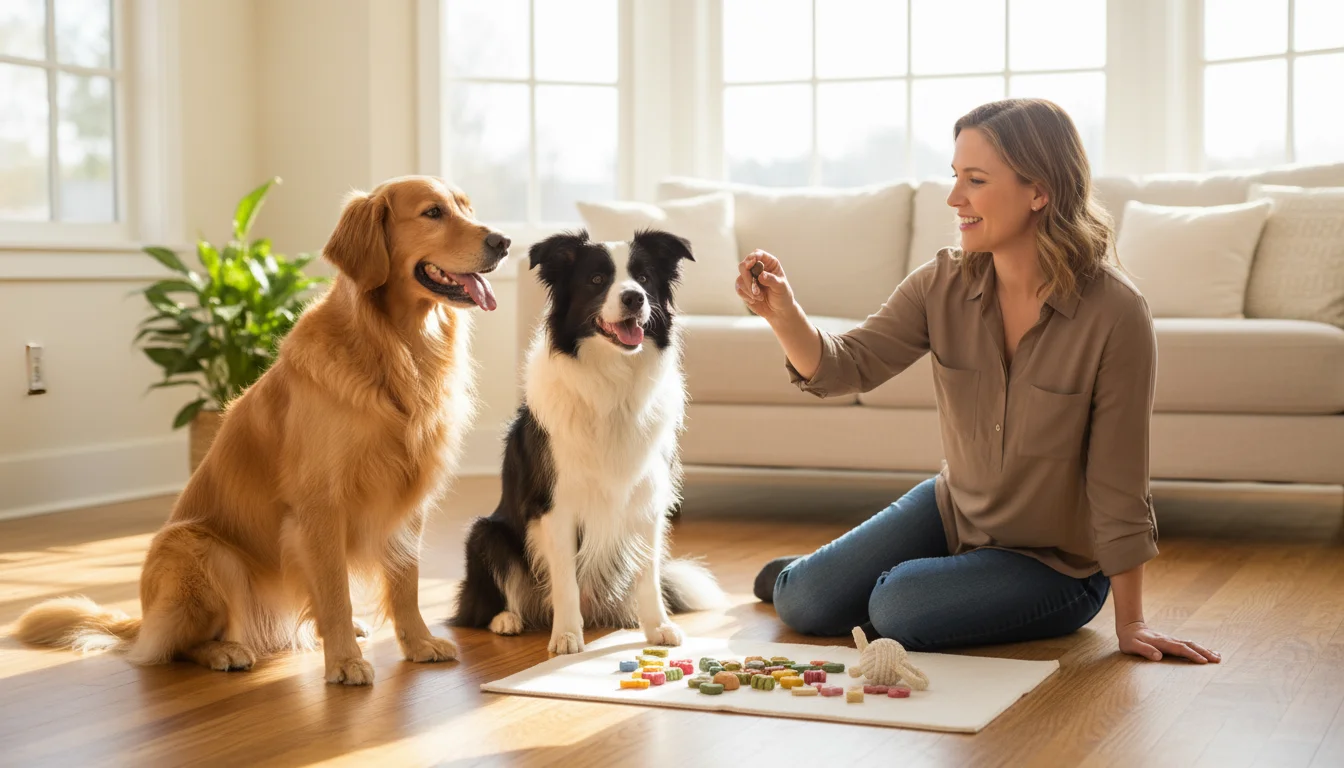
Positive reinforcement is the most effective and humane approach to any pet training, including housetraining. It involves rewarding desired behaviors, making your puppy more likely to repeat them. According to the Association of Professional Dog Trainers (APDT), reward-based methods are scientifically proven to be more effective and build a stronger, more trusting relationship between pet and owner, unlike punishment-based approaches which can cause fear and anxiety.
Key Elements of Positive Reinforcement:
- Immediate Rewards: The timing of your reward is crucial. As soon as your puppy finishes eliminating in the designated spot, offer praise, a high-value treat (something they love, like small pieces of chicken or cheese), and perhaps a quick, happy play session. This immediate reward creates a clear association: “Potty outside equals good things!”
- Enthusiastic Praise: Use a happy, upbeat tone of voice. Words like “Good potty!” or “Yes!” delivered with genuine excitement reinforce the positive action.
- Marker Training: A verbal marker (“Yes!”) or a clicker used at the exact moment your puppy begins to eliminate provides precise feedback. Follow the marker immediately with a treat. This pinpoint accuracy helps your puppy understand exactly what behavior earned the reward.
- High-Value Treats: Standard kibble might not be motivating enough. Reserve special, delicious treats exclusively for successful potty breaks.
Never punish your puppy for accidents. Punishment causes fear and teaches them to hide their elimination from you, making housetraining significantly harder. Instead, focus solely on rewarding the desired behavior.
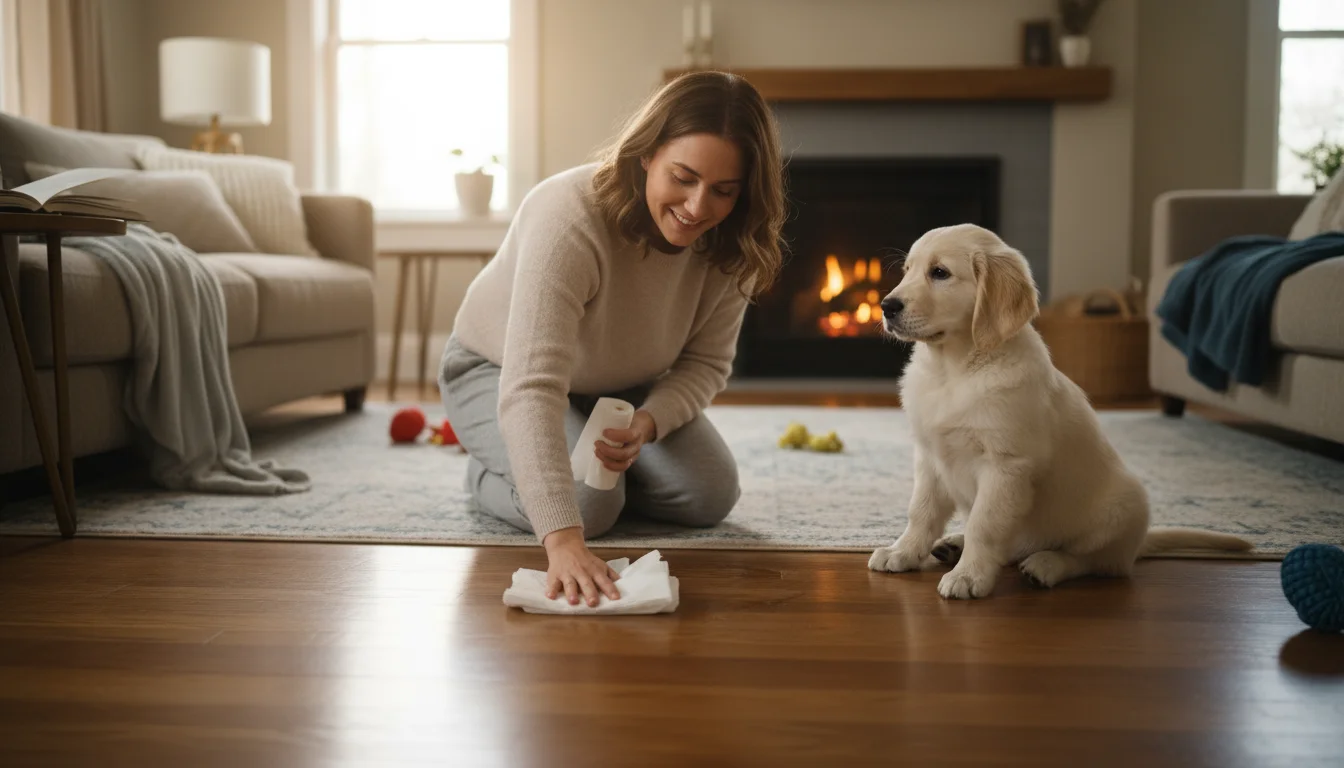
Handling Accidents Gracefully
Even with the best intentions and the most consistent schedule, accidents will happen. Your reaction to these accidents determines whether they become a roadblock or a learning opportunity. The key is to respond calmly and without punishment.
Maintaining a clean home and a healthy pup involves several essential daily dog care tasks that go beyond just potty training.
To keep your progress on track, be sure to avoid these 8 common training mistakes that can slow down your puppy’s learning.
If You Catch Your Puppy in the Act:
- Interrupt Gently: Make a noise (a clap, a soft “Ah-ah!”) to interrupt them, but do not startle or scare them. The goal is to stop the elimination, not to punish.
- Immediately Take Them Outside: Quickly pick them up or leash them and carry/lead them to their designated outdoor potty spot.
- Reward Outdoor Elimination: If they finish going outside, praise and reward them lavishly. This reinforces that outside is the correct place.
- Clean Thoroughly: Return inside and clean the accident spot thoroughly. Use an enzymatic cleaner specifically designed for pet odors. Regular household cleaners might remove the scent for humans, but a puppy’s sensitive nose can still detect it, marking the spot for future accidents. According to the ASPCA, thorough cleaning is essential to remove all traces of odor and prevent repeat accidents.
If You Find an Accident After It Happened:
Do not react. Your puppy will not connect your anger or frustration to an accident that occurred minutes or hours ago. They will only learn to fear you. Simply clean the mess with an enzymatic cleaner and resolve to supervise more closely in the future. Remember, an accident is a management failure, not a puppy failure. It indicates you missed a cue or waited too long between potty breaks.
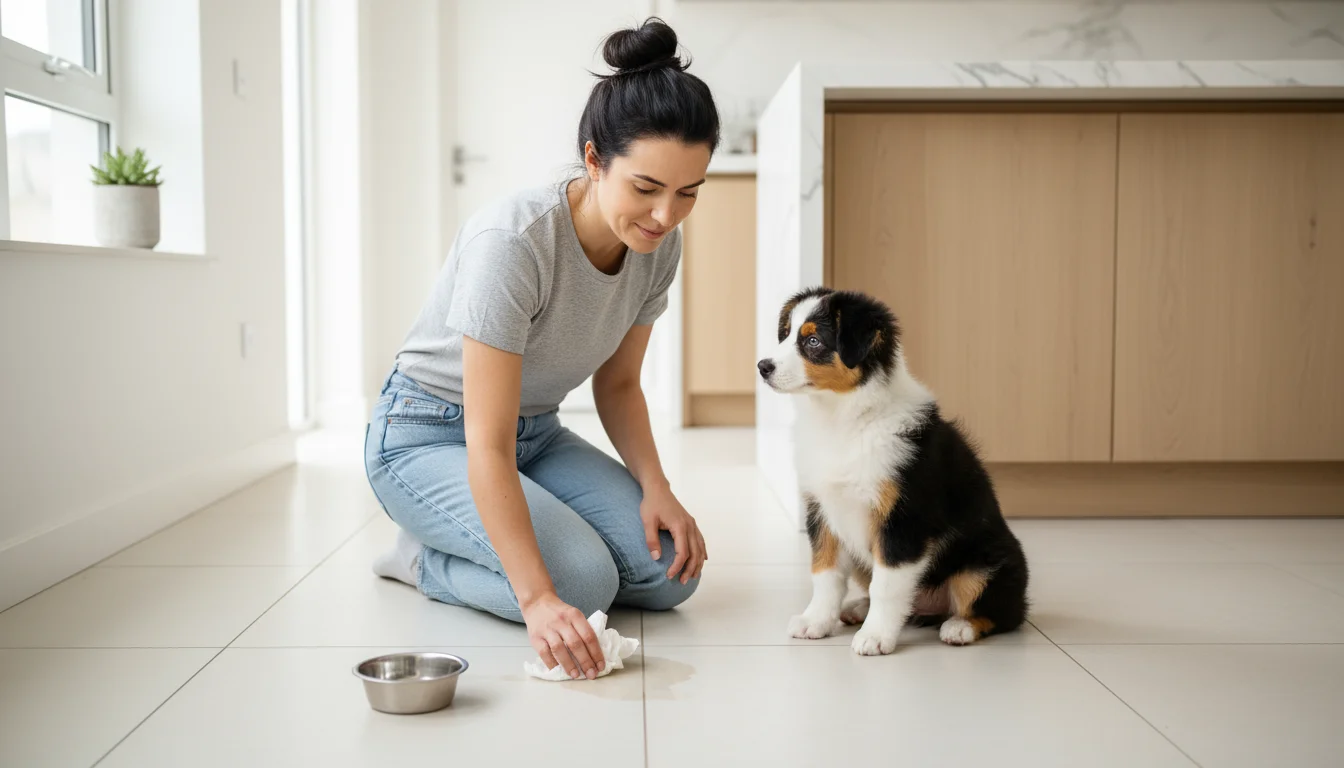
Common Housetraining Challenges and Solutions
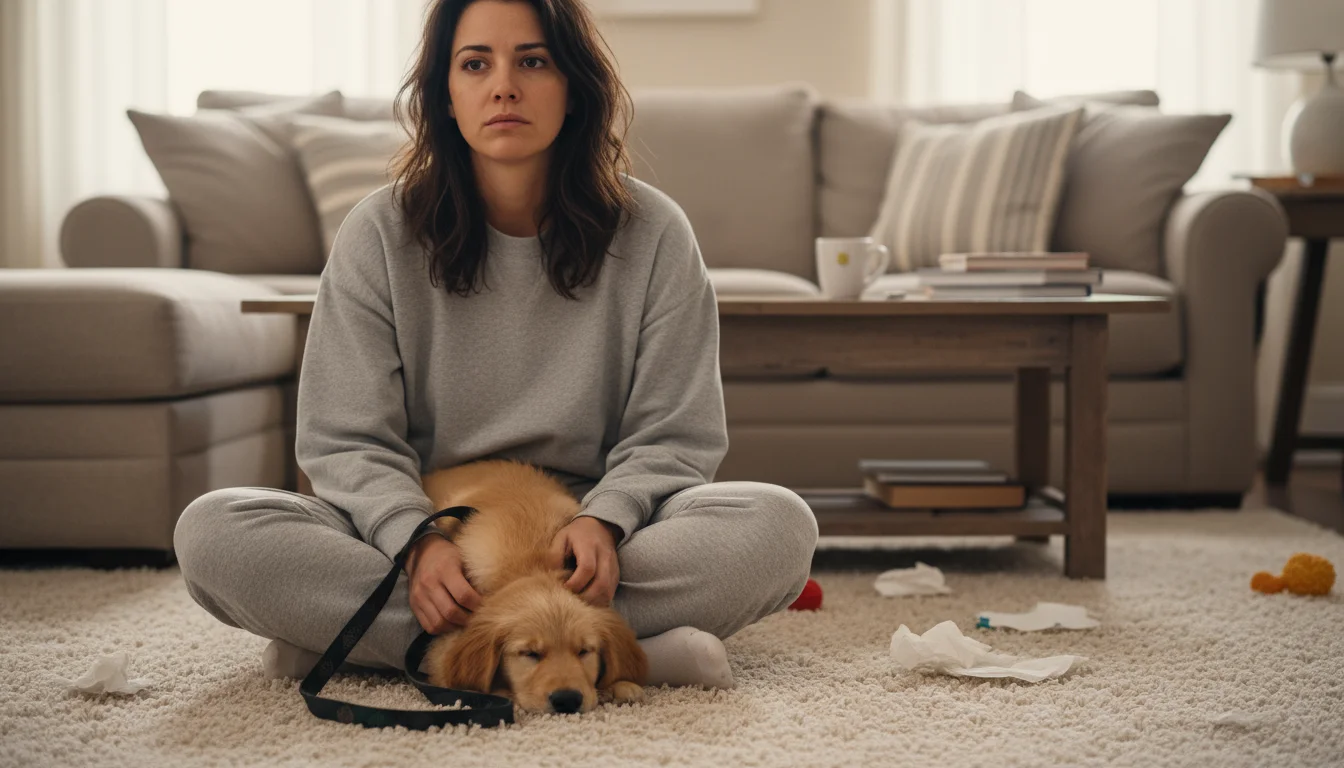
While the 7-day plan provides a solid framework, you might encounter specific challenges. Understanding these common issues and their solutions can help you navigate the housetraining process effectively.
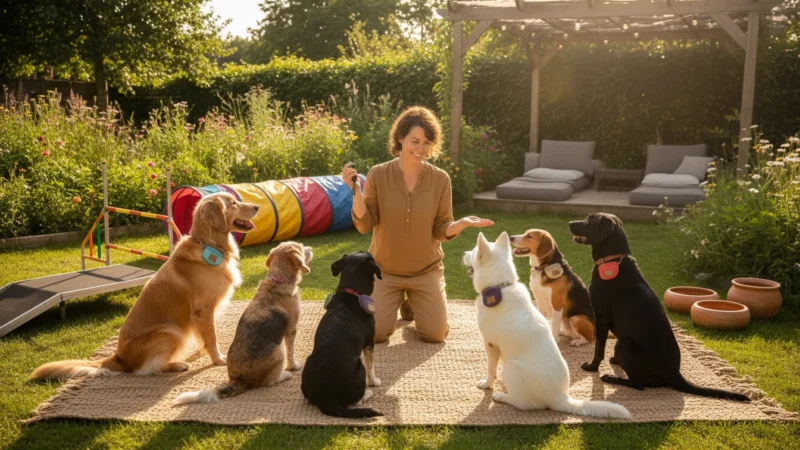
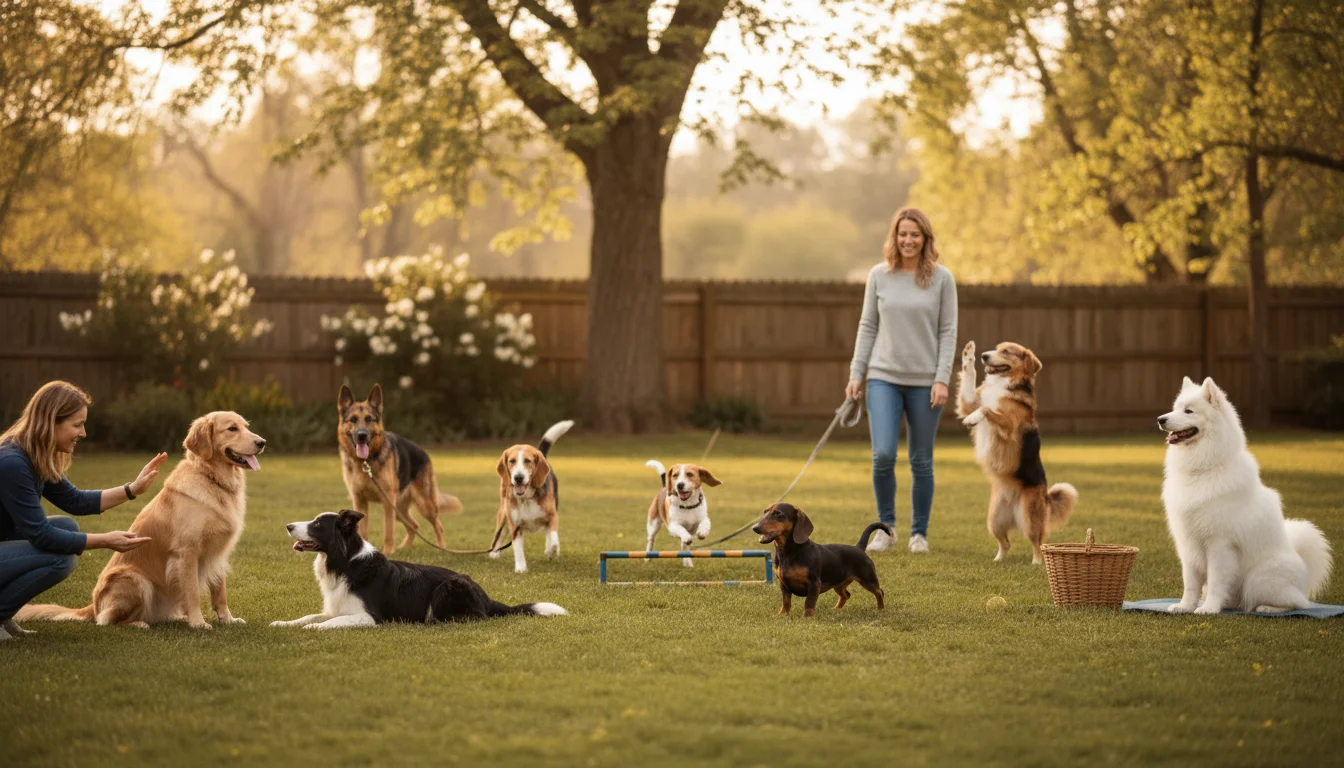
If you are managing more than one pet, learning how to train multiple dogs at once will help you maintain consistency across the entire household.
Challenge 1: Inconsistent Success
Your puppy seems to get it one day, then has several accidents the next. This often stems from inconsistency in the human’s routine. Have you relaxed the schedule? Are you supervising less? Are you rewarding less enthusiastically?
Solution: Re-evaluate your consistency. Return to a more rigorous schedule, increase supervision, and ensure every successful outdoor elimination receives a high-value reward. Sometimes, a medical check-up with your veterinarian helps rule out urinary tract infections or other health issues that could contribute to accidents.
Challenge 2: Submissive or Excitement Urination
Some puppies urinate when they are excited (e.g., when you arrive home) or when they feel submissive (e.g., if you loom over them or scold them).
Solution: For excitement urination, keep greetings low-key. Avoid making eye contact or speaking excitedly for the first few minutes you come home. Let your puppy calm down, then take them directly outside. For submissive urination, avoid harsh tones, direct eye contact, or leaning over your puppy. Approach them gently and crouch down to their level.
Challenge 3: Marking Behavior
Both male and female puppies, especially intact ones, might engage in marking—releasing small amounts of urine to scent-mark territory. This differs from full bladder elimination.
Solution: Neutering or spaying often reduces marking behavior. Continue diligent supervision, clean marked areas with enzymatic cleaner, and reinforce outdoor elimination with rewards. Consider belly bands for male dogs (worn indoors) or specific diapers for females to manage indoor marking while you work on behavior modification.
Challenge 4: Refusal to Potty Outside in Bad Weather
Some puppies dislike going out in rain, snow, or extreme temperatures.
Solution: Make the experience as comfortable as possible. Use a puppy raincoat or boots. Create a sheltered potty spot with an awning or umbrella. Take them out frequently, even for short periods. If they refuse to go, bring them back inside for 5-10 minutes, then try again. Persistence and positive reinforcement for braving the elements are key.
Challenge 5: Not Notifying You
Your puppy goes outside and potties, but never signals they need to go.
Solution: Teach your puppy to ring a bell. Hang a bell on the door you use for potty breaks. Every time you go out, gently nudge your puppy’s nose or paw to touch the bell, then open the door. When they potty outside, reward them. They will eventually learn to associate ringing the bell with going outside to potty. This proactive training gives your puppy a clear way to communicate their needs.
When to Seek Professional Help
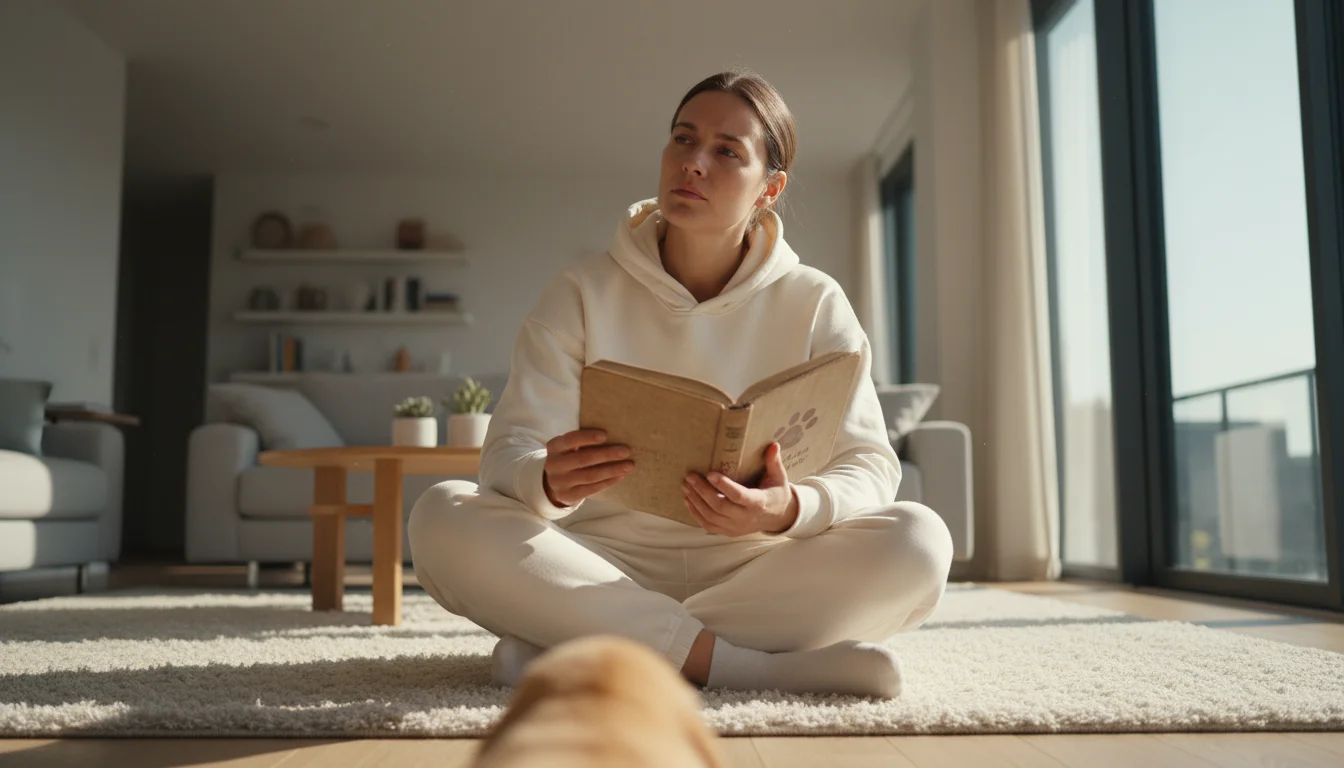
While this guide provides a robust framework for how to housetrain your puppy in 7 days, some situations warrant professional intervention. Do not hesitate to reach out if you face persistent challenges.
Reviewing these signs your dog needs professional training can help you determine if your puppy’s accidents are linked to a deeper behavioral issue.
If you are unsure whether your puppy’s behavior is normal for their age, check these 12 signs your dog needs professional training help to decide on the next steps.
Consult Your Veterinarian First
If your puppy continues to have frequent accidents despite consistent training, your first step should always be a visit to your veterinarian. Medical issues like urinary tract infections, bladder stones, kidney disease, or even diabetes can cause increased urination and incontinence. A veterinarian can diagnose and treat any underlying health conditions. According to the American Veterinary Medical Association (AVMA), ruling out medical causes is always the priority when dealing with elimination issues.
When to Contact a Certified Professional Dog Trainer (CPDT-KA)
If your puppy receives a clean bill of health from the vet and still struggles with housetraining, consult a certified professional dog trainer. A trainer certified by organizations like the Certification Council for Professional Dog Trainers (CCPDT) or the Association of Professional Dog Trainers (APDT) can assess your specific situation, observe your puppy’s behavior, and provide personalized training plans. They can identify subtle environmental factors or communication gaps that might hinder progress. Their expertise in positive reinforcement techniques can prove invaluable.
When to Consult a Veterinary Behaviorist (DACVB)
For severe or complex elimination problems, such as extreme anxiety contributing to accidents, separation anxiety-related urination, or fear-based elimination, a veterinary behaviorist might be the most appropriate specialist. A veterinary behaviorist holds a Doctor of Veterinary Medicine (DVM) degree and has completed additional residency training in animal behavior, making them board-certified by the American College of Veterinary Behaviorists (ACVB). They can prescribe medication in conjunction with behavior modification plans, addressing both the behavioral and physiological aspects of the problem. This holistic approach offers the best chance for resolving entrenched behavioral issues.
Frequently Asked Questions
Can I really housetrain my puppy in 7 days?
While you can establish a strong foundation and significant progress within seven days, “fully housetrained” means consistent reliability in all situations. For most puppies, true reliability takes several weeks to a few months of consistent effort. The 7-day plan provides intensive training to kickstart the process, setting your puppy up for long-term success with continued commitment.
What if my puppy is older than a few months? Is the 7-day plan still effective?
Yes, the principles remain the same regardless of age. Older puppies or even adult dogs who have not been properly housetrained can benefit greatly from this intensive 7-day approach. You might find an older dog catches on faster due to better bladder control and cognitive abilities, but they might also have ingrained bad habits that require extra patience and consistency to overcome.
Should I use puppy pads during housetraining?
Using puppy pads can be a mixed blessing. They teach your puppy that it is acceptable to eliminate inside the house, which can prolong the transition to solely outdoor elimination. For rapid housetraining to go outside, it is generally best to skip puppy pads entirely and focus on outdoor potty breaks. If you live in an apartment or have mobility issues, pads might serve as an intermediate step, but understand they add an extra layer to the training process.
My puppy cries in their crate at night. What should I do?
Crying in the crate, especially at night, can indicate several things: they might need a potty break, feel lonely, or find the crate uncomfortable. Ensure they had a final potty break, their crate is comfortable and correctly sized, and they are not too hot or cold. For young puppies, a night-time potty break might be necessary. If they are just whining for attention, avoid reinforcing the behavior by letting them out. Instead, quietly reassure them without opening the crate, or ignore it if you are certain all their needs are met.
Housetraining your puppy in 7 days is an ambitious but achievable goal with dedication and the right approach. By understanding your puppy’s needs, implementing a consistent routine, utilizing positive reinforcement, and managing their environment, you can build a solid foundation for a clean and happy home. Remember that patience and kindness are your most valuable tools throughout this journey.
For expert pet care guidance, visit
Rover — Pet Care Blog, Preventive Vet and American Veterinary Medical Association (AVMA).
Disclaimer: This article is for informational purposes only and is not a substitute for professional veterinary advice, diagnosis, or treatment. Always consult with a licensed veterinarian for medical concerns about your pet.
Once you have mastered the basics of housetraining, you can begin introducing 15 fun tricks to teach your dog to strengthen your bond.
Leave a Reply