
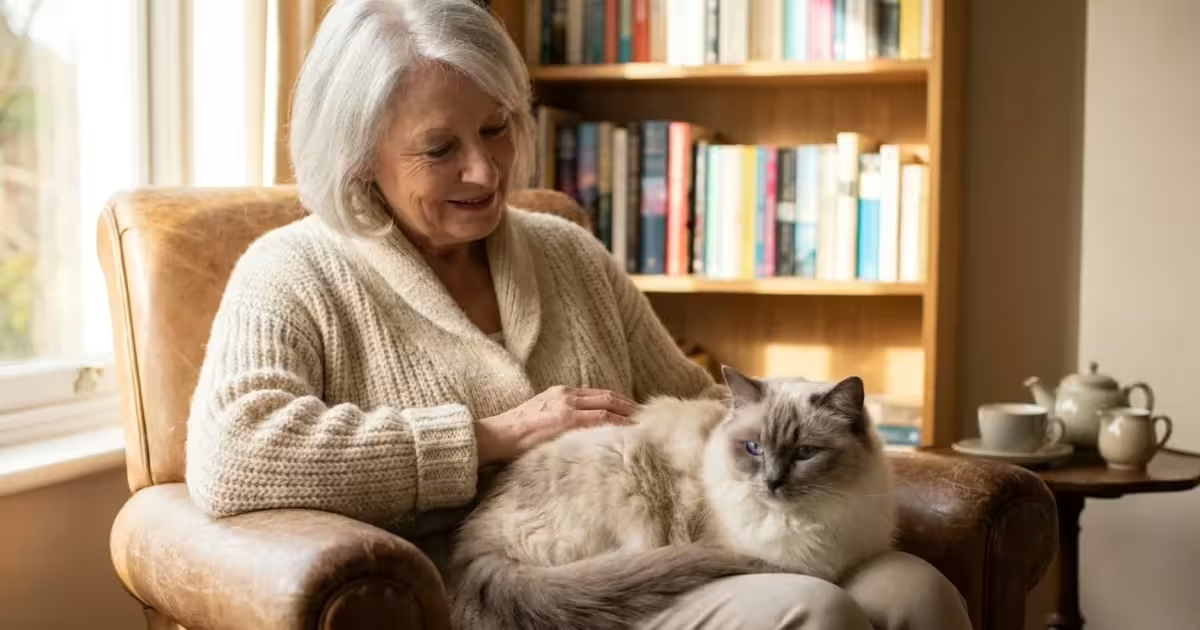
Finding the perfect feline companion later in life brings immense joy, comfort, and proven health benefits to your daily routine. The best cat breeds seniors appreciate often share a gentle demeanor, lower exercise requirements, and an affectionate nature that thrives in tranquil environments. When seeking quiet cats elderly individuals can easily manage, prioritizing personality and energy levels guarantees a harmonious match. From plush lap cats that enjoy lazy afternoons to easygoing companions requiring minimal maintenance, the right feline friend makes all the difference. Discovering low energy cats over 60 will transform your quiet senior household into a warm, loving home without overwhelming your physical capabilities or daily schedule.
Beyond cats, exploring the best pets for seniors living alone can reveal other animals that provide exceptional companionship for retirement.
Core Traits of Cats Suited for Senior Living
Bringing a pet into your life during your retirement years offers profound emotional rewards. According to the American Veterinary Medical Association (AVMA), the human-animal bond provides significant health benefits, including reduced stress levels, lower blood pressure, and decreased feelings of isolation. However, ensuring a successful match requires looking past a cat’s appearance to understand their fundamental personality traits.
If you are open to canine companions, there are also dogs that are easy for seniors to care for due to their gentle and low-maintenance nature.
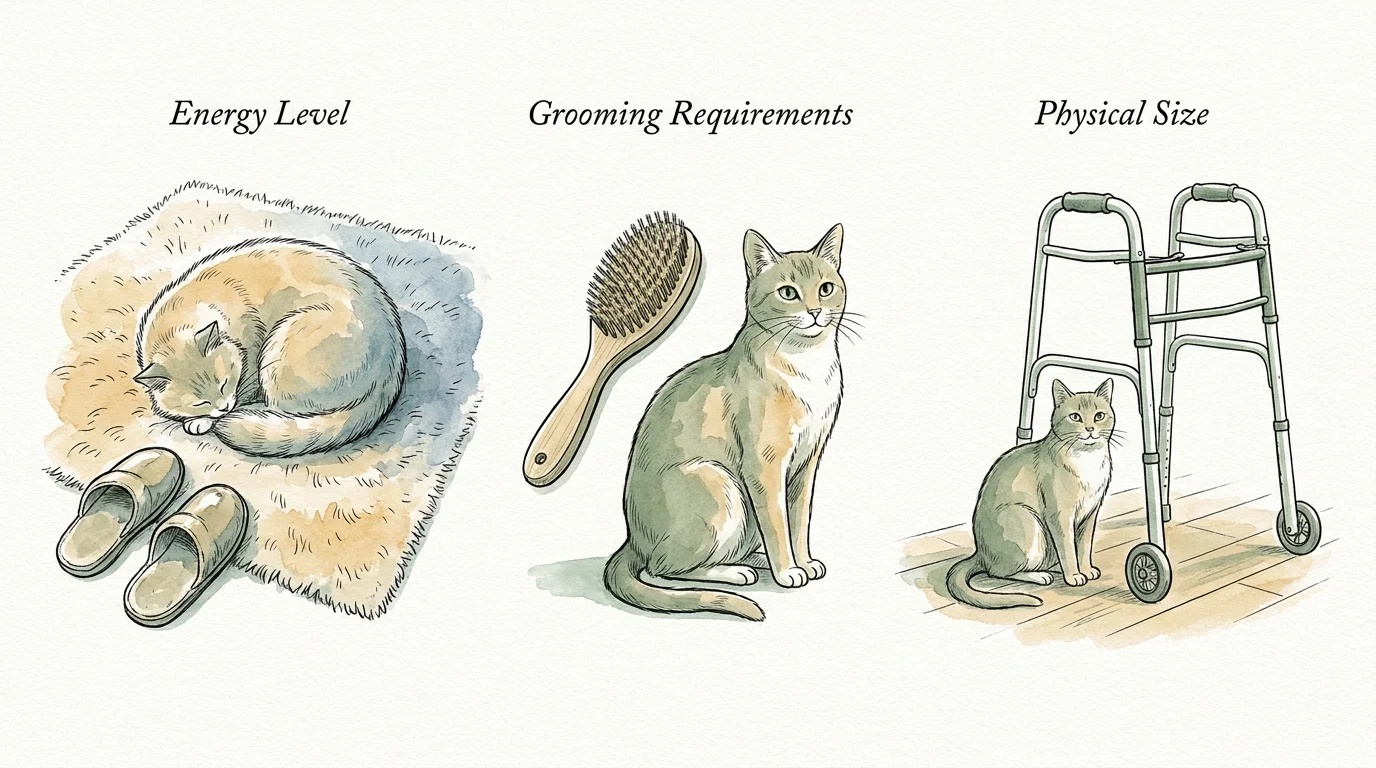
When searching for senior friendly cat breeds, you want to evaluate three main categories: energy level, grooming requirements, and physical size. High-energy breeds like Bengals or Siamese often require intense interactive play sessions and mental stimulation that can become exhausting. Instead, you need a companion that matches your calmer pace of life. A cat that enjoys lounging by the window, napping at your feet, and observing the household quietly is ideal.
Additionally, physical limitations or mobility issues should factor into your decision. Cats that constantly weave between your legs can present serious tripping hazards. Breeds that require daily, rigorous brushing to prevent painful fur matting might become a chore if arthritis affects your hands. By focusing on temperament, you can easily identify calm cats retired households will thoroughly enjoy.
1. The Ragdoll: The Ultimate Gentle Companion
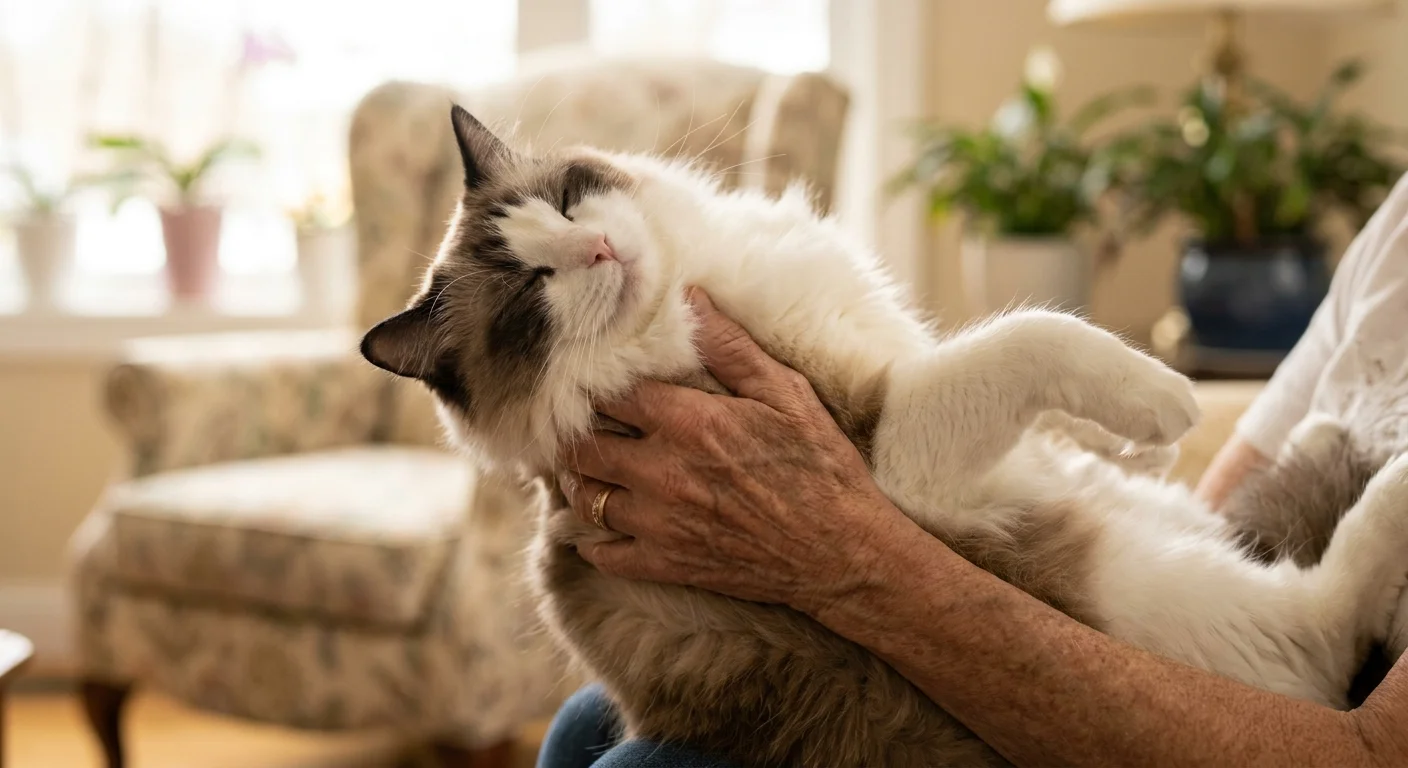
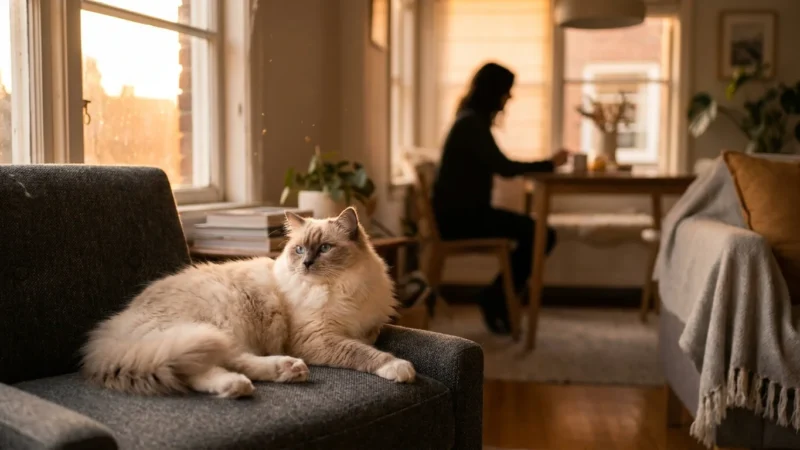
The Ragdoll consistently ranks among the most beloved breeds for a slower-paced lifestyle. Their name derives from their endearing tendency to go completely limp and relax whenever you pick them up. This breed thrives on human companionship; they will gladly follow you from room to room, offering a quiet, comforting presence without demanding constant entertainment.
As noted by the Cat Fanciers’ Association (CFA), Ragdolls are famously docile and tend to relax entirely in your arms, making them exceptional companions for those seeking a highly affectionate pet. They possess striking blue eyes and a semi-long coat that is surprisingly easy to maintain. Because they lack a dense undercoat, a gentle brushing once or twice a week is usually sufficient to keep them looking beautiful and feeling comfortable.
You should note that Ragdolls are a larger breed. Males can weigh up to 20 pounds, which could be heavy for some older adults to lift. Fortunately, their preference for keeping “four on the floor” means they are usually content to jump onto the sofa beside you rather than needing to be scooped up and carried.
2. The British Shorthair: Independent Yet Devoted
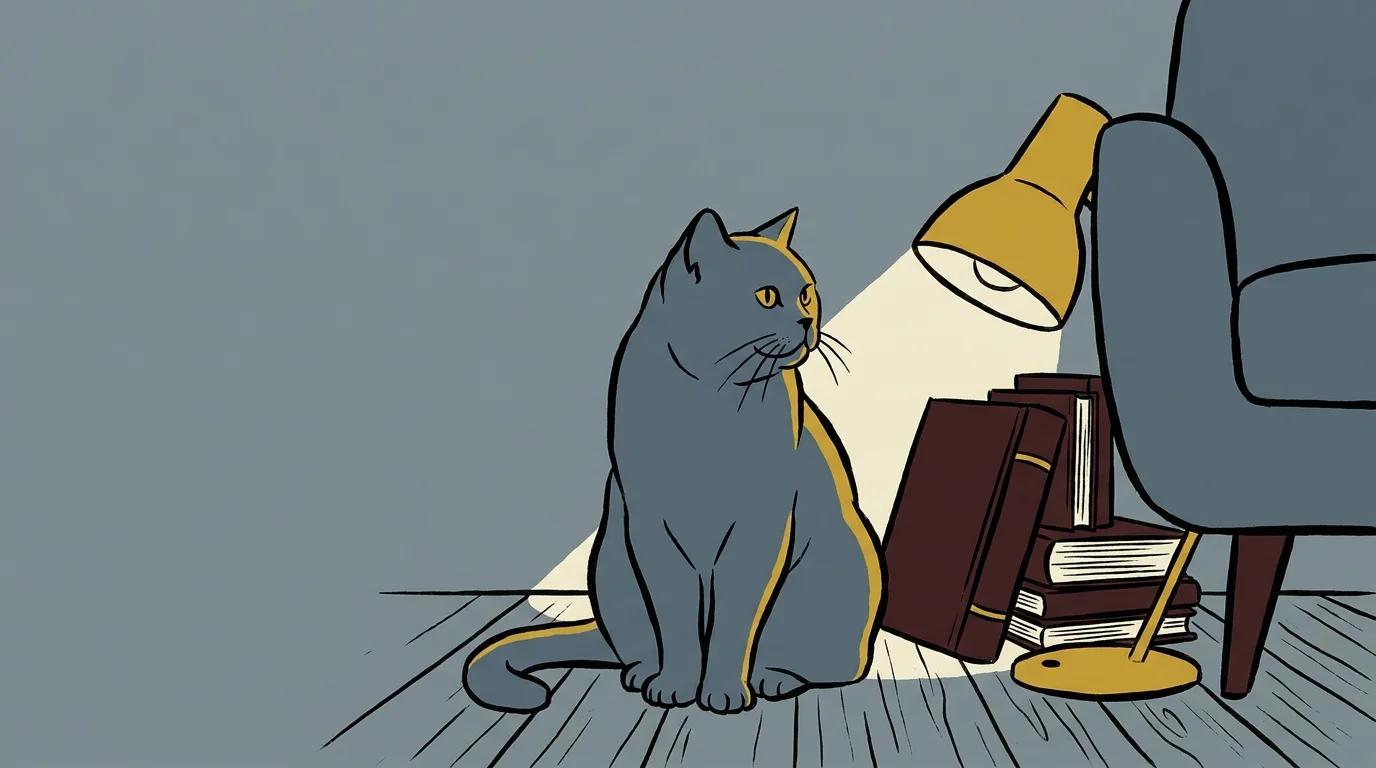
If you appreciate a cat that loves you deeply but respects personal space, the British Shorthair is an excellent choice. Characterized by their dense, plush coats and round, expressive faces, these cats possess a dignified, calm demeanor. They are highly adaptable and rarely become anxious or destructive, fitting perfectly into the category of low energy cats over 60.
British Shorthairs are intensely loyal to their families. Rather than insisting on sitting directly on your lap, they often prefer to sit right next to you on the couch or at the foot of your bed. This makes them ideal for individuals who might find a heavy, clingy cat physically uncomfortable. They are undemanding companions who are perfectly happy watching television with you or observing the birds from a comfortable perch.
Their short, thick coat requires minimal upkeep. A quick weekly brush removes loose hair and keeps their coat gleaming. Furthermore, they are a quiet breed; they rarely vocalize and prefer to communicate through soft purrs and affectionate head bumps.
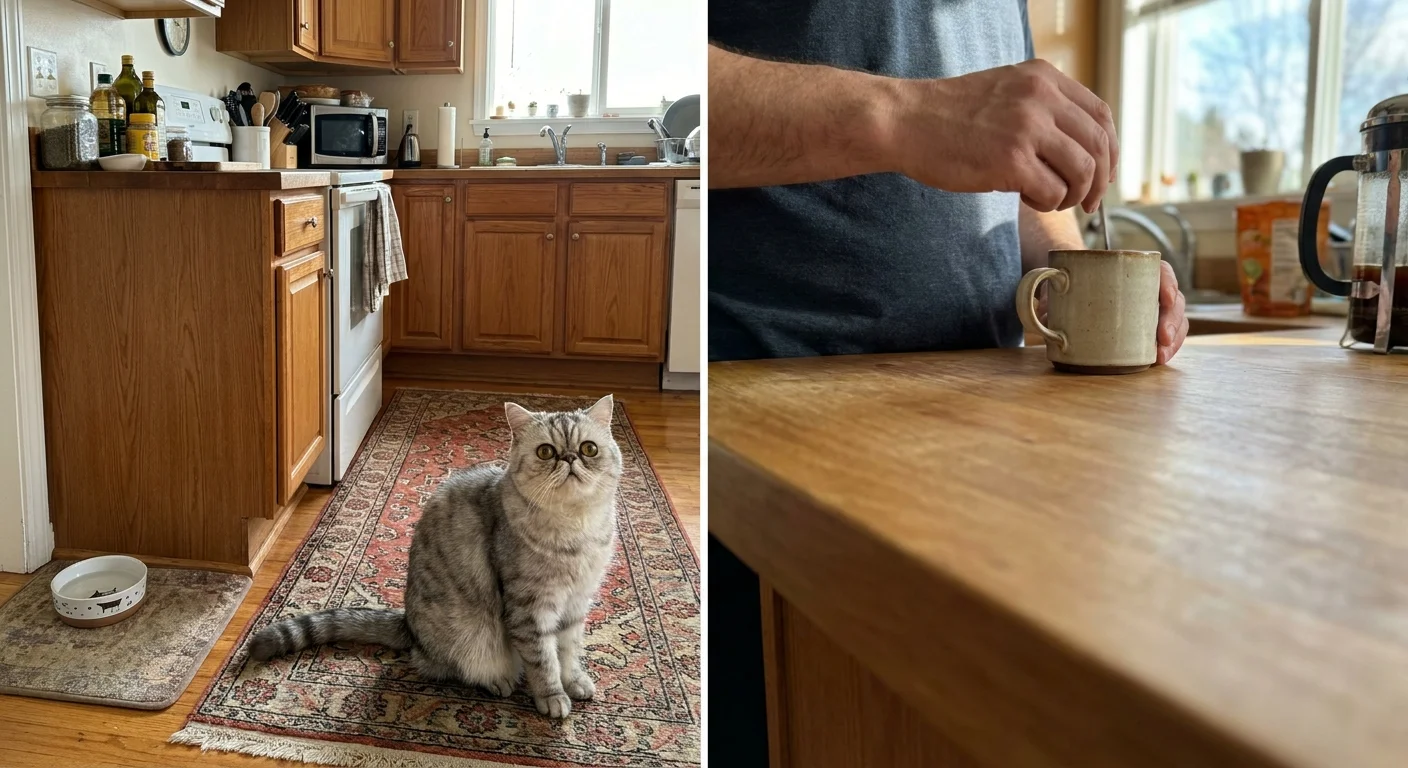
3. The Exotic Shorthair: Low-Maintenance Affection
Nicknamed the “lazy man’s Persian,” the Exotic Shorthair offers all the wonderful personality traits of a Persian cat without the rigorous grooming routine. They were bred to have the same sweet, mellow, and peaceful temperament as their long-haired cousins, making them exceptionally well-suited for a quiet home.
Even for more relaxed breeds, using interactive cat toys during their brief active periods helps keep their minds sharp.
Exotic Shorthairs are incredibly affectionate and thrive on gentle interaction. They love curling up in laps and receiving gentle pets. Their energy levels are quite low; a few short bursts of chasing a toy mouse or a feather wand usually satisfy their daily exercise needs. The rest of the time, they are more than happy to sleep the day away in a sunbeam.
Because they have a dense, short coat, they require less grooming than a Persian, though they do shed. Brushing them twice a week prevents loose hair from accumulating on your furniture. Like all flat-faced (brachycephalic) breeds, their eyes may need occasional wiping with a damp, warm cloth to prevent tear staining, a simple routine that takes only a few seconds a day.
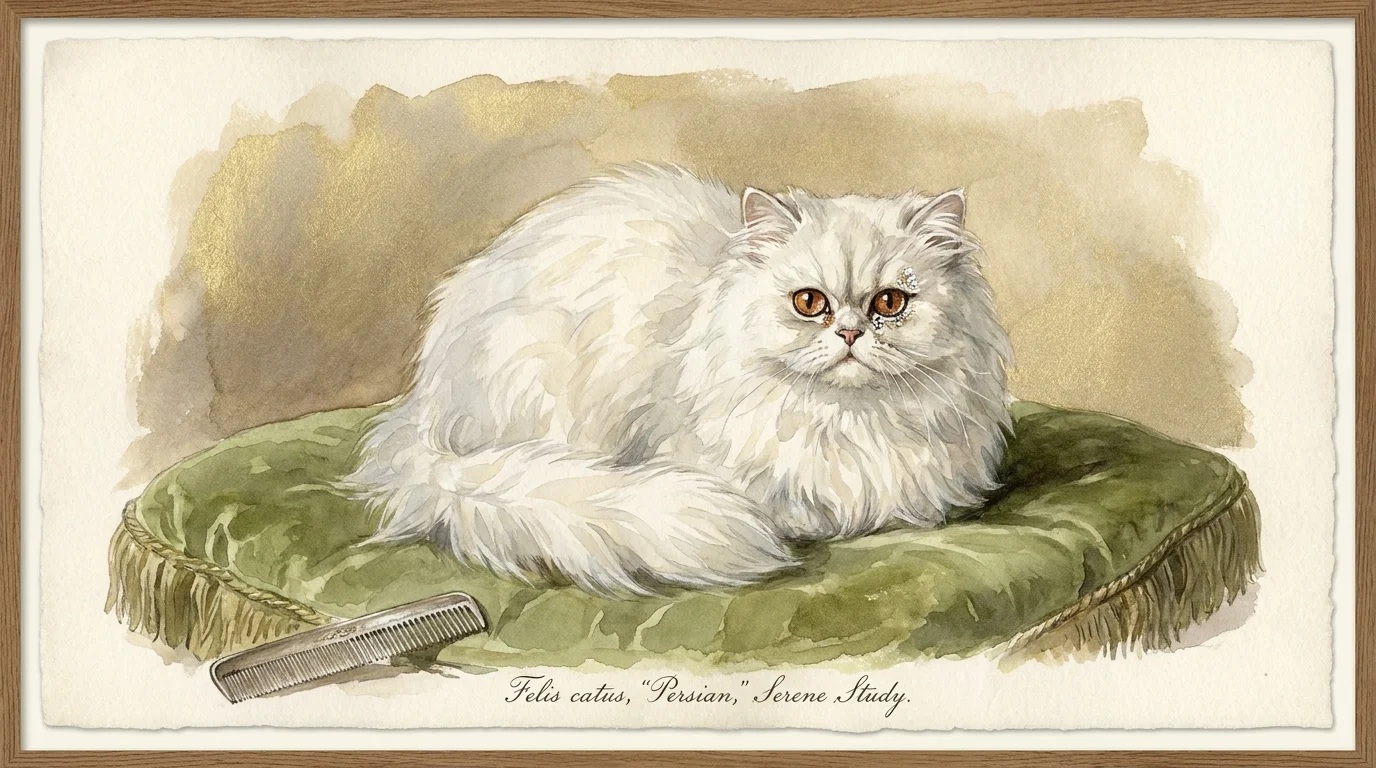
4. The Persian: Serene and Stately
For centuries, the Persian has been the quintessential lap cat. If you are seeking an extremely placid, sweet-tempered companion, the Persian excels. They are the epitome of indoor luxury, preferring the comfort of a soft pillow over climbing the curtains or exploring high shelves.
Beyond coat care, it is also useful to learn how to trim your cat’s claws safely to prevent them from snagging on carpets or furniture.
Persians possess very quiet, musical voices, but they communicate primarily through their large, expressive eyes. They form deep attachments to their owners and genuinely enjoy being pampered. For seniors who find the rhythmic, repetitive motion of brushing a pet therapeutic, a Persian provides the perfect opportunity for daily bonding. Their long, flowing coats require dedicated daily grooming to prevent painful mats and tangles.
If daily brushing sounds overwhelming, many Persian owners choose to take their cats to a professional groomer every few months for a “lion cut.” This safely removes the long hair and drastically reduces daily maintenance while keeping the cat’s wonderfully serene personality intact.
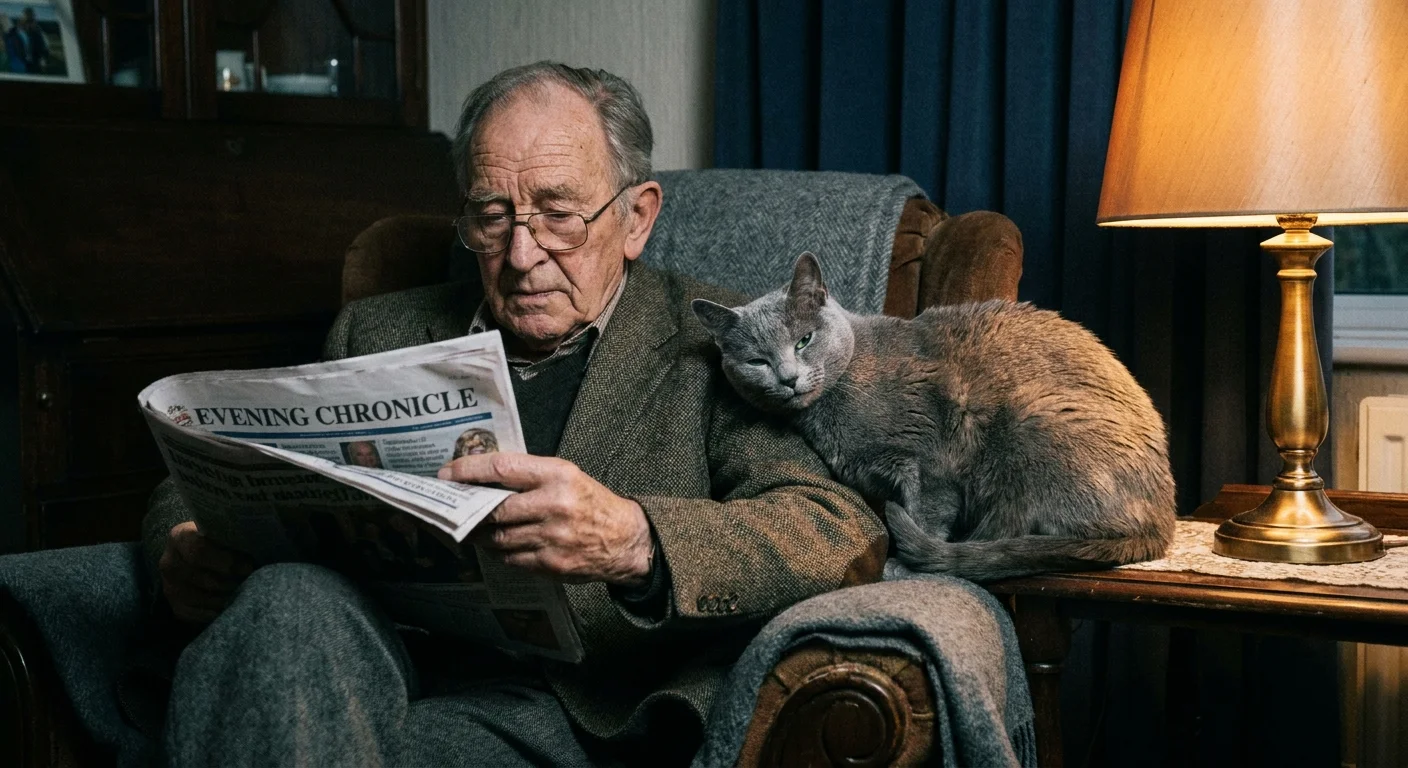
5. The Russian Blue: Quiet and Loyal
The Russian Blue is a strikingly beautiful cat with a silver-tipped blue coat and vivid green eyes. Beyond their elegant appearance, they are known for their gentle, somewhat shy nature. They tend to bond intensely with one or two people in the household, making them deeply devoted companions for individuals living alone or in quiet partnerships.
Since these cats are so intuitive, you can explore various ways to bond with your cat that focus on gentle physical proximity rather than high-energy play.
These cats are highly intelligent and remarkably empathetic. Many owners report that their Russian Blue senses when they are feeling unwell or sad, responding by staying close and offering comforting purrs. They are naturally cautious around strangers and loud noises, which is exactly why they thrive in the peaceful environment of a senior household.
Their short, dense coat produces very little dander and requires almost no grooming outside of a weekly stroke with a soft brush. They are also remarkably quiet cats. When they do vocalize, it is typically a soft, polite chirp rather than a demanding meow. They provide companionship without chaos.
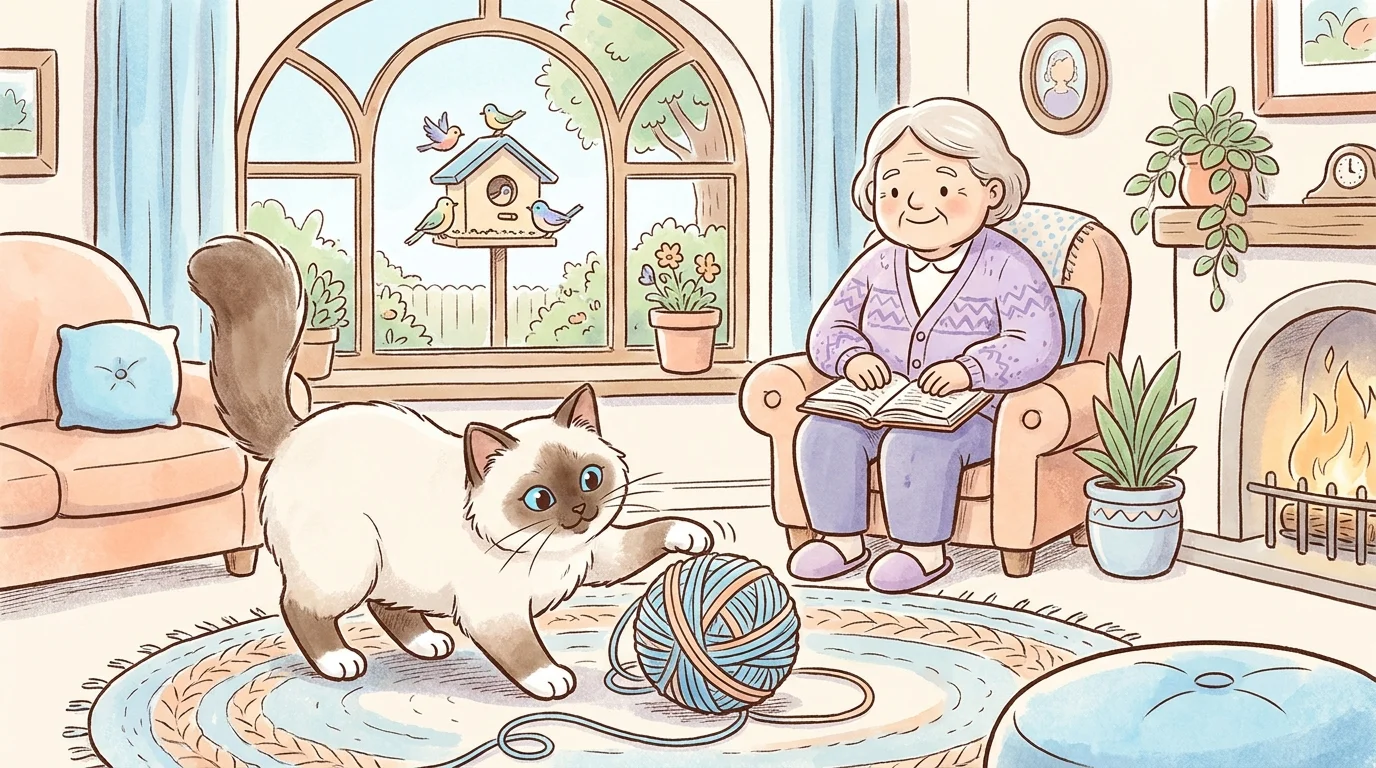
6. The Birman: Sweet-Tempered and Social
The Birman, often referred to as the “Sacred Cat of Burma,” is a striking breed with a pale body, darker points on their face and ears, and distinct white “gloves” on their paws. They strike a perfect balance between being playfully engaging and incredibly relaxed.
Staying observant of senior pet health markers is also essential as these gentle companions enter their golden years.
Birmans are very people-oriented. They do not like to be left alone for extended periods, making them wonderful pets for retirees who spend most of their time at home. They will happily “help” you read the newspaper, knit, or work on a puzzle by sitting right in the middle of your activities. Their affectionate nature makes them highly intuitive to their owner’s moods.
Despite having a semi-long coat, Birmans lack a dense undercoat, meaning their fur rarely mats. Running a metal comb through their silky hair once or twice a week easily maintains their majestic appearance. They possess a soft, sweet voice and will happily engage in gentle conversation with you throughout the day.
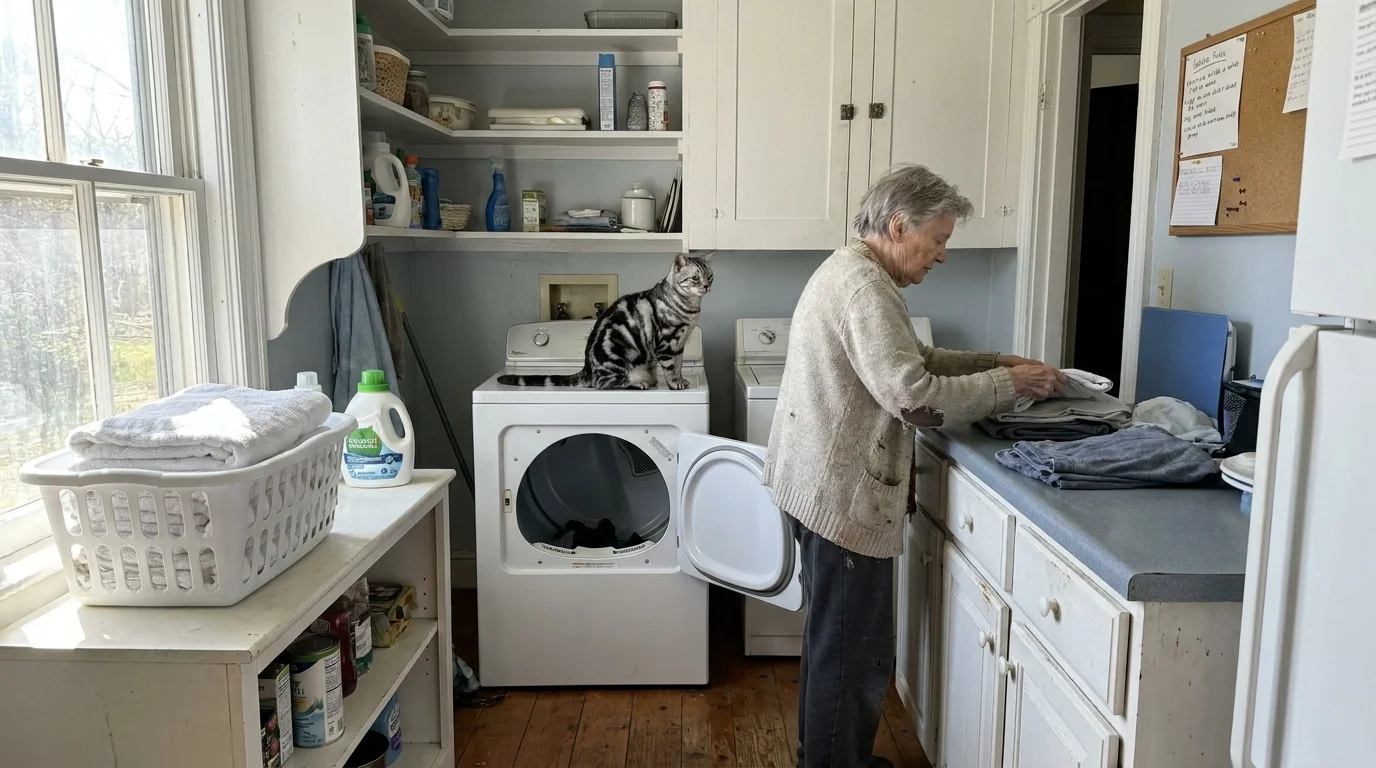
7. The American Shorthair: Easygoing and Adaptable
If you want a hardy, healthy, and completely uncomplicated companion, the American Shorthair is an outstanding candidate. Originally working cats brought to North America to protect food stores, they have evolved into some of the most adaptable and easygoing family pets available.
They are independent enough to entertain themselves when you are busy or resting, yet affectionate enough to seek you out for evening cuddles. They possess a moderate energy level; they enjoy a good play session with a laser pointer or a wand toy but quickly settle down afterward. Their adaptable nature means they adjust well to changes in routine or the occasional visit from energetic grandchildren.
The American Shorthair requires almost no specialized care. Their short coat is easy to manage with occasional brushing, and they are generally known for their robust health and longevity. They represent the perfect balance of independence and devotion for any senior household.
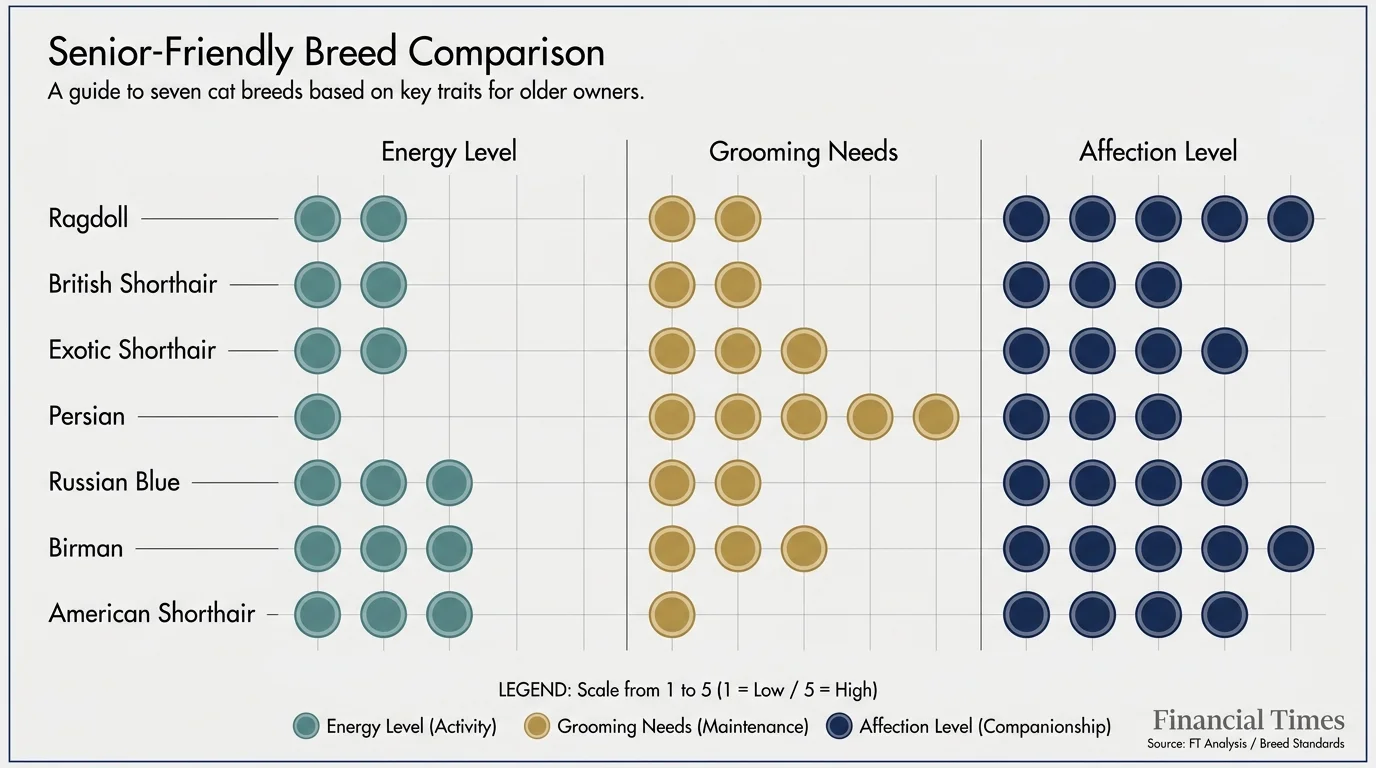
Breed Comparison Chart
To help you determine which feline friend best fits your lifestyle, use this quick reference guide to compare the key traits of the breeds discussed above.
| Breed | Grooming Needs | Energy Level | Vocalization Level |
|---|---|---|---|
| Ragdoll | Moderate (1-2x weekly) | Low | Quiet |
| British Shorthair | Low (Weekly) | Low | Very Quiet |
| Exotic Shorthair | Moderate (2x weekly) | Very Low | Quiet |
| Persian | High (Daily) | Very Low | Quiet |
| Russian Blue | Low (Weekly) | Moderate to Low | Very Quiet |
| Birman | Moderate (1-2x weekly) | Moderate to Low | Average |
| American Shorthair | Low (Weekly) | Moderate | Average |
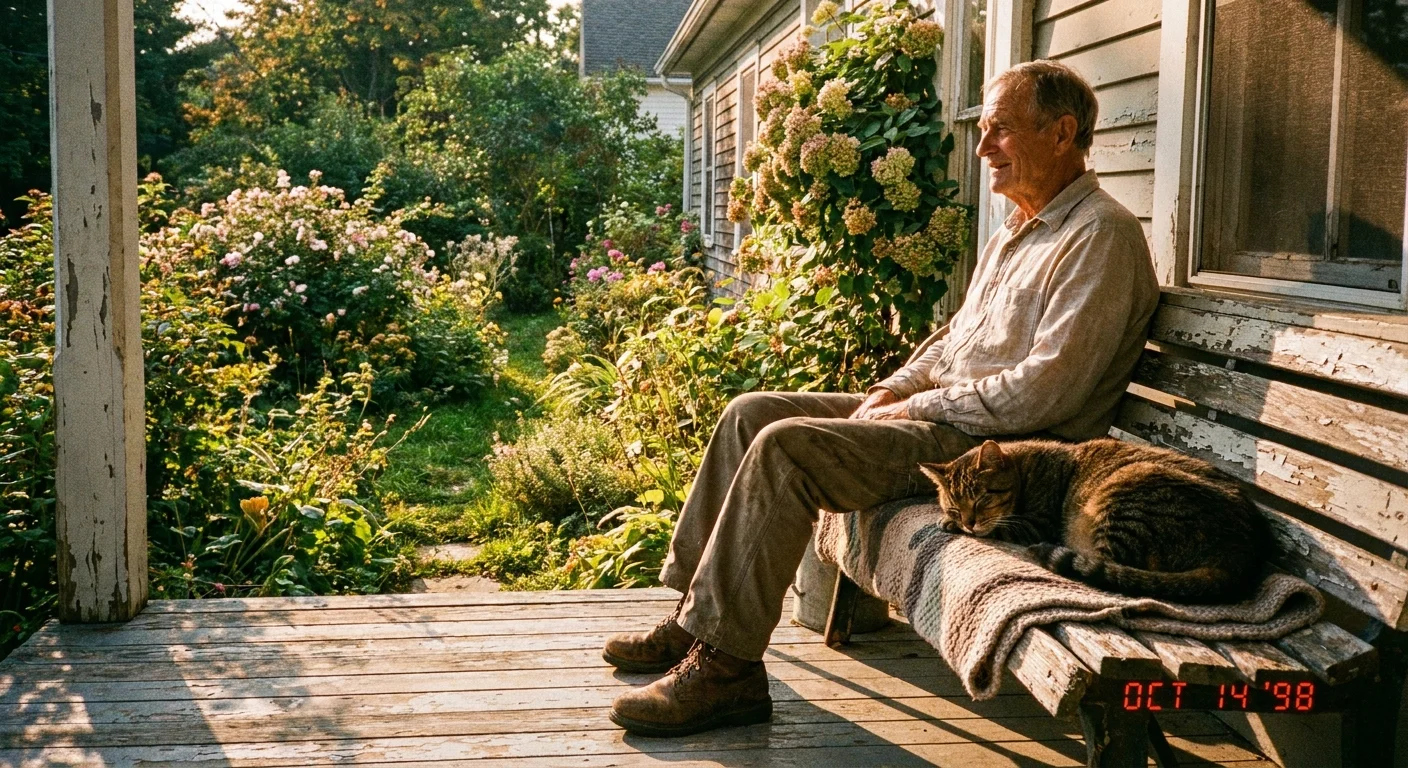
The Benefits of Adopting an Older Cat
While kittens are undeniably adorable, they bring a level of chaos, destruction, and boundless energy that can quickly overwhelm a quiet household. Kittens love to climb drapes, chew on cords, and dart suddenly across the floor, which poses a severe tripping hazard for older adults. This is why looking at adult or senior rescue cats is often the best strategy.
Experts at The Humane Society of the United States strongly advocate for adopting older animals, noting that their personalities are fully formed. When you meet a senior cat in a shelter, what you see is exactly what you get. If the cat is calm, gentle, and loves sitting in laps at the rescue facility, they will exhibit those same wonderful traits in your home.
“Older cats are the hidden gems of animal shelters. They come with a lifetime of love to give, require significantly less supervision, and settle seamlessly into quieter homes, perfectly matching the energy of a retired owner.” — Dr. Sarah Mitchell, DVM
Furthermore, adopting an older cat makes financial sense. Senior cats available for adoption are typically already spayed or neutered, fully vaccinated, and microchipped. Many shelters even offer discounted adoption fees for senior citizens adopting senior pets, making it an affordable and deeply rewarding way to find a companion.
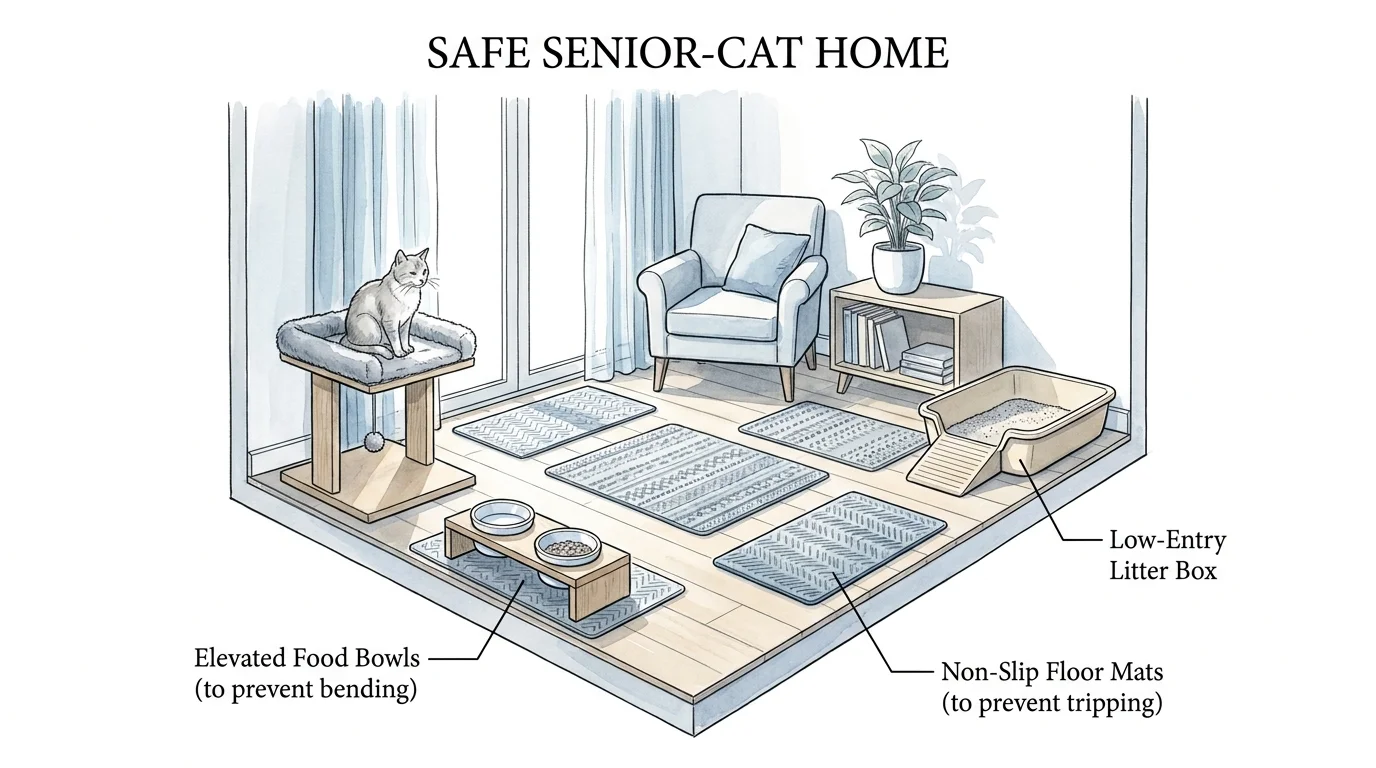
Home Modifications and Care Safety
Creating a safe environment for both you and your feline companion requires a few simple adjustments. As we age, minimizing fall risks and physical strain becomes paramount. To ensure a safe environment, the ASPCA provides excellent guidelines on pet safety and home hazards, reminding owners that thoughtful preparation prevents accidents.
First, consider outfitting your cat with a comfortable breakaway collar featuring a small bell. The subtle jingling sound provides an auditory cue of the cat’s location, ensuring you do not accidentally step on them or trip over them when walking through dim hallways or kitchens.
Second, optimize the placement of your cat’s essential items. Avoid placing the litter box in a basement that requires you to carry heavy containers of litter down steep stairs. Instead, choose a quiet, easily accessible corner on your main living floor. Look for litter boxes with low-entry thresholds, which are easier for older cats to step into and easier for you to manage. You might also consider utilizing a lightweight, clumping litter or a subscription service that delivers smaller, manageable bags directly to your door.
Elevated food and water bowls prevent you from having to bend down to the floor twice a day, protecting your back and knees. Automatic feeders and water fountains also reduce the daily physical requirements of pet care while ensuring your cat remains well-fed and hydrated.
Finally, routine care like nail trimming protects your delicate skin from accidental scratches while keeping your cat comfortable. Establishing a calm, cooperative grooming routine keeps your bond strong and your household safe.
Frequently Asked Questions
Are female cats calmer than male cats?
Once a cat is spayed or neutered, gender plays a very minor role in their overall temperament. Breed characteristics, individual personality, and age are much stronger indicators of how calm a cat will be. Many experts actually note that neutered male cats often display highly affectionate, “lap cat” tendencies, while females can sometimes be slightly more independent.
How do I handle vet visits if I no longer drive?
Many veterinary clinics now offer mobile or house-call services specifically designed to assist elderly clients or nervous pets. A veterinarian will come directly to your living room to perform routine exams, administer vaccines, and draw blood. Alternatively, local pet-sitting services and community volunteer networks often provide reliable pet transportation services to traditional clinics.
Will an older cat bond with me as strongly as a kitten would?
Absolutely. Adult and senior cats are profoundly capable of forming deep, unbreakable bonds with new owners. In fact, many older rescues display a distinct sense of gratitude when placed in a warm, quiet, and loving home. Because they are not distracted by the hyperactive playfulness of kittenhood, older cats are often more focused on giving and receiving affection from day one.
Can I adopt a cat if I live in an assisted living facility?
Many modern assisted living and independent senior communities welcome pets, recognizing the tremendous mental health benefits they provide. You will need to check your specific facility’s pet policy. Most facilities require cats to be spayed/neutered, up-to-date on vaccinations, and kept entirely indoors. A quiet, low-energy breed is typically the perfect candidate for this type of living arrangement.
For expert pet care guidance, visit
Pet Poison Helpline,
FDA Center for Veterinary Medicine,
PetMD and
Vetstreet.
Disclaimer: This article is for informational purposes only and is not a substitute for professional veterinary advice, diagnosis, or treatment. Always consult with a licensed veterinarian for medical concerns about your pet.
Leave a Reply