
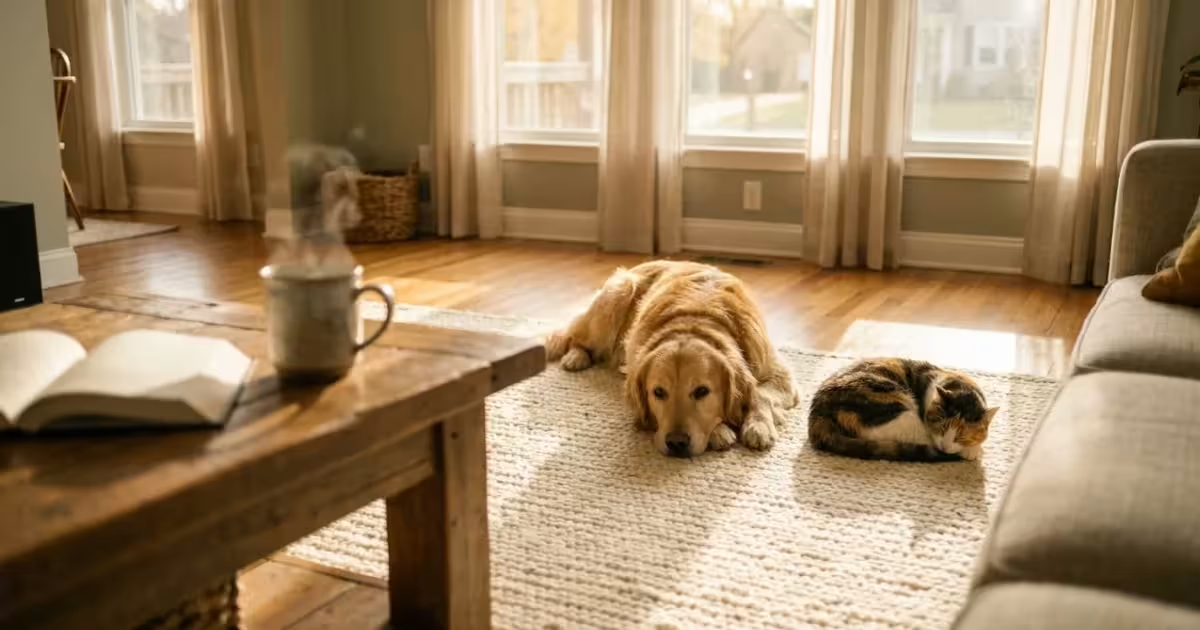
The gentle rhythm of a cat’s purr or the rhythmic swimming of aquarium fish does more than just brighten your living space—it physically alters your brain chemistry. Interacting with companion animals triggers the release of oxytocin while simultaneously dropping cortisol levels, providing an immediate, natural buffer against daily stress and anxiety. Whether you need a reason to get outside, a quiet companion for mindful observation, or an affectionate friend to share your evenings, finding the right pet can transform your home into a restorative sanctuary. By matching an animal’s care requirements with your lifestyle and emotional needs, you can build a mutually beneficial bond that nurtures your mental well-being and enriches their life.
Along with emotional bonding, it is crucial to recognize signs your pet is in pain to ensure their well-being and maintain a calm household.
Many of these animals are also considered the best pets for seniors living alone due to their manageable care requirements and profound emotional benefits.

Dogs: The Ultimate Outdoor Motivators
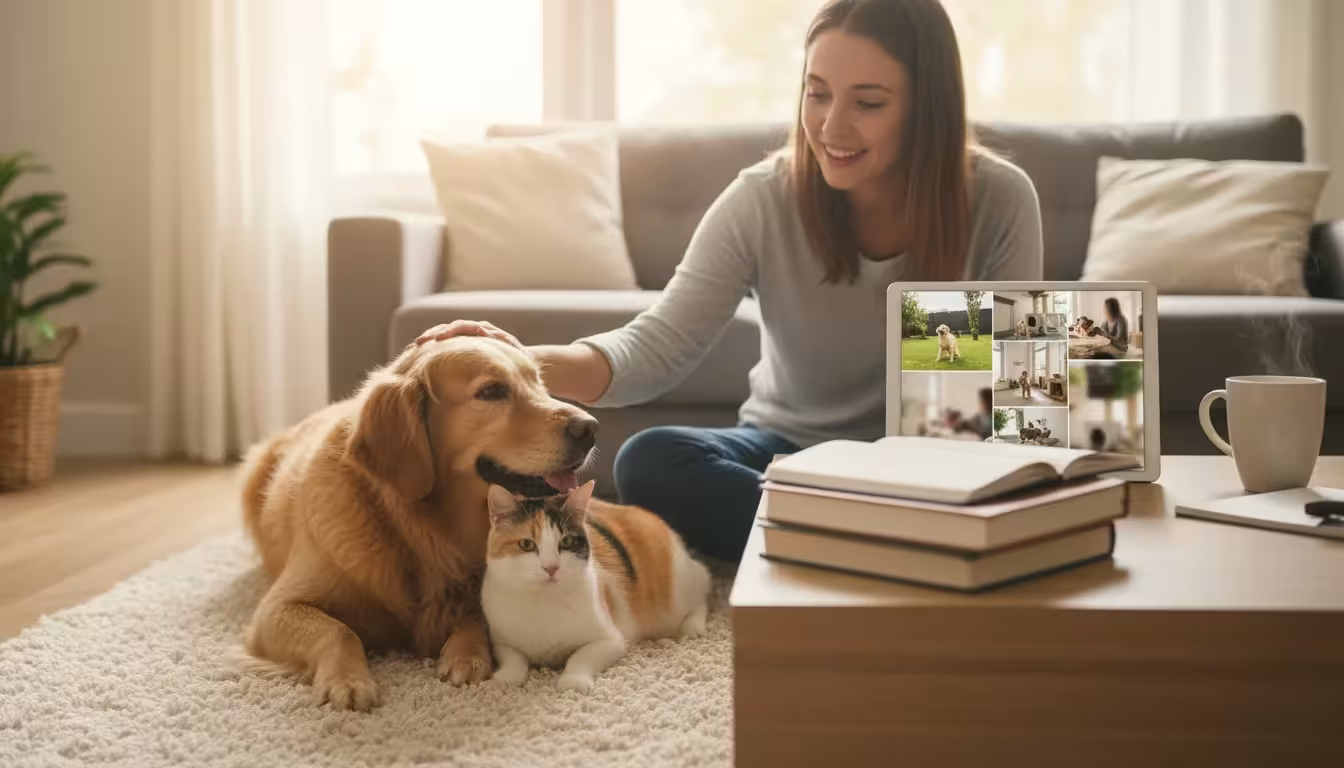
Living with a dog fundamentally shifts your daily routine, requiring you to step outside, breathe fresh air, and engage with the world. This daily physical activity is a powerful, natural intervention for anxiety and depression. When you take your dog for a walk, you are exposed to sunlight and nature, which helps regulate your circadian rhythm and boosts your overall mood. Furthermore, dogs act as wonderful social icebreakers, encouraging spontaneous conversations with neighbors and other pet owners, which gently combats feelings of isolation.
The key to maximizing this stress relief is choosing a breed or mix that genuinely aligns with your energy levels and living situation. If you are an avid hiker seeking a trail companion, a robust breed like a Golden Retriever or a Standard Poodle might be ideal. Conversely, if your idea of relaxation involves gentle neighborhood strolls and cuddling on the sofa, a senior rescue dog or a low-energy breed like a Basset Hound will provide the calming presence you need without the guilt of unspent energy.
According to the American Kennel Club (AKC), participating in structured activities—such as basic obedience, trick training, or canine sports—builds a profound mutual trust. Training requires you to stay entirely present in the moment, effectively breaking the cycle of anxious rumination. You can also incorporate olfactory enrichment into your daily routine. Taking your dog on a “sniffari”—a walk where you allow them to slowly follow their nose rather than marching at a brisk pace—tires out their brain and encourages you to slow down and observe your surroundings. When traveling with your dog to pet-friendly parks or vacation rentals, always prioritize safety by using a crash-tested car harness and packing a basic canine first-aid kit.
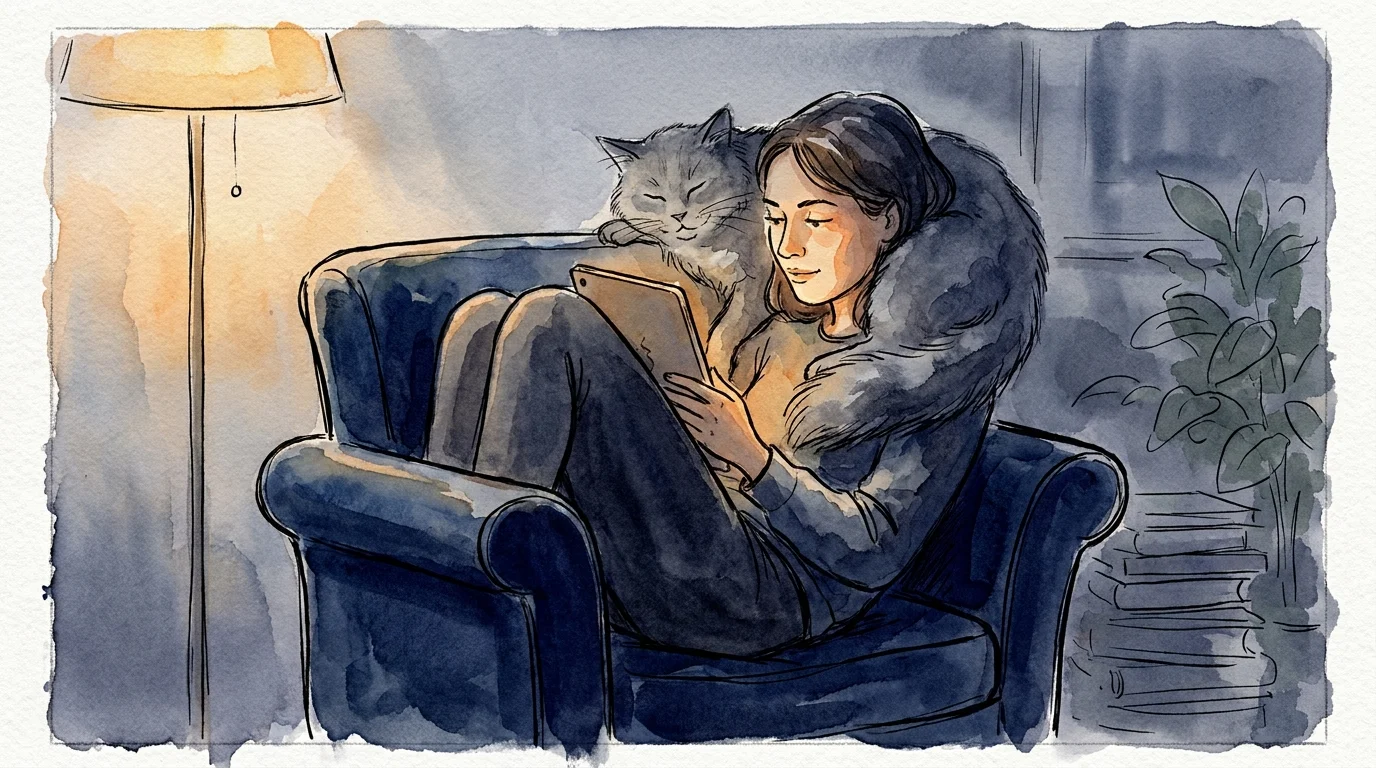
Cats: Purring Healers and Quiet Companions
Cats are masters of cozy, low-stress living. Their independent yet affectionate nature makes them incredible companions for busy professionals, apartment dwellers, or individuals with limited mobility. The unique physical mechanism of a cat’s purr is one of nature’s most fascinating healing tools. Cats purr at a frequency between 20 and 140 Hertz. Scientific studies have shown that frequencies in this exact range promote tissue regeneration, decrease inflammation, and significantly lower human blood pressure. Simply resting with a purring cat on your lap acts as a form of physiological therapy.
To foster a calm environment for both you and your cat, it is essential to respect their need for territory and predictability. Provide plenty of vertical space, such as tall cat trees or secure wall-mounted shelves. Cats feel safest when they can observe a room from a high vantage point. This environmental management prevents feline anxiety, which in turn keeps your home peaceful. Research documented by the American Veterinary Medical Association (AVMA) highlights that the human-animal bond thrives when we actively accommodate an animal’s natural behavioral needs, leading to a mutually beneficial relationship.
You can actively bond with your cat through interactive play. Using a wand toy for 15 minutes before bedtime mimics a cat’s natural hunting cycle: stalk, pounce, kill, and eat. Following this play session with a small meal encourages their natural sleep cycle, helping them settle down for the night. This structured routine not only reduces midnight zoomies but also gives you a dedicated, relaxing ritual to look forward to at the end of a stressful day. Additionally, engage in fun DIY pet projects to keep them stimulated. Cutting paw-sized holes into a clean cardboard shoebox and hiding their favorite treats inside creates an excellent, budget-friendly puzzle feeder that satisfies their foraging instincts.
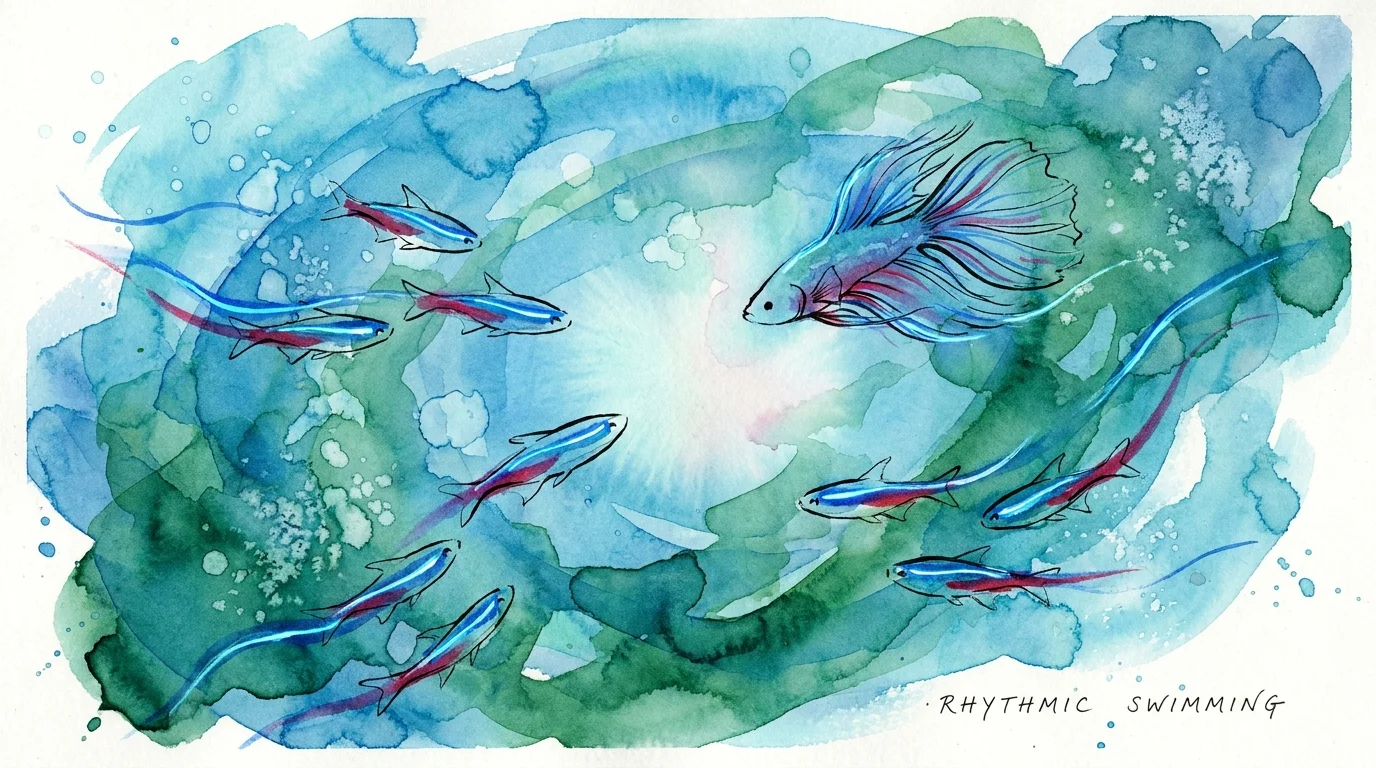
Freshwater Aquarium Fish: Living, Breathing Meditation
The concept of “aquarium therapy” is highly effective for stress management. Watching fish glide effortlessly through clean water, surrounded by gently swaying plants, forces your breathing to slow down. The visual tranquility of an aquarium provides a healthy focal point for mindfulness meditation, offering an escape from screens and daily pressures. Unlike mammals, fish do not require physical handling, making them the perfect low-demand pets for individuals who want to nurture a living creature without the sensory overload of a highly interactive animal.
“The simple act of observing an aquatic environment slows our heart rate and breathing, offering a momentary, meditative escape from a hyper-connected world.”
Successfully keeping fish requires learning about the nitrogen cycle—a fascinating biological process where beneficial bacteria convert toxic fish waste (ammonia) into nitrites, and eventually into less harmful nitrates. Taking 10 minutes a week to test your water parameters using a liquid test kit becomes a grounding, predictable routine. It provides a sense of accomplishment and control, which is incredibly helpful when other aspects of life feel chaotic.
For beginners looking for a calming experience, a 20-gallon long tank housing hardy species like Corydoras catfish or a single Betta fish is ideal. You can lean into the creative aspect of fishkeeping through aquascaping. Arranging natural driftwood, smooth river stones, and live aquatic plants like Anubias or Java Fern allows you to design a miniature, thriving ecosystem. This DIY project is deeply rewarding and transforms a simple glass box into a stunning, living piece of art in your living room.
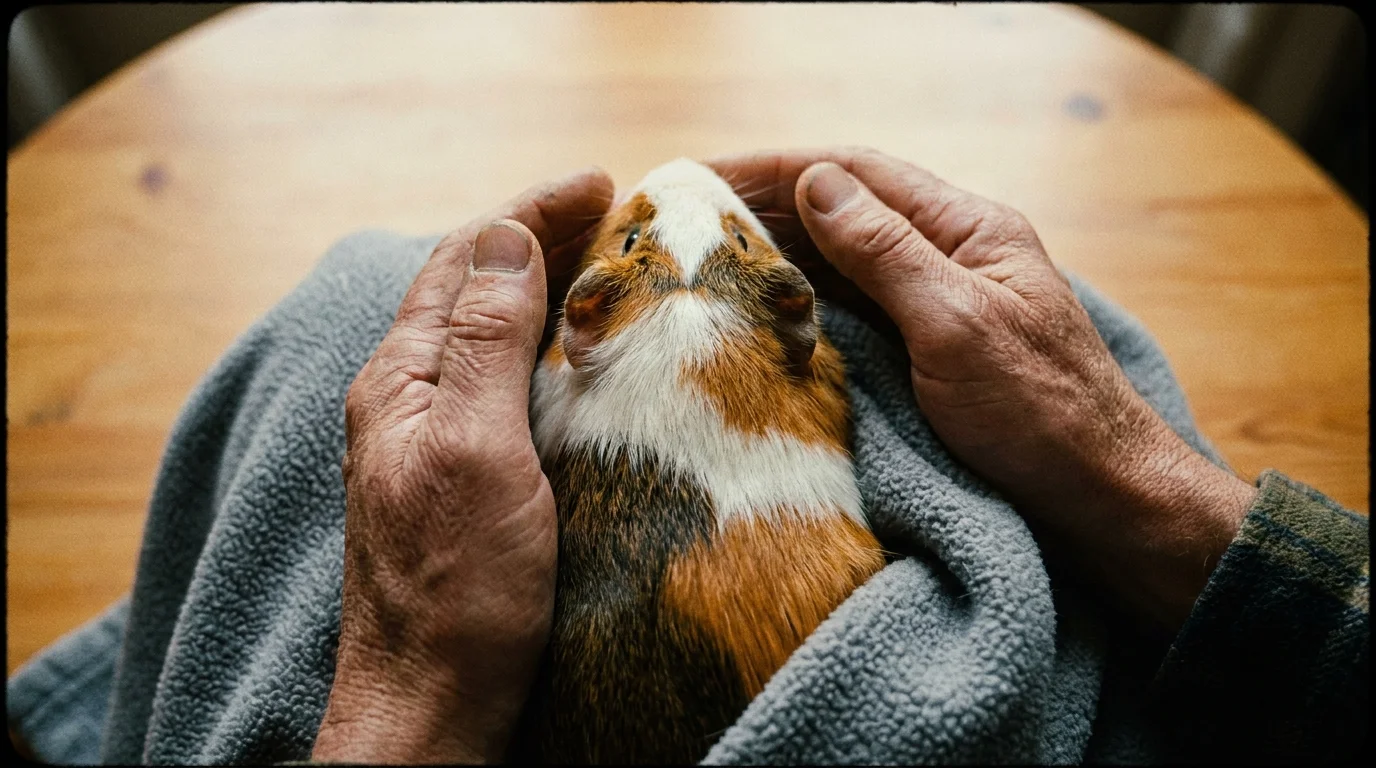
Guinea Pigs: Social, Chatty, and Comforting
If you love the idea of a small pet but want one that actively communicates with you, guinea pigs are exceptional choices. Unlike smaller, more skittish rodents, guinea pigs are robust, handleable, and distinctly vocal. They quickly learn your schedule and will greet you with enthusiastic “wheeks” when they hear the refrigerator door open or the rustle of a vegetable bag. This cheerful vocalization brings a sense of life and joy to a quiet house, providing immediate emotional uplift.
Guinea pigs are highly social herd animals, meaning they must always be kept in pairs or small groups. Watching two bonded guinea pigs groom each other and popcorn (a joyful, hopping motion) is guaranteed to make you smile. According to the Association of Professional Dog Trainers (APDT)—whose foundational positive reinforcement principles apply to nearly all companion animals—reward-based interactions help timid animals learn to trust human hands. By speaking softly and offering high-value treats like bell peppers, you can easily teach your guinea pigs to approach you confidently for chin scratches.
Setting up their environment is a fantastic DIY opportunity. Instead of expensive, often cramped pet store cages, you can build a custom C&C (cubes and coroplast) enclosure. This modular setup allows you to create a massive, customized living space on a budget. You can sew your own washable fleece cage liners, which are soft on their feet and eco-friendly. Taking them out for supervised “floor time” in a bunny-proofed room allows you to sit quietly at their level, offering treats and enjoying their gentle, inquisitive nature.
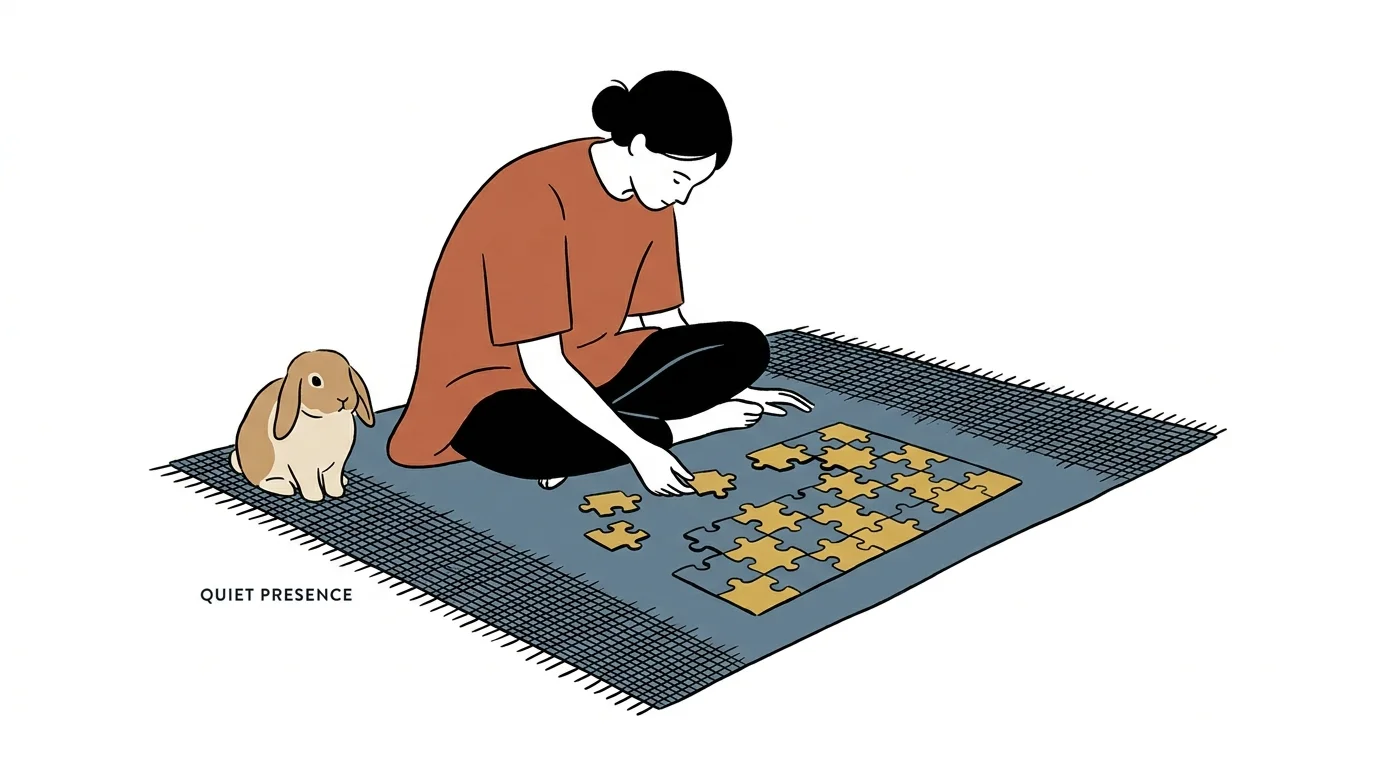
Rabbits: Quiet Companions for Mindful Bonding
Rabbits are deeply misunderstood pets that, when cared for properly, offer profound emotional support. Because they are crepuscular—meaning they are most active at dawn and dusk—they perfectly match the schedule of someone who works standard daytime hours. You can enjoy their energetic binkies (twisting leaps of joy) in the morning and their quiet companionship in the evening. Rabbits do not bark or meow; their silent presence is incredibly soothing for people who are easily overstimulated by noise.
Before welcoming a rabbit, consult a pet-friendly home guide to ensure your living space is safely prepared for a curious, free-roaming pet.
Because rabbits are prey animals, earning their trust requires you to physically lower yourself to the floor and remain completely still. You cannot force a rabbit to cuddle. Instead, you must practice patience, allowing them to approach you on their own terms. When a rabbit finally chooses to hop over and rest its chin on your ankle, demanding pets, the emotional reward is immense. This process teaches you patience, emotional regulation, and the value of quiet presence.
Integrating a rabbit into your home lifestyle requires thoughtful preparation. They are highly intelligent and easily litter-box trained. The simplest method is to place a layer of safe, paper-based bedding in a large litter pan and top it generously with fresh Timothy hay, as rabbits naturally prefer to graze while they do their business. You will also need to “bunny-proof” your home by protecting electrical cords with split-loom tubing. For budget-friendly enrichment, stuff empty toilet paper rolls with hay and a few dried herbs. Watching them enthusiastically toss and chew their DIY toys provides excellent daily entertainment.
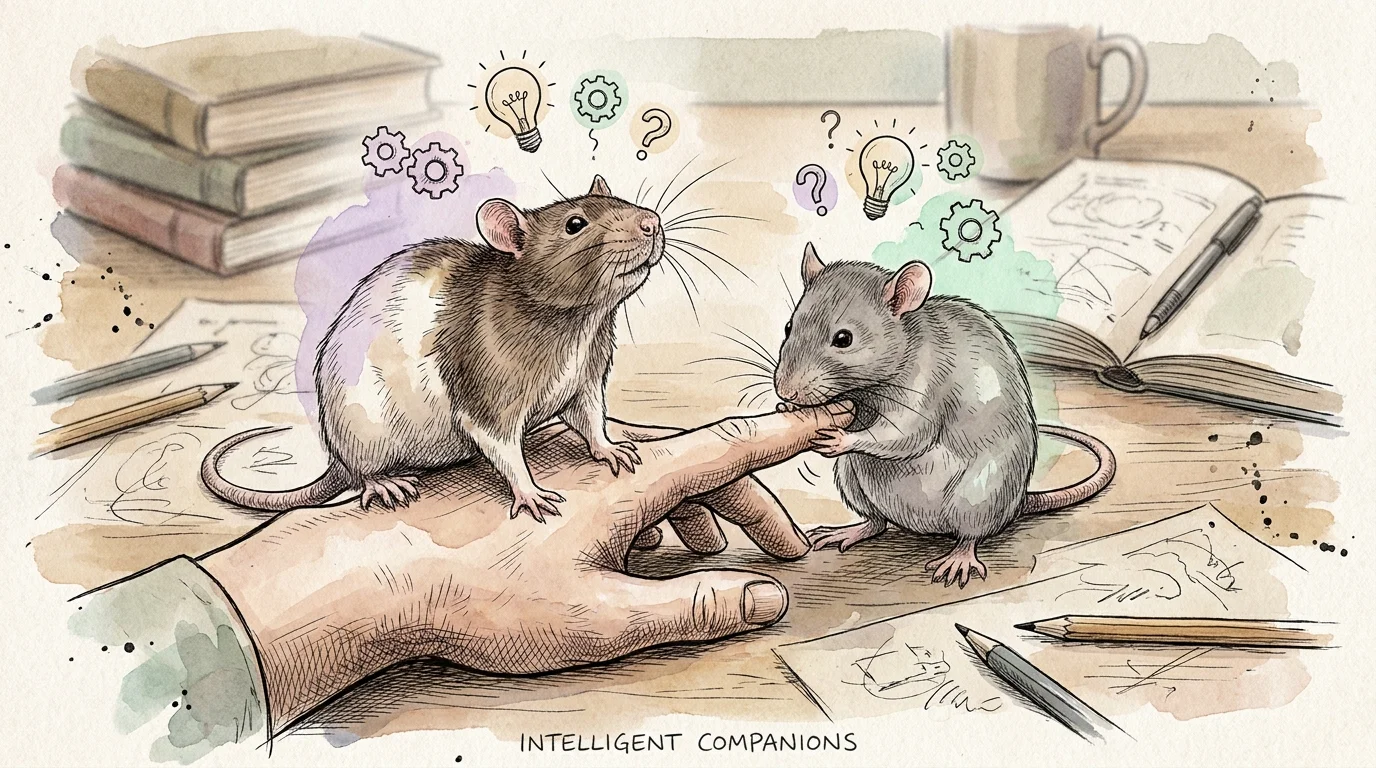
Fancy Rats: Highly Empathetic Problem Solvers
Do not let outdated stereotypes deter you; fancy rats are widely considered the “pocket dogs” of the small pet world. They are intensely social, meticulously clean, and fiercely intelligent. What makes fancy rats exceptional for stress relief is their documented capacity for empathy. Studies show that rats recognize distress in their cagemates and will actively work to comfort them. They extend this affection to their human caretakers, often enjoying sitting on your shoulder or sleeping in your hoodie pocket while you work or read.
To keep them happy, rats require a tall, multi-level wire cage that allows for plenty of climbing. Because they have sensitive respiratory systems, it is crucial to use dust-free bedding and ensure excellent ventilation. A major part of the joy of owning rats is decorating their cage. You can upcycle cardboard boxes, PVC pipes, and old cotton t-shirts into hammocks and hiding spots, rearranging their home weekly to give them fresh mental stimulation.
Rats thrive on cognitive challenges. You can easily teach them to come when called, spin in circles, or even fetch small objects using a clicker and small dabs of meat-based baby food as a reward. This process of habituation—gradually exposing them to new experiences and reinforcing them positively—strengthens your bond. Spending 20 minutes an evening guiding your rats through a tabletop obstacle course is a highly engaging activity that diverts your focus away from workplace stress and anchors you in a moment of pure, playful fun.

Small Birds: Cheerful Routine Builders
For those who find silence oppressive, small birds like Canaries, Zebra Finches, or Budgerigars bring a bright, musical energy into the home. Their morning chirps and complex songs create a lively, optimistic atmosphere. Caring for birds imposes a healthy, strict daily routine. Because they require fresh water, cage maintenance, and chopped vegetables early in the day, they gently force you out of bed, giving your morning immediate purpose and structure.
While small birds are not always hands-on pets like dogs or cats, the auditory comfort they provide is immense. Earning a small bird’s trust requires slow, deliberate movements and a calm demeanor. By implementing handling strategies from Fear Free Pets, you can ensure your home environment minimizes visual and auditory stressors, allowing your feathered companions to feel completely secure. This involves speaking softly, avoiding sudden lunges, and using positive reinforcement to encourage them to step onto your finger voluntarily.
Environmental safety is critical for birds. Their respiratory systems are highly efficient but extremely sensitive. You must eliminate all Teflon (PTFE) non-stick cookware, aerosol sprays, and scented candles from your home, as the fumes can be instantly fatal to them. Making these lifestyle adjustments often leads to a healthier, more natural home environment for you as well. In the evening, covering their cage with a dark cloth to ensure they get their required 10 to 12 hours of uninterrupted sleep becomes a peaceful ritual, signaling to both of you that it is time to wind down for the night.
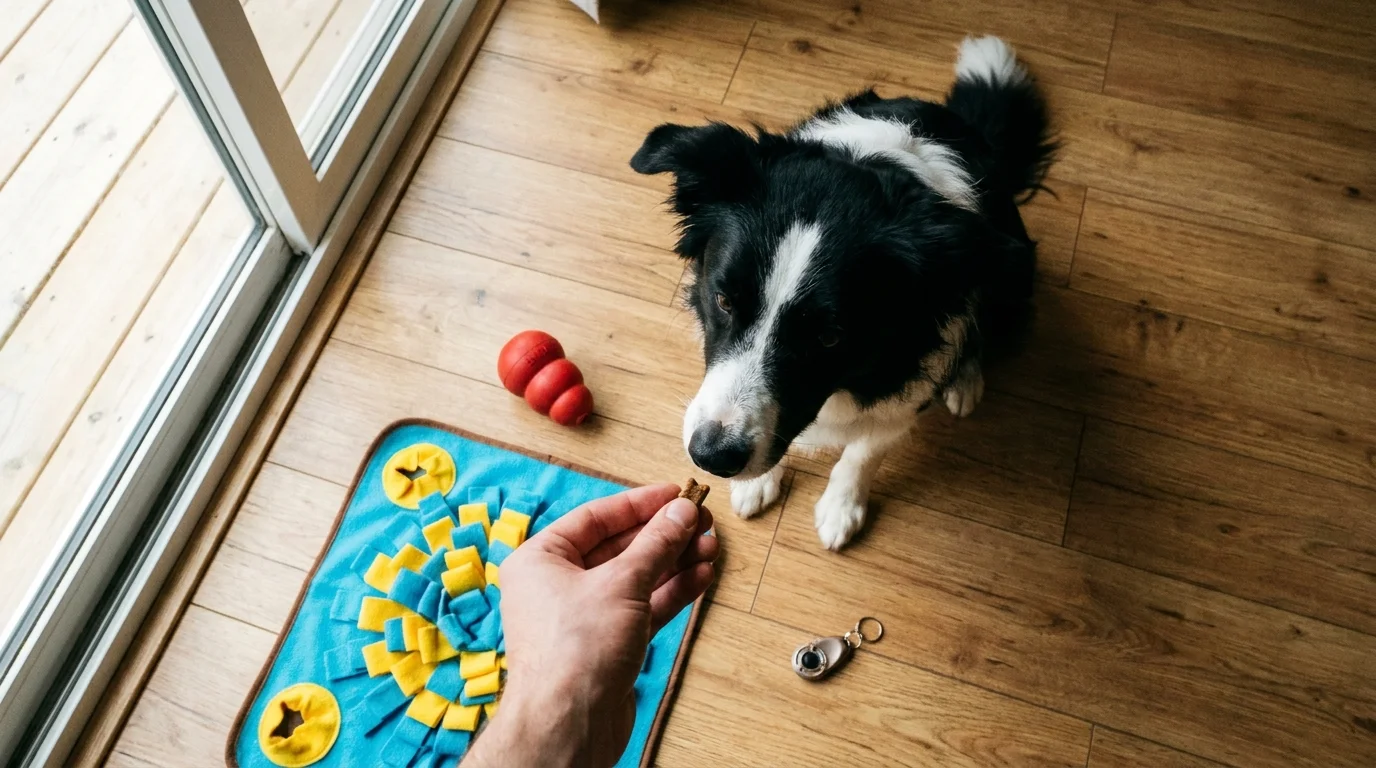
Shared Enrichment Activities to Boost Your Mood
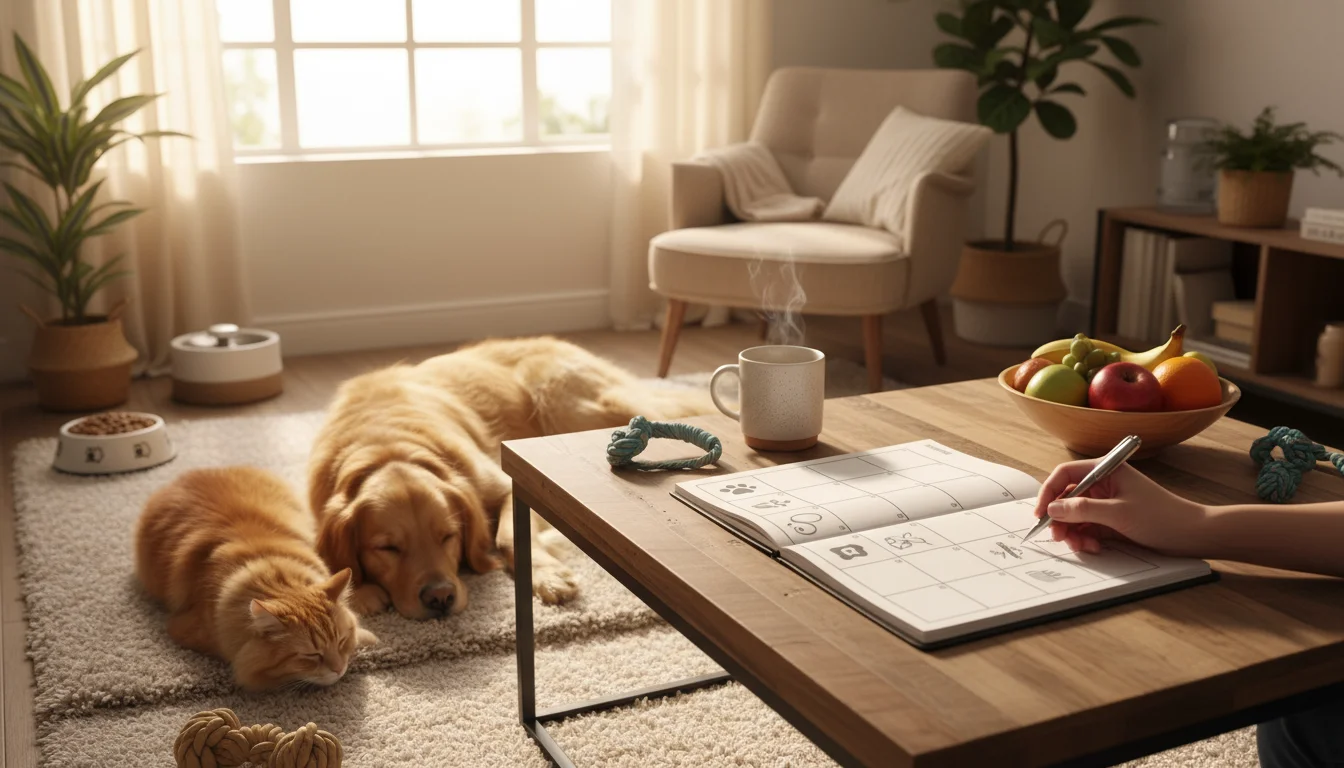
Providing enrichment for your pet is not just about keeping them busy; it is an active bonding exercise that significantly boosts your own mental health. Engaging in these activities releases dopamine in both the human and the animal. Below is a practical guide to shared activities that promote calmness and connection.
| Pet Type | Calming Bonding Activity | Frequency | Emotional Benefit |
|---|---|---|---|
| Dogs | Lick mats spread with plain yogurt and frozen | 2-3 times/week | Licking releases endorphins in dogs and gives you 20 minutes of quiet time. |
| Cats | Grooming with a soft, silicone bristle brush | Weekly | Mimics maternal grooming, deepening trust and lowering your heart rate. |
| Fish | Aquascaping and live plant pruning | Weekly | Highly creative, meditative task that yields a beautiful visual reward. |
| Guinea Pigs | Hand-feeding fresh, leafy greens | Daily | Encourages gentle, quiet interaction and positive association. |
| Rabbits | Floor time (lying quietly in their space) | Daily | Forces you to practice physical stillness and mindful presence. |
| Rats | Solving DIY cardboard puzzle boxes | 3-4 times/week | Provides mental stimulation and highly entertaining, engaging observation. |
| Birds | Whistling or playing soft acoustic music | Daily | Fosters a cheerful auditory environment and encourages vocal mimicry. |
You do not need to stretch your budget to provide excellent enrichment. While heavy-duty rubber puzzle toys are fantastic investments, a simple towel rolled up with dry kibble hidden inside makes an excellent, free “snuffle mat” for dogs and cats. The goal is shared engagement, not expensive gear.
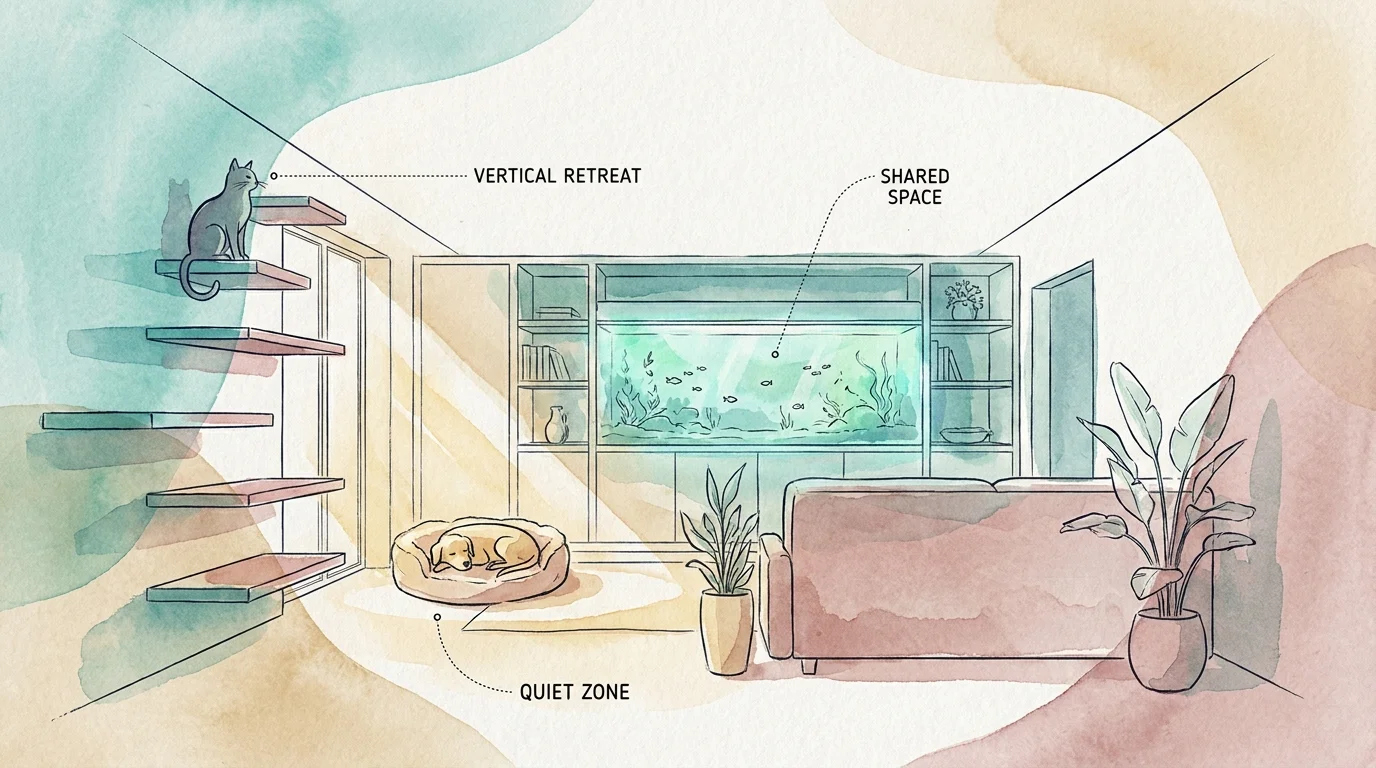
Multi-Pet Dynamics: Maintaining a Peaceful Home
Bringing a new pet into your home to help with stress is a wonderful idea, provided it does not create conflict with the pets you already have. A chaotic, tension-filled household will elevate your anxiety rather than reduce it. Managing multi-pet dynamics requires strategic planning, patience, and a deep understanding of animal behavior.
“A harmonious multi-pet household requires patient, staggered introductions and ensuring every animal has independent access to vital resources to prevent resource guarding.” — American College of Veterinary Behaviorists (ACVB) Guidelines
Never rush an introduction between two animals. Begin with scent swapping. Keep the new pet in a dedicated, secure basecamp room. Take a clean towel, gently rub it on the new pet, and place it near your resident pet’s food bowl, and vice versa. This allows them to investigate the new arrival’s scent while experiencing something positive (eating). Once they are comfortable with the scent, move to visual introductions through a sturdy baby gate, rewarding both animals heavily with high-value treats for calm, quiet behavior.
Resource management is the cornerstone of household peace. Ensure there are always multiple feeding stations, water bowls, and resting areas distributed throughout the house. For cats, the golden rule of litter boxes is one per cat, plus one extra, spread across different rooms to prevent territorial blocking. By proactively managing their environment, you eliminate the root causes of inter-pet conflict, ensuring your home remains the relaxing sanctuary you need it to be.
Frequently Asked Questions
What is the easiest pet for a senior citizen?
For seniors, low-maintenance pets that do not pose a tripping hazard or require rigorous physical exercise are best. Adult or senior rescue cats are phenomenal companions, as they are already litter-trained and generally have lower energy levels. Small, older dogs or a beautifully planted freshwater aquarium also provide excellent companionship and stress relief without demanding strenuous daily hikes.
Do I need a professional trainer for my emotional support animal?
No special training or official registry is legally required for an animal to be considered an Emotional Support Animal (ESA); they simply need to provide comfort to an individual with a diagnosed mental health condition. However, investing time in basic positive reinforcement training ensures your pet is well-behaved, confident, and easy to live with, which naturally minimizes your own daily stress.
How do I manage pet care on a tight budget?
Pet ownership does not have to be financially overwhelming. You can save money by making DIY enrichment toys from household recyclables, prioritizing preventative care (like routine vaccinations and dental health) to avoid massive emergency vet bills, and adopting from local shelters whose fees often include initial medical care, microchipping, and spay/neuter surgeries.
Are there hypoallergenic pets for allergy sufferers?
While no warm-blooded animal is 100% hypoallergenic, certain dog breeds with hair instead of fur (like Poodles or Schnauzers) produce less dander. If allergies are severe, consider non-mammalian companions. Aquarium fish, Leopard Geckos, or small birds can offer incredible stress relief without triggering an allergic response.
Can a pet actually cure my anxiety?
A pet cannot cure a clinical anxiety disorder, but they are highly effective complementary companions that help manage symptoms. They provide routine, enforce physical activity, offer tactile comfort, and ground you in the present moment. Always pair the emotional support of a pet with professional medical or psychological guidance for comprehensive mental health care.
For expert pet care guidance, visit
Rover — Pet Care Blog, Preventive Vet, American Veterinary Medical Association (AVMA) and American Kennel Club (AKC).
Disclaimer: This article is for informational purposes only and is not a substitute for professional veterinary advice, diagnosis, or treatment. Always consult with a licensed veterinarian for medical concerns about your pet.




Leave a Reply