đŸ¶đŸ± Everyday With Pets.com
  • Dog Care
  • Cat Care
  • Pet Health
  • Lifestyle & Fun
  • Training & Behavior
  • Product Reviews

8 Pets That Love Following Their Owners Everywhere

May 13, 2026 · Uncategorized
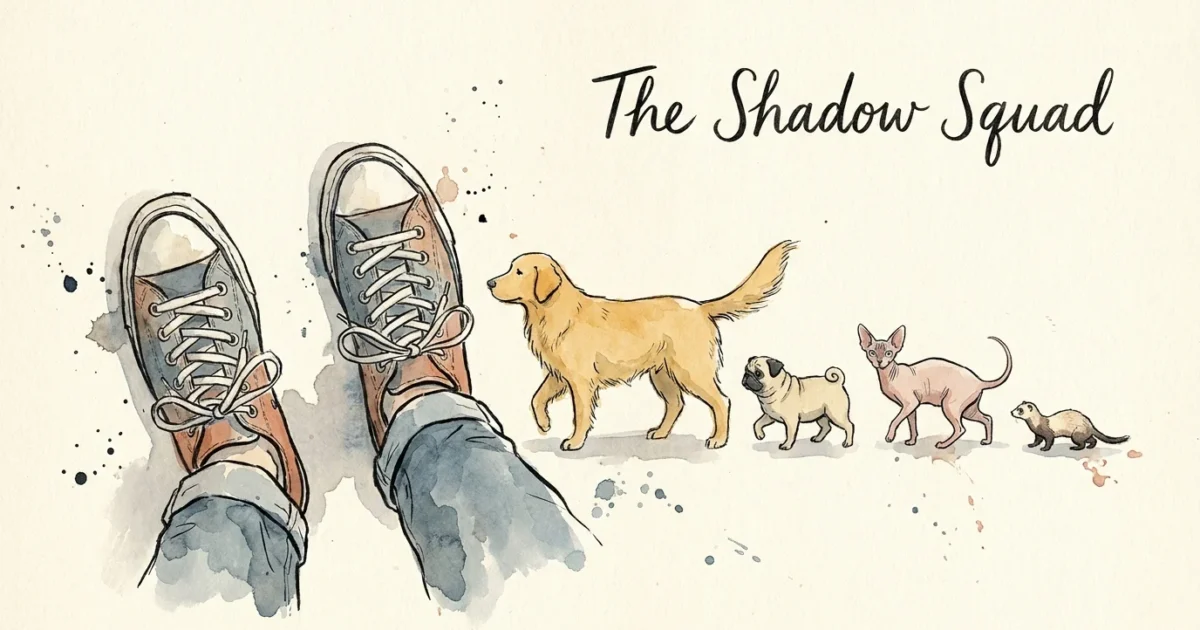
Ink and watercolor illustration of a person walking with a line of different pets following closely behind their heels.

Living with a pet who follows your every move is a rewarding experience that cements an unbreakable bond. Whether you are cooking dinner, working at your desk, or simply walking to another room, these loyal companions insist on being right by your side. This “velcro” behavior stems from centuries of breeding, natural pack instincts, and profound affection for their chosen humans. Understanding which species and breeds naturally crave this constant proximity helps you meet their emotional needs. By recognizing the unique traits of highly attached animals, you can provide the perfect balance of engagement, affection, and gentle boundary-setting to ensure your companion thrives safely and happily.
Table of Contents

  • The Psychology Behind Clingy Pets
  • 1. Golden Retrievers: The Ultimate Velcro Dogs
  • 2. Sphynx Cats: Hairless and Highly Attached
  • 3. Cockatoos: The Avian Shadow
  • 4. Pugs: Pocket-Sized Companions
  • 5. Ragdoll Cats: Feline Floppy Friends
  • 6. Ferrets: Curious and Constantly Close
  • 7. Chihuahuas: Fiercely Loyal Lap Dogs
  • 8. Guinea Pigs: Herd Animals Craving Connection
  • Is It Love or Separation Anxiety?
  • How to Encourage Independence Safely
  • Frequently Asked Questions
An artistic diagram showing a golden connection between a heart and a pet brain, labeled 'The Oxytocin Loop'.
The oxytocin loop connects the heart and brain, illustrating the biological bond between pets and their pack.

The Psychology Behind Clingy Pets

The urge to shadow a human companion is not a random behavioral quirk; it is deeply rooted in an animal’s evolutionary history, genetics, and socialization. For pack animals like dogs, staying close to the family unit is a survival mechanism that has evolved over thousands of years. Early canines relied on their pack for hunting, warmth, and protection. As humans domesticated these animals, we effectively became their surrogate pack leaders and family members. According to the American Kennel Club (AKC), many breeds were specifically developed to work closely alongside humans, making their desire to follow you a deeply ingrained genetic trait rather than just a learned habit.

Beyond genetics, the simple act of being near you releases positive neurochemicals in your pet’s brain. Studies show that when humans and dogs, or even humans and cats, engage in mutually affectionate behaviors, both experience a surge of oxytocin—often called the “love hormone.” This chemical reinforces the bond and makes the physical proximity feel inherently rewarding. Your pet follows you because your presence makes them feel safe, happy, and relaxed.

Furthermore, pets are highly observant creatures that learn through routine and reinforcement. They quickly figure out that following you often leads to exciting outcomes: a dropped piece of food in the kitchen, a sudden play session in the living room, or a walk outside. They monitor your micro-movements—putting on shoes, grabbing keys, or shifting your weight—to anticipate what happens next. Understanding this psychology allows you to appreciate their devotion while managing their expectations, ensuring they remain confident even when you cannot be right beside them.

A Golden Retriever leans affectionately against its owner's leg in a sunlit, messy morning kitchen.
This devoted golden retriever stays glued to its owner’s side while they pour their morning coffee.

1. Golden Retrievers: The Ultimate Velcro Dogs

When you picture a dog happily trailing behind its owner, a Golden Retriever often comes to mind. Bred originally as sporting dogs in the Scottish Highlands, Golden Retrievers were tasked with retrieving waterfowl for hunters. This specific job required a dog that was not only athletic and gentle-mouthed but also incredibly attentive to its handler’s location and commands. Today, those same working traits translate into a family dog that wants to be involved in whatever you are doing.

Golden Retrievers are famous for their eagerness to please. They thrive on physical affection and verbal praise, meaning they actively seek out interactions throughout the day. It is incredibly common for a Golden Retriever to follow you from room to room, often carrying a favorite toy, a sock, or a slipper in their mouth. This oral fixation combined with their desire for proximity is their way of offering a gift and initiating connection.

To keep a Golden Retriever happy, you must engage their minds and bodies. Because they are so people-oriented, they do not do well when left alone in a backyard for long stretches. They require daily exercise, interactive play, and to be treated as a core member of the household. Incorporating them into your daily chores—such as teaching them to carry the mail or clean up their toys—satisfies their working drive while honoring their need to stay close to your side.

A hairless Sphynx cat sits on its owner's shoulders like a scarf while they work at a laptop.
This hairless Sphynx cat perches on its owner’s shoulder, staying close while they work at a laptop.

2. Sphynx Cats: Hairless and Highly Attached

While cats often carry a reputation for aloofness, the Sphynx shatters every feline stereotype. Known for their striking hairless appearance, Sphynx cats are famously affectionate, outgoing, and exceptionally demanding of their owners’ attention. Feline experts at the Cat Fanciers’ Association (CFA) note that the Sphynx requires substantial human interaction and thrives best when integrated into every aspect of their owner’s daily routine.

A significant reason for their clingy nature is physiological. Lacking a typical fur coat, Sphynx cats are essentially living heat-seeking missiles. They lose body heat rapidly and rely on their environment—and their humans—to stay warm. You will frequently find a Sphynx perched on your shoulders while you walk around the house, burrowed under the blankets against your legs at night, or curled up directly on your laptop keyboard.

Their need for physical contact extends beyond warmth; they are highly social animals that bond intensely with their families. They greet owners at the door, follow them into the bathroom, and enthusiastically participate in activities. However, their unique anatomy requires specific care. Because they do not have fur to absorb the natural oils their skin produces, they need regular sponge baths or gentle wipe-downs to prevent greasy buildup and skin issues. This mandatory grooming routine only deepens the physical bond and trust between you and your hairless companion.

A white cockatoo perches on its owner's shoulder and gently preens them while they do laundry.
A white cockatoo perches on its owner’s shoulder, acting as a feathered shadow while she folds laundry.

3. Cockatoos: The Avian Shadow

Companion birds are remarkably intelligent, but Cockatoos take the concept of attachment to an entirely different level. In the wild, Cockatoos are flock animals that rely on their family group for survival, foraging, and emotional support. When you bring a Cockatoo into your home, you become their flock. They do not naturally understand the concept of solitary independence; to a Cockatoo, isolation is unnatural and stressful.

Cockatoos love to ride on shoulders, assist with household chores by inspecting everything you touch, and demand physical affection. They are often referred to as “velcro birds” because they will quite literally cling to your clothing to avoid being put down. They crave head scratches, gentle cuddling, and constant verbal interaction.

While this deep bond is endearing, it requires careful management. A Cockatoo that becomes too dependent on an owner’s constant presence can quickly develop severe behavioral issues, such as excessive screaming, aggression, or feather destructive behavior (plucking) when left alone. Avian experts strongly recommend teaching Cockatoos independent play from a young age. Providing highly engaging foraging toys, establishing a predictable routine, and ensuring they have supervised out-of-cage time that does not always involve direct physical handling will help your avian shadow develop into a well-adjusted companion.

A pug follows closely behind its owner's feet as they walk down a sunlit hallway.
A loyal pug follows closely behind its owner’s heels as they walk through a sunlit home hallway.

4. Pugs: Pocket-Sized Companions

Unlike sporting or working breeds that follow owners out of a desire for a job, Pugs follow their owners because companionship is the only job they were ever bred to do. Originating in ancient China, Pugs were highly valued by Chinese emperors and lived luxurious lives as cherished lap dogs. Centuries of breeding for the sole purpose of human companionship have resulted in a dog that firmly believes its rightful place is wherever you happen to be.

Pugs are intuitive, expressive, and heavily motivated by food and affection. They will happily trail behind you into the kitchen in hopes of a dropped morsel, then follow you to the sofa for a nap. Because they are a brachycephalic (flat-faced) breed, they are not suited for strenuous exercise or extreme temperatures. Their ideal day consists of short, gentle walks followed by hours of resting at—or on—your feet.

This deep attachment makes them wonderful pets for seniors, apartment dwellers, or anyone looking for a constant, loving presence. However, their tendency to stay underfoot means owners must be cautious when moving around the house. Training your Pug to go to a designated bed or mat in the rooms you frequent the most can keep them safe from being stepped on while still allowing them to supervise your activities.

A large, fluffy Ragdoll cat lies completely limp and relaxed across its owner's lap on a blue sofa.
A fluffy Ragdoll cat relaxes on its owner’s lap, proving why they are the ultimate floppy companions.

5. Ragdoll Cats: Feline Floppy Friends

The Ragdoll is a relatively modern cat breed, developed in the 1960s, and bred specifically for a docile, affectionate temperament. They earned their unique name from their charming tendency to go completely limp and relaxed when picked up by a trusted human. Ragdolls exhibit many behavioral traits more commonly associated with dogs; they love to play fetch, come when called, and will eagerly follow their owners from the bedroom to the kitchen to the bathroom.

Unlike more independent cat breeds that prefer high vantage points away from the commotion, Ragdolls prefer to remain at ground level, right in the middle of the action. They are intensely curious and want to investigate whatever you are doing. If you are reading a book, they will lay across the pages. If you are folding laundry, they will sit in the basket.

Because of their exceptionally trusting and gentle nature, Ragdolls should be kept strictly as indoor cats. They lack the aggressive self-preservation instincts needed to navigate the dangers of the outdoors. Providing them with safe indoor enrichment, such as interactive wand toys and low scratching posts, will keep them stimulated. Their soft, trilling vocalizations and constant presence make them ideal companions for families seeking a highly engaged feline friend.

A curious ferret peeks out of the front pocket of its owner's hoodie during a craft project.
A curious ferret peeks from a hoodie pocket while its owner sorts through colorful craft supplies.

6. Ferrets: Curious and Constantly Close

Ferrets are members of the mustelid family and possess a vibrant, mischievous energy that is entirely unique. While they are known for sleeping up to 14 to 18 hours a day, the hours they spend awake are filled with intense curiosity and a strong desire to interact with their owners. A bonded ferret will eagerly follow you around the house, nipping at your socks, investigating your shoes, and demanding to be picked up.

Ferrets view their owners as giant playmates. When a ferret is excited, they perform a bouncing, backward hop known as the “weasel war dance,” often accompanied by a soft clucking sound called “dooking.” They want to involve you in this play. They are notorious thieves and will often steal small items—like keys, socks, or pens—and hide them under furniture, looking back to see if you are following them to their stash.

Because of their small size and tendency to get right under your feet, having a ferret follow you requires extreme vigilance. Ferret-proofing your home is mandatory to ensure they do not slip into recliners, open appliances, or small holes in the cabinetry. When you are moving quickly through the house, it is often safest to carry your ferret or place them in a secure playpen to protect them from accidental injury while still allowing them to watch you.

A tiny Chihuahua stands alert on its owner's lap while they sit together on a garden patio.
A loyal Chihuahua stands alert on its owner’s lap, proving why these dogs are such devoted companions.

7. Chihuahuas: Fiercely Loyal Lap Dogs

The Chihuahua may be the smallest dog breed in the world, but they possess an outsized personality and an intense capacity for loyalty. Originating in Mexico, these tiny dogs were historically kept as companions, and they take that role incredibly seriously today. Chihuahuas are famous for becoming “one-person dogs.” While they can be affectionate with an entire family, they typically choose one primary human to bond with and will follow that person relentlessly.

Due to their tiny stature and low body fat, Chihuahuas get cold easily. This drives them to seek out the warmth of their favorite human. It is practically a breed standard for a Chihuahua to burrow under blankets, inside sweaters, or curl up tightly against your side. If you get up to leave the room, your Chihuahua will emerge from their warm nest to trot dutifully behind you.

This extreme loyalty is endearing, but it requires responsible management. Chihuahuas can easily become overprotective of their chosen person, exhibiting aggressive behaviors like growling or snapping when others approach. Early, positive socialization is crucial. By exposing your Chihuahua to a wide variety of people, environments, and other animals in a gentle, rewarding way, you ensure their deep attachment to you does not manifest as fear-based aggression toward the rest of the world.

A guinea pig lies nose-to-nose with its owner on a soft rug, showing a moment of quiet connection.
A fluffy guinea pig snuggles against its owner’s face while they rest together on a shaggy rug.

8. Guinea Pigs: Herd Animals Craving Connection

You might not expect a small prey animal to act like a velcro pet, but Guinea Pigs (cavies) are incredibly social creatures that form deep, communicative bonds with their owners. In the wild, Guinea Pigs live in herds for safety and companionship. When brought into a home, they instinctively view their humans as an extension of their herd, especially if handled gently and frequently from a young age.

While they cannot follow you around the house with the same freedom as a dog or cat, a bonded Guinea Pig will follow you constantly with their eyes and their voices. They quickly learn the sound of your footsteps, your voice, and the opening of the refrigerator door. They will greet you with enthusiastic “wheeking” (a loud squeal of excitement) whenever you enter the room, demanding your attention and fresh vegetables.

During supervised floor time in a secure, enclosed space, a well-socialized Guinea Pig will actively choose to follow you as you walk or crawl around the room. They will climb into your lap and purr when petted. Because their need for social interaction is so high, it is universally recommended by exotic veterinarians to keep Guinea Pigs in pairs or small groups. Even with a cavy companion, they will still eagerly seek out your presence for treats, chin scratches, and the security your towering presence provides.

A split illustration comparing a relaxed pet at home with an anxious pet waiting at a closed door.
A calm dog sleeps near its owner while an anxious pet paces by a closed door.

Is It Love or Separation Anxiety?

Having a pet that loves to be near you is wonderful, but it is vital to distinguish between a healthy, affectionate attachment and clinical separation anxiety. A pet with a healthy attachment follows you because they enjoy your company. They are relaxed, curious, and comfortable. When you leave the house, they might watch you go or wait by the door for a few minutes, but they quickly settle down to nap, play with toys, or eat their food.

Separation anxiety, on the other hand, is a serious behavioral condition rooted in panic. Veterinary behaviorists from the American College of Veterinary Behaviorists (ACVB) emphasize that true separation anxiety involves distress and panic, whereas healthy attachment simply involves a preference for your company. A pet suffering from separation anxiety goes into a state of severe distress the moment they realize you are leaving, or sometimes even just when you move out of their sightline within the home.

If you suspect your pet has separation anxiety, it is crucial to consult your veterinarian or a certified animal behaviorist. They can help you develop a desensitization plan and, if necessary, prescribe anti-anxiety medications to lower your pet’s panic threshold so they can learn to feel safe alone.

Use this table to help identify the differences in your pet’s behavior:

Behavioral Indicator Healthy Attachment (Velcro Pet) Separation Anxiety
Body Language Relaxed muscles, soft eyes, calm breathing while following you. Pacing, panting, trembling, and hyper-vigilance.
When You Leave Watches you leave, eventually settles down to sleep or play. Vocalizes loudly (howling/screaming), attempts to escape, scratches doors.
While You Are Gone Eats food, drinks water normally, uses the litter box or holds it appropriately. Refuses food/treats, drools excessively, has destructive or elimination accidents.
When You Return Happy, wiggly greeting, then returns to normal activity level. Frantic, prolonged greeting, inability to calm down for several minutes.
A three-panel illustration showing steps to train a pet to stay calm and independent using treats and distance.
Use a treat-filled toy and gradual distance to help your dog learn to relax and stay calm.

How to Encourage Independence Safely

Even the most securely attached pet needs to learn how to self-soothe and exist comfortably without constant physical contact. Teaching your pet independence does not mean pushing them away; it means building their confidence so they feel secure relaxing on their own. This is especially important for velcro dogs and clingy cats to prevent the development of separation anxiety.

“Fostering independence in a clingy pet isn’t about breaking the bond; it’s about building their confidence. A confident pet knows they are safe and loved, even when you aren’t in the same room.” — Certified Animal Behavior Consultant

The most effective way to teach independence is through positive reinforcement and gradual distance building. Mat training, or teaching the “Place” command, is a foundational skill for this process.

  1. Select a comfortable spot: Choose a specific dog bed, mat, or blanket. Place it in the room where you spend a lot of time, but a few feet away from your exact location (like the sofa or desk).
  2. Reward for interactions: Lure your pet onto the mat with a high-value treat. As soon as all four paws are on the mat, say “Yes!” or click, and deliver the treat directly onto the mat.
  3. Encourage a settled posture: Wait for your pet to sit or lie down on the mat. Reward them for calm, relaxed body language. The goal is for them to associate the mat with positive feelings and relaxation.
  4. Build duration and distance: Slowly increase the time your pet stays on the mat before rewarding them. Then, start taking one step away from the mat, returning immediately to reward. Gradually increase the distance until you can walk across the room while they remain comfortably on their mat.
  5. Provide engaging distractions: When your pet is on their mat, provide a puzzle toy, a frozen Kong stuffed with peanut butter, or a snuffle mat. This keeps their brain engaged and creates a positive association with being slightly separated from you.

In addition to mat training, try to desensitize your pet to your departure cues. If your pet gets anxious when you put on your shoes or pick up your keys, start doing these actions randomly throughout the day without actually leaving the house. Put on your coat, sit on the couch for five minutes, and then take it off. This breaks the association between the cue and the anxiety of separation.

Frequently Asked Questions

Why does my pet follow me into the bathroom?

Bathrooms are inherently interesting to pets because they are full of novel scents and sounds. Furthermore, closed doors frustrate animals that are used to having free access to their territory and their favorite humans. When you go into the bathroom and close the door, your pet feels separated from their pack. Following you in is their way of ensuring you are safe and keeping the family unit together.

Should I ignore my pet if they are too clingy?

You should never strictly ignore a pet that is seeking comfort, as this can increase their anxiety. However, you should ignore pushy, demanding behaviors like nudging your hand aggressively or barking for attention. Wait for a moment of calm, then reward that calm behavior with your attention. Teach them that relaxed behavior earns affection, while demanding behavior does not.

Can a pet become too attached to one person?

Yes. Hyper-attachment to a single person can lead to resource guarding (where the pet growls at others who approach you) or severe separation anxiety when you are absent. To prevent this, ensure that other household members are equally involved in feeding, walking, and training the pet so they build positive associations with everyone in the home.

Do cats imprint on a single human like dogs do?

While the term “imprinting” is technically reserved for specific developmental stages in birds and livestock, cats absolutely form intense, preferred attachments to specific humans. A cat will often choose a “favorite” person based on who respects their boundaries, feeds them, and provides the type of play or physical affection they prefer most.

For expert pet care guidance, visit
Vetstreet, Fear Free Pets and The Spruce Pets.

Disclaimer: This article is for informational purposes only and is not a substitute for professional veterinary advice, diagnosis, or treatment. Always consult with a licensed veterinarian for medical concerns about your pet.

Share this article

Facebook Twitter Pinterest LinkedIn Email

Leave a Reply Cancel reply

Your email address will not be published. Required fields are marked *

Search

Latest Posts

  • Ink and watercolor illustration of a person walking with a line of different pets following closely behind their heels. 8 Pets That Love Following Their Owners Everywhere
  • A person at a kitchen table surrounded by pet bills with a bulldog at their feet, captured in a realistic home setting. 9 Pets That Are Becoming Surprisingly Expensive To Own
  • A senior man laughing with a small white dog on a sunny porch, representing the joy of low-shedding companions. 8 Dogs That Barely Shed And Are Great For Seniors
  • A silver-haired woman laughing with a Cavalier King Charles Spaniel in a sunlit, cozy living room. 8 Dogs That Are Surprisingly Easy For Seniors To Care For
  • A smiling senior woman sits on a garden bench with a Cavalier King Charles Spaniel resting its paws on her lap in the autumn sun. 8 Dog Breeds That Are Perfect For Retirees Living Alone
  • A golden retriever and a calico cat resting together in a sun-lit, cozy living room, illustrating a peaceful home environment. 7 Pets That Help Reduce Stress and Anxiety at Home
  • 8 Best Pets for Seniors Living Alone 8 Best Pets for Seniors Living Alone
  • Best Dog Toys for Aggressive Chewers: Tested and Rated - comprehensive guide Best Dog Toys for Aggressive Chewers: Tested and Rated
  • Cooling Mats for Pets: Do They Really Work? - comprehensive guide Cooling Mats for Pets: Do They Really Work?
  • 10 Essential Cat Care Products Under $50 - comprehensive guide 10 Essential Cat Care Products Under $50

Newsletter

Get the latest posts delivered to your inbox.

Related Articles

A smiling senior woman sits on a garden bench with a Cavalier King Charles Spaniel resting its paws on her lap in the autumn sun.

8 Dog Breeds That Are Perfect For Retirees Living Alone

Discover the top 8 dog breeds perfect for retirees living alone, featuring expert tips on…

Read More →
A person at a kitchen table surrounded by pet bills with a bulldog at their feet, captured in a realistic home setting.

9 Pets That Are Becoming Surprisingly Expensive To Own

Discover the hidden costs of owning nine surprisingly expensive pets and learn practical budgeting strategies…

Read More →
A senior man laughing with a small white dog on a sunny porch, representing the joy of low-shedding companions.

8 Dogs That Barely Shed And Are Great For Seniors

Discover the 8 best low-shedding dogs for seniors, featuring expert advice on breed temperament, grooming…

Read More →
A silver-haired woman laughing with a Cavalier King Charles Spaniel in a sunlit, cozy living room.

8 Dogs That Are Surprisingly Easy For Seniors To Care For

Discover the top 8 low-maintenance dogs that are surprisingly easy for seniors to care for,…

Read More →
đŸ¶đŸ± Everyday With Pets.com

Making Pet Care Simple, Every Day

TechTonic Team, L.L.C-FZ
Dubai, UAE

contact@everydaywithpets.com

Trust & Legal

  • Home
  • About Us
  • Contact Us
  • Editorial Policy
  • Privacy Policy
  • Terms and Conditions
  • Subscribe
  • Unsubscribe
  • Request to Know
  • Request to Delete
  • CA Private Policy

Categories

  • Cat Care
  • Dog Care
  • Lifestyle & Fun
  • Pet Health
  • Product Reviews
  • Training & Behavior

© 2026 đŸ¶đŸ± Everyday With Pets.com. All rights reserved.