

Your pets process the glowing shapes on your television screen differently than humans do, but many species genuinely enjoy a good movie night. Modern high-definition screens bridge the gap in animal vision, replacing the confusing strobe-light effect of older tube televisions with fluid, captivating images that stimulate your pet’s brain. Understanding how companion animals perceive broadcast media helps you provide better mental enrichment and recognize when screen time becomes overstimulating. From predatory felines tracking digital birds to intelligent parrots bobbing along to musical numbers, screen time offers surprising cognitive benefits when managed correctly. You can harness this everyday technology to alleviate separation anxiety and create highly engaging indoor environments for your animal family members.
This shared interest is common among pets that love following their owners everywhere, as they often want to be involved in whatever activity you are doing.
The Science Behind Pet Vision and Screens
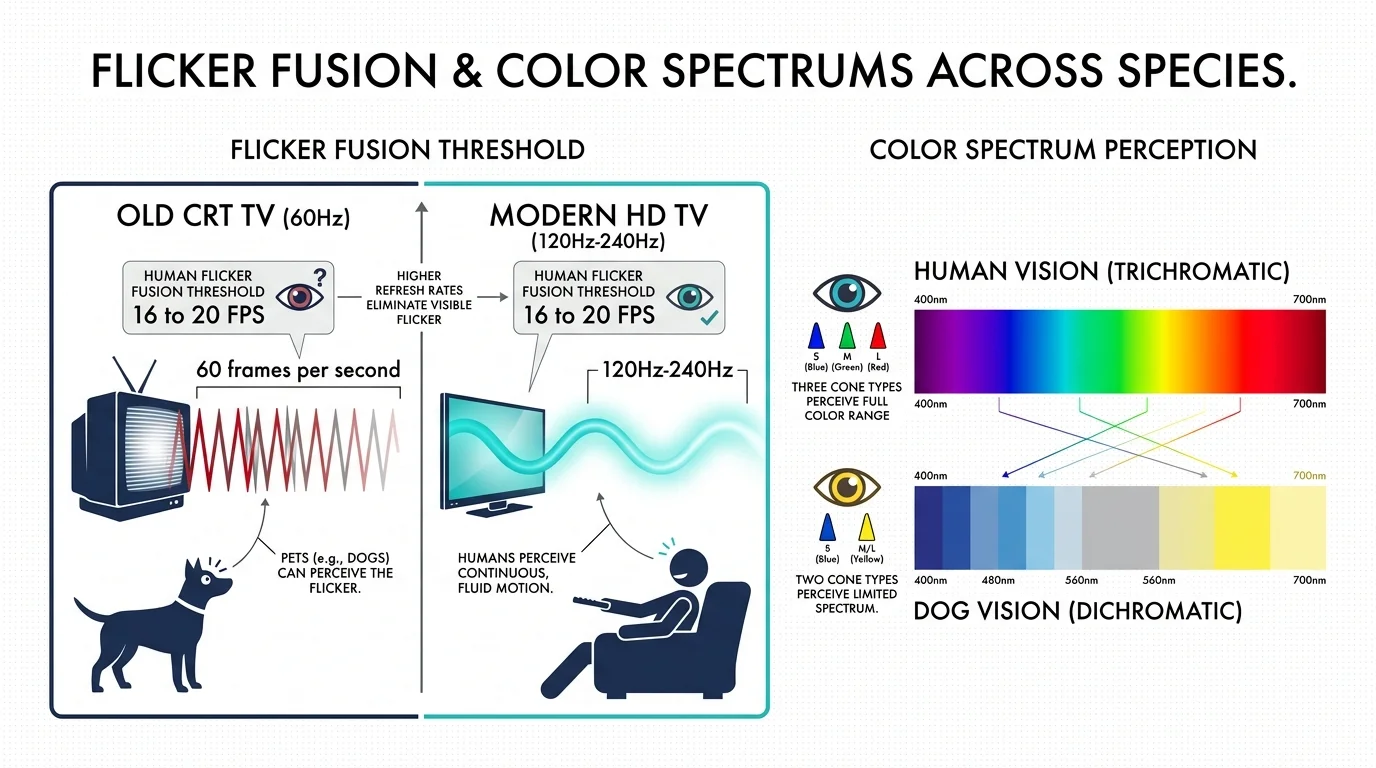
To understand why your pets suddenly seem so interested in your flat-screen television, you have to look at the mechanics of animal vision. For decades, dogs and cats completely ignored televisions. Older cathode-ray tube (CRT) televisions refreshed their images at about 60 frames per second. Humans have a flicker fusion rate of around 16 to 20 frames per second, meaning we perceived those old screens as smooth, continuous motion. However, many animals have a much higher flicker fusion rate. To them, older televisions looked like a harsh, aggressively flickering strobe light.
Monitoring how your animal’s interest in digital movement changes can be a helpful way to track senior pet health and vision quality as they age.
The transition to modern high-definition LCD, LED, and OLED screens changed everything for our pets. These modern displays refresh at 120Hz, 240Hz, or even higher, finally surpassing the flicker fusion threshold of most companion animals. For the first time in history, your dog or cat can look at a television and see exactly what you see: smooth, fluid movement. According to the American Kennel Club (AKC), dogs also possess dichromatic vision, meaning they perceive the world primarily in shades of blue and yellow. Modern screens with high contrast and vivid colors make it much easier for pets to distinguish shapes and figures.
Different species bring varying levels of visual acuity to their screen time. Understanding these biological differences helps you curate the best possible digital environment for your companion.
| Pet Species | Visual Perception Traits | Motion Sensitivity | Ideal Screen Content |
|---|---|---|---|
| Dogs | Dichromatic (blue and yellow hues) | Very High | Nature documentaries, other animals running, high-contrast imagery |
| Cats | Dichromatic (blue and green hues) | Extreme | Close-ups of birds, fish, squirrels, and laser pointers |
| Parrots | Tetrachromatic (sees full spectrum plus ultraviolet) | High | Brightly colored cartoons, musicals, and dancing figures |
| Small Mammals | Limited color perception; excellent peripheral vision | Moderate to High | Slow-moving nature scenes with soothing, low-volume audio |
1. Dogs: The Visual Hunters and Herders
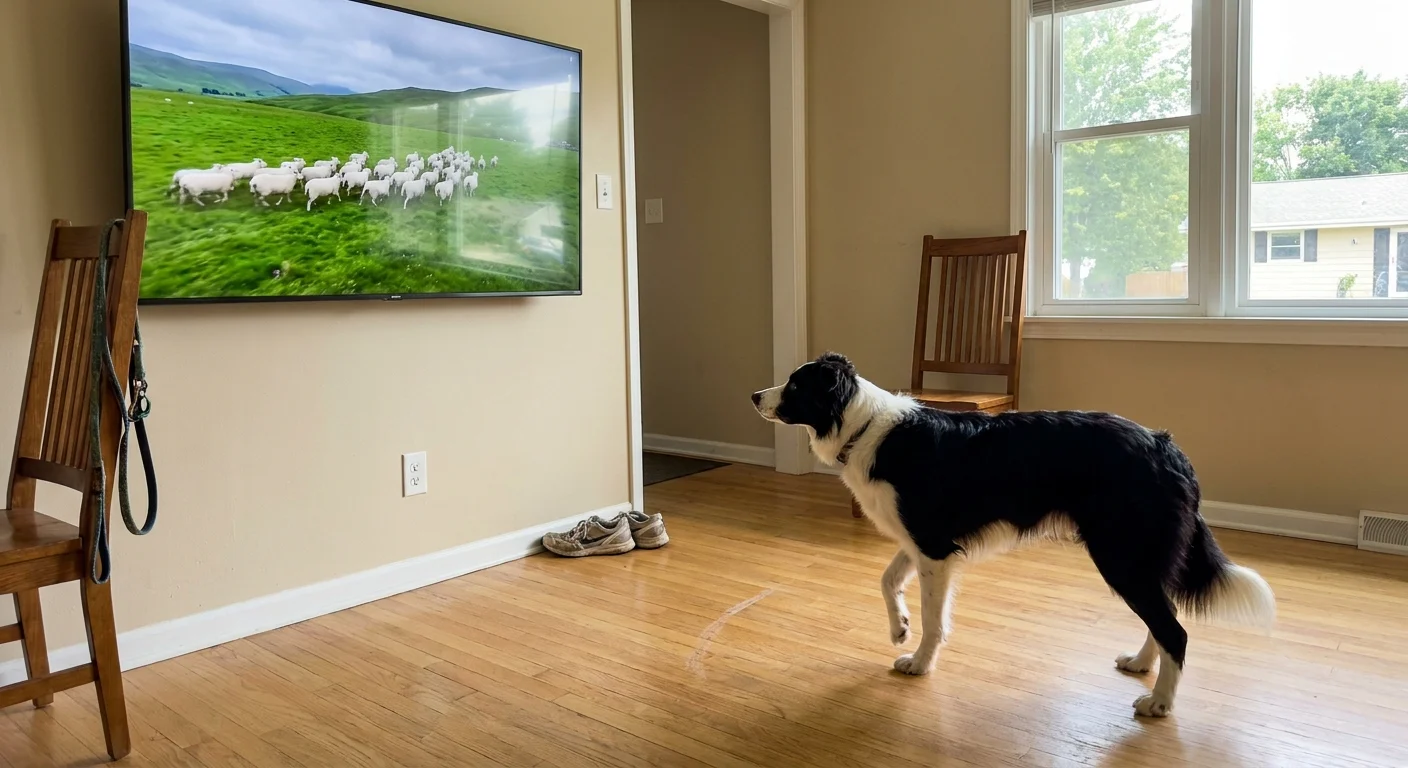
If you have ever been startled by your dog launching off the sofa to bark at a digital horse, you already know that canines are avid television watchers. However, not all dogs care about screens. A dog’s reaction to television is heavily influenced by their breed group and their primary sensory reliance. Sighthounds—such as Greyhounds, Whippets, and Salukis—are biologically hardwired to track movement across vast distances. These breeds are highly reactive to objects darting across a screen. Similarly, herding breeds like Border Collies and Australian Shepherds have a strong instinct to control movement, making them intensely focused on on-screen action.
You can also use movie time as an opportunity to practice fun tricks to teach your dog in a low-energy environment.
On days when you can’t get outside, this visual stimulation works well alongside indoor games for dogs to keep them busy.
Conversely, scent hounds like Beagles and Basset Hounds often ignore the television entirely. If a stimulus does not possess an interesting scent, they simply dismiss it as irrelevant background noise. When curating viewing material for your visually motivated dog, look for programming that features other animals. Many dogs show distinct recognition of on-screen canines and will tilt their heads in response to digital barking, whining, or howling.
If your dog becomes overly excited or anxious while watching TV, gently redirect their attention. You want television to be an enrichment tool, not a source of chronic stress. Reward your dog with treats and calm praise when they settle quietly in front of the screen rather than lunging at it.
2. Cats: The High-Definition Predators
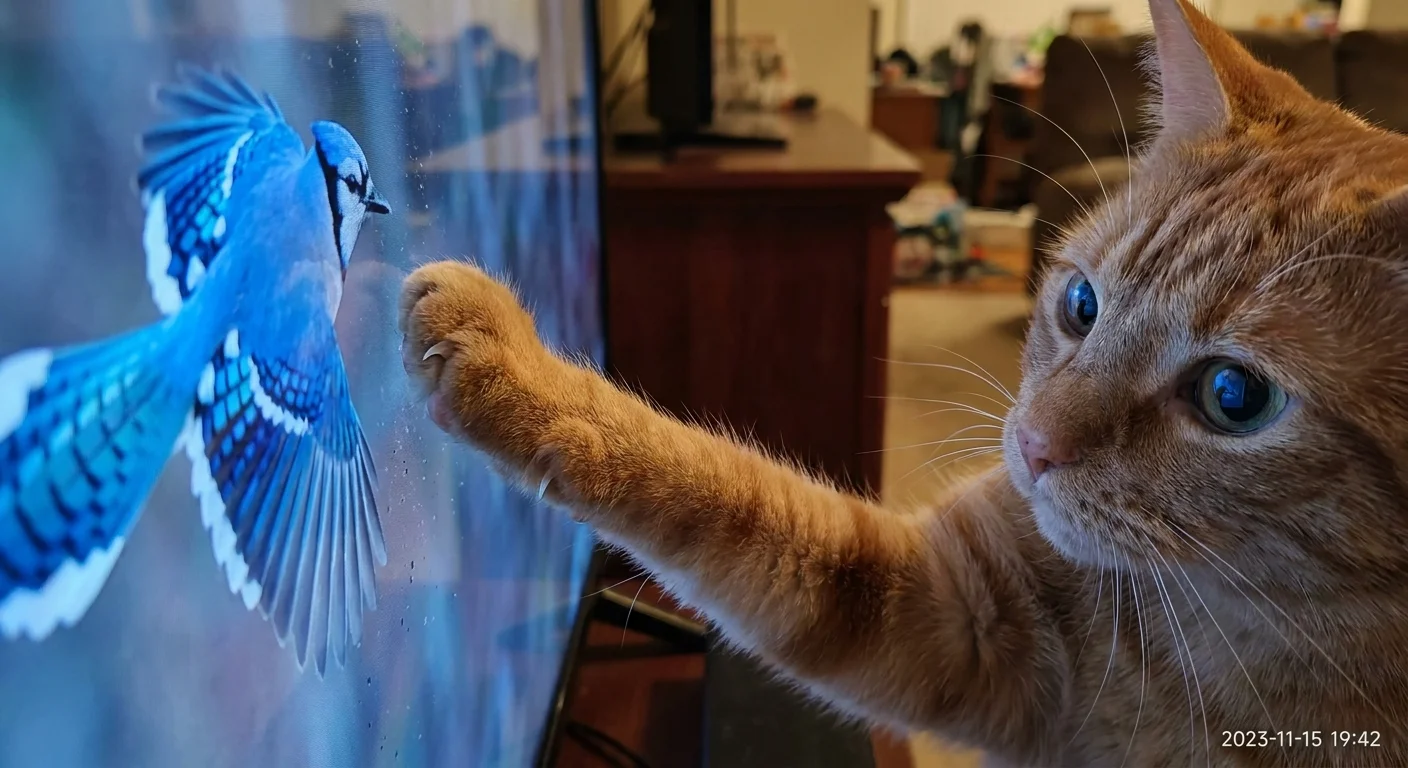
Felines are obligate carnivores with eyes specifically engineered to detect the slightest twitch of prey. For cats, television serves as a high-definition window into a world of inaccessible birds, mice, and fish. There is a reason “Cat TV” has become a massive genre on video streaming platforms; uninterrupted, close-up footage of wildlife safely captivates a cat’s predatory instincts.
For an even better viewing setup, you can try several DIY pet projects to build a comfortable window-level perch for your screen-loving cat.
Incorporating short visual sessions into your pet care routine ensures your cat stays busy even on your most hectic workdays.
Experts at Cornell University College of Veterinary Medicine emphasize that indoor cats require varied environmental enrichment to prevent behavioral issues. Screen time can absolutely be part of this enrichment strategy, offering crucial mental stimulation when you are busy or away from home. Cats will often stalk up to the television, bat at the screen, or even check behind the monitor to find where the digital bird “flew.”
However, you must manage your cat’s viewing habits carefully to prevent predatory frustration. In the wild, a cat’s hunt ends with a physical catch and a dopamine release. Television denies them this physical completion. To prevent your cat from becoming agitated, limit their screen time to short sessions and follow up immediately with physical play. Use a feather wand or a motorized mouse toy so your cat can physically catch something, satisfying their instinctual sequence of staring, stalking, and pouncing.
3. Parrots: The Colorful Critics
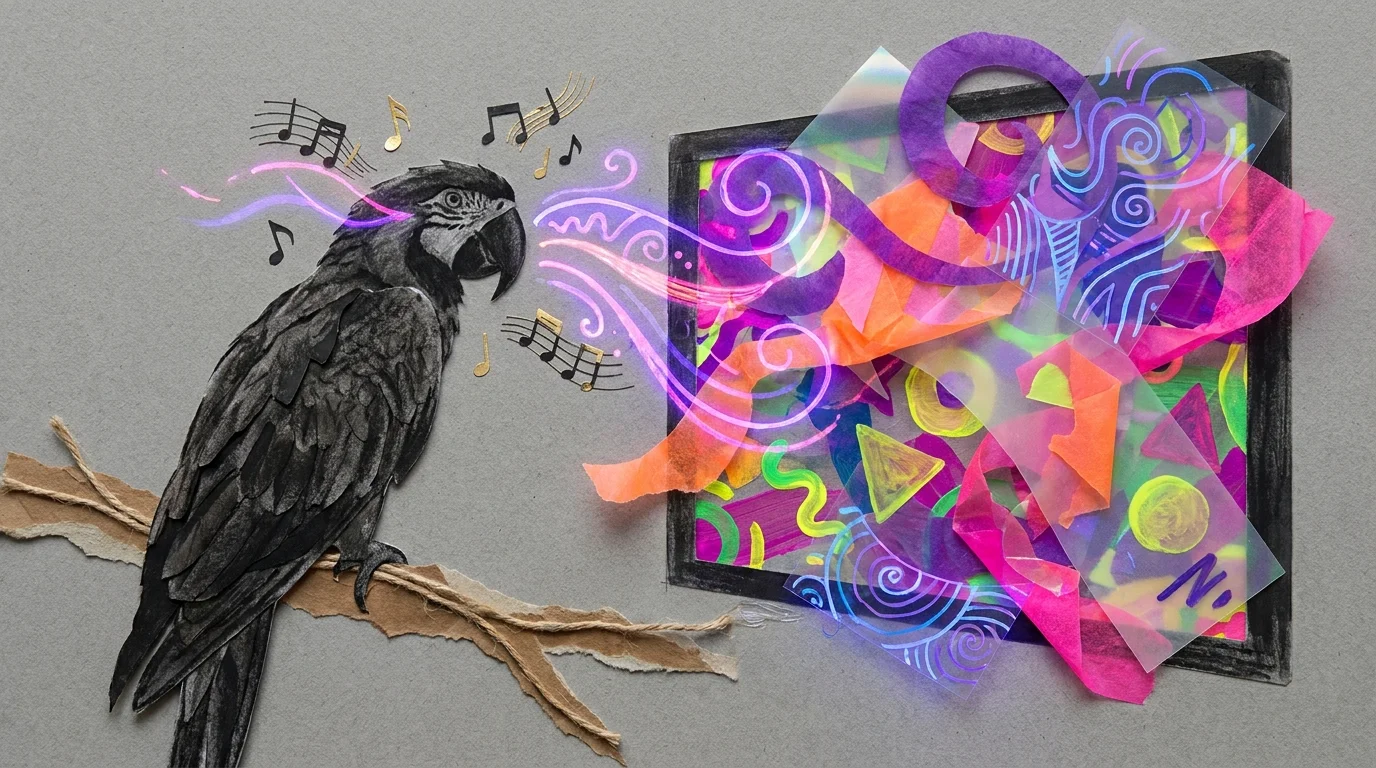
Parrots are among the most visually gifted pets you can own. Their eyes are located on the sides of their heads, granting them an incredible field of view, and they possess tetrachromatic vision. This means they see everything humans see, plus the ultraviolet spectrum. Because they process visual information so rapidly, they are incredibly sensitive to their environment. This high intelligence and visual acuity make screens highly engaging for them.
If your bird is constantly seeking interaction from digital parrots on screen, it may be one of the signs you are ready to adopt a second pet.
Their vivid reactions and colorful feathers also make these birds ideal subjects for pet photography at home.
Many parrot owners notice that their birds gravitate toward bright, high-contrast imagery. Cartoons, animated feature films, and musical performances are massive hits in the avian world. Because parrots are highly social flock animals, they often interpret television as a form of companionship. A parrot might bob its head, vocalize, or even attempt to dance along with the rhythm of the television audio.
When you leave the house, leaving the television on can prevent your bird from feeling isolated. Ensure the programming is positive and uplifting; loud, aggressive noises or scenes depicting predatory birds (like hawks or eagles) can cause significant stress. A cheerful musical or a brightly colored children’s show often provides the perfect, low-stress background environment for an intelligent, sensitive parrot.
4. Ferrets: The Curious Observers
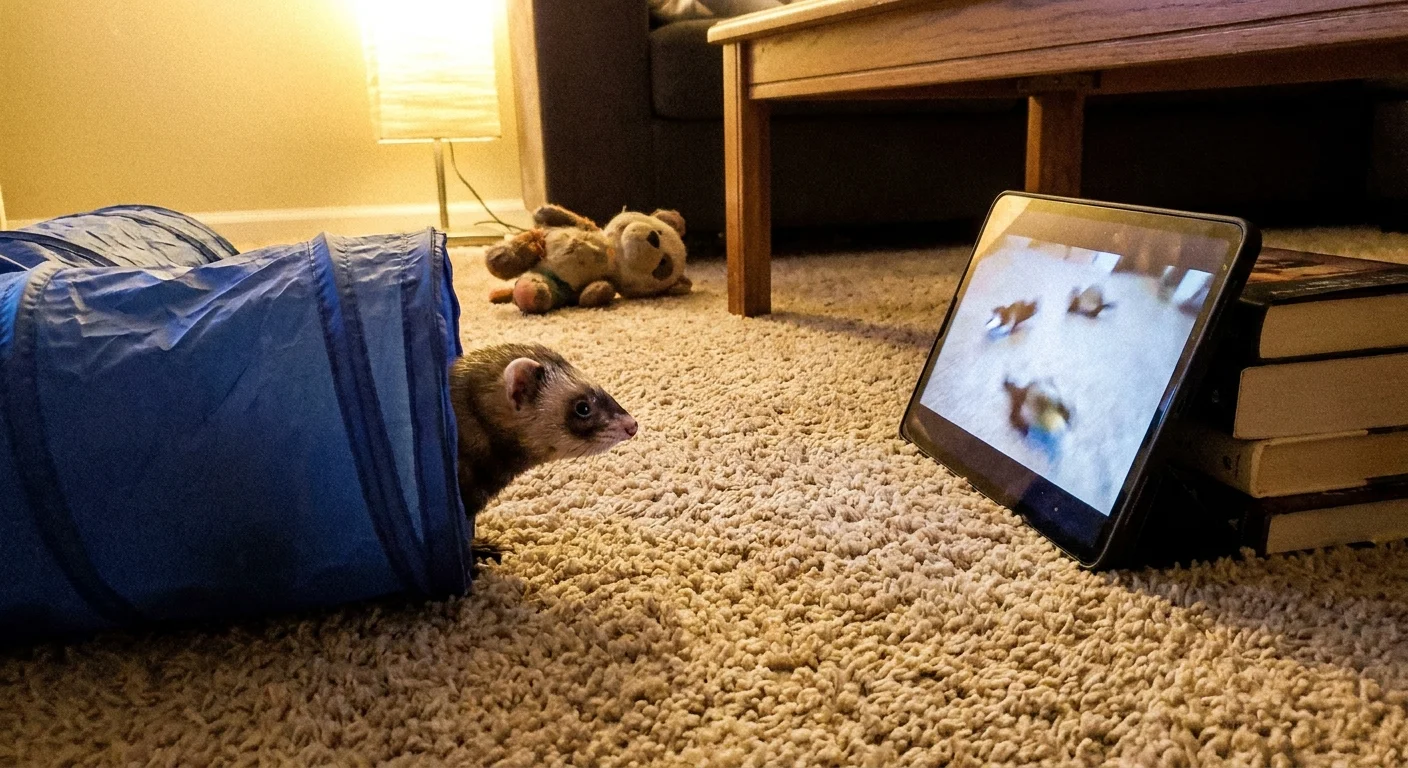
Ferrets are notorious for their high-energy antics and mischievous behavior, but they also have moments of intense curiosity. While ferrets do not possess the sharp distance vision of a dog or a cat, they are highly attuned to sudden movements, bright flashes of light, and high-pitched sounds. If a television show features quick scene cuts, squeaking noises, or rapid movement, a ferret will absolutely take notice.
To see what they get up to when you aren’t in the room, you might consider setting up one of the best pet cameras to observe their behavior.
Their television viewing style is decidedly interactive. A ferret rarely sits still for an entire program. Instead, they will notice an interesting sound or movement, freeze to evaluate the screen, and then attempt to physically investigate the source. You will frequently find a curious ferret trying to climb the entertainment center or scurrying behind the television stand to find the “hidden” animals making the noise.
Because ferrets are prone to getting into dangerous spaces, television time must always be supervised. Ensure your electronic cables are thoroughly protected with cord covers, as a ferret searching for the source of a television sound might decide to chew on the nearest wire instead.

5. Guinea Pigs: The Cozy Viewers
You might not expect a small herbivore to care about your movie choices, but guinea pigs are incredibly aware of their environment. As prey animals, guinea pigs rely on their senses to detect safety and danger. While they are not actively tracking digital prey like a cat would, they are highly receptive to the ambient light and sound a television provides.
While they enjoy watching the screen with you, always be careful to keep human foods that are dangerous for pets out of their reach during movie snacks.
Since they are naturally stoic, it is also important to learn how to spot signs your pet is in pain during these periods of quiet observation.
Guinea pigs thrive in calm, predictable environments. They tend to enjoy slow-moving visuals accompanied by soft, classical music or gentle nature sounds. Programs that feature aggressive audio—such as loud action movies, barking dogs, or shouting—can trigger their startle reflex, sending them scurrying into their hideouts.
If you keep your guinea pig enclosure in your living room, you can make television time an enjoyable bonding experience. Provide them with a fresh pile of hay and a secure, covered space from which they can observe the room. The rhythmic, predictable drone of a quiet television program can actually help mask unpredictable outdoor noises, making your guinea pigs feel more secure in their space.
6. Rabbits: The Background Noise Enthusiasts
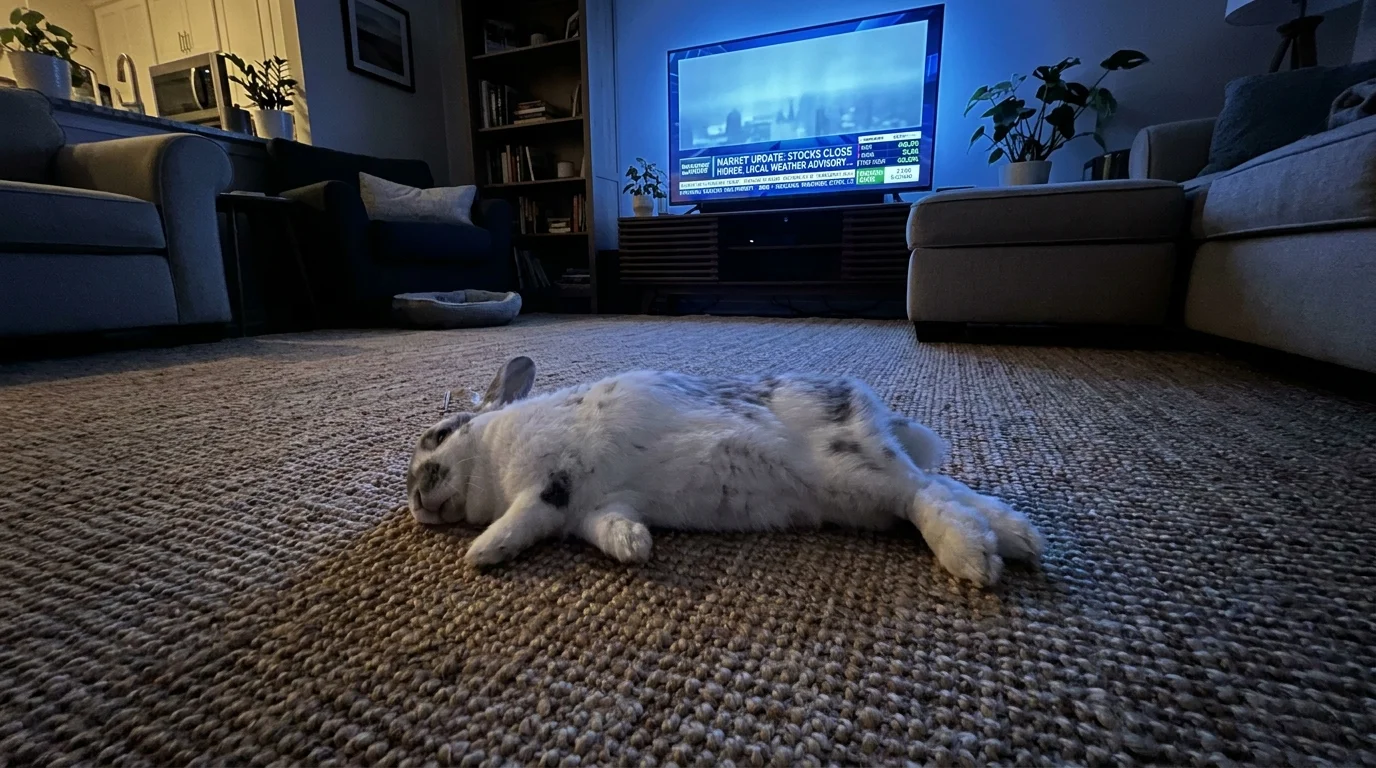
Rabbits have a fascinating visual system. With eyes positioned high and on the sides of their skulls, they have nearly 360-degree vision, allowing them to spot predators from almost any direction. However, this evolutionary trait leaves them with a small blind spot directly in front of their noses. Consequently, rabbits do not stare directly at screens the way a dog or cat might; they observe the television from an angle.
For rabbits, the appeal of television is often more auditory than visual. Much like guinea pigs, rabbits are easily startled by sudden, sharp sounds in an otherwise silent house. The low, conversational murmur of a television show provides excellent acoustic camouflage. It smooths out the household soundscape, covering up anxiety-inducing noises like thunder, passing trucks, or neighborhood construction.
If you choose to leave the television on for your free-roaming rabbit, keep the volume comfortably low. Their large ears are incredibly sensitive. Opt for dialogue-heavy shows, cooking programs, or gentle documentaries. Avoid channels with booming commercial breaks that might break the tranquil atmosphere.
7. Rats: The Intelligent Spectators
Domestic rats are among the most misunderstood and highly intelligent pets you can bring into your home. They are natural problem solvers with an intense desire to understand their surroundings. While their vision is relatively poor compared to humans, relying heavily on their whiskers and sense of smell, they are excellent at detecting motion and contrasting light patterns.
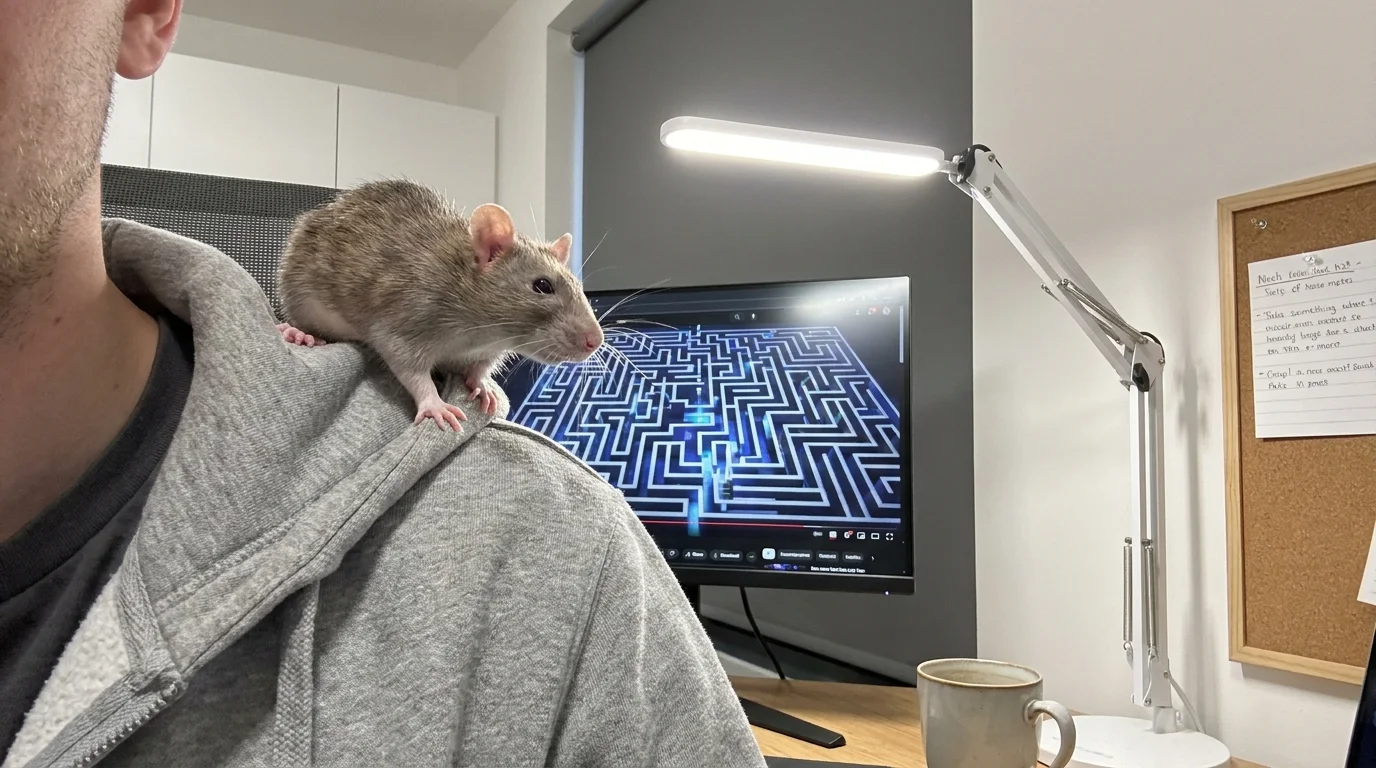
The ASPCA highlights that providing dynamic environmental enrichment—including visual and auditory stimulation—is essential for the psychological well-being of highly intelligent small mammals. Rats deeply enjoy sitting on their owner’s shoulder or lap while the television is on. The shifting lights from the screen, combined with your physical warmth, make for a highly enriching experience.
Rats are particularly responsive to spatial puzzles and moving geometric shapes. While they might not understand the plot of your favorite sitcom, they are engaged by the shifting blocks of color and the variety of sounds. Incorporating screen time into their daily out-of-cage play routines offers a wonderful, low-energy way to bond with these affectionate, clever creatures.
Creating a Safe and Healthy Viewing Experience
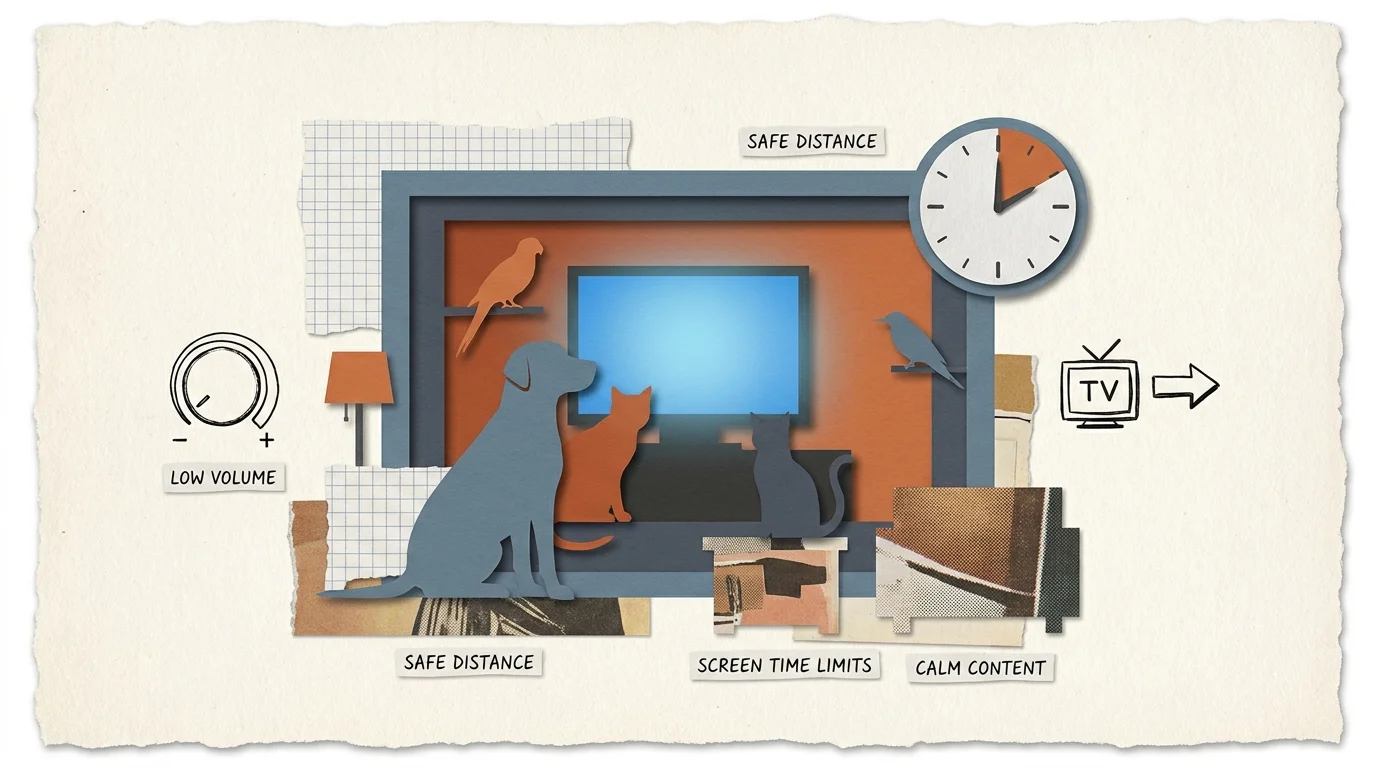
While screen time offers fantastic mental enrichment, it is crucial to set up a safe viewing environment. Treat your pet’s television time with the same care and boundaries you would apply to a small child.
The American Animal Hospital Association (AAHA) routinely advises pet owners to pet-proof their homes, which includes securing heavy electronics. A cat leaping at a digital bird or a large dog jumping up to inspect an on-screen animal can easily tip over an unsecured television, leading to severe injury and expensive damage.
Follow these practical guidelines to keep screen time safe and healthy:
- Secure your hardware: Wall-mount your television or use heavy-duty anti-tip straps to anchor the TV to the wall or furniture. Ensure all power cords and HDMI cables are tucked away inside protective cord concealers.
- Manage the volume: Animal hearing is vastly superior to human hearing. A volume level that seems normal to you might be deafening to your dog or rabbit. Keep the audio at a low, conversational level, and disable surround-sound subwoofers that produce floor-shaking bass.
- Control blue light exposure: Just like humans, pets have circadian rhythms regulated by light. Turn off the television at least an hour before your pet’s bedtime to prevent the screen’s blue light from disrupting their sleep cycle.
- Use as a supplement, not a replacement: Television should never replace physical exercise, training, or one-on-one affection. It is a fantastic tool for the hours you are working, but it cannot substitute for a brisk walk or an interactive play session.
“Interactive enrichment, including species-appropriate visual media, provides vital mental stimulation for dogs and cats recovering from surgery or experiencing reduced mobility.” — Dr. Sarah Mitchell, DVM
You do not need to invest in expensive pet-specific subscription services to provide this enrichment. Free video platforms offer thousands of hours of high-quality nature footage. Curate a playlist of appropriate content, set a sleep timer on your television, and observe how your pet interacts with the media. By tailoring the viewing experience to your pet’s specific biological needs and species instincts, you can turn a simple household appliance into a powerful tool for behavioral health.
Frequently Asked Questions
Can watching television damage my pet’s eyesight?
No, watching modern flat-screen televisions will not damage your pet’s eyesight. Just like with humans, sitting too close for extended periods might cause mild eye strain or dry eyes, but it does not cause permanent ocular damage. Ensure the room is adequately lit so they are not staring at a bright screen in a pitch-black room, which helps reduce visual fatigue.
Why does my dog completely ignore the TV when my friend’s dog loves it?
A dog’s interest in television is heavily dependent on their breed, personality, and primary senses. Visually motivated breeds, like terriers and sighthounds, are more likely to react to on-screen movement. If your dog relies primarily on their sense of smell (like a hound) or simply isn’t highly reactive to visual stimuli, they will likely recognize that the TV lacks a scent profile and ignore it completely.
Is it safe to leave the television on while I am at work?
Yes, leaving the television on while you are away can be an excellent way to provide background noise and alleviate mild separation anxiety. It helps mask startling outdoor sounds like sirens or delivery trucks. However, ensure you select calm, continuous programming (like nature documentaries) and turn off auto-play features that might switch to loud, aggressive action movies while you are gone.
What types of videos are best for indoor cats?
Indoor cats prefer videos that feature their natural prey scaled to realistic sizes. Footage of birds at a feeder, squirrels foraging, or fish swimming in a tank are highly effective. Avoid videos with rapidly flashing lights or unnatural, chaotic movements, as these can cause overstimulation rather than predatory engagement.
For expert pet care guidance, visit
Cat Fanciers’ Association (CFA), ASPCA and The Humane Society of the United States.
Disclaimer: This article is for informational purposes only and is not a substitute for professional veterinary advice, diagnosis, or treatment. Always consult with a licensed veterinarian for medical concerns about your pet.








Leave a Reply