
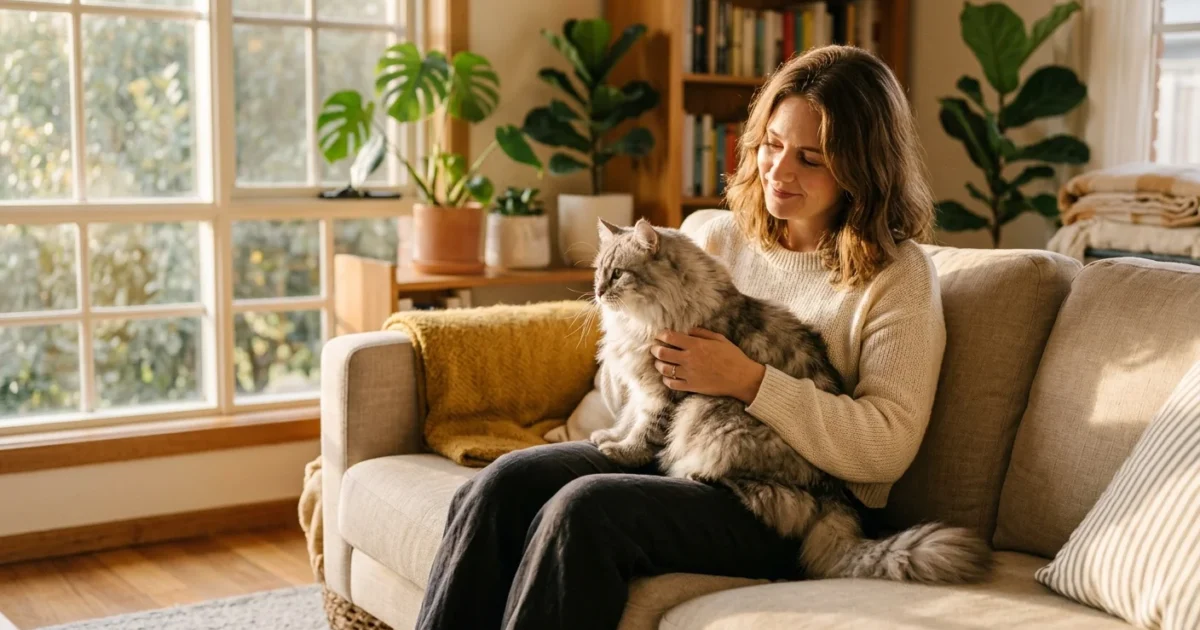
Living with sneezing, watery eyes, and itchy skin should not automatically end your dream of sharing a home with a loving feline companion. While no cat is completely non-allergenic, specific low allergen cats produce significantly less dander and salivary proteins, making them far easier on sensitive immune systems. Understanding how different cat breeds produce allergens empowers you to choose a pet that fits your health needs and lifestyle. By combining the right breed selection with targeted environmental management, you can comfortably share your space with a furry friend. Explore these seven remarkable hypoallergenic cat breeds to discover which affectionate feline fits seamlessly into your home.
Understanding Cat Allergies and the Fel d 1 Protein
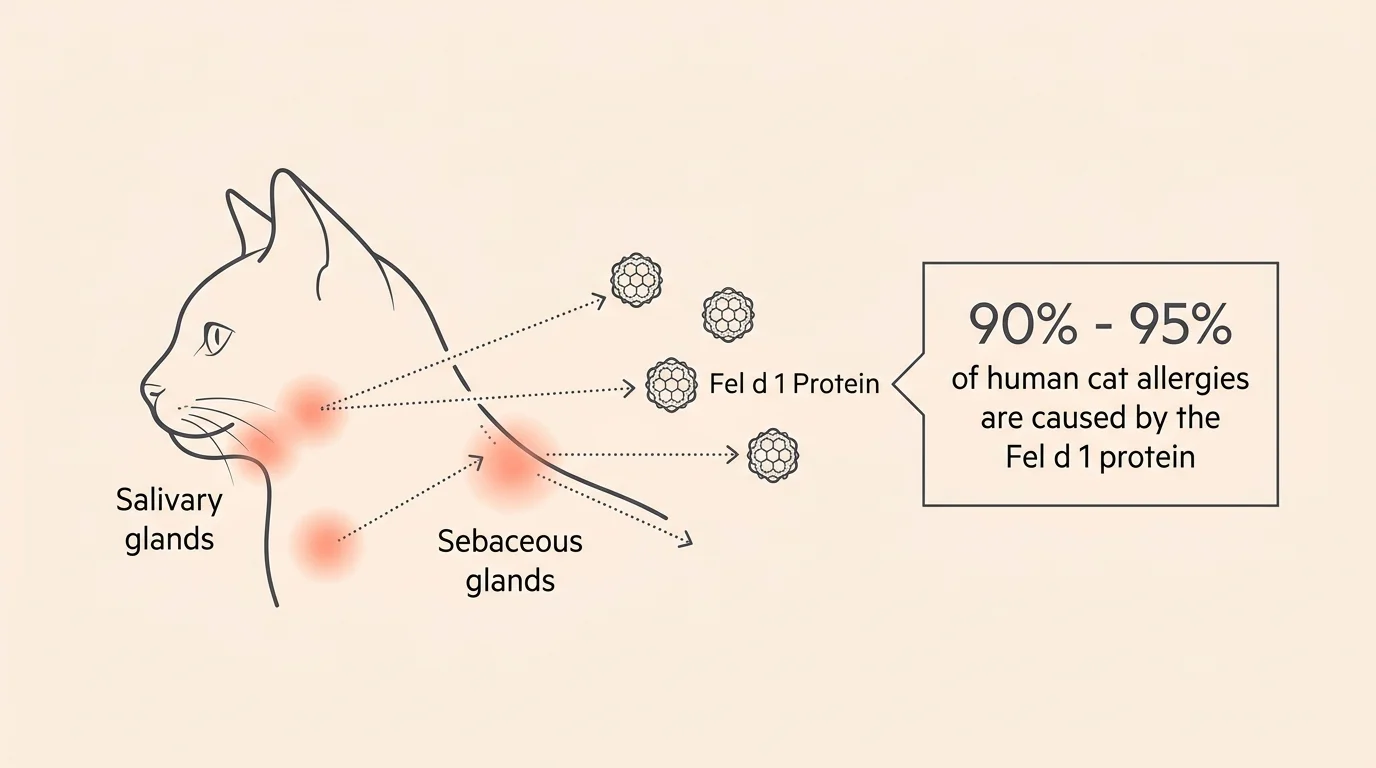
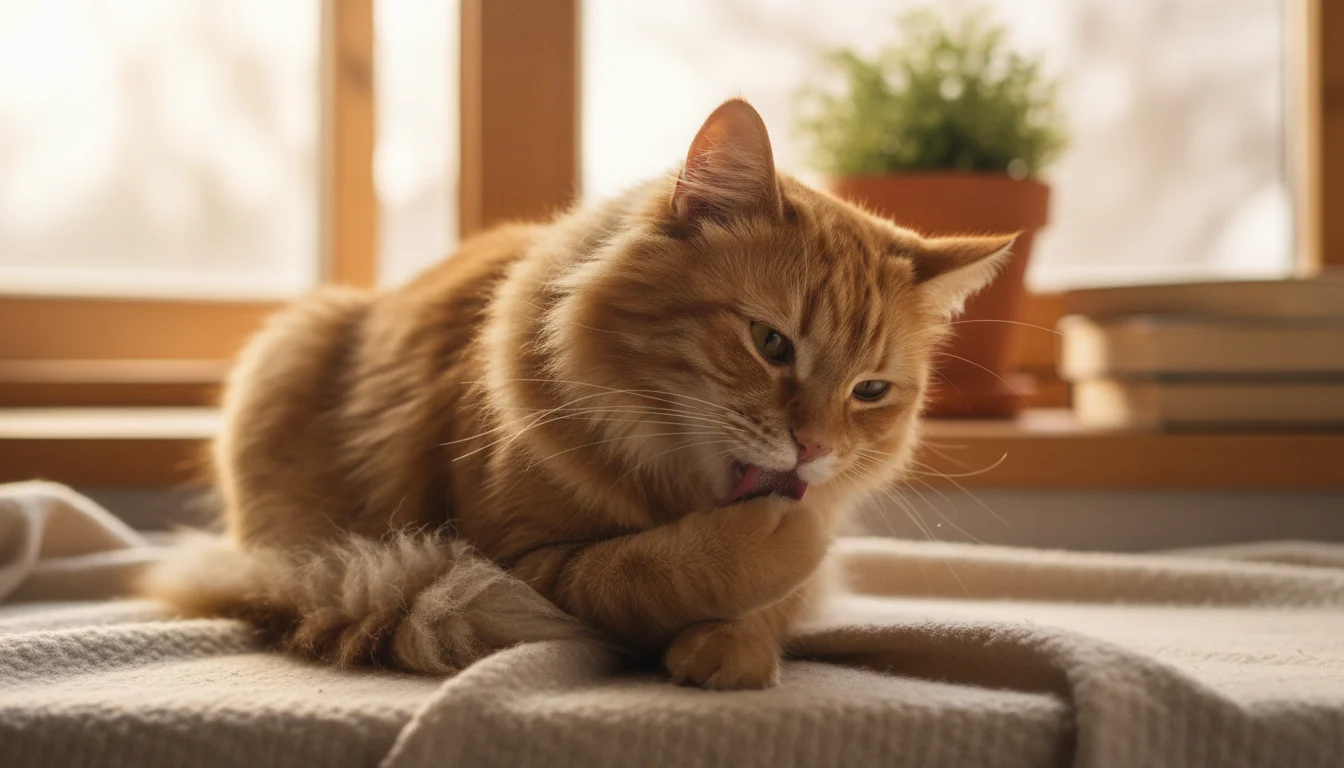
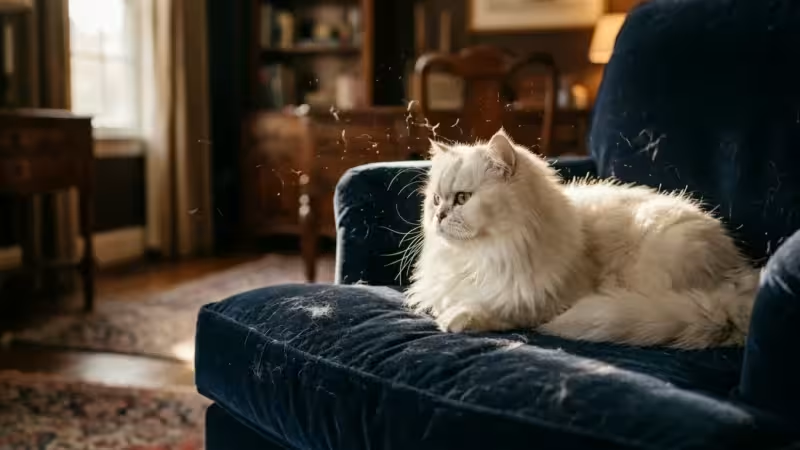
Global health studies indicate that between 10% and 20% of adults worldwide experience allergic reactions to companion animals, with cat allergies occurring roughly twice as frequently as dog allergies. Many people assume that cat hair triggers these distressing symptoms; however, the real culprit is a tiny, sticky glycoprotein known as Fel d 1. Your cat’s sebaceous (skin) glands and salivary glands produce this protein naturally. When your cat grooms itself, saliva dries on the fur and dander, breaking down into microscopic airborne particles that circulate throughout your home.
Because these particles remain airborne for hours and cling stubbornly to carpets, drapes, and clothing, sensitive human immune systems mistake them for harmful invaders. This reaction prompts histamine releases that cause runny noses, coughing, and itchy eyes. Approximately 90% to 95% of human cat allergies stem directly from exposure to this single protein.
Biological factors alter the amount of protein a cat secretes. Unneutered male cats produce the highest concentrations of Fel d 1 due to testosterone levels; neutered males and females produce significantly less. Furthermore, certain hypoallergenic cat breeds naturally synthesize lower baseline levels of Fel d 1 or shed far less hair and dander, making them exceptional choices for cats for allergy sufferers.
“Up to 95 percent of human allergic reactions to felines stem directly from the Fel d 1 protein secreted by skin glands and saliva, rather than the hair itself.” — Veterinary Allergy Specialist Insight
Research from Cornell University College of Veterinary Medicine demonstrates that Fel d 1 is lightweight and easily settles on household surfaces. Recognizing that “hypoallergenic” means “lower allergen production” rather than “100% allergen-free” helps you establish realistic expectations. By selecting a low-protein producer and adopting proactive cleaning routines, you can dramatically lower allergen exposure in your household.
7 Top Hypoallergenic Cat Breeds for Allergy Sufferers
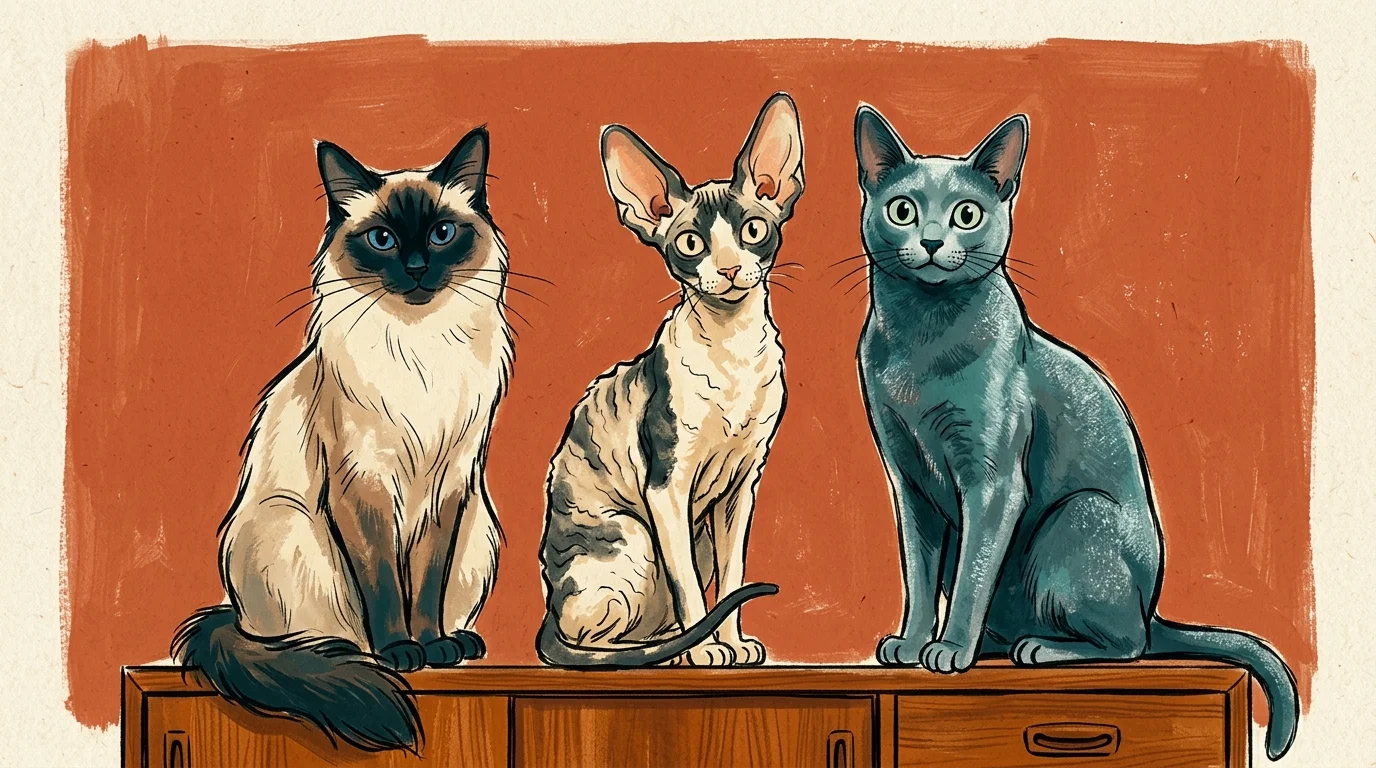
Selecting the right feline requires balancing personality, physical traits, and allergen profile. These seven hypoallergenic cat breeds offer distinct advantages for sensitive owners, ranging from hairless companions to surprisingly fluffy low-protein producers.
If you want to compare low-allergen felines against heavy shedder breeds, explore our list of cat breeds that shed the most.
1. The Siberian
Despite its luxurious, dense triple coat, the Siberian tops the list of best cats for allergies. Genetic studies show that many Siberian cats carry a natural gene mutation causing them to produce lower levels of the Fel d 1 protein than standard domestic cats. Native to the harsh climate of Russia, this muscular, large breed possesses a weather-resistant coat that surprisingly does not trigger reactions in many mild to moderate allergy sufferers.
Siberians feature warm, playful, and deeply affectionate personalities. They often follow their human family members from room to room, display dog-like loyalty, and enjoy interactive play well into their senior years. While their thick coat requires regular brushing twice a week to prevent matting, their reduced protein secretion makes them an extraordinary choice for sensitive homes.
2. The Balinese
Often referred to as the “long-haired Siamese,” the Balinese boasts a sleek coat, striking blue almond-shaped eyes, and point-coloration patterns. Do not let its silky length fool you—the Balinese produces significantly less Fel d 1 protein than average domestic felines. Because this breed possesses a single coat without a dense undercoat, it sheds far less hair and dander into your living environment.
Preparing your home for an inquisitive Balinese is easy with these budget-friendly essential cat care products under $50.
Balinese cats express their emotions vocalizing with soft, pleasant meows. They crave mental stimulation, excel at learning puzzle toys, and love perching high on cat trees. Their single-layer coat makes grooming simple; a weekly combing usually suffices to keep their fur in top condition while keeping loose dander at a minimum.
3. The Bengal
With its wild appearance mimicking a miniature leopard, the Bengal is an energetic, muscular cat created by crossing domestic breeds with the Asian Leopard Cat. Bengals feature a unique, pelt-like short coat that requires remarkably little grooming. Because Bengals spend less time licking their fur compared to other breeds, they transfer less salivary protein onto their coat.
Keeping an energetic cat active indoors takes planning, so review the key care differences for indoor vs outdoor cats to keep them satisfied.
To learn more about how hair length and coat density affect maintenance, read our guide on cat coat types and care needs.
Bengals shed very little hair, which keeps salivary dander tied to shed fur from spreading onto your furniture. However, Bengals demand an active lifestyle; they thrive when provided with climbing walls, wheel spinners, and daily interactive play sessions. If you seek an adventurous, highly intelligent companion that leaves minimal hair around the home, the Bengal deserves serious thought.
4. The Russian Blue
The Russian Blue is renowned for its silvery-blue plush coat, vivid green eyes, and gentle demeanor. From an allergen standpoint, the Russian Blue offers a dual advantage: its body synthesizes lower amounts of Fel d 1, and its dense double coat traps skin dander beneath the surface layer of fur rather than releasing it into the air.
For mature pet parents seeking calm companions, discover more gentle felines in our guide to cats suited for quiet senior households.
According to the Cat Fanciers’ Association (CFA), recognizing individual breed traits helps owners match their lifestyle and grooming commitment to their prospective pet. Russian Blues display a quiet, sweet nature, often forming deep attachments to one or two primary caregivers. They adapt wonderfully to quiet apartments and predictable daily routines, requiring minimal grooming beyond light weekly brushing.
5. The Devon Rex
The Devon Rex sports a distinct physical appearance with oversized ears, high cheekbones, and a short, rippled coat. Possessing fragile, wavy fur composed primarily of soft down hair, this breed lacks heavy outer guard hairs. Consequently, the Devon Rex sheds hardly any fur, reducing the spread of dried salivary allergens throughout your living quarters.
Devon Rex cats exhibit high energy levels and a clown-like personality. They love perching on your shoulders, burrowing under warm blankets, and participating in family activities. Because their delicate coat breaks easily, brush them gently with a soft-bristle brush or wipe them down with a damp cloth rather than using harsh metal combs.
6. The Cornish Rex
Similar to its Devon cousin, the Cornish Rex features a delicate, wavy coat composed entirely of soft undercoat down. Lacking both awn hairs and guard hairs, the Cornish Rex sheds far less than typical shorthaired breeds. This physical trait makes it one of the most effective non-allergenic cats for owners sensitive to loose fur and floating environmental dander.
If you plan on adopting a young kitten, our comprehensive first 12 weeks kitten care guide covers all early health and development needs.
Cornish Rex cats retain a kitten-like enthusiasm throughout their lives. They move with greyhound-like elegance and seek out warm spots in the house, such as sunbeams or warm laps. Their thin coat means they absorb skin oils quickly, so they benefit from periodic gentle baths to remove oil build-up containing concentrated skin proteins.
7. The Sphynx
The hairless Sphynx is perhaps the most famous breed associated with allergy management. Lacking a coat means the Sphynx cannot shed allergen-laden fur across your rugs or furniture. However, you must remember that the Sphynx still produces skin oils, dander, and saliva containing the Fel d 1 protein.
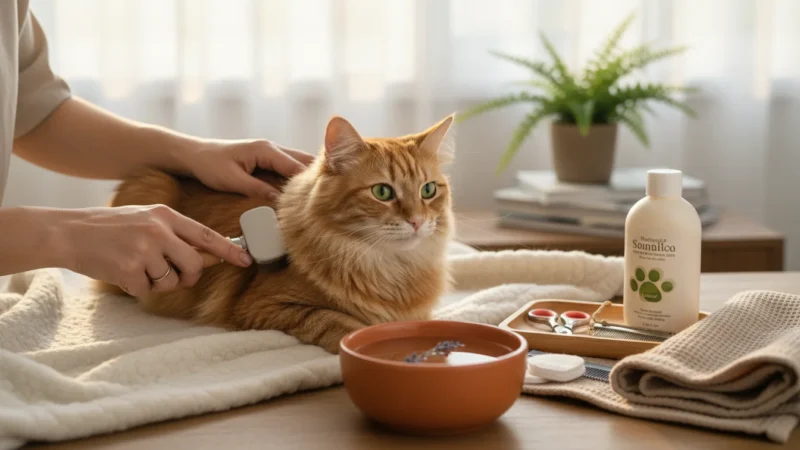
To make frequent bath times comfortable and hassle-free, consider creating the perfect cat grooming station at home.
Because the Sphynx lacks fur to absorb natural body secretions, skin oils accumulate directly on its skin surface. To keep your Sphynx clean and reduce allergen build-up, maintain a routine of sponge baths every one to two weeks using a gentle, vet-approved shampoo. Sphynx cats offer incredibly loving, affectionate, and warming companionship, constantly seeking physical contact with their human caregivers.
Comparing Low-Allergen Cat Breeds: Coat, Temperament, and Care
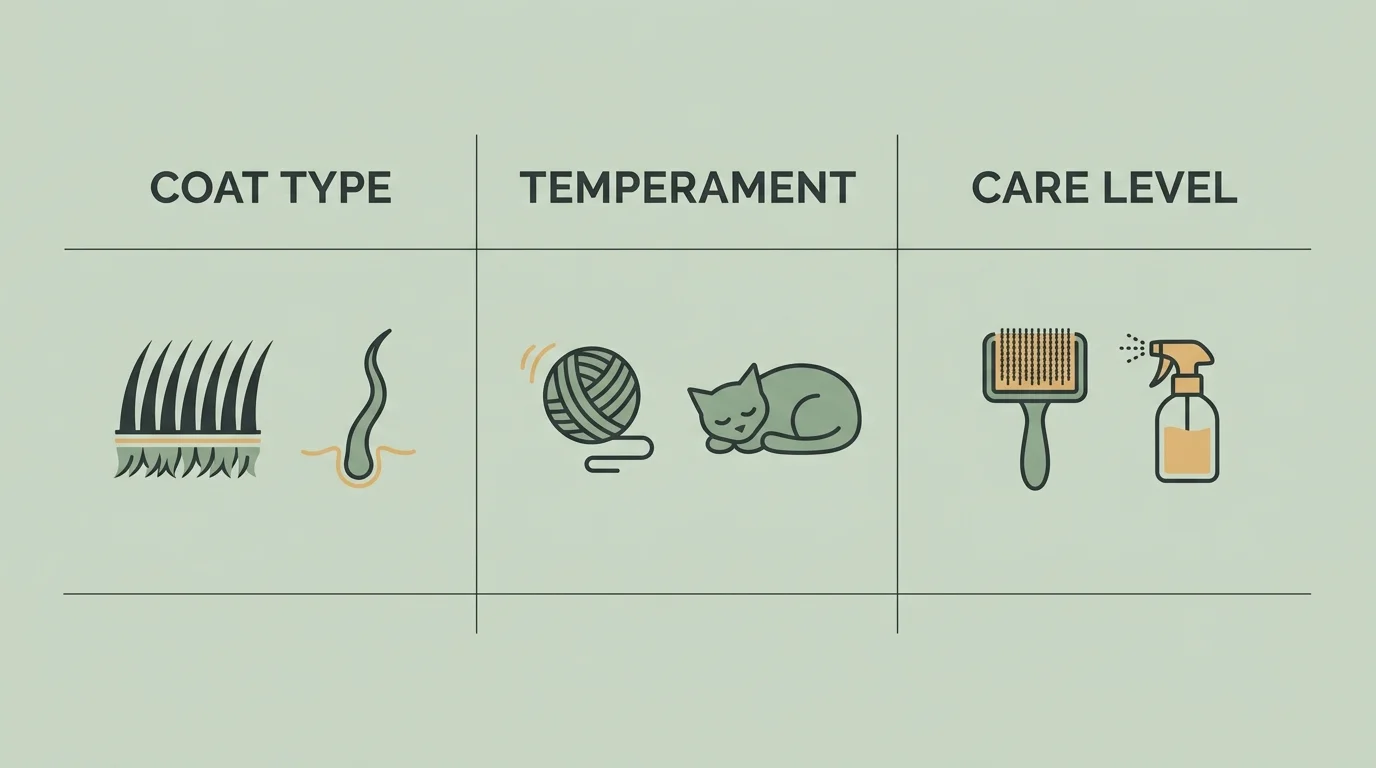
To help you evaluate these low allergen cats side-by-side, the following table compares their key physical traits, primary allergen reduction mechanisms, grooming demands, and personality characteristics:
Once you select the right companion, learning how to introduce a new cat to your home will help prevent stress for everyone.
For a deeper dive into coat care and brushing techniques, explore our home grooming guide for cats.
| Breed Name | Coat Type | Allergen Reduction Mechanism | Grooming Effort | Temperament Traits |
|---|---|---|---|---|
| Siberian | Dense, thick triple coat | Lower natural genetic production of Fel d 1 protein | Moderate (2x weekly brushing) | Affectionate, playful, gentle giant |
| Balinese | Single long silky coat | Low Fel d 1 output; lack of undercoat minimizes shedding | Low-Moderate (1x weekly combing) | Vocal, intelligent, deeply social |
| Bengal | Short, pelt-like sleek coat | Minimal grooming self-cleansing; low hair shedding | Low (occasional wipe-down) | High-energy, athletic, inquisitive |
| Russian Blue | Short, dense plush double coat | Traps dander within coat; reduced Fel d 1 production | Low (1x weekly brushing) | Quiet, loyal, sweet-tempered |
| Devon Rex | Short, wavy, fragile down coat | Extremely minimal shedding; few guard hairs | Low (gentle wiping or brushing) | Playful, loyal, clownish |
| Cornish Rex | Fine, curly down-only coat | Single-layer down hair sheds virtually no dander-laden fur | Low-Moderate (periodic oil baths) | Active, affectionate, warmth-seeking |
| Sphynx | Hairless (fine peach fuzz) | No fur to collect or shed salivary proteins and dander | Moderate-High (1-2x monthly baths) | Extremely loving, needy, cuddle-bug |
When selecting among these breeds, assess your schedule and willingness to handle specific care needs. If you enjoy routine grooming and prefer a large, cuddly companion, a Siberian fits exceptionally well. If you prefer low-maintenance coats and high-energy companions, a Bengal or Cornish Rex may better suit your household.
Actionable Environmental Strategies to Reduce Cat Allergens
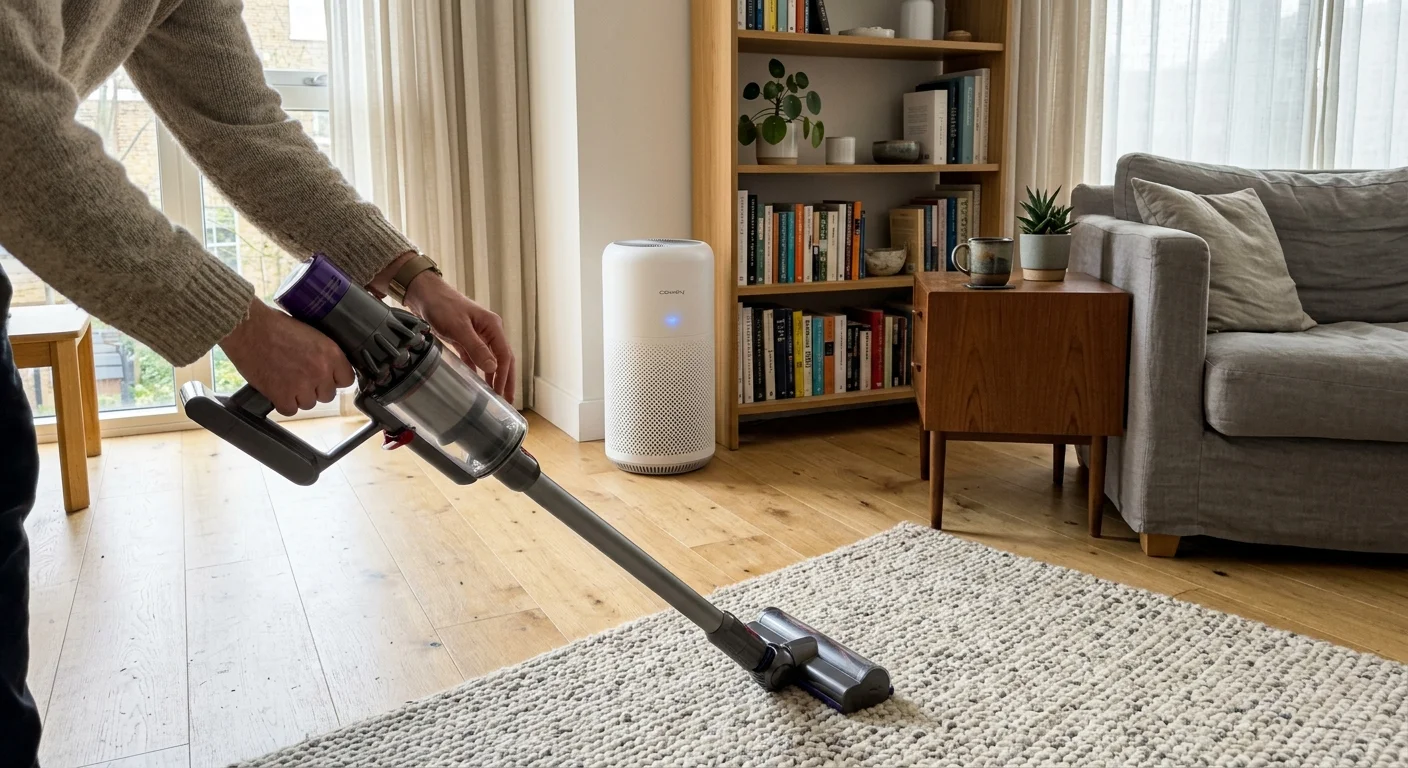
Bringing home a low-allergen cat represents just one piece of the puzzle. Managing your indoor environment effectively minimizes allergen accumulation and creates a comfortable atmosphere for everyone in your household.
- Install High-Efficiency Air Purifiers: Place HEPA (High-Efficiency Particulate Air) purifiers in rooms where your cat spends significant time, particularly the living room and bedrooms. HEPA filters capture up to 99.97% of airborne particles as small as 0.3 microns, effectively trapping free-floating dander.
- Create an Allergen-Free Bedroom Sanctuary: Keep your bedroom door strictly closed to your cat. Because you spend roughly a third of your life sleeping, preventing dander from penetrating your mattress, pillows, and bedding provides your respiratory system eight hours of uninterrupted rest.
- Upgrade Your Cleaning Equipment: Vacuum carpets, rugs, and upholstered furniture twice weekly using a vacuum cleaner equipped with a sealed HEPA filter. Standard vacuums often blow fine allergen dust back into the air, worsening your symptoms.
- Replace Fabrics with Hard Surfaces: Where budget permits, swap wall-to-wall carpeting for hardwood, tile, or laminate flooring. Smooth surfaces trap significantly fewer allergens and allow easy cleaning with damp micro-fiber mops.
- Wash Soft Furnishings Frequently: Wash cat beds, throw blankets, and couch covers every one to two weeks in hot water (at least 140°F or 60°C) to neutralize embedded proteins.
- Manage Litter Box Placement: Place litter boxes in well-ventilated areas away from main living spaces. When cats dig in litter, they kick up dust coated in urinary proteins; using low-dust, natural litter formulas prevents airborne triggers.
Grooming and Dietary Interventions for Allergy Management
Targeted pet care practices lower the quantity of active Fel d 1 protein present on your cat’s body before it transfers to your furniture or air space.
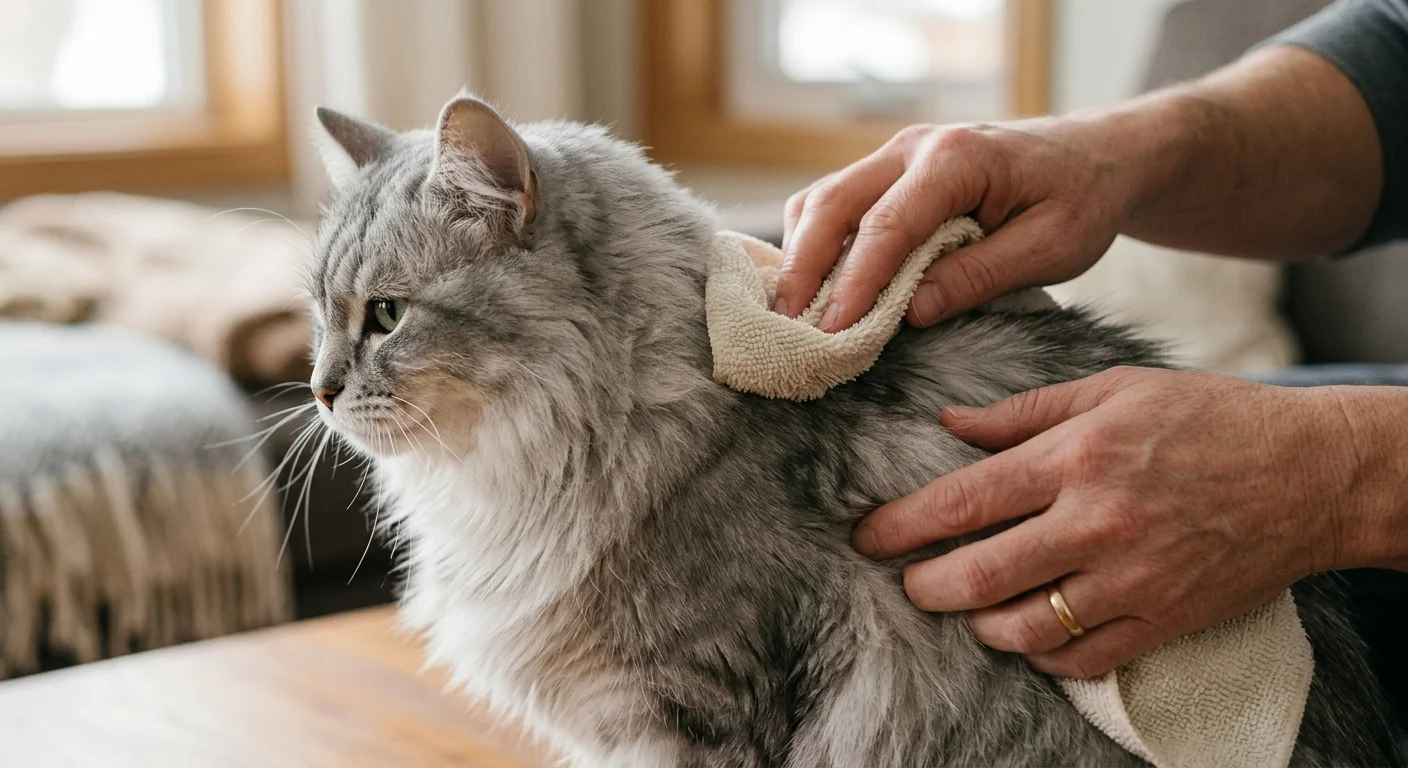
Establish a routine wiping protocol. Wiping your cat’s coat three to four times per week using a damp micro-fiber cloth or pet-safe allergen-reducing wipe removes loose dander and dried saliva without over-drying their skin. If your cat tolerates water, a warm rinse every few weeks washes away accumulated skin proteins efficiently.
Have a family member who does not suffer from allergies handle grooming tasks. Brushing your cat outdoors or in a garage prevents loose fur from flying around your main living quarters.
“Routine coat maintenance and HEPA air filtration form the foundation of successful cohabitation with low allergen cats.” — Dr. Elena Vance, DVM
Recent nutritional breakthroughs offer another powerful solution. Specialty feline diets formulate anti-Fel d 1 antibodies derived from egg yolks. When your cat consumes this food, the specific IgY protein neutralizes active Fel d 1 in its saliva inside the mouth. Over several weeks of daily feeding, this safe dietary approach significantly lowers active allergens on your cat’s fur and shed dander.
Educational resources on PetMD highlight that egg product diets rich in specific antibodies can neutralize active Fel d 1 in a cat’s mouth before it transfers to fur during grooming. Pairing specialized nutrition with regular coat wiping forms an effective defense against household allergen spikes.

Evaluating Breeders, Financial Costs, and Safe Adoption
Finding a healthy purebred kitten requires careful research and financial planning. Purebred low-allergen kittens from reputable breeders generally cost between $500 and $3,000+, depending on the breed rarity, pedigree lineage, and geographic location.
For example, hairless Sphynx kittens typically range from $1,500 to $3,000+ due to specialized breeding and health monitoring needs. Russian Blue, Cornish Rex, and Devon Rex kittens usually fall between $600 and $1,500+ from ethical, registered breeders. Siberian kittens often cost between $1,200 and $2,500 due to high demand and pedigree tracking.
Follow these practical guidelines when sourcing your pet ethically and safely:
- Verify Cattery Registration: Ensure the breeder belongs to established feline registries such as the Cat Fanciers’ Association (CFA) or The International Cat Association (TICA). Ethical breeders perform genetic screening for hereditary conditions like hypertrophic cardiomyopathy (HCM).
- Avoid Backyard Breeders and Scams: Never send deposit money without verifying the breeder through video calls, clear documentation, or references. Be cautious of websites offering purebred kittens for unnaturally low prices ($200–$300), as these often represent online scams or inhumane kitten mills.
- Conduct a Live Sensitivity Test: Ask the breeder if you can spend an hour visiting the cattery or testing a fabric swatch (such as a t-shirt or towel) exposed to the specific adult cat or parents. This “t-shirt test” lets your immune system react before you make a long-term commitment.
- Explore Breed-Specific Rescues: Look into specialized breed rescue organizations and local shelters. Purebred cats occasionally end up in shelters due to owner moves or life changes. Adopting an adult cat from a rescue gives you a clear understanding of the cat’s full-grown allergen profile and temperament.
Frequently Asked Questions
Are female cats better for people with allergies than male cats?
Yes, biological research confirms that female cats produce lower baseline levels of the Fel d 1 protein than intact male cats. Testosterone stimulates protein production in skin and salivary glands. However, neutering a male cat drastically reduces its hormone levels, bringing its protein output down to levels comparable to a female cat.
Can you become immune to your cat over time?
Some individuals report building a natural tolerance to their specific pet after months of continuous, low-level exposure. Medical professionals refer to this phenomenon as desensitization. However, this reaction varies widely among individuals; you should never rely solely on natural immunity developing when bringing a new pet into your home.
Is there a completely non-allergenic cat breed available?
No, a 100% non-allergenic cat breed does not exist. All felines produce skin dander, saliva, and urine containing various allergen proteins. Breeds designated as hypoallergenic simply produce lower quantities of these proteins or possess physical coat traits that minimize allergen spread across your environment.
How long does it take for cat allergens to clear out of a house?
Fel d 1 protein particles are lightweight and sticky, allowing them to remain in carpets, soft upholstery, and wall surfaces for up to six months after a cat leaves a home. Thorough deep cleaning, carpet steam cleaning, painting walls, and installing fresh HEPA filters accelerate the removal of residual dander.
For expert pet care guidance, visit
ASPCA, The Humane Society of the United States, Cornell University College of Veterinary Medicine and UC Davis School of Veterinary Medicine.
Disclaimer: This article is for informational purposes only and is not a substitute for professional veterinary advice, diagnosis, or treatment. Always consult with a licensed veterinarian for medical concerns about your pet.
Leave a Reply