🐶🐱 Everyday With Pets.com
  • Dog Care
  • Cat Care
  • Pet Health
  • Lifestyle & Fun
  • Training & Behavior
  • Product Reviews

If Your Cat Headbutts You, This Is What It Really Means

June 16, 2026 · Training & Behavior
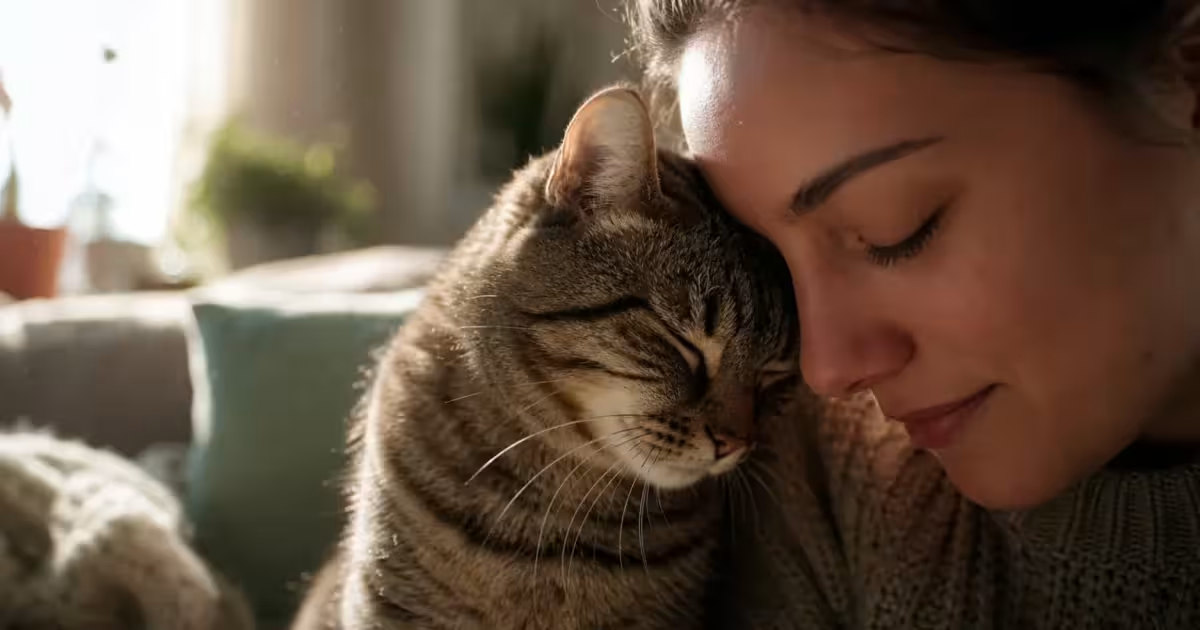
A close-up photograph of a tabby cat headbutting a woman's cheek in a warm, sunlit living room.

When your cat approaches you, locks eyes, and firmly bonks their forehead against your shin or face, they are delivering one of the highest compliments in the feline world. This endearing behavior—scientifically known as bunting—is a complex communication tool rooted in scent marking, colony bonding, and deep affection. While it looks like a miniature wrestling move, a cat headbutt actually serves to deposit comforting facial pheromones onto you, effectively claiming you as a safe, trusted member of their family. Understanding the biological and emotional drives behind this quirky gesture allows you to deepen your bond with your pet and recognize exactly what they need from you in that moment.
Table of Contents

  • The Science of Bunting: What Exactly Is It?
  • Five Reasons Your Cat Headbutts You
  • How to Respond When Your Cat Bunts
  • Headbutting vs. Head Pressing: A Vital Distinction
  • Why Doesn’t My Cat Headbutt Me?
  • Other Fascinating Ways Cats Show Affection
  • Frequently Asked Questions
An anatomical diagram of a cat's head showing the locations of facial scent glands used for bunting.
This anatomical diagram illustrates the key facial scent glands cats use to mark you when bunting.

The Science of Bunting: What Exactly Is It?

To fully appreciate why your cat headbutts you, you need to understand the fascinating anatomy of feline scent glands. Cats possess specialized sebaceous glands located strategically across their bodies, with a high concentration clustered right on their heads. You will find these microscopic glands along their cheeks, around their lips, beneath their chin, and right in the center of their forehead. When your cat rubs these specific areas against a person, an animal, or an object, they leave behind powerful chemical messengers known as pheromones.

Pheromones are entirely undetectable to the human nose, yet they dictate a massive portion of how cats interpret their environment. When a cat leaves their facial pheromones on something, they are essentially placing an invisible “safe” sticker on it. According to researchers at the Cornell University College of Veterinary Medicine, feline facial pheromones promote a sense of familiarity, security, and well-being. By marking their environment, cats actively reduce their own stress levels and establish a comforting territory.

The physical act of pressing these head glands against you is called “bunting.” Unlike urine spraying or scratching—which cats often use to assert dominance or signal territorial anxiety to rival felines—bunting is an affiliative behavior. It is reserved exclusively for people, pets, and places the cat feels completely secure around. Therefore, the next time your cat winds around your legs and drives their skull into your calf, recognize that they are engaging in a highly evolved biological process designed to weave your scents together.

A ginger cat headbutting its owner's leg as they sit on the floor working on a laptop.
An affectionate orange tabby cat headbutts its owner’s knee to show love and claim its territory.

Five Reasons Your Cat Headbutts You

While the root cause of bunting relies on pheromone distribution, the specific emotional intent behind each headbutt can vary depending on the context. By observing your cat’s body language leading up to the bonk, you can decipher exactly what they are trying to tell you.

  1. They are claiming you as family. In feral cat colonies, cats that belong to the same social group will frequently rub heads and bodies together. This behavior mixes their individual scents into a unified “colony scent.” When your cat bunts you, they are integrating you into their feline family unit; you smell like them, which means you belong to them.
  2. They are seeking immediate attention. Cats are incredibly intelligent observers of human behavior. If your cat headbutts your hand while you are typing on a keyboard, they have likely learned that this physical disruption results in a petting session. Experts at the ASPCA note that cats will quickly repeat behaviors that yield positive reinforcement, making bunting a highly effective strategy for demanding your focus.
  3. They are self-soothing in a new environment. If you recently moved to a new home or brought in new furniture, your cat might increase their bunting behavior. They are working overtime to deposit their comforting scent profile across an unfamiliar landscape. If they headbutt you amidst this chaos, they are using you as an emotional anchor, pulling comfort from your established bond.
  4. They are checking your scent. Did you just come home from visiting a friend who owns a dog? Your cat will immediately notice the foreign odors clinging to your clothes. A thorough headbutt serves a dual purpose here: your cat is investigating the intriguing new smells while simultaneously overwriting them with their own territorial pheromones.
  5. They are showing immense trust. A cat’s eyes are vital for survival, and the top of their head is a vulnerable blind spot. Willingly pressing their face into your body requires them to close their eyes and lower their guard. It is a profound display of trust, indicating they know you will not harm them while they are momentarily distracted.
A close-up photograph of a hand scratching a tuxedo cat under the chin as it closes its eyes in contentment.
Return your cat’s affection with a gentle chin scratch under the warm, golden sunlight.

How to Respond When Your Cat Bunts

Because headbutting is a deep sign of affection, responding appropriately is an excellent way to reinforce your bond. However, cats are notorious for their boundaries, so your reaction should match their current mood.

When your cat initiates a headbutt, the best immediate response is gentle verbal praise accompanied by soft physical contact. Lightly scratch them precisely where their scent glands are located: behind the ears, under the chin, or along the base of the cheeks. Many cats will lean heavily into your hand, effectively guiding your fingers to exactly where they want to be pet. If you are sitting on the floor or lying in bed, you can even gently lean your own forehead down to meet theirs. This physical reciprocation mimics how two bonded cats would interact in the wild.

It is equally important to know what not to do. Never force a headbutt. If you grab your cat’s head and pull it toward your face, you will likely trigger a defensive response, breaking the trust they just offered. Furthermore, observe what happens after the initial contact. Some cats will deliver a single, solid bunt and then confidently walk away. This is not a rejection; it simply means their task of marking you is complete. Let them go. Over-petting a cat that only wanted a quick greeting can lead to overstimulation and defensive scratching.

A comparative diagram showing the difference between affectionate bunting and veterinary emergency head pressing.
This illustration contrasts affectionate head bunting against a hand with dangerous head pressing against a wall.

Headbutting vs. Head Pressing: A Vital Distinction

While bunting is a beautiful, affectionate behavior, there is a distinct and visually similar action that every pet owner must be aware of: head pressing. Knowing the difference between the two can quite literally save your cat’s life.

Bunting is a fluid, dynamic movement. The cat approaches you, rubs, bumps, and generally looks relaxed, often purring or meowing. In stark contrast, head pressing is a static, unyielding, and compulsive behavior. A cat exhibiting head pressing will stand rigidly and push the top of their head flush against a wall, a corner, or a piece of heavy furniture. They will hold this unnatural posture for extended periods, completely unresponsive to their environment. They are not rubbing; they are stubbornly pressing.

“Head pressing is never a quirky behavioral choice; it is an urgent clinical sign of neurological damage or prosencephalon disease requiring immediate veterinary intervention.”

According to veterinary resources like PetMD, head pressing indicates severe distress in the forebrain or thalamus. The causes for this neurological emergency can range from brain tumors and toxic poisoning to severe liver disease (hepatic encephalopathy) or infectious swelling of the brain. A cat pressing their head against a wall is typically experiencing immense pain or profound confusion.

If you witness head pressing, do not wait to see if it resolves on its own. It is vital to seek emergency veterinary care immediately. Watch for secondary symptoms that frequently accompany head pressing, such as pacing in relentless circles, staring blankly at walls, sudden vision loss, or uncharacteristic vocalization. By keeping a sharp eye on your cat’s body language, you can easily distinguish between a harmless display of affection and a critical medical emergency.

An ink and watercolor illustration of a cat sitting quietly at the foot of a bed, looking lovingly at its owner.
A grey cat sitting quietly on the bed shows affection without needing to headbutt you.

Why Doesn’t My Cat Headbutt Me?

If you are reading this and feeling a little neglected because your feline companion has never once headbutted your shin, take a deep breath. A lack of bunting does not mean your cat dislikes you, nor does it mean your bond is somehow deficient. Feline affection is highly individualized.

Just like humans, cats have distinct personalities and varying thresholds for physical contact. The crucial socialization window for kittens occurs between two and seven weeks of age. Kittens that were heavily handled by compassionate humans during this timeframe tend to be more physically affectionate as adult cats. Conversely, cats rescued from feral backgrounds or those who experienced trauma early in life may find direct facial contact far too intimidating, no matter how much they love you.

Breed genetics can also play a subtle role. Some breeds, such as the Siamese or Oriental Shorthair, may prefer vocalization over physical touch, “talking” to you incessantly to show their love. Other cats simply prefer proximity over contact, finding immense comfort in sitting quietly at the opposite end of the couch. Always respect your cat’s unique communication style; forcing physical affection onto an aloof cat will only create anxiety and distance.

An ink and watercolor illustration of a cat's paws kneading a soft, yellow knit blanket on its owner's lap.
A happy calico cat purrs and kneads a cozy knitted blanket to show its ultimate affection.

Other Fascinating Ways Cats Show Affection

If your cat isn’t a headbutter, they are undoubtedly communicating their love to you in other, equally meaningful ways. Feline body language is rich and varied. As outlined by animal welfare organizations like The Humane Society of the United States, recognizing these subtle signs allows you to appreciate the full spectrum of your pet’s emotional life.

Below is a guide to some of the most common ways cats show they care, beyond the classic bunt:

Behavior Physical Description Emotional Meaning Best Owner Response
The Slow Blink Your cat looks at you and very deliberately closes and opens their eyes. Often called a “kitty kiss,” this indicates extreme relaxation and absolute trust in your presence. Slowly blink back at them to mirror their affection and reinforce the calm environment.
Kneading (Making Biscuits) Rhythmic pushing of the front paws against a soft surface—or your stomach. A regression to kittenhood nursing behaviors, signaling deep comfort, happiness, and safety. Praise them softly; if their claws are sharp, place a thick blanket between their paws and your skin.
Tail Quivering The cat approaches you with their tail held straight up, rapidly vibrating the tip. Intense excitement and joy at seeing you. Often seen when you return home from work. Offer immediate verbal praise and initiate a gentle play or petting session.
Exposing the Belly Rolling onto their back and splaying their legs to expose their vital organs. The ultimate display of vulnerability and trust. They know you will not attack their weakest point. Admire from afar. For most cats, the belly is a trap; touching it may trigger a defensive bite.
Following You Trailing quietly behind you as you move from room to room throughout the house. A desire for companionship and inclusion. They want to be involved in your daily routine. Acknowledge their presence verbally, perhaps tossing a toy to engage their curiosity.

Frequently Asked Questions

Does headbutting hurt the cat?

No, normal bunting does not hurt your cat. Feline skulls are remarkably thick, and the impact of a friendly headbutt is easily absorbed without causing any pain or concussive damage. If your cat bunts you with enough force to genuinely bruise your skin or chip a tooth, it is merely a sign of over-exuberance, not self-harm.

Why does my cat headbutt objects instead of me?

Cats are territorial creatures that thrive on a consistent environmental scent. When your cat aggressively rubs their face against the corner of a coffee table, a doorway, or a cardboard box, they are refreshing their scent markers. This creates an invisible perimeter of familiarity that helps them feel secure in their own home.

Do big cats like lions and tigers headbutt?

Yes, the instinct to bunt spans the entire feline family tree. If you observe a pride of lions interacting in the wild, you will frequently see them forcefully bumping heads and rubbing cheeks. Just like domestic house cats, these apex predators use facial pheromones to reinforce social bonds and establish a unified colony scent among their family members.

Should I headbutt my cat back?

You can certainly return the gesture, provided you do so gently and gauge their reaction. Slowly lowering your forehead to meet theirs can be a wonderful bonding experience. However, always let the cat initiate the contact, and if they pull away or flatten their ears, immediately retreat to respect their personal space.

For expert pet care guidance, visit
American Veterinary Medical Association (AVMA), American Kennel Club (AKC), Cat Fanciers’ Association (CFA), ASPCA and The Humane Society of the United States.

Disclaimer: This article is for informational purposes only and is not a substitute for professional veterinary advice, diagnosis, or treatment. Always consult with a licensed veterinarian for medical concerns about your pet.

Share this article

Facebook Twitter Pinterest LinkedIn Email

Leave a Reply Cancel reply

Your email address will not be published. Required fields are marked *

Search

Latest Posts

  • A close-up photograph of a tabby cat headbutting a woman's cheek in a warm, sunlit living room. If Your Cat Headbutts You, This Is What It Really Means
  • A ginger cat leans its head against a person's hand on a wooden table in a sunlit, cozy living room. 10 Pet Habits That Reveal Hidden Feelings
  • Close-up macro photograph of a vibrant Panther Chameleon with turquoise and red scales on a mossy branch. 10 Most Beautiful Color Changing Animals
  • A senior yellow Labrador Retriever resting on a rug in a sunlit room, looking slightly tired, captured in a candid home setting. 6 Symptoms of Insulin Deficiency in Dogs
  • A senior dog rests its head on a woman's knee in a sun-drenched room, symbolizing a deep, secure bond. 9 Behaviors That Reveal Strong Pet-Owner Bonds
  • A dog and a cat sitting together in a sunlit living room, subtly communicating through body language and proximity. 10 Ways Pets Quietly Communicate with Owners
  • Close-up of an elderly Golden Retriever with a grey muzzle resting on a cushion in warm, natural morning light. 9 Changes Senior Pets Often Go Through
  • A fluffy Ragdoll cat with blue eyes relaxes on a grey sofa in a sunlit, cozy living room during golden hour. 10 Cat Breeds Known for Affectionate Personalities
  • A large Greyhound and a small Cavalier King Charles Spaniel resting together on a rug in a sun-filled living room. 9 Dog Breeds Known for Calm Personalities
  • A person gently examines a senior Golden Retriever's ear in a sunlit living room, symbolizing careful pet health observation. 10 Body Changes in Dogs Worth Watching Closely

Newsletter

Get the latest posts delivered to your inbox.

Related Articles

How to Train Your Cat to Use a Scratching Post - comprehensive guide

How to Train Your Cat to Use a Scratching Post

Learn how to train your cat to use a scratching post with positive reinforcement, proper…

Read More →
How to Socialize Your Puppy: A Week-by-Week Plan - comprehensive guide

How to Socialize Your Puppy: A Week-by-Week Plan

Learn how to socialize your puppy effectively with a week-by-week plan, building confidence and preventing…

Read More →
Understanding Cat Aggression and Reducing It - comprehensive guide

Understanding Cat Aggression and Reducing It

Learn to understand and reduce cat aggression with science-backed pet training tips and environmental enrichment…

Read More →
8 Best Pets for Seniors Living Alone

8 Best Pets for Seniors Living Alone

Discover the 8 best pets for seniors living alone. Explore expert behavior advice, low-maintenance care…

Read More →
10 Essential Commands Every Dog Should Know - comprehensive guide

10 Essential Commands Every Dog Should Know

Learn 10 essential commands every dog should know using positive reinforcement, enhancing safety, communication, and…

Read More →
Clicker Training 101: Getting Started the Right Way - comprehensive guide

Clicker Training 101: Getting Started the Right Way

Learn clicker training for your pet with this comprehensive guide, covering setup, techniques, troubleshooting, and…

Read More →
How to Train Multiple Dogs at Once - comprehensive guide

How to Train Multiple Dogs at Once

Learn how to train multiple dogs at once with science-backed, positive reinforcement methods for a…

Read More →
Understanding and Managing Dog Separation Anxiety - comprehensive guide

Understanding and Managing Dog Separation Anxiety

Learn to understand and manage dog separation anxiety with practical, evidence-based training tips, positive reinforcement,…

Read More →
12 Signs Your Dog Needs Professional Training Help - comprehensive guide

12 Signs Your Dog Needs Professional Training Help

Learn 12 crucial signs your dog needs professional training help, from aggression to anxiety, and…

Read More →
🐶🐱 Everyday With Pets.com

Making Pet Care Simple, Every Day

Inedit Agency S.R.L.
Bucharest, Romania

contact@everydaywithpets.com

Trust & Legal

  • Home
  • About Us
  • Contact Us
  • Editorial Policy
  • Privacy Policy
  • Terms and Conditions
  • Subscribe
  • Unsubscribe
  • Request to Know
  • Request to Delete
  • CA Private Policy

Categories

  • Cat Care
  • Dog Care
  • Lifestyle & Fun
  • Pet Health
  • Product Reviews
  • Training & Behavior

© 2026 🐶🐱 Everyday With Pets.com. All rights reserved.