
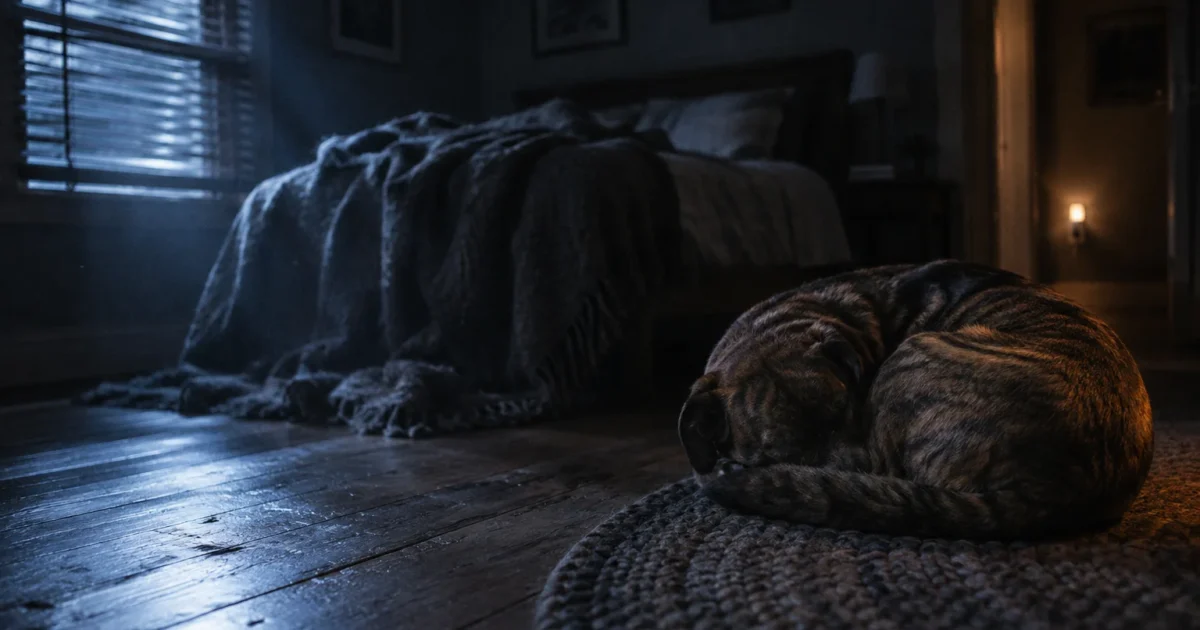
A sudden nighttime drop in indoor temperature can disrupt your dog’s rest and cause intense physical discomfort. Recognizing the earliest signs of cold stress helps you protect your pet from sleepless nights and winter health hazards.
Dogs react to chilly rooms much like humans do; their bodies attempt to conserve heat through involuntary physical reactions. Subtle postural shifts often reveal their chill long before obvious symptoms appear.
Here are eight unmistakable indicators that your dog feels cold at night, alongside practical, vet-approved adjustments to keep them cozy until morning.
Recognizing the 8 Signs Your Dog Is Cold at Night
Dogs communicate physical discomfort primarily through changes in body language and sleep habits.
Observing these distinct physical and behavioral indicators allows you to intervene before nighttime chills create health risks.
1. Involuntary Shivering and Trembling
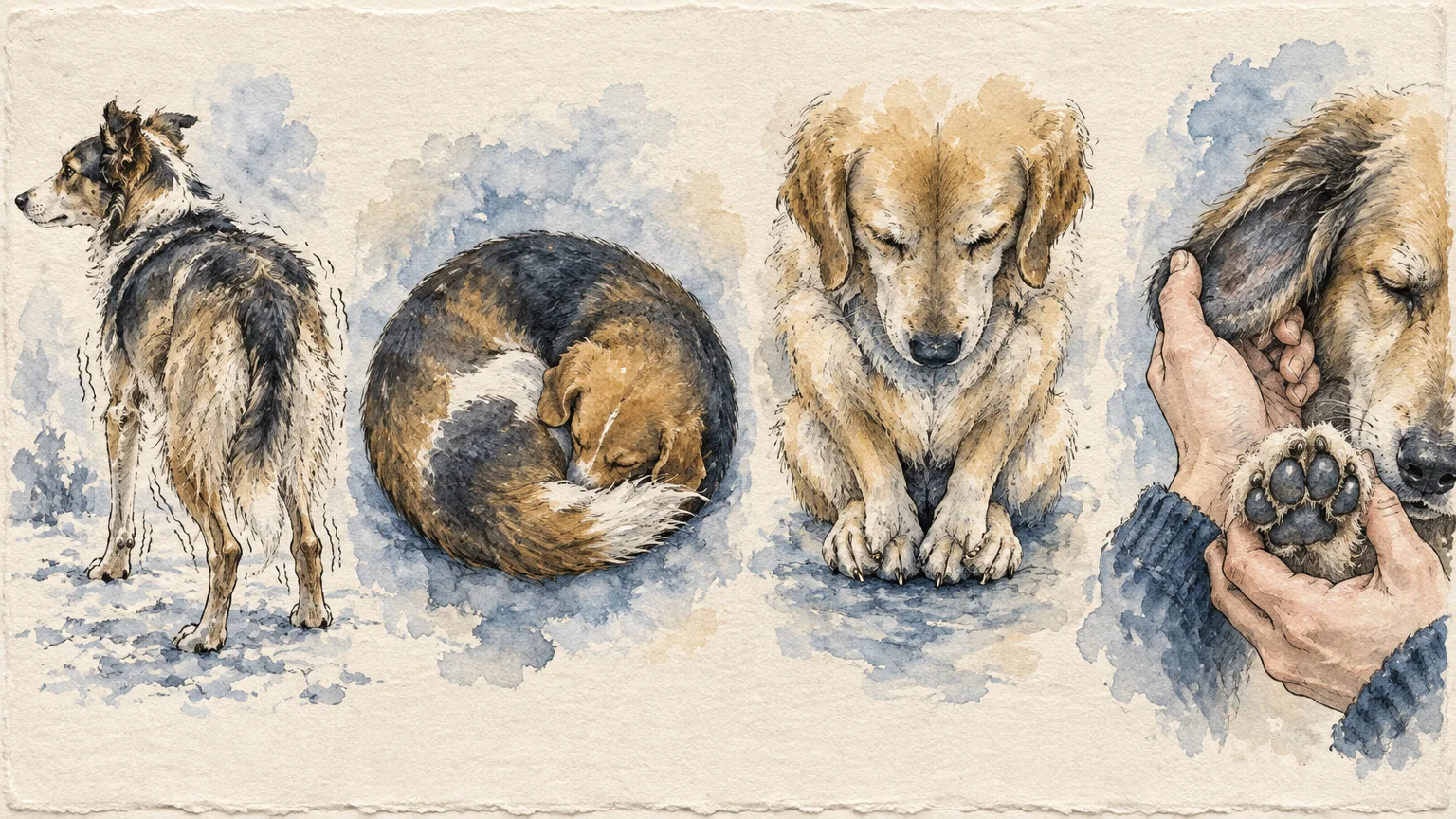
Shivering represents a dog’s primary biological defense against falling core body temperatures. Rapid muscle contractions consume stored energy to produce emergency thermal warmth.
If your dog trembles while resting in their crate or bed, their sleeping area is too cold.
Watch closely for subtle vibrations across their flanks and thighs before full-body shaking begins. Shivering depletes energy reserves quickly, leaving your dog tired and stressed by sunrise.
Unlike anxiety-induced trembling, cold shivering stops once you wrap your dog in an insulated blanket.
2. The Tightly Curled “Donut” Sleeping Position
A relaxed, warm dog stretches out along their side or sprawls comfortably across sleeping surfaces.
In contrast, a cold dog curls into a tight, compact ball to minimize exposed body surface area. This donut posture shields delicate abdominal organs from low ambient temperatures.
Take special notice if your dog tucks their muzzle directly beneath their tail. This instinctual position captures warm exhaled breath, recycling heat to warm their face and chest.
If your dog remains tightly balled up without shifting positions, their bedding requires immediate insulation.
3. Tucking Paws Securely Under the Chest
Observe how your dog positions their limbs when lying on bare floors or thin cushions.
Chilled dogs pull all four paws securely beneath their brisket rather than extending them freely. This tight tuck prevents conductive heat loss through sensitive, uninsulated paw pads.
You may also notice their entire frame looks rigid rather than relaxed. Sustained muscle contraction helps prevent ambient cold from penetrating deeper tissue layers.
Tucking paws tightly protects the major blood vessels that run close to the skin surface along the legs.
4. Ice-Cold Ears, Nose, and Paw Pads to the Touch
When temperatures drop, the canine circulatory system constricts peripheral blood vessels to prioritize blood flow to vital organs.
Gently cup your hands around your dog’s ears, nose, and the fleshy pads of their paws.
If these areas feel icy compared to their warm groin or armpits, your pet is cold. Chilled extremities indicate that their circulatory system is working in conservation mode.
Healthy ears should feel gently warm to the touch, not chilled like autumn leaves.
5. Relentless Heat-Seeking Behavior
Dogs actively modify their behavior when their primary bed fails to provide sufficient warmth.
Your dog might scratch at your bedroom door, burrow aggressively into your blankets, or press tightly against your legs. Other pets squeeze into cramped spaces between furniture to escape drafts.
If you find your pet lying directly over heating registers or near furnace vents, take immediate action. This persistent search for heat shows their existing bedding provides inadequate protection.
When an independent sleeper suddenly demands to sleep under your covers, check the floor-level temperature.
6. Nighttime Restlessness and Whining
A warm dog falls asleep quickly and rests quietly throughout the entire evening.
Persistent cold disrupts natural sleep cycles, causing your dog to pace, circle, and whine softly in distress. They may repeatedly dig at their blankets trying to construct a warmer nest.
Cold prevents dogs from entering restorative deep sleep stages. This interrupted rest leaves pets fatigued, anxious, and irritable throughout the following day.
Dogs need consistent, warm rest to maintain strong daytime energy and emotional balance.
7. Morning Stiffness and Reluctance to Rise
Frigid indoor temperatures stiffen muscle fibers and thicken protective joint fluid overnight.
If your dog hesitates to get out of bed or limps during early morning routines, overnight drafts are often responsible.
While senior dogs suffer most from morning cold stiffness, young dogs can also experience tight muscles after sleeping on chilly floors. Gentle overnight warmth prevents this painful morning stiffness.
Warming the sleeping area often reduces morning mobility struggles within just a couple of days.
8. Slow, Shallow Respiration and Lethargy
Prolonged exposure to low temperatures forces a dog’s metabolic rate to decelerate.
Your dog’s breathing may become slow, quiet, and shallow as their body conserves dwindling energy reserves.
Chilled dogs also respond sluggishly when you call their name or gently nudge them awake. When accompanied by shivering, sluggish responses signal significant cold stress that demands prompt warming.
Never ignore lethargy paired with cold skin, as this indicates advancing cold stress.
Ideal Room Temperatures for Sleeping Dogs
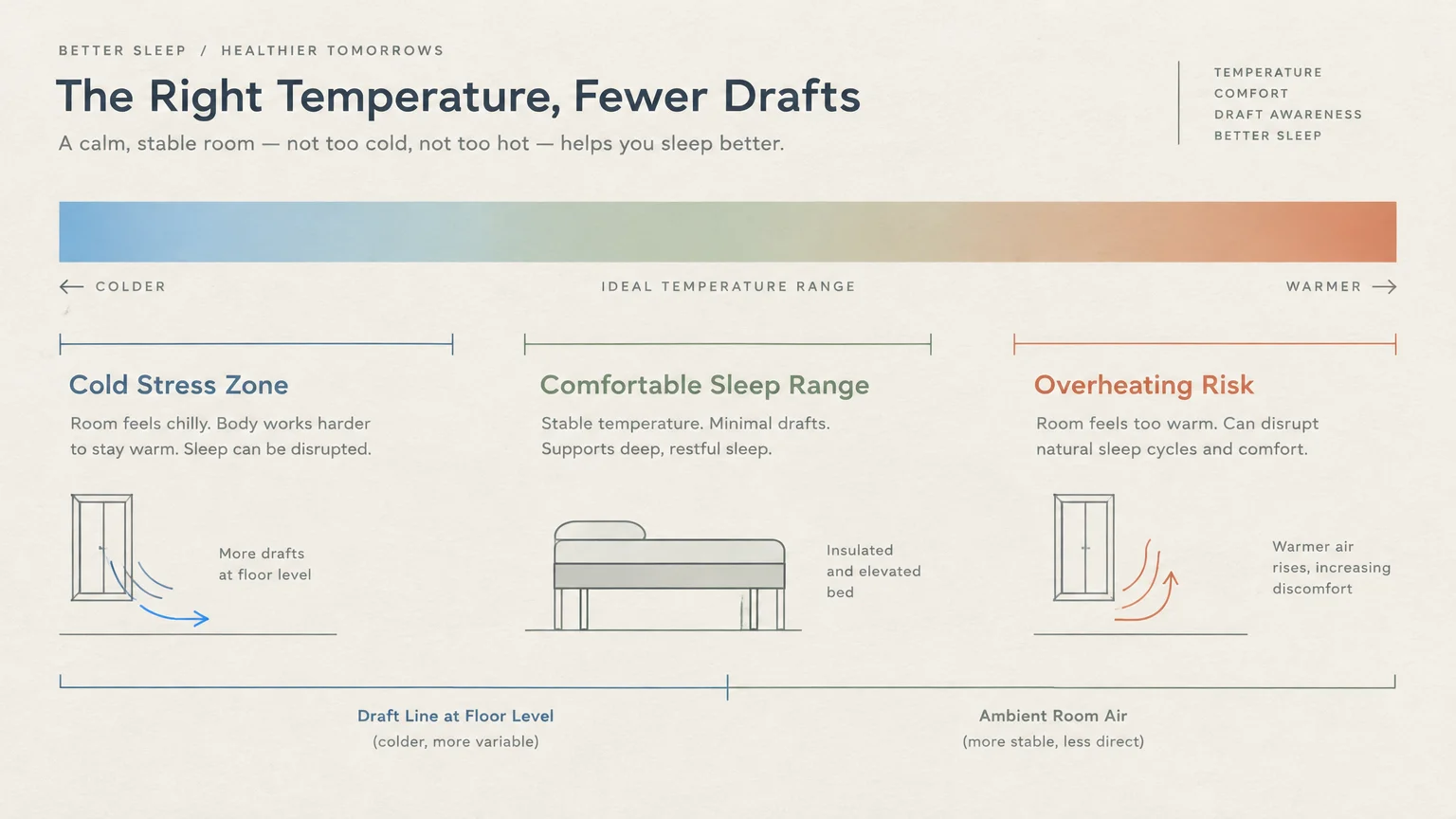
Maintaining the right indoor temperature protects your dog’s health while ensuring everyone in your household sleeps comfortably.
Most domestic dogs thrive when indoor sleeping areas remain between 68 and 72 degrees Fahrenheit. However, safe room temperatures vary dramatically depending on your dog’s size, coat, and age.
According to PetMD, temperatures falling below 45 degrees Fahrenheit require immediate protective measures for sensitive pets.
Keep in mind that cold air sinks toward the floor where your dog’s bed rests. Bare tile, laminate, or hardwood floors often register five to ten degrees colder than your wall thermostat.
Review the temperature benchmarks below to evaluate your dog’s specific thermal needs during cold weather.
| Canine Category | Recommended Nighttime Room Temp | Cold Caution Threshold |
|---|---|---|
| Small & Toy Breeds | 70°F to 74°F | Below 65°F |
| Lean & Short-Coated Breeds | 68°F to 72°F | Below 62°F |
| Medium Dogs with Dense Coats | 65°F to 70°F | Below 55°F |
| Northern & Double-Coated Breeds | 60°F to 68°F | Below 45°F |
| Senior, Ailing, or Arthritic Dogs | 70°F to 74°F | Below 68°F |
Use these ranges as starting points, and observe your individual dog’s behavior to fine-tune their sleeping environment.
Dogs Most Vulnerable to Nighttime Chill
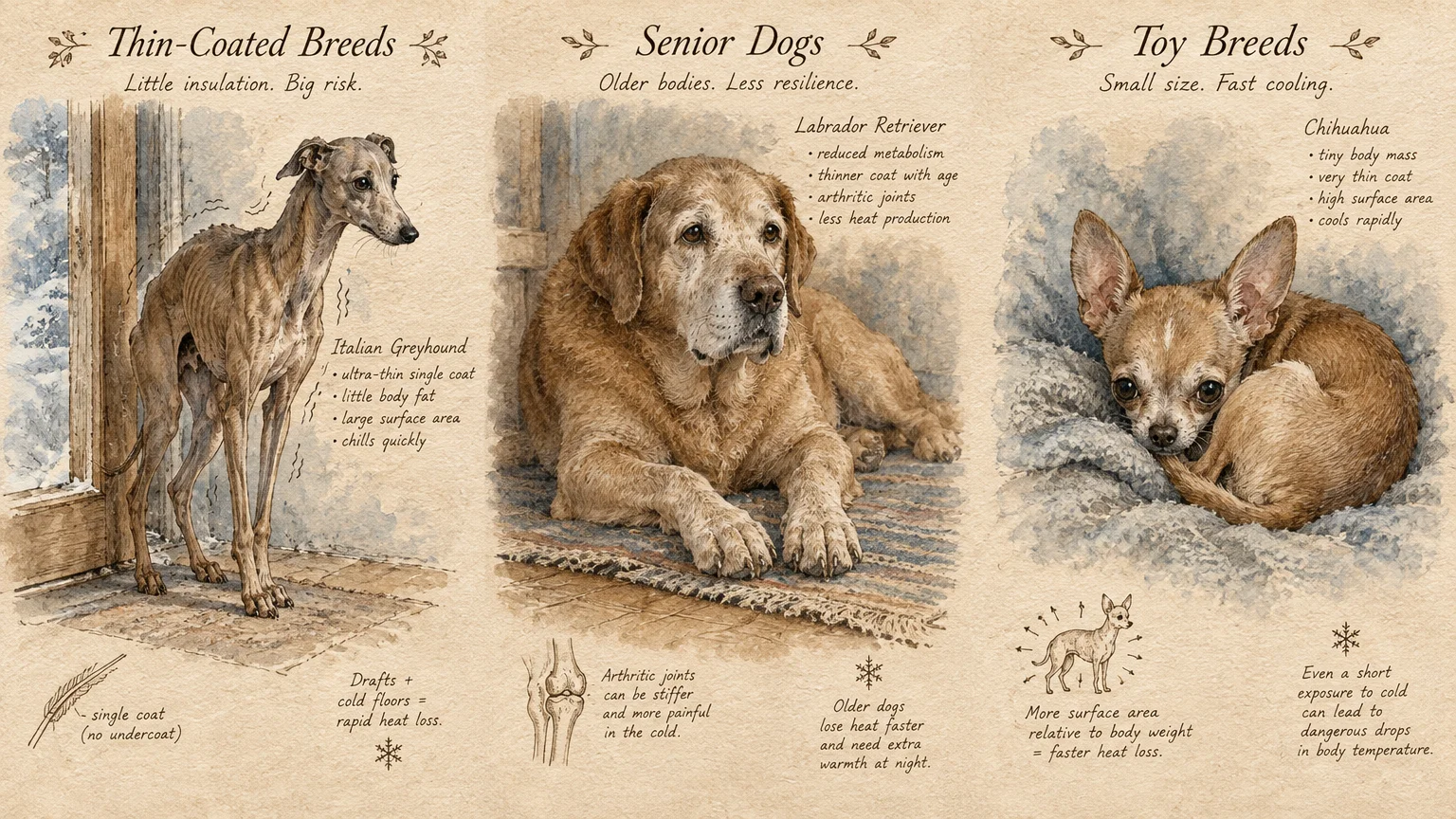
Certain physical traits leave specific dogs far more vulnerable to cold stress than others.
Small breeds like Chihuahuas, Maltese, and Miniature Pinschers have large surface areas relative to their compact body mass. They lose core heat to surrounding air rapidly.
Lean breeds with minimal body fat, such as Greyhounds, Whippets, and Salukis, lack natural subcutaneous insulation. Their ultra-short coats offer little defense against nighttime drafts.
Puppies younger than six months cannot regulate their internal body temperature efficiently. They require extra warmth and insulated bedding to prevent rapid hypothermia during chilly nights.
Senior dogs face unique challenges because reduced muscle mass and slower metabolism diminish heat production. Furthermore, cold temperatures aggravate arthritis, causing painful nighttime stiffness.
Dogs coping with chronic medical conditions like hypothyroidism, kidney disease, or Cushing’s disease also struggle with internal thermoregulation. These vulnerable pets require dedicated nighttime heating support.
Safe and Effective Ways to Keep Your Dog Warm at Night
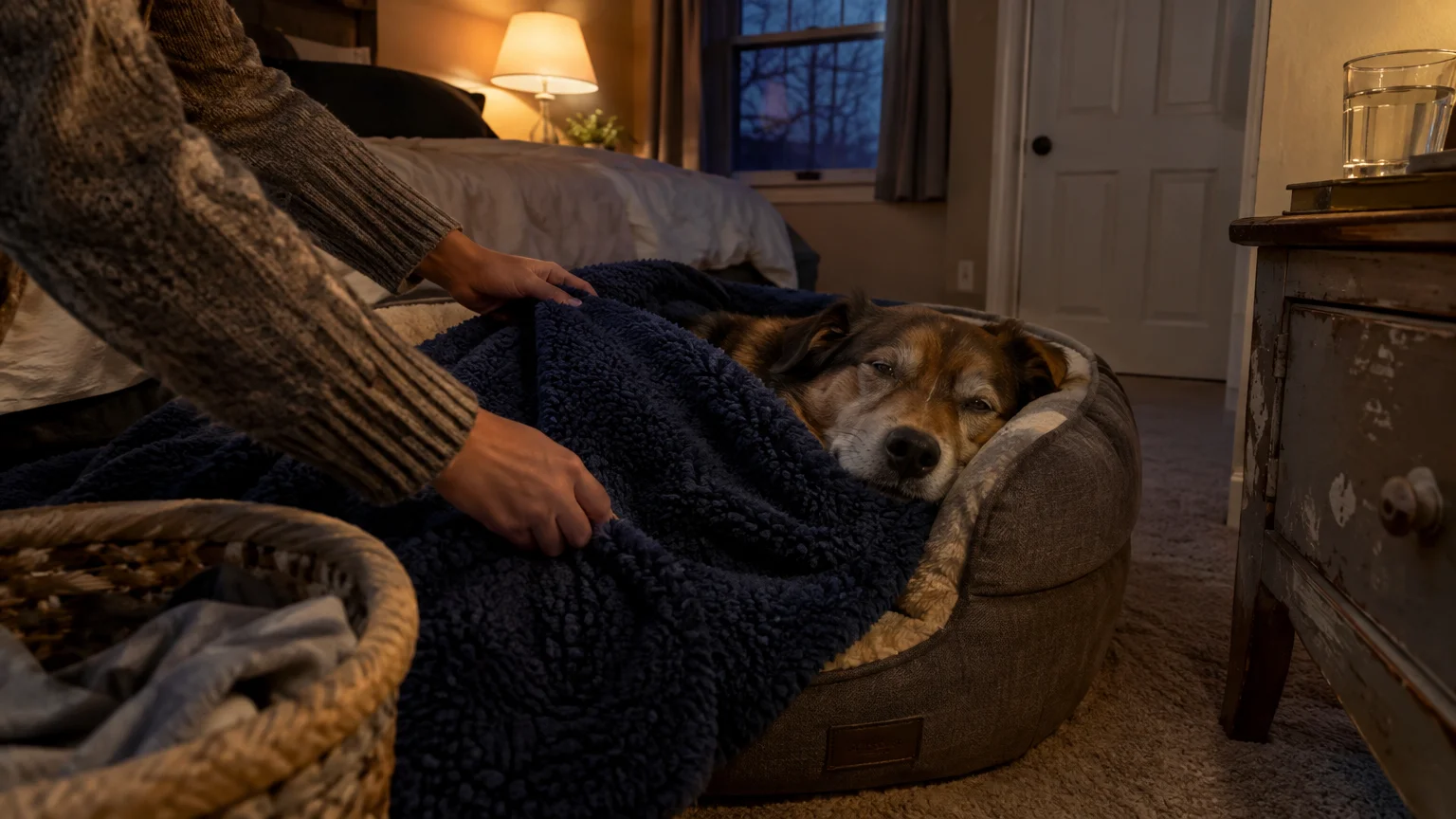
Implementing practical bedding adjustments creates a cozy, draft-free haven that supports uninterrupted sleep.
Elevate your dog’s bed off bare flooring to block conductive heat loss. Using a low platform, raised cot, or thick foam mat stops cold floor temperatures from chilling your pet.
Move sleeping areas away from drafty exterior doors, single-pane windows, and cold outside walls. Placing your dog’s bed in an interior room corner significantly reduces draft exposure.
Dress short-haired dogs in soft fleece canine pajamas or well-fitted indoor sweaters before bedtime. Ensure the garment allows full range of motion without pinching around the neck or groin.
Provide multiple lightweight plush or fleece blankets directly in your dog’s bed. Layered blankets trap warm air pockets and allow your dog to burrow to their preferred temperature.
Close bedroom curtains at night to create an insulating barrier against cold air seeping through window glass.

Choosing the Right Winter Bedding: DIY vs. Store-Bought
Providing adequate winter warmth does not require an expensive equipment overhaul. Both commercial products and clever DIY adjustments can protect your companion from winter chill.
Commercial Warming Products
Self-warming thermal pet beds feature internal sheets of reflective metalized foil wrapped in soft batting. This clever technology bounces your dog’s radiant body heat back without using electricity.
Orthopedic memory foam beds offer thick, dense cushions that block floor chill while supporting sore joints. Look for options with bolster walls, which block floor drafts and provide headrests.
Cost-Effective DIY Bedding Solutions
You can build an outstanding thermal barrier using standard corrugated cardboard boxes under your dog’s bed. Cardboard contains internal air flutes that stop floor chill from transferring upward.
Layer clean, repurposed human fleece blankets, flannel sheets, or old wool sweaters into their sleeping area. These textiles insulate effectively and hold up well to repeated machine washings.
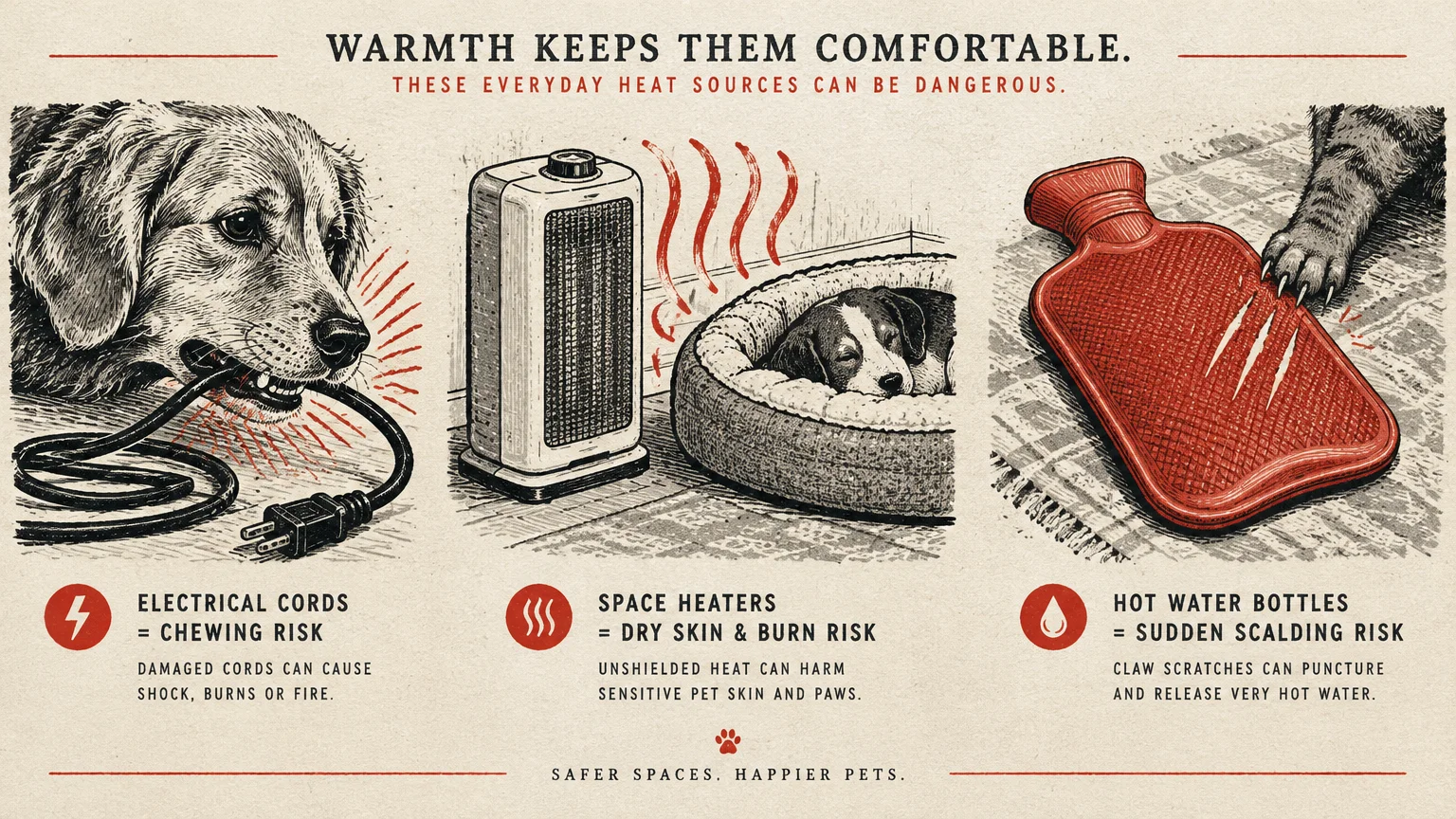
Fill a traditional rubber hot water bottle with warm tap water and wrap it securely in a thick towel. Place it alongside your dog’s bedding edge to create a gentle heat zone.
Never use boiling water, and always inspect the rubber seal to prevent hot water leaks.
Critical Nighttime Heating Hazards to Avoid
While protecting your companion is vital, certain supplemental heating methods present severe safety risks.
Never place human electric heating pads in your dog’s bed. Human pads lack chew-resistant cords and can reach temperatures high enough to cause severe thermal burns on sleeping dogs.
Portable space heaters also introduce significant fire dangers when placed near dog beds or crates. A restless dog can easily knock over portable heaters in the dark.
Furthermore, space heaters blast intensely dry air that irritates canine respiratory passages and dries out skin. Keep electric space heaters outside your pet’s sleeping zone.
Position dog beds at least three feet away from baseboard heaters, woodstoves, and radiators. Direct radiant heat can scorch blankets, singe fur, or trigger heat exhaustion in sleeping pets.
When Nighttime Shivering Signals a Medical Emergency
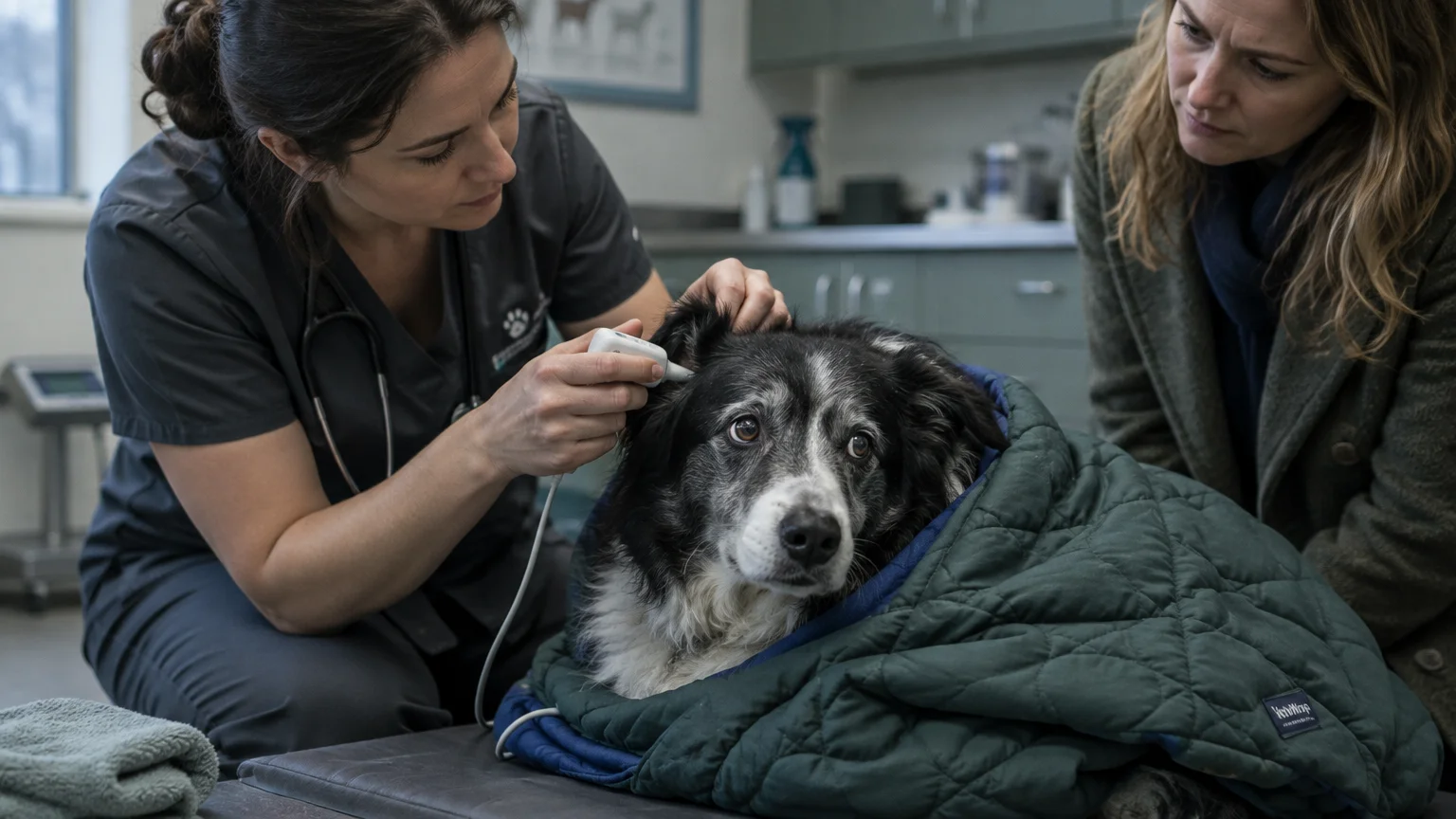
Shivering does not always mean your dog feels chilly; trembling frequently accompanies severe pain, toxicity, or fever.
According to the American Kennel Club (AKC), normal canine body temperature ranges strictly between 101 and 102.5 degrees Fahrenheit.
If your dog’s core temperature drops below 99 degrees Fahrenheit, they enter hypothermia. This life-threatening medical emergency requires immediate clinical intervention.
Guidelines from the American Veterinary Medical Association (AVMA) highlight that hypothermia impairs heart function, respiration, and immune defenses.
“Hypothermia can progress silently in vulnerable pets, turning simple cold exposure into a life-threatening systemic crisis.” — Dr. Sarah Mitchell, DVM
Check the color of your dog’s gums if they shiver persistently. Pale, blue, or gray gums indicate impaired circulation and dangerously depleted oxygen delivery.
If your dog continues trembling after being moved into a warm room with blankets, contact an emergency veterinarian immediately.
Frequently Asked Questions
What temperature is too cold for a dog to sleep indoors?
Temperatures below 60 degrees Fahrenheit are uncomfortable for small, thin, or senior dogs. For healthy, double-coated breeds, temperatures falling below 50 degrees Fahrenheit require extra bedding and thermal support.
Can my dog safely wear a coat or sweater all night?
Yes, dogs can wear breathable fleece sweaters or pajamas overnight. Ensure the garment fits comfortably, restricts no breathing or limb movement, and has no loose buttons that pose choking hazards.
How do I know if my dog is too warm at night?
An overheated dog will pant, kick off blankets, and stretch out flat on bare tile or uncarpeted floors. If you notice these behaviors, remove clothing layers and lower the room temperature.
Are heated pet beds safe to leave on overnight?
Veterinary-approved pet heating pads featuring chew-proof cords and internal safety thermostats are safe for overnight use. Always ensure your dog can easily step off the pad whenever they desire.
Should I put blankets inside my dog’s crate during winter?
Yes, crated dogs need blankets because plastic and wire crate pans provide no insulation against cold floors. Multiple fleece blankets allow your dog to burrow and regulate their personal sleeping temperature.
For expert pet care guidance, visit
ASPCA, The Humane Society of the United States and Cornell University College of Veterinary Medicine.
Disclaimer: This article is for informational purposes only and is not a substitute for professional veterinary advice, diagnosis, or treatment. Always consult with a licensed veterinarian for medical concerns about your pet.




Leave a Reply