
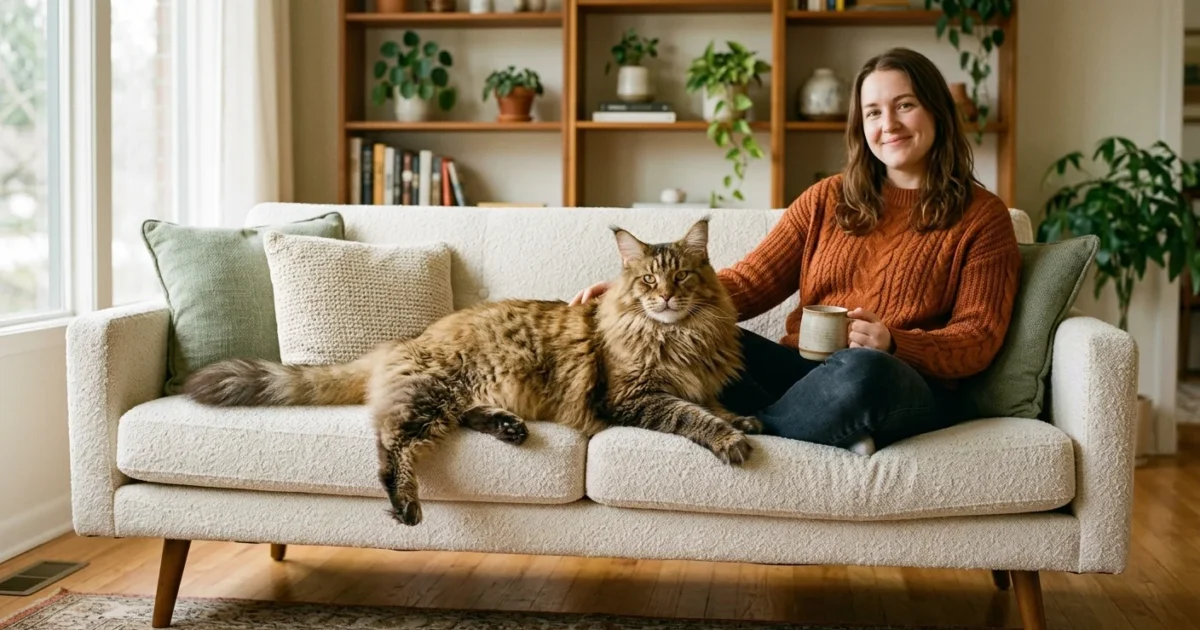
Bringing a giant feline into your home transforms your living space and daily routine, offering dog-like affection wrapped in magnificent, lion-like grandeur. Identifying the largest cat breeds requires looking beyond simple body weight to evaluate frame length, skeletal height, and muscle mass. Whether you admire the wild athletic presence of a Savannah cat or the gentle demeanor of a fluffy Maine Coon, these grand companions demand specialized care, spacious accommodations, and proper nutritional support. In this comprehensive guide, we explore the world’s biggest domestic cats, detailing their physical benchmarks, temperament traits, and care needs so you can welcome and raise your giant house cat with absolute confidence.
If you are preparing to bring one of these impressive felines into your household, review our complete guide on how to introduce a new cat for a seamless transition.
Understanding Giant Cat Breeds: Physiology and Growth
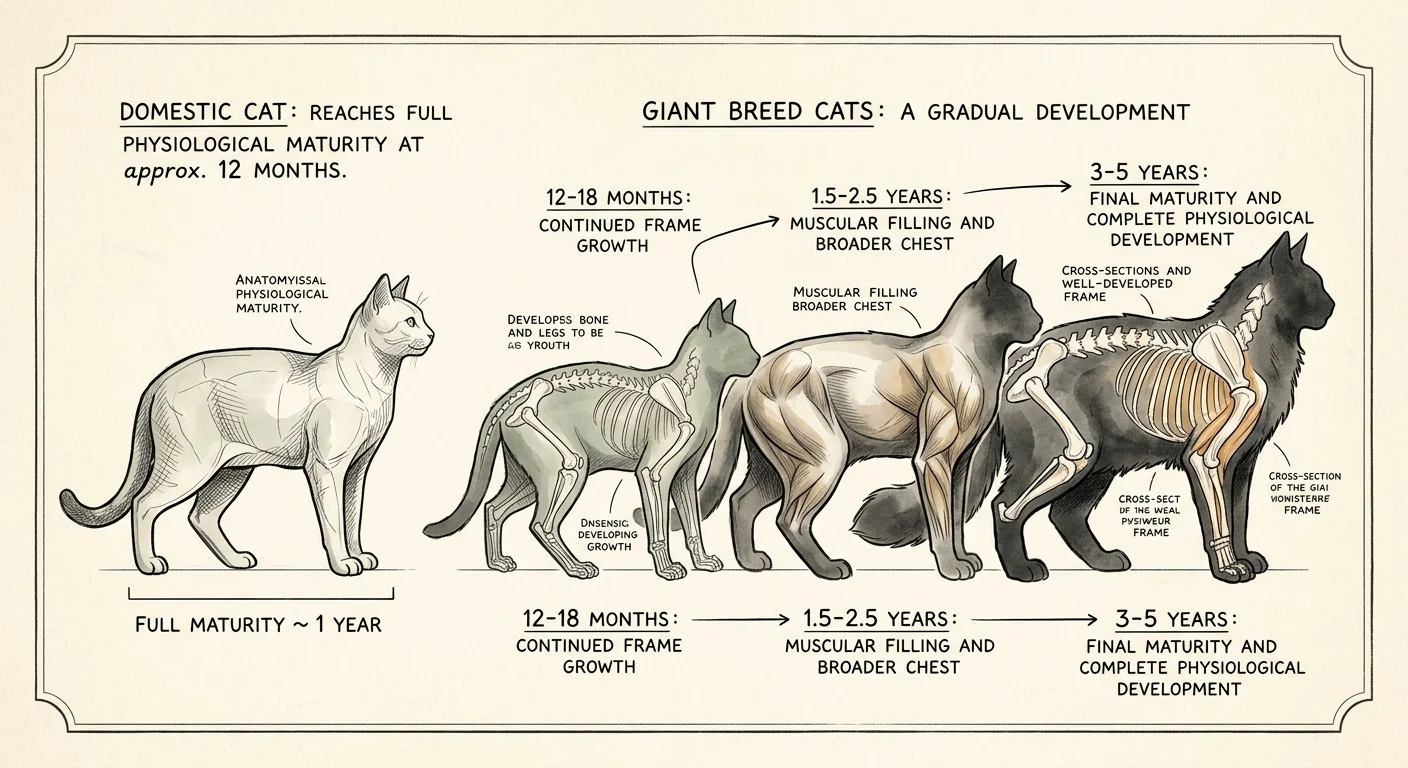
When you evaluate giant cat breeds, distinguishing between a naturally large skeletal frame and an overweight feline is crucial. A domestic cat carrying excessive body fat faces severe health risks, whereas true giant house cat breeds possess dense bone structures, broad chests, and long muscular torsos designed by genetics. These physical adaptations allow large breeds to carry substantial weight comfortably while maintaining agility and strength.
One of the most fascinating aspects of large domestic cats involves their prolonged development timeline. While average domestic shorthairs complete their physical growth around 12 months of age, giant breeds develop at a far slower pace. Breeds such as the Maine Coon, Ragdoll, and Norwegian Forest Cat take anywhere from 3 to 5 years to achieve full skeletal, muscular, and coat maturity. During these extended growth years, their growth plates remain open longer, requiring steady, high-quality nutrition to support healthy joint and bone formation.
According to official breed standards from the Cat Fanciers’ Association (CFA), judges evaluate these impressive felines based on overall balance, bone mass, and structural integrity rather than simple scale weight alone. A well-proportioned 18-pound male Norwegian Forest Cat will display a lean waistline and muscular shoulders, exemplifying natural structural size rather than indoor obesity.
Profiles of the 10 Largest Domestic Cat Breeds
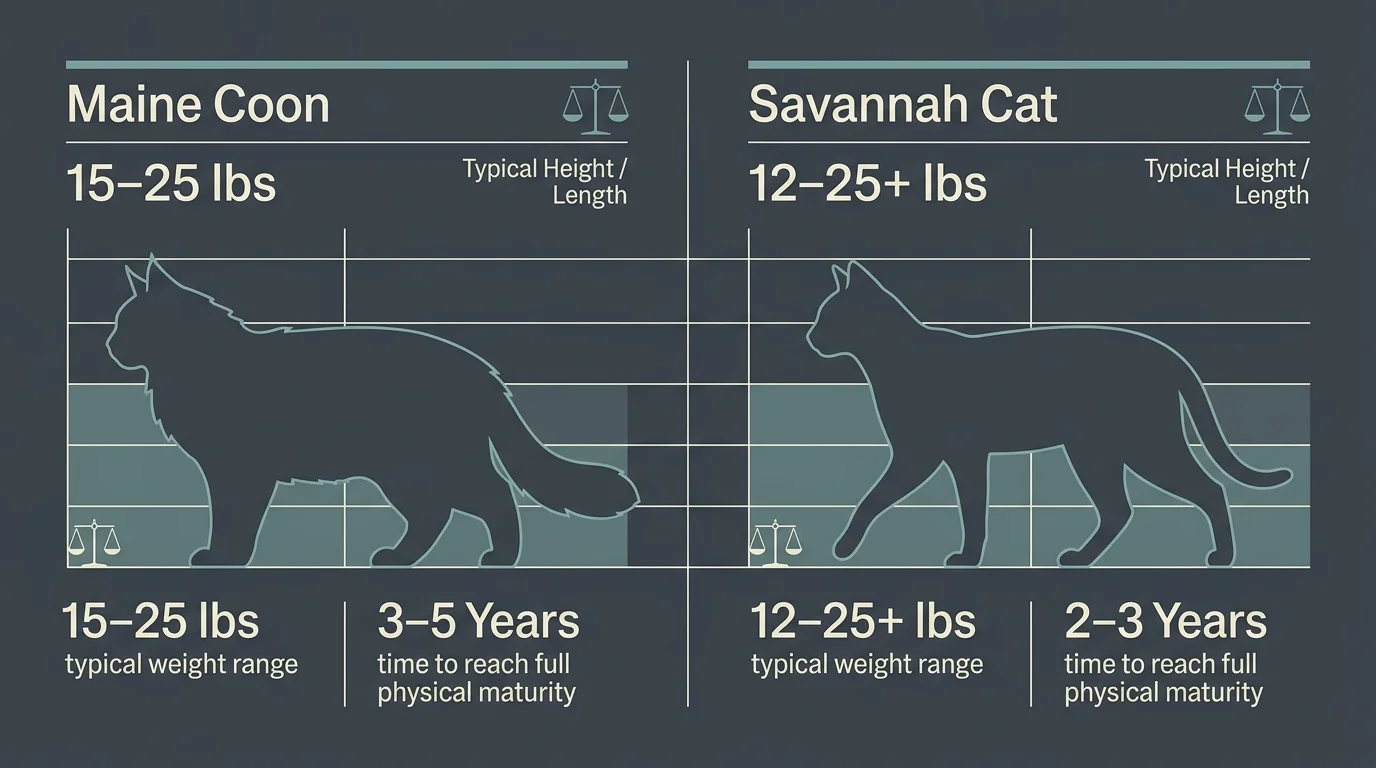
To help you compare these magnificent felines, the table below highlights the physical benchmarks, average weights, and maturation timelines for the 10 largest domestic cat breeds. Following the table, you will find detailed profiles for each individual breed.
| Breed Name | Average Male Weight | Average Female Weight | Typical Height / Length | Full Maturity Timeline |
|---|---|---|---|---|
| Maine Coon | 15–25 lbs (6.8–11.3 kg) | 8–12 lbs (3.6–5.4 kg) | 10–16 in tall / Up to 40 in long | 3–5 Years |
| Savannah Cat (F1–F2) | 12–25+ lbs (5.4–11.3+ kg) | 10–18 lbs (4.5–8.2 kg) | 14–19 in tall at shoulder | 2–3 Years |
| Ragdoll | 15–20 lbs (6.8–9.1 kg) | 10–15 lbs (4.5–6.8 kg) | 11–13 in tall / Up to 38 in long | 3–5 Years |
| Norwegian Forest Cat | 15–20 lbs (6.8–9.1 kg) | 9–16 lbs (4.1–7.3 kg) | 10–12 in tall / Up to 36 in long | 3–5 Years |
| Chausie | 15–25 lbs (6.8–11.3 kg) | 10–15 lbs (4.5–6.8 kg) | 14–18 in tall at shoulder | 2–3 Years |
| Siberian Cat | 15–20 lbs (6.8–9.1 kg) | 10–15 lbs (4.5–6.8 kg) | 10–12 in tall / Up to 35 in long | 3–5 Years |
| British Shorthair | 12–18 lbs (5.4–8.2 kg) | 9–14 lbs (4.1–6.4 kg) | 12–14 in tall / Cobby body | 3–5 Years |
| Turkish Van | 12–18 lbs (5.4–8.2 kg) | 7–12 lbs (3.2–5.4 kg) | 10–14 in tall / Long muscular torso | 3–5 Years |
| Ragamuffin | 14–20 lbs (6.4–9.1 kg) | 10–15 lbs (4.5–6.8 kg) | 10–15 in tall / Heavy boned frame | 3–5 Years |
| Bengal | 10–18 lbs (4.5–8.2 kg) | 8–12 lbs (3.6–5.4 kg) | 10–14 in tall / Athletic muscular torso | 2 Years |
1. Maine Coon
Often dubbed the “Gentle Giant” of the cat world, the Maine Coon holds the title of the largest purely domestic, non-hybrid cat breed. Adult male Maine Coons typically weigh between 15 and 25 lbs (6.8–11.3 kg), while females weigh between 8 and 12 lbs. These muscular cats feature broad chests, large tufted paws that act like snowshoes, and long, rectangular bodies capable of stretching up to 40 inches (100 cm) from nose to tail tip.
The breed consistently dominates world record books for sheer length. Barivel, a male Maine Coon living in Italy, holds the Guinness World Record for the longest living domestic cat, measuring an incredible 120 cm (3 ft 11.2 in) when verified on May 22, 2018. Meanwhile, Mymains Stewart Gilligan (“Stewie”), a Maine Coon from Nevada, USA, holds the all-time record for the longest domestic cat ever recorded at 123 cm (48.5 in), verified on August 28, 2010. Beyond their impressive size, Maine Coons charm their families with soft trills, water-loving habits, and an affectionate, dog-like loyalty.
2. Savannah Cat
The Savannah cat represents a striking hybrid cross between a domestic feline and an African Serval. Because of their wild ancestry, early generations (F1 and F2) stand significantly taller at the shoulder than conventional house cats. Early-generation Savannahs weigh between 12 and 25+ lbs (5.4–11.3+ kg) and stand 14 to 19 inches tall, whereas later generations (F4 and F5) average a more modest 11 to 18 lbs.
Their leggy build produces astonishing height records. Fenrir Antares Powers, an F2 Savannah cat from Farmington Hills, Michigan, holds the Guinness World Record for the tallest living domestic cat at 47.83 cm (18.83 in) at the shoulder, verified on January 29, 2021. He surpassed the previous record holder, Arcturus Aldebaran Powers (also a Savannah cat from Michigan), who held the all-time height record of 48.4 cm (19.1 in) in 2016. Savannahs are exceptionally active, athletic jumpers capable of leaping up to 8 feet vertically, meaning you must provide ample room and high-energy play in your home.
3. Ragdoll
If you want a massive cat with a gentle heart, the Ragdoll is an ideal choice. Developed in California during the 1960s, adult male Ragdolls weigh between 15 and 20 lbs (6.8–9.1 kg), while females weigh 10 to 15 lbs. They earned their name because they famously relax into a limp state when picked up by people they trust.
Ragdolls possess heavy boning, broad shoulders, and a plush, semi-longhair point coat complemented by striking blue eyes. Because they take 3 to 5 years to mature fully, their soft coat color and adult body mass develop gradually over time. Their calm, docile temperament makes them wonderful indoor companions, though their large size means you must support their hindquarters properly whenever you cradle them.
4. Norwegian Forest Cat
Known affectionately as the “Wegie,” the Norwegian Forest Cat evolved over centuries in Scandinavia’s cold climate. Built to endure harsh winters, adult males weigh 15 to 20 lbs (6.8–9.1 kg), featuring a dense, insulated double coat, a water-repellent top layer, and a magnificent neck ruff. Their long, heavily boned legs support a robust torso, allowing them to traverse rough terrain easily.
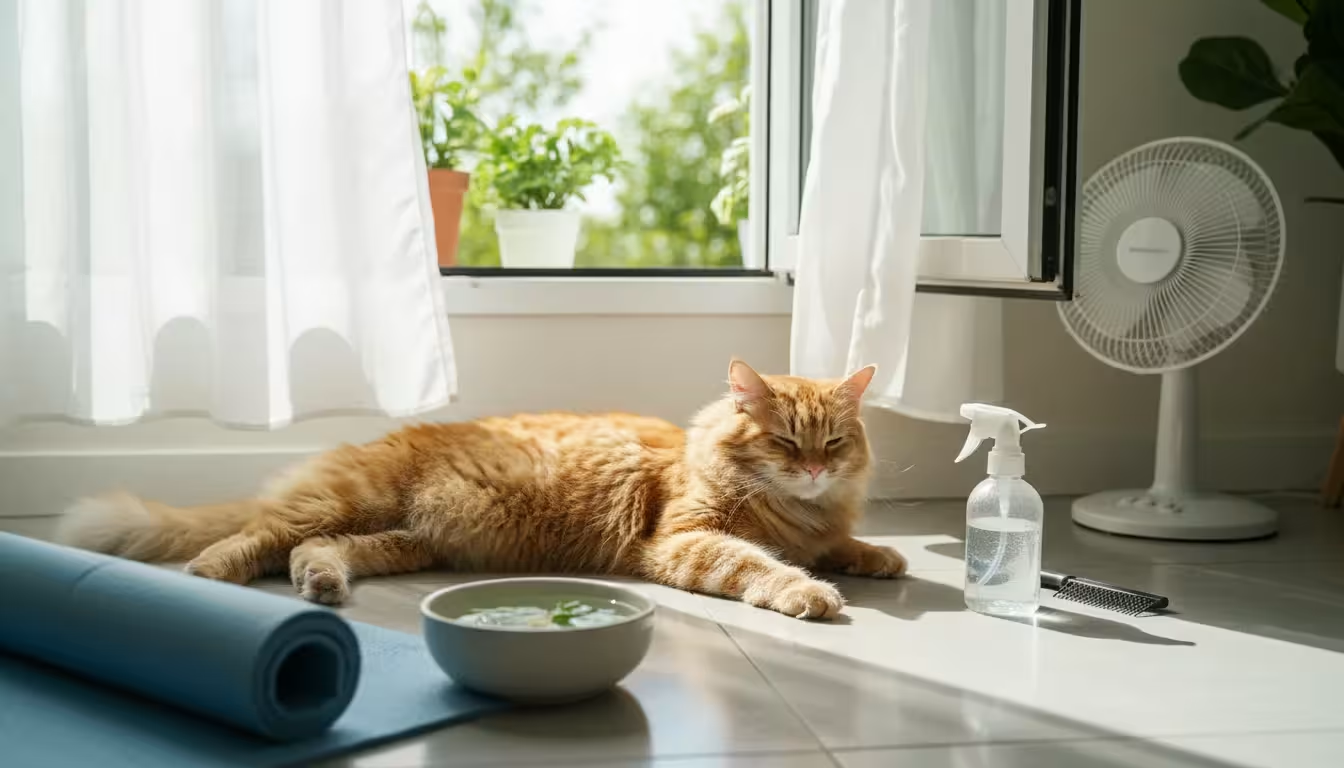
Due to their thick, multi-layered fur, these arctic companions benefit greatly from practical summer cat care techniques when temperatures rise.
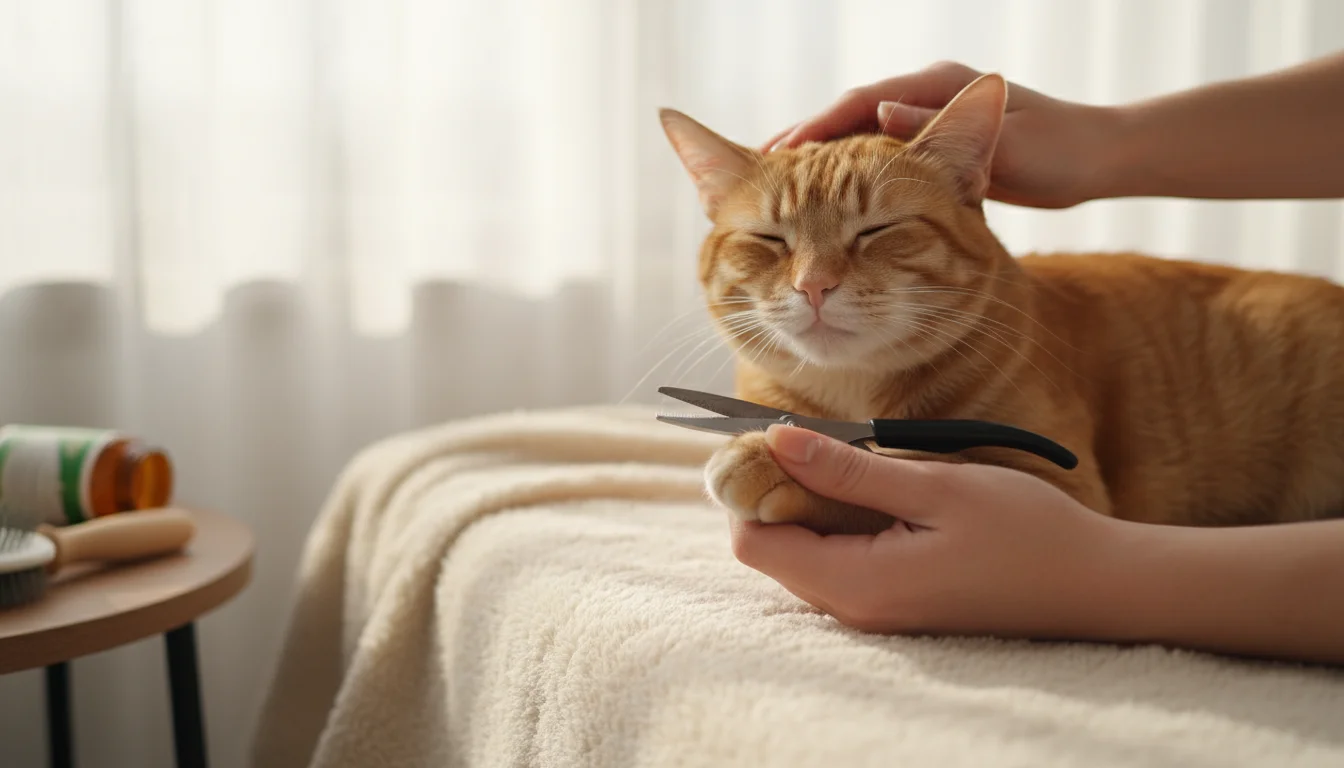
To prevent mats from forming in their thick fur, establish a regular routine for grooming your cat at home.
Wegies are phenomenal climbers equipped with sturdy, powerful claws that allow them to climb down trees headfirst—a rare feat among domestic felines. They mature slowly over 3 to 5 years, developing a confident, even-tempered personality that balances independence with affectionate family loyalty.
5. Chausie
The Chausie is a majestic hybrid cat created by breeding domestic felines with the wild jungle cat (Felis chaus). Adult male Chausies average between 15 and 25 lbs (6.8–11.3 kg), possessing deep, broad chests, long legs, and large, tufted ears. Their muscular, streamlined bodies are built for sprinting and high-velocity jumping.
Chausies retain a bold, inquisitive, and highly energetic disposition. They bond intensely with human family members and dislike being left alone for extended periods. If you welcome a Chausie into your household, plan to invest time in daily leash walks, fetch games, and complex puzzle toys to keep their active minds satisfied.
“Tailoring nutritional intake to match the extended growth window of large breeds prevents premature joint stress and allows structural bones to reach maximum density safely.” — Dr. Sarah Mitchell, DVM
6. Siberian Cat
Originating in Russia’s challenging wilderness, the Siberian Cat is a heavily muscled, ancient breed designed for strength and survival. Adult males routinely reach 15 to 20 lbs (6.8–9.1 kg), boasting a dense triple coat that protects them from extreme moisture and cold. Their barrels chests, round paws, and slightly longer hind legs give them extraordinary leaping capability.
Because heavy-coated giant cats shed substantially during seasonal shifts, consult our guide to cat breeds that shed the most to stay ahead of grooming.
Despite their substantial size, Siberians are agile acrobats who love perching atop high furniture. Many pet owners appreciate that Siberians naturally produce lower levels of the Fel d 1 protein—the primary allergen responsible for cat allergies—making them a potential option for mild allergy sufferers, though individual reactions vary.
7. British Shorthair
With their broad cheeks, compact chest, and round facial structure, the British Shorthair resembles a solid, living teddy bear. Adult male British Shorthairs weigh between 12 and 18 lbs (5.4–8.2 kg). Unlike the long-legged hybrid breeds, the British Shorthair exhibits a “cobby” build characterized by short, sturdy legs, heavy bone density, and a thick, dense coat.
As heavy-bodied breeds mature into their golden years, understanding key aspects of senior cat care helps preserve their mobility and comfort.
Despite their heavy build, their relaxed demeanor makes them a frequent mention among cat breeds suited for apartment living provided they get daily enrichment.
British Shorthairs mature gradually over 3 to 5 years. They maintain a calm, quiet, and easygoing temperament. While they prefer lounging near your feet over being carried around, their solid weight requires proper portion control to prevent excess weight gain as they age.
8. Turkish Van
Hailing from the Lake Van region of Eastern Turkey, the Turkish Van is a naturally occurring large breed built like an athlete. Adult males weigh between 12 and 18 lbs, boasting broad shoulders, powerful hindquarters, and a long, muscular torso. Their unique semi-longhair coat lacks a dense undercoat, giving it a soft, cashmere-like texture that resists water.
Equipping your home for a large breed doesn’t need to be costly—check out these top-rated essential cat care products under $50.
Famed as the “Swimming Cat,” many Turkish Vans actively seek out water, enjoying splashing in shallow tubs or investigating dripping faucets. Their large size comes paired with high energy levels, so you will need plenty of open vertical territory and interactive toys to keep them happily engaged.
9. Ragamuffin
Closely related to the Ragdoll, the Ragamuffin was established as an independent breed to preserve distinct coat colors and traits. Adult male Ragamuffins weigh between 14 and 20 lbs (6.4–9.1 kg), featuring a heavy-boned body, a slight fatty pad on the lower abdomen, and expressive, walnut-shaped eyes. Their plush coat feels surprisingly luxurious and resists matting easily.
Observing your cat’s everyday routines makes it easier to spot the clear signs your cat is happy and healthy.
Ragamuffins take up to 5 years to reach full structural growth. They are exceptionally patient, gentle, and affectionate, making them outstanding companions for households with young children or other pets. They thrive on cuddle time and routinely follow their owners from room to room.
10. Bengal
Developed by crossing domestic cats with the Asian leopard cat (Prionailurus bengalensis), the Bengal combines exotic wild aesthetics with a domestic temperament. While females average 8 to 12 lbs, muscular male Bengals frequently reach 10 to 18 lbs. Their long, sleek torsos and hard muscle tone make them feel noticeably heavier and firmer than they look.
Bengals are world-renowned for their striking rosetted coats, high energy, and intense intelligence. They demand an environment filled with climbing structures, exercise wheels, and interactive games. When you manage their physical energy effectively, Bengals become loving, entertaining family members.
Key Care and Environmental Needs for Extra-Large Cats
Owning a giant house cat requires thoughtful adjustments to your living environment. Standard commercial pet supplies are typically manufactured for 8- to 10-pound felines; placing a 20-pound Maine Coon or Ragdoll into standard equipment leads to discomfort, stress, and behavioral issues. By customizing your setup, you ensure your feline friend stays happy and healthy.
- Extra-Large Litter Boxes: Standard litter boxes measure roughly 18 to 22 inches long, which forces a 36-inch cat to cramp its body or eliminate outside the box. As a general rule, a litter box must measure at least 1.5 times the length of your cat from nose to base of tail. Many large cat owners craft custom litter boxes using 50-quart or larger plastic storage totes by cutting an entry opening in one side.
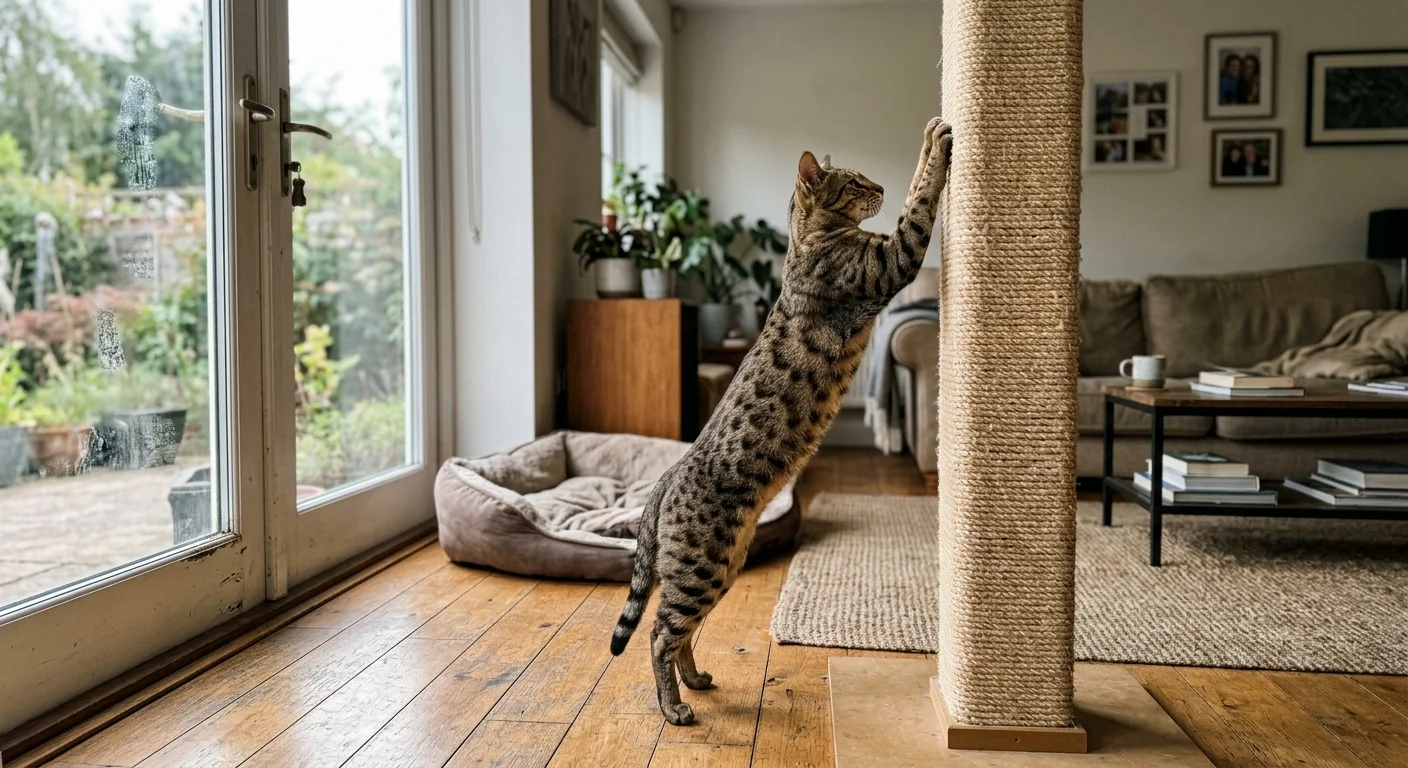
- Heavy-Duty Scratching Posts: Small, lightweight scratching posts will tip over when a 20-pound cat leans its weight against them. Select scratchers that stand at least 36 to 40 inches tall mounted on broad, heavy wooden bases, allowing your cat to achieve a full vertical stretch safely.
- Reinforced Climbing Trees: Look for heavy-duty cat trees built with solid wood or thick PVC pillars rather than thin cardboard tubes. Ensure perches measure at least 18 by 20 inches so your large cat can nap comfortably without falling off.
- Substantial Carrier Sizing: Skip small plastic carriers and opt for top-loading extra-large hard carriers or soft-sided carrier totes designed for medium-sized dogs. Your cat should be able to stand, turn around, and lie down easily during vet visits.
Enrichment is equally vital for large breeds. Veterinary research from the Cornell University College of Veterinary Medicine emphasizes that structured daily play, window perches, and puzzle feeders prevent indoor boredom and mitigate behavioral problems in high-energy or hybrid breeds. Engaging your cat in 15-minute play sessions twice daily keeps their muscles toned and joints flexible.
Legal Regulations and Ethical Considerations for Hybrid Breeds
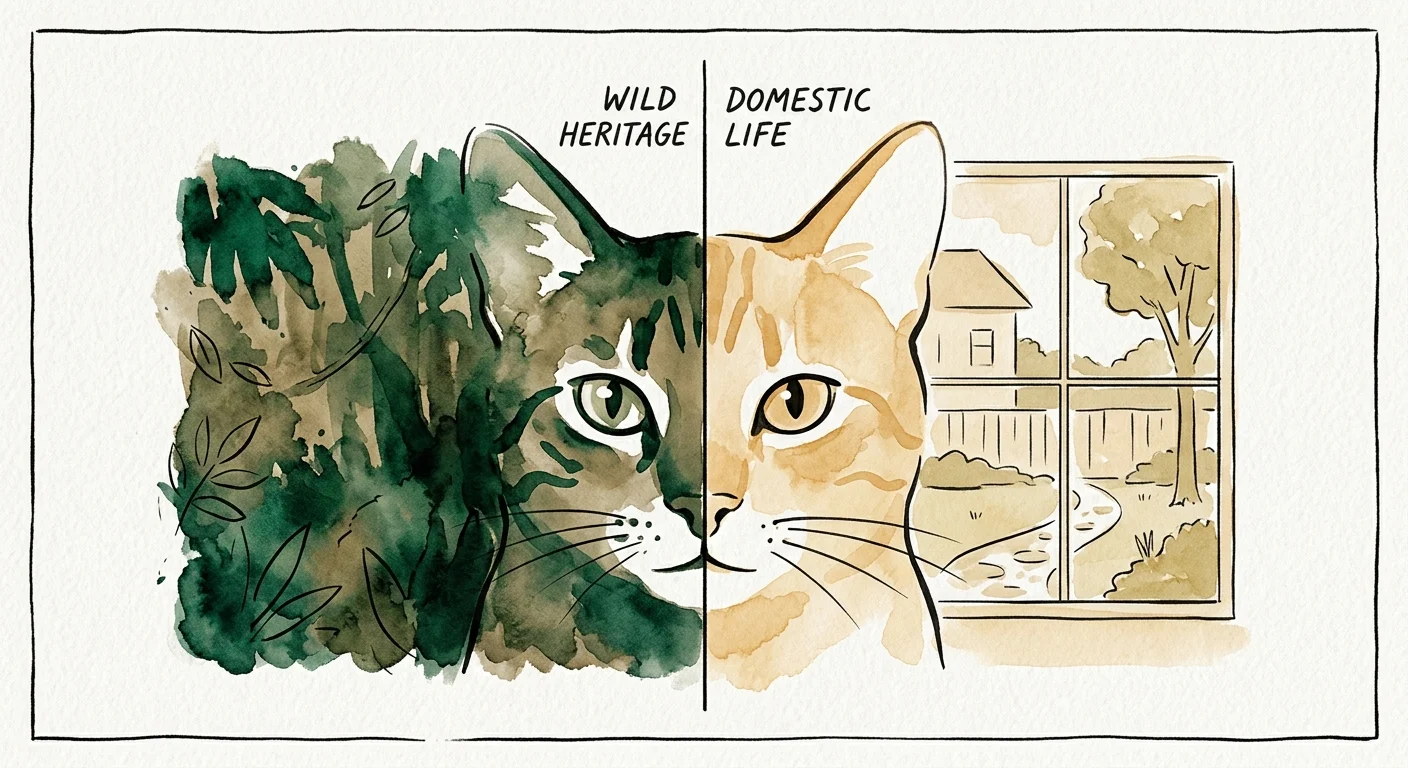
Before adopting giant wild-hybrid breeds like the Savannah cat or Chausie, you must research the legal landscape in your jurisdiction. Because these breeds carry wild ancestral DNA, state, provincial, and local municipal laws regulate or restrict their ownership to protect public safety and wildlife populations.
For example, Savannah cats face total ownership bans in states such as Georgia and Hawaii. Other states, including New York and Vermont, restrict ownership to early generations, allowing only F4 generations or later. Municipal laws can be even stricter; cities like New York City and Minneapolis maintain blanket bans on all domestic-wild hybrid felines regardless of generation. Always consult your local animal control agency before committing to a hybrid cat.
Financial commitment is another critical factor when purchasing hybrid cats from reputable breeders. A high-generation F1 Savannah cat (50% serval) typically costs between $1,500 and $20,000+ USD depending on pedigree and traits. Show-quality F4 or F5 generations average between $1,000 and $2,500 USD. Beyond initial purchasing costs, ensure you support ethical breeders who register their lines with recognized registries like TICA or CFA, provide comprehensive health guarantees, and perform full genetic screening on parent cats.
According to recommendations from the ASPCA, prospective owners should also consider adoption through specialized breed rescues. Rescuing an adult giant cat or hybrid allows you to provide a loving home to an animal while bypassing the intense demands of kittenhood.
Managing Health and Longevity in Large Felines
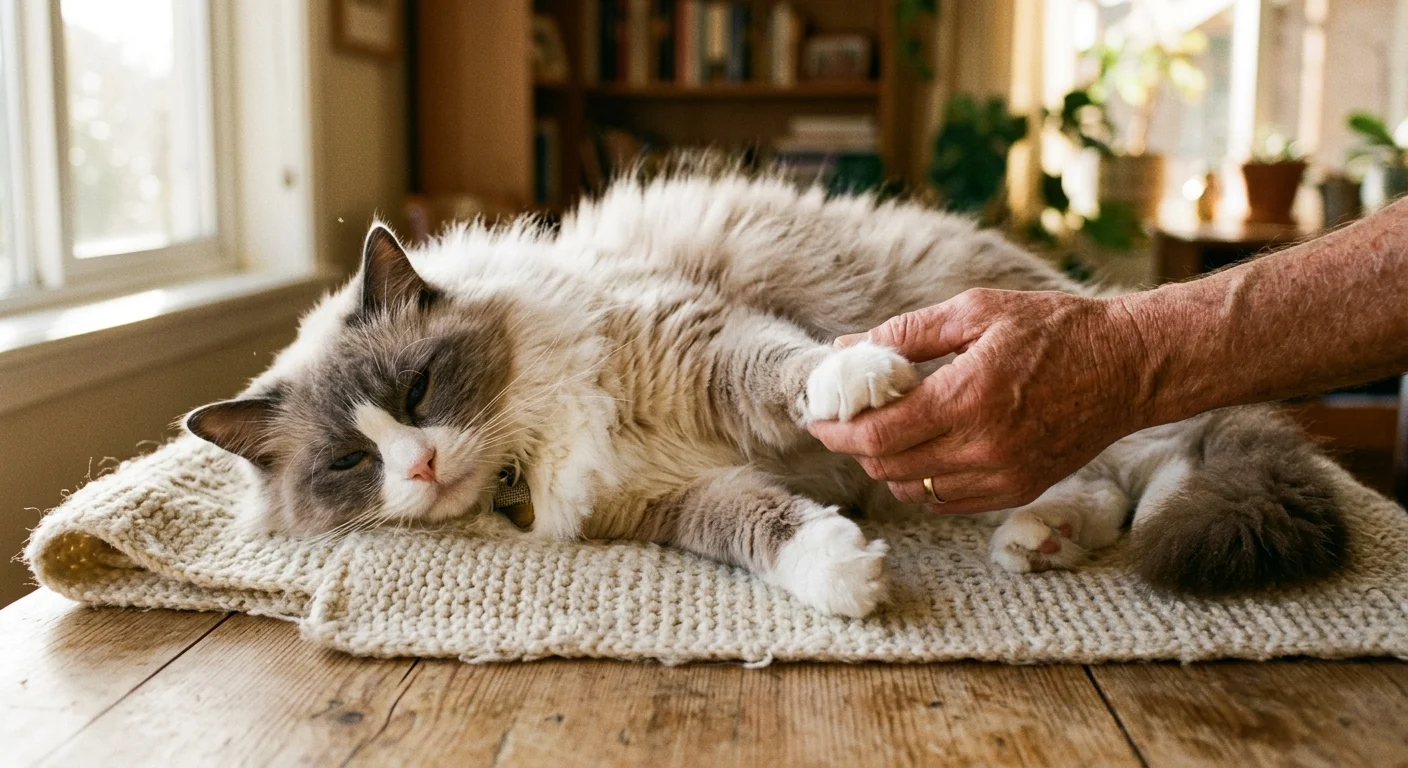
Because big cat breeds carry extra body mass, keeping them in peak physical condition requires dedicated preventive healthcare. Understanding genetic predispositions and maintaining ideal body composition will extend your pet’s life and enhance their day-to-day comfort.
Several large breeds carry genetic predispositions to specific cardiac and skeletal conditions:
- Hypertrophic Cardiomyopathy (HCM): This inherited heart condition causes thickening of the heart walls. It occurs more frequently in Maine Coons and Ragdolls. Responsible breeders use DNA testing and routine echocardiograms to screen breeding stocks.
- Hip Dysplasia: Extra weight and long skeletal frames put increased strain on hip joints. Over time, malformed hip joints cause painful arthritis and mobility loss.
- Spinal Muscular Atrophy (SMA): A genetic disorder affecting Maine Coons that leads to muscle weakness and degeneration in the hindlimbs.
Preventing feline obesity is the single most important action you can take to protect a large cat’s joints and heart. Veterinarians use the 9-point Body Condition Score (BCS) system to assess healthy weight. On this scale, a score of 4 to 5 represents ideal body condition—you should easily feel your cat’s ribs under a light coat layer, observe a visible waistline behind the ribs, and see a slight abdominal tuck.
“Maintaining a lean body condition score throughout your large cat’s adult life is the single most effective way to reduce stress on their hips and joints while protecting heart function.” — Dr. Marcus Vance, DVM, DACVIM
Managing joint care through proper diet is equally essential. Research compiled by health experts at PetMD highlights that high-protein, low-carbohydrate wet food diets maintain lean muscle mass while providing high moisture levels that protect kidney function. Adding joint supplements containing glucosamine, chondroitin, and omega-3 fatty acids (EPA/DHA) supports cartilage health, especially during the extended 3- to 5-year growth phase of giant domestic breeds.
Frequently Asked Questions
What is the largest domestic cat breed in the world?
The Maine Coon is widely recognized as the largest non-hybrid domestic cat breed based on weight and overall length. However, early-generation Savannah cats (such as F1 and F2 hybrids) can stand taller at the shoulder due to their African Serval ancestry.
How big do male Maine Coons actually get?
Adult male Maine Coons typically weigh between 15 and 25 lbs (6.8–11.3 kg) and reach body lengths up to 40 inches from nose to tail tip. Record-holding individual Maine Coons have measured over 48 inches in total length.
Are large cat breeds more expensive to care for than standard cats?
Yes, large cat breeds generally cost more over their lifespan. They consume larger quantities of food, require high-capacity litter boxes and extra-sturdy furniture, and often require higher prescription drug dosages calculated by weight during veterinary visits.
Do giant cat breeds take longer to mature than normal house cats?
Yes. While average domestic shorthair cats complete their growth by 12 months, giant breeds like Maine Coons, Ragdolls, and Norwegian Forest Cats grow slowly over 3 to 5 years before reaching full skeletal structure and coat density.
For expert pet care guidance, visit
Rover — Pet Care Blog, Preventive Vet, American Veterinary Medical Association (AVMA) and American Kennel Club (AKC).
Disclaimer: This article is for informational purposes only and is not a substitute for professional veterinary advice, diagnosis, or treatment. Always consult with a licensed veterinarian for medical concerns about your pet.

Leave a Reply