
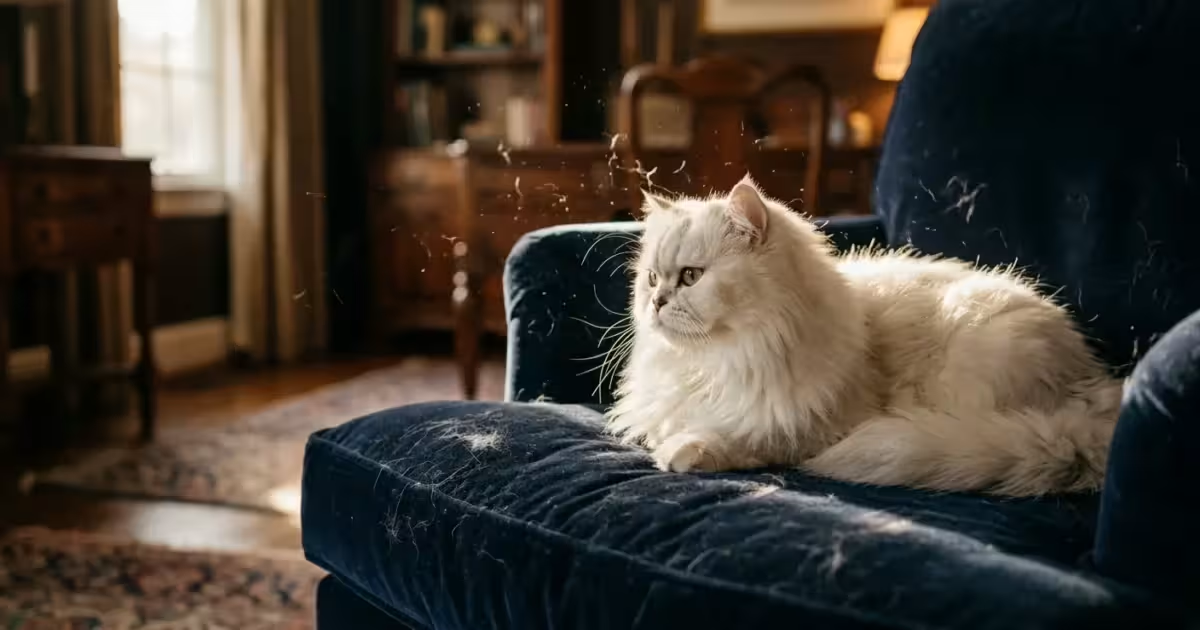
Finding tufts of fur on your favorite sweater or drifting across the living room floor is a familiar reality for many feline enthusiasts. While all cats lose some hair as part of their natural growth cycle, certain breeds take shedding to an entirely different level. If you are preparing to bring a new companion into your home or simply trying to understand why your vacuum is constantly working overtime, identifying the top offenders can help you manage the mess. We break down the ten cat breeds that shed the most, explaining the reasons behind their prolific hair loss and providing practical, actionable grooming strategies to keep both your pet comfortable and your living space pristine.
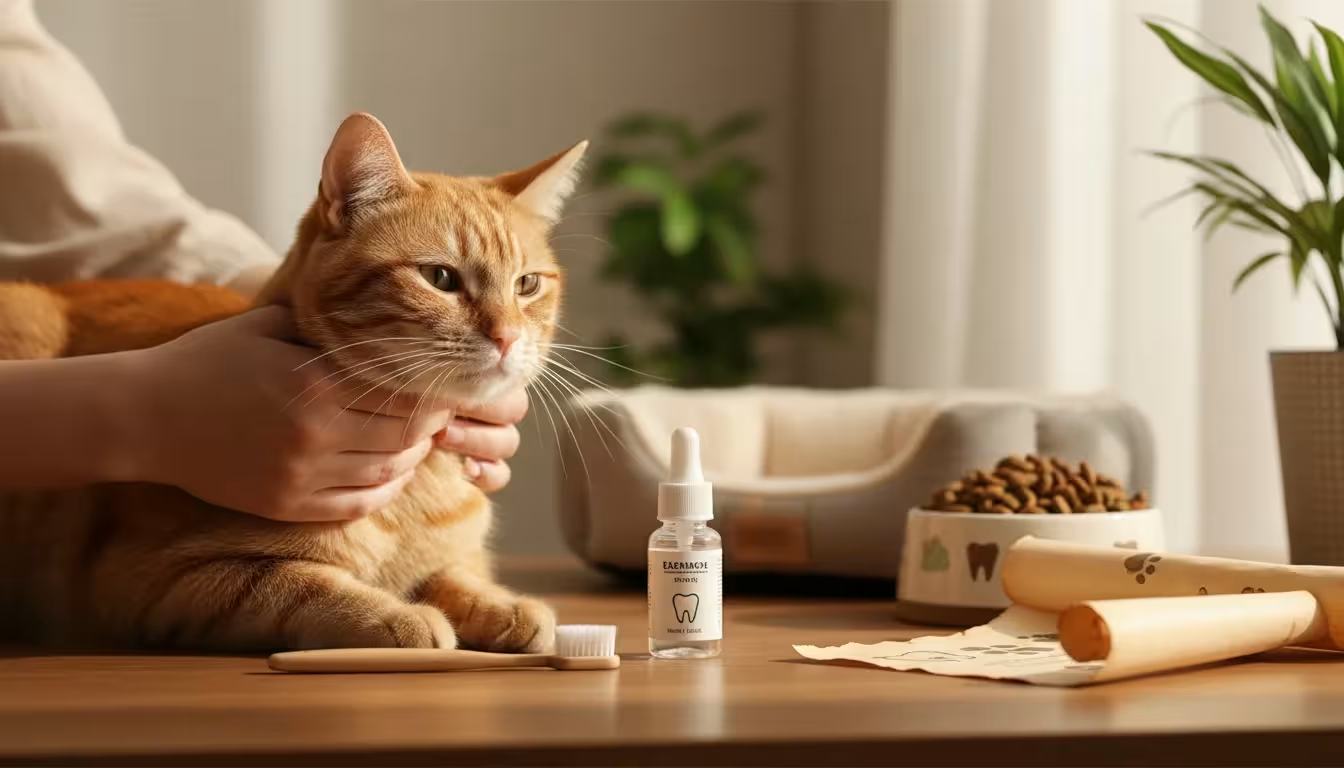
Equipping yourself with affordable, high-quality cat care products is the first step toward managing a heavy-shedding pet.
Understanding the Feline Hair Growth Cycle
Before you blame your cat for the endless layer of fur covering your furniture, it helps to understand how feline hair naturally behaves. Every single hair on your cat’s body goes through a specific lifecycle. Recognizing this cycle allows you to set realistic expectations for your pet’s grooming needs.
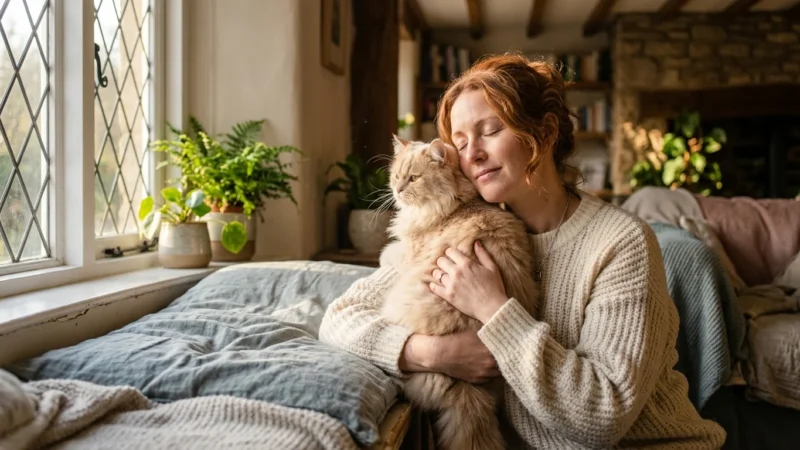
Additionally, keeping tabs on your cat’s grooming behavior can help you determine if their self-maintenance is healthy or excessive.
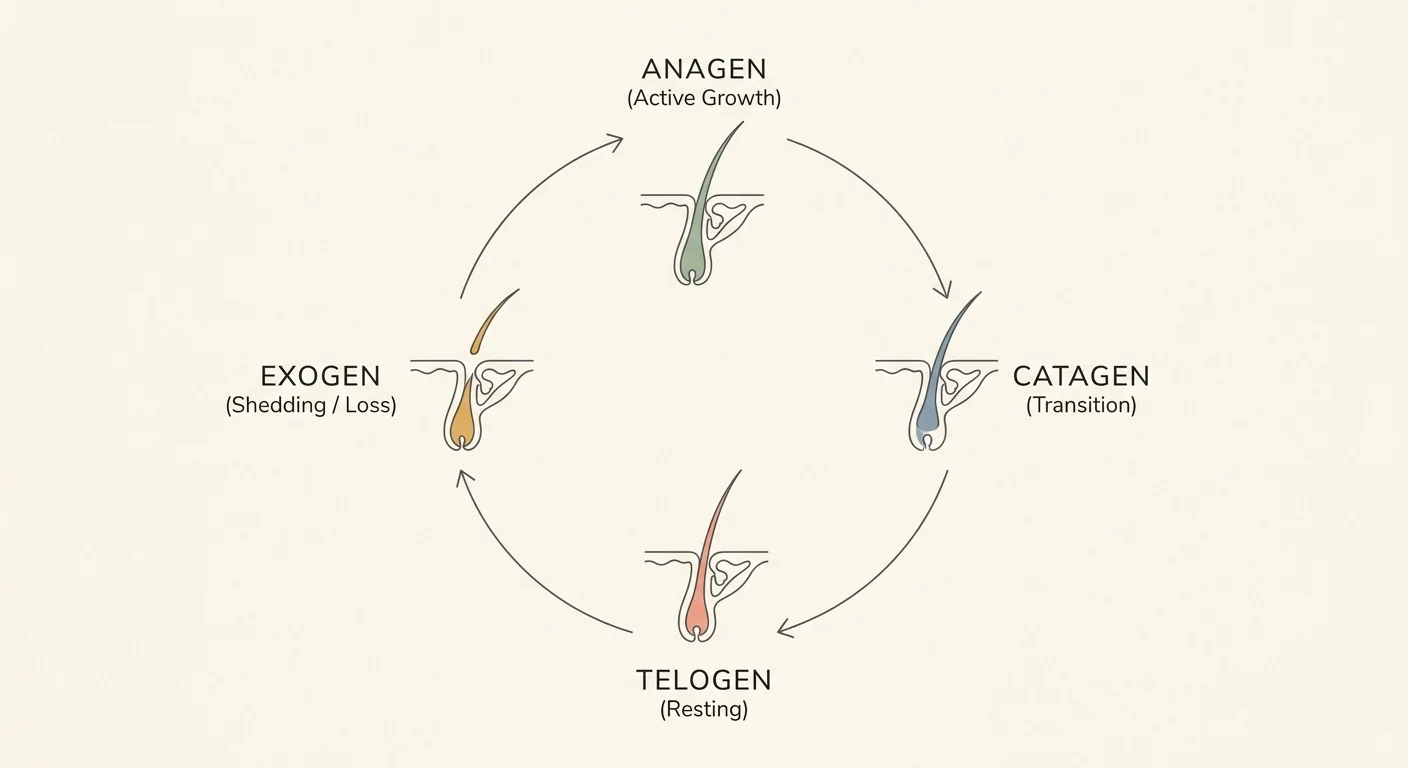
The hair growth cycle consists of four distinct phases. The anagen phase is the period of active growth. Next comes the catagen phase, a brief transitional period where the hair stops growing. The hair then enters the telogen phase, resting in the follicle without actively growing. Finally, during the exogen phase, the old hair is pushed out by a new hair beginning its anagen phase—this is the shedding you see on your clothes and floors.
Breeds with massive amounts of fur, such as those featuring dense double or triple coats, simply have more hair follicles going through this cycle at any given time. According to experts at Cornell University College of Veterinary Medicine, shedding is a perfectly natural and necessary biological process that allows cats to shed damaged hair and regulate their body temperature. You cannot stop the cycle, but by understanding it, you can intercept the loose fur with a brush before it becomes a nuisance in your home.
Top 10 Cat Breeds That Shed the Most
Coat length is not the only factor that dictates how much a cat sheds. The density of the coat and the presence of an insulating undercoat play a much larger role. Here are the ten feline breeds famous for leaving their fuzzy mark everywhere they go.
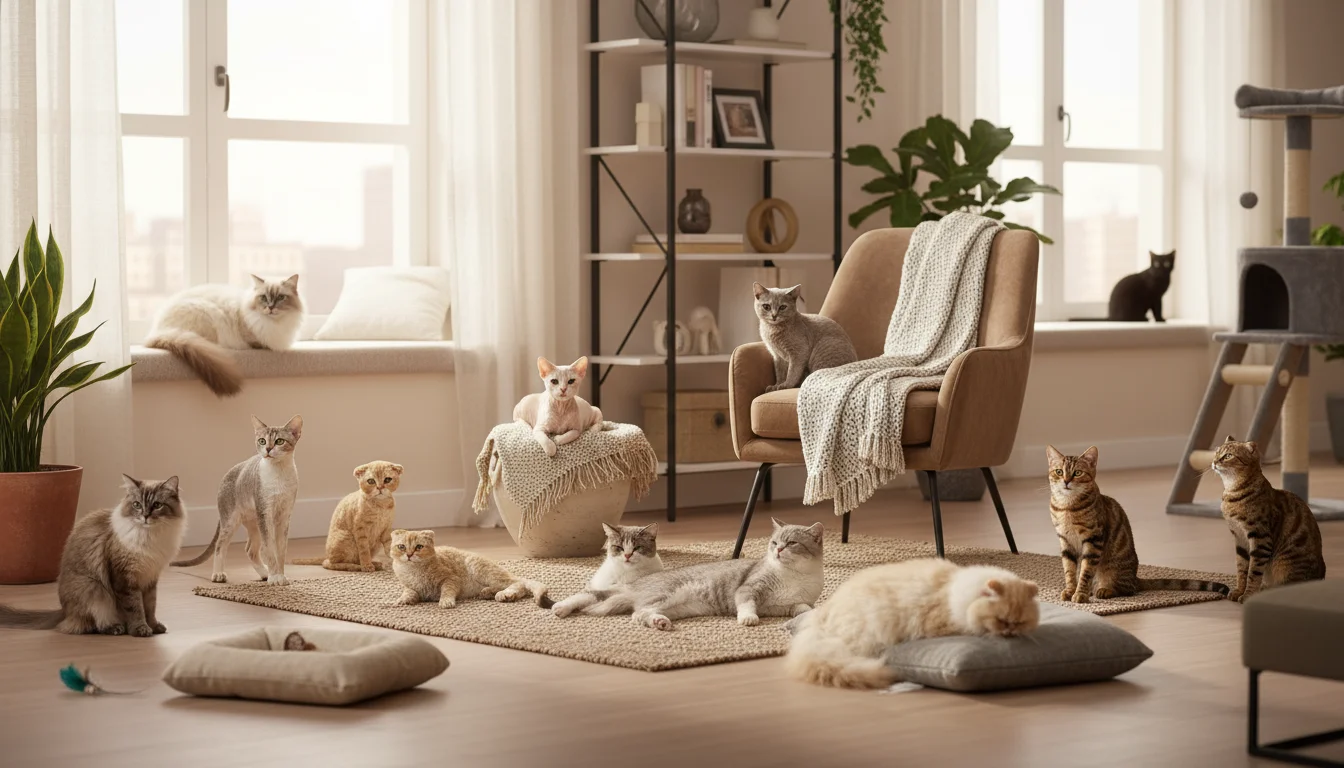
Before diving into the list, it helps to understand how different cat coat types influence grooming requirements.
If you live in a smaller space and are concerned about fur management, you might want to look into the best cat breeds for apartment living to find a pet that fits your home.
1. Persian
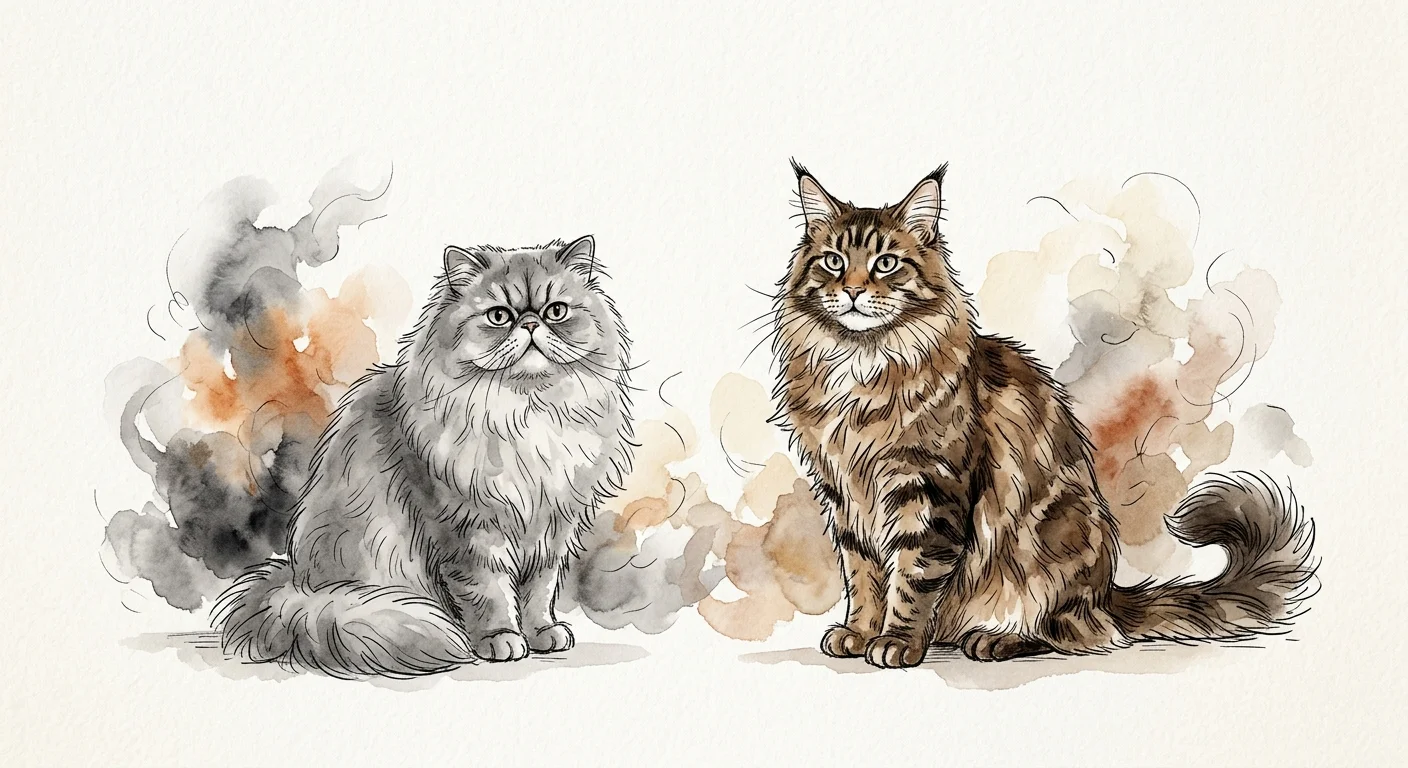
The Persian is undeniably the undisputed champion of heavy shedders. Known for their glamorous, flowing coats, these cats possess a remarkably dense, cotton-like undercoat hidden beneath long guard hairs. Because their fur is so fine and abundant, they are highly prone to painful matting if left unbrushed. Owning a Persian requires a strict daily grooming commitment. Their luxurious fur sheds consistently throughout the year, meaning a stainless steel comb must become a staple in your daily routine.
2. Maine Coon
As one of the largest domesticated cat breeds, the Maine Coon produces a staggering volume of fur. Evolved to survive the brutal winters of New England, they possess a heavy, shaggy, water-resistant coat. Their fur is intentionally uneven—shorter on the shoulders and longer on the stomach and britches. While their silky topcoat resists matting better than a Persian’s, their sheer size and the density of their undercoat mean they drop a substantial amount of hair year-round, peaking intensely during the spring transition.
3. Siberian
Originating from the freezing climate of Russia, the Siberian cat boasts a rare and magnificent “triple coat.” This consists of a tight, downy undercoat, an insulating middle layer of awn hairs, and a waterproof outer layer of sturdy guard hairs. When a Siberian decides to “blow” their coat in the spring to prepare for warmer weather, the volume of fur they lose is extraordinary. Despite their heavy shedding, some allergy sufferers tolerate Siberians well due to lower levels of the Fel d 1 protein in their saliva, though they are by no means non-shedding.
4. Ragdoll
Ragdolls are famous for their docile, floppy nature and their incredibly soft, rabbit-like fur. Interestingly, most Ragdolls lack a dense undercoat, which leads some owners to mistakenly believe they are low-shedding. In reality, their plush topcoat sheds continuously. Because their fur is so soft and fine, it easily becomes airborne, weaving itself into fabrics and carpets with ease. Regular brushing is essential to capture these fine hairs before they disperse.
Since they crave human interaction, finding ways to keep your cat entertained when you are busy is highly recommended.
In addition to their luxurious coats, Ragdolls are highly celebrated as one of the most affectionate cat breeds you can find.
5. Norwegian Forest Cat
Affectionately known as “Wegies,” these robust cats are built to withstand Scandinavian winters. They feature a woolly undercoat completely covered by long, glossy, water-resistant guard hairs. Similar to the Siberian, the Norwegian Forest Cat experiences massive seasonal blowouts. During the spring, you may notice large clumps of undercoat lifting from their hindquarters and flanks. Frequent, deep grooming with an undercoat rake is necessary during these transitional months.
6. Russian Blue
It may surprise you to see a shorthaired cat on this list, but the Russian Blue earns its spot. Their coat is remarkably dense—so dense, in fact, that you can draw patterns in their fur and the hairs will stay in place. This breed possesses a thick double coat, with the undercoat and topcoat being the exact same length. While you will not find long tumbleweeds of fur, they shed a high volume of short, stiff hairs that persistently stick to velvet, fleece, and upholstery.
Because of their calm demeanor, Russian Blues are highly popular, but if you are looking for other calm options, there are several cat breeds suited for senior households that require lower maintenance.
7. Exotic Shorthair
Often referred to as the “lazy man’s Persian,” the Exotic Shorthair was bred to have the sweet face and temperament of a Persian but with a short, dense coat. However, “short” does not mean “low maintenance.” Their plush double coat stands away from the body due to its extreme density. They shed prolifically, dropping thick clusters of undercoat. Regular combing is required to prevent their thick coat from becoming compacted and uncomfortable.
8. Chartreux
The Chartreux is a rare French breed characterized by a striking blue-gray coat and brilliant copper eyes. Their unique coat is slightly woolly and breaks at the neck, chest, and flanks, creating a sheep-like appearance. This dense, water-repellent double coat sheds heavily, particularly during seasonal shifts. Because their fur is so thick, simply petting them often results in a hand covered in loose gray fluff.
9. Himalayan
A beautiful cross between the Persian and the Siamese, the Himalayan shares the massive, high-maintenance coat of its Persian ancestors alongside the striking color-point pattern of the Siamese. They possess the same dense, fine undercoat that requires daily attention. If neglected, a Himalayan’s coat will quickly form painful mats close to the skin, causing severe discomfort and localized skin infections.
10. American Shorthair
Another shorthaired breed with a deceptively heavy shedding output, the American Shorthair features a hard, thick coat designed to protect them from the elements and superficial scratches while hunting. Their dense undercoat sheds steadily throughout the year. Because their hair is relatively short, it weaves deeply into carpets and furniture, making a high-quality vacuum cleaner an absolute necessity for owners.
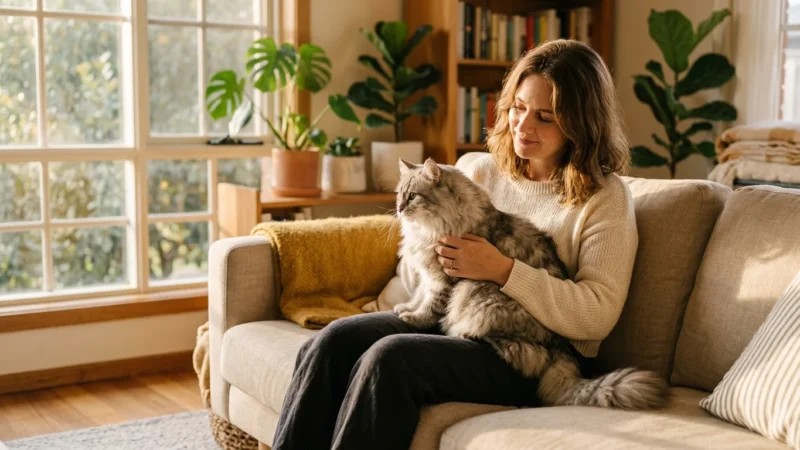
Managing a heavy-shedding breed is easier when you know your cat is in top shape; learning to spot the signs your cat is happy and healthy is key to overall pet wellness.
The Impact of Seasons on Your Cat’s Coat
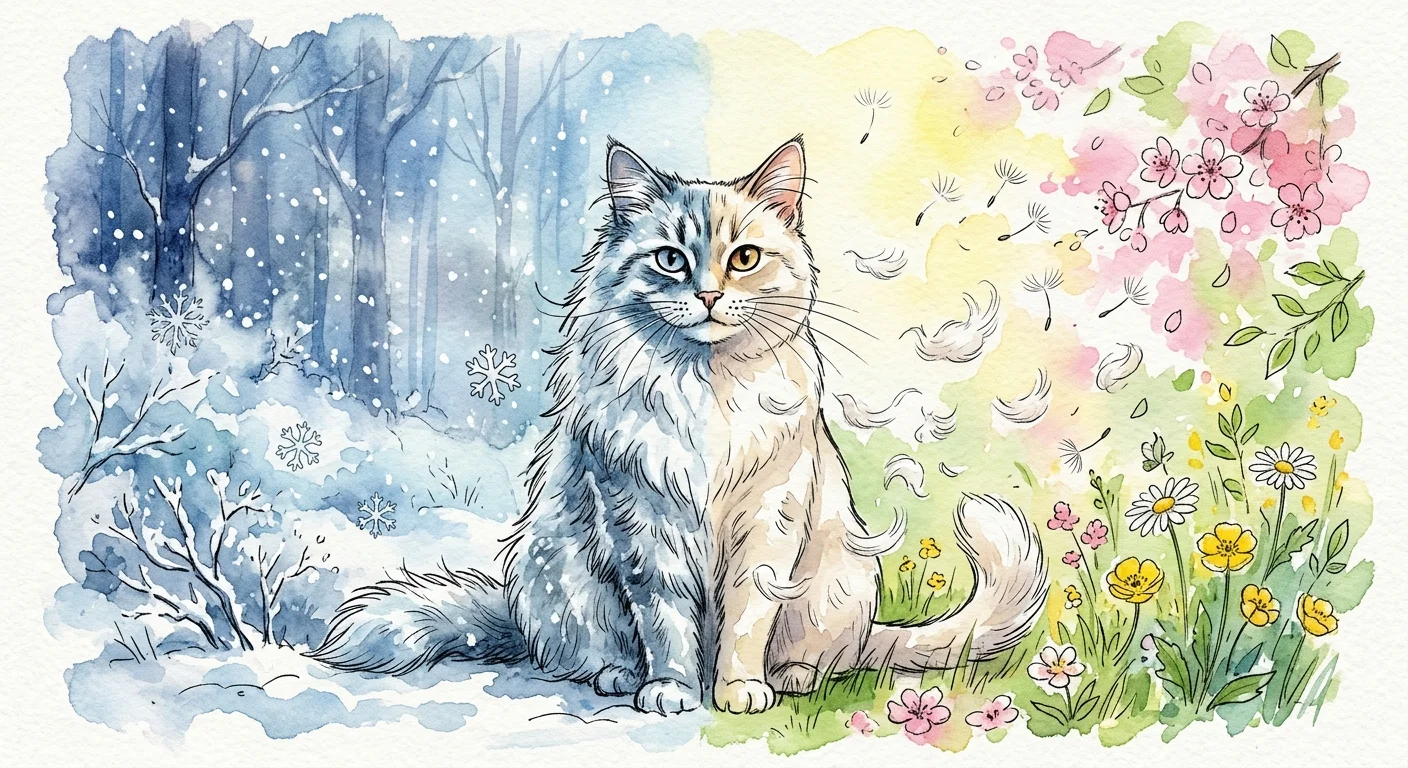
If you notice an explosion of fur in your home twice a year, you are witnessing seasonal shedding. For outdoor cats, and indoor cats exposed to natural sunlight, seasonal coat changes are a biological imperative.
Managing their seasonal coat blowout is a key part of keeping indoor cats cool during the year’s warmest months.
Many pet owners mistakenly believe that temperature alone triggers these massive shedding events. In reality, the primary catalyst is photoperiod—the length of daylight hours. As days grow longer in the spring, your cat’s brain receives signals to drop their heavy, insulating winter undercoat to prevent overheating during the summer months. Conversely, as days shorten in the autumn, they shed their lighter summer coat to make way for a fresh, dense winter underlayer.
“A cat’s shedding cycle is triggered more by photoperiod—the length of daylight—than by temperature changes. This is why strict indoor cats exposed to artificial lighting often shed continuously year-round rather than in distinct seasonal bursts.” — Feline Dermatology Specialists
Because most house cats live in climate-controlled environments with artificial lighting left on well into the evening, their biological clocks become slightly confused. As a result, indoor cats tend to shed a moderate, steady amount of fur 365 days a year, with only mild peaks during the spring and fall.
Essential Grooming Tools for Heavy Shedders
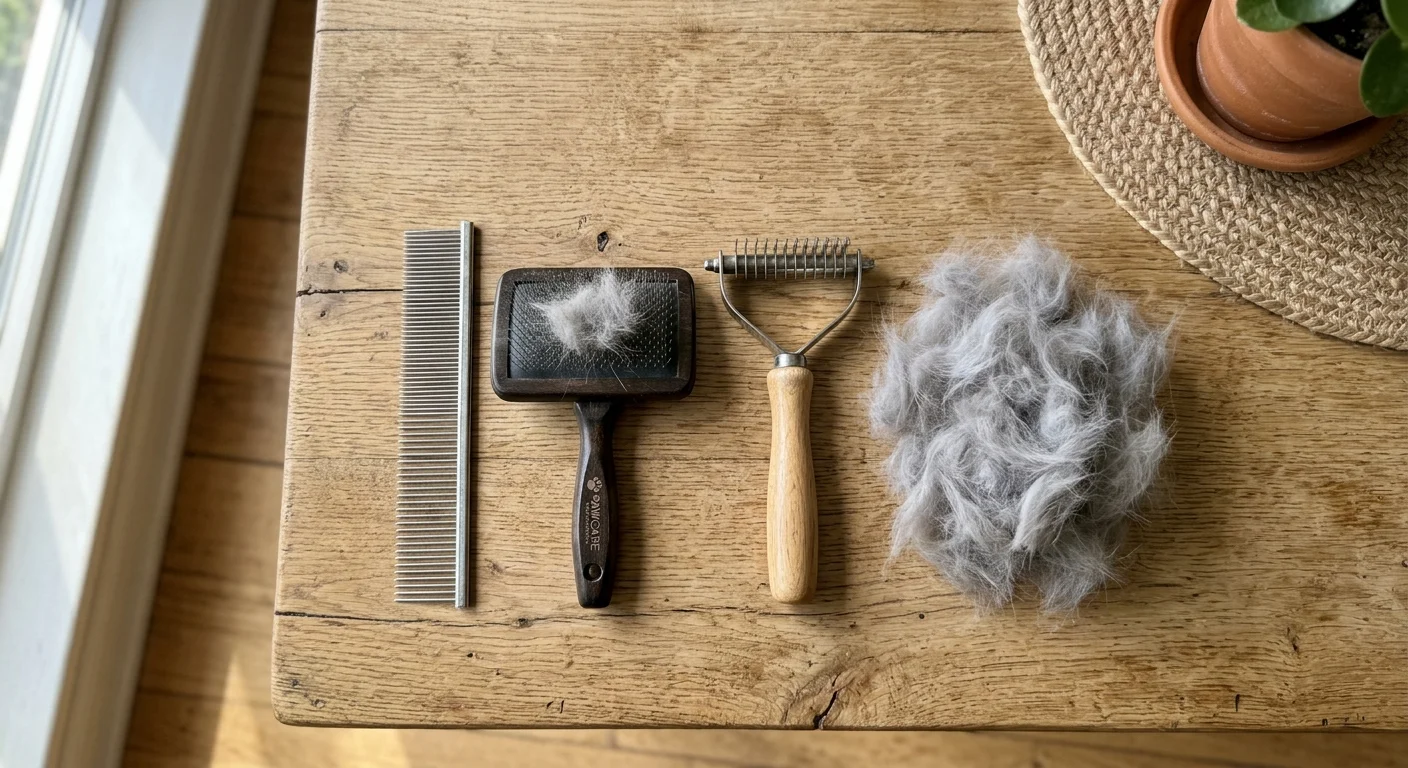
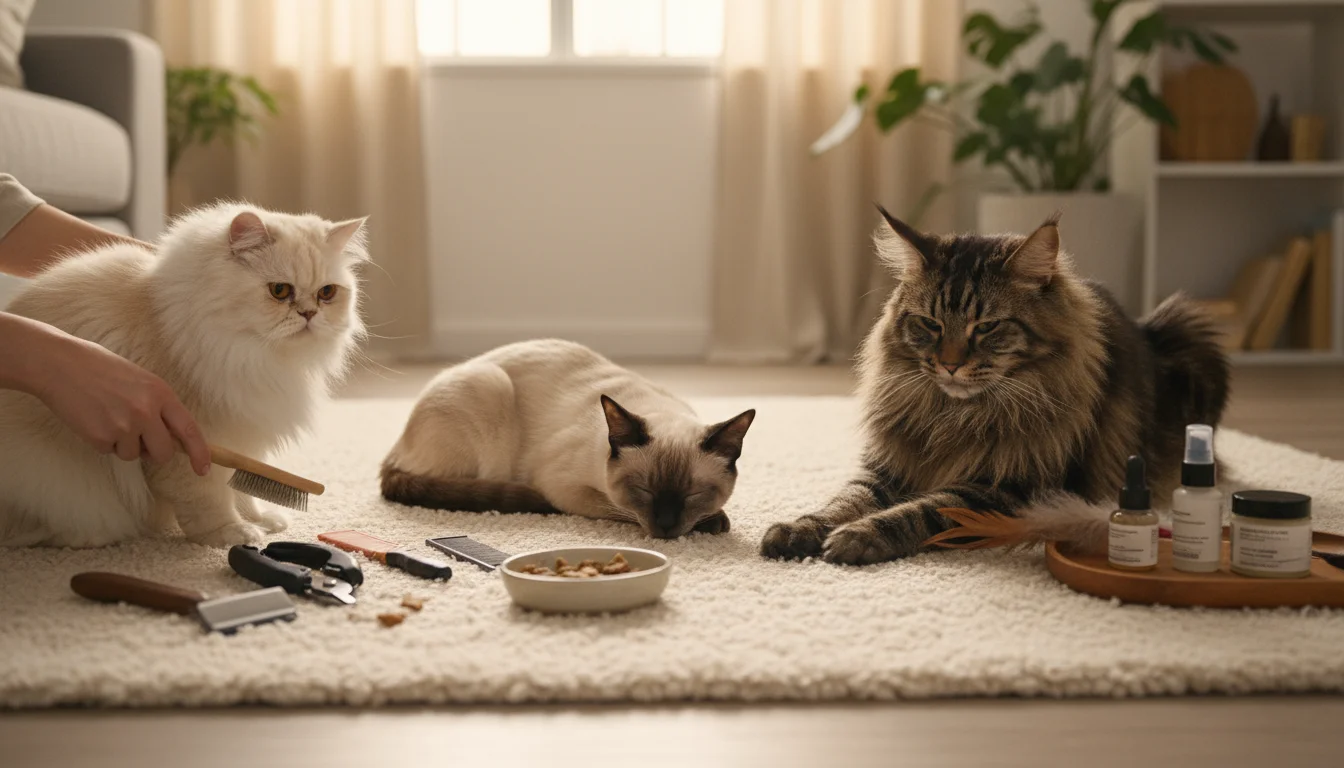
Tackling a heavy shedder with a cheap, generic brush is an exercise in frustration. Different coat types require specific tools to safely and effectively remove loose fur without damaging the skin. Building a targeted grooming kit will save you time and keep your cat’s coat healthy.
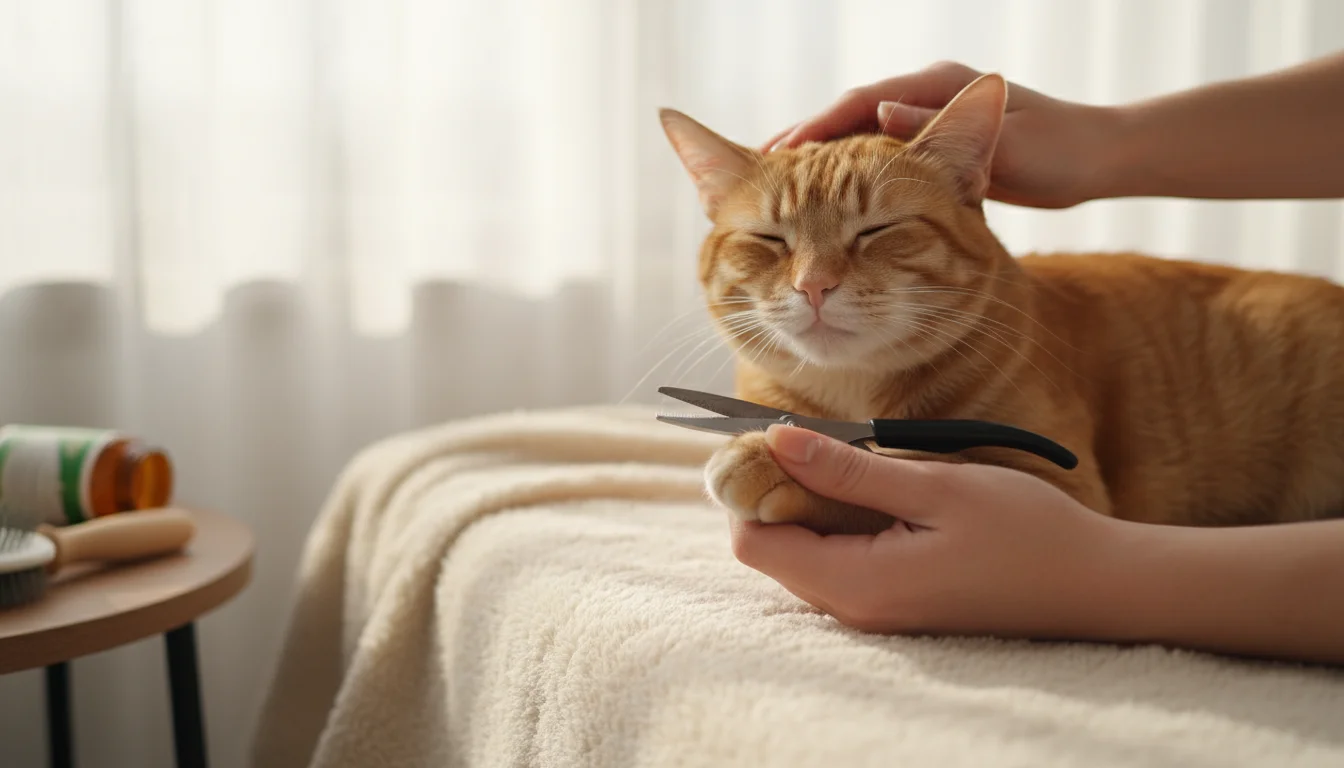
While focusing on the coat is essential, don’t forget that a full grooming routine also involves learning how to trim your cat’s claws safely and calmly.
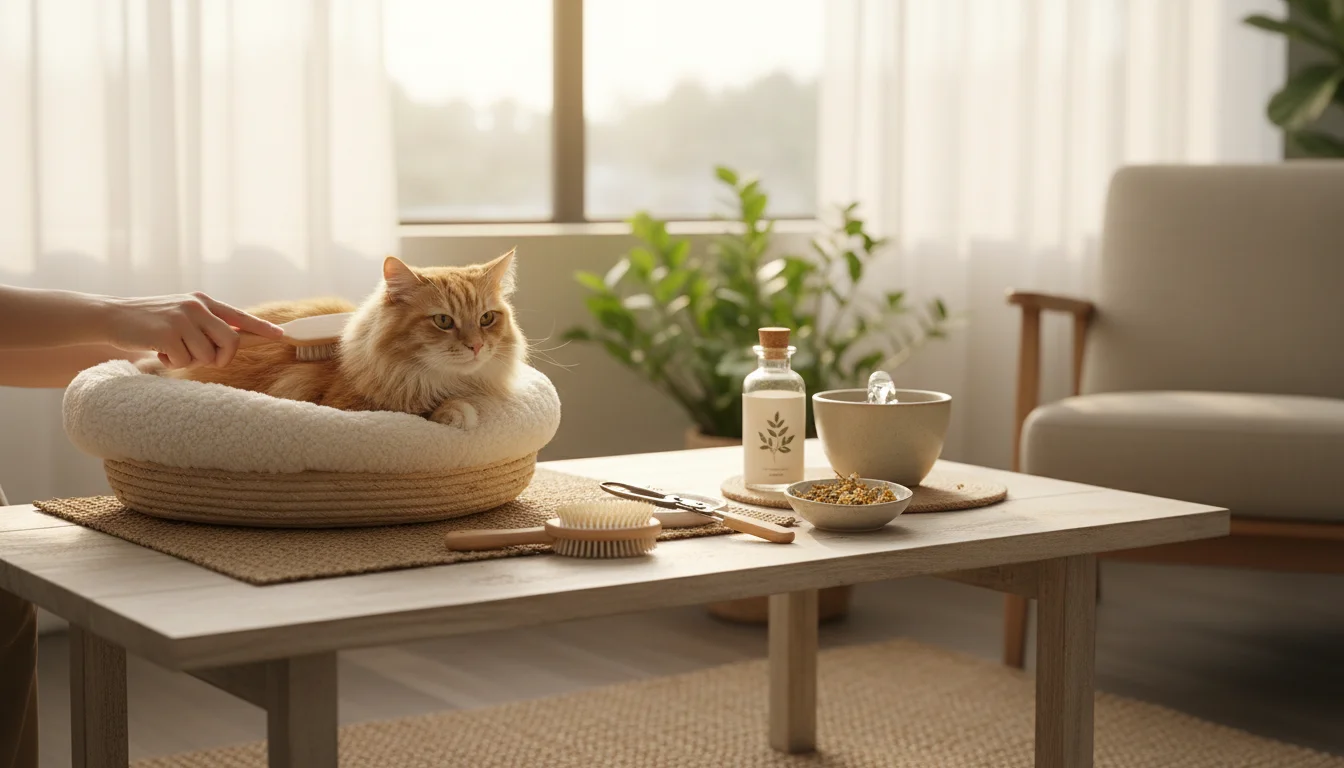
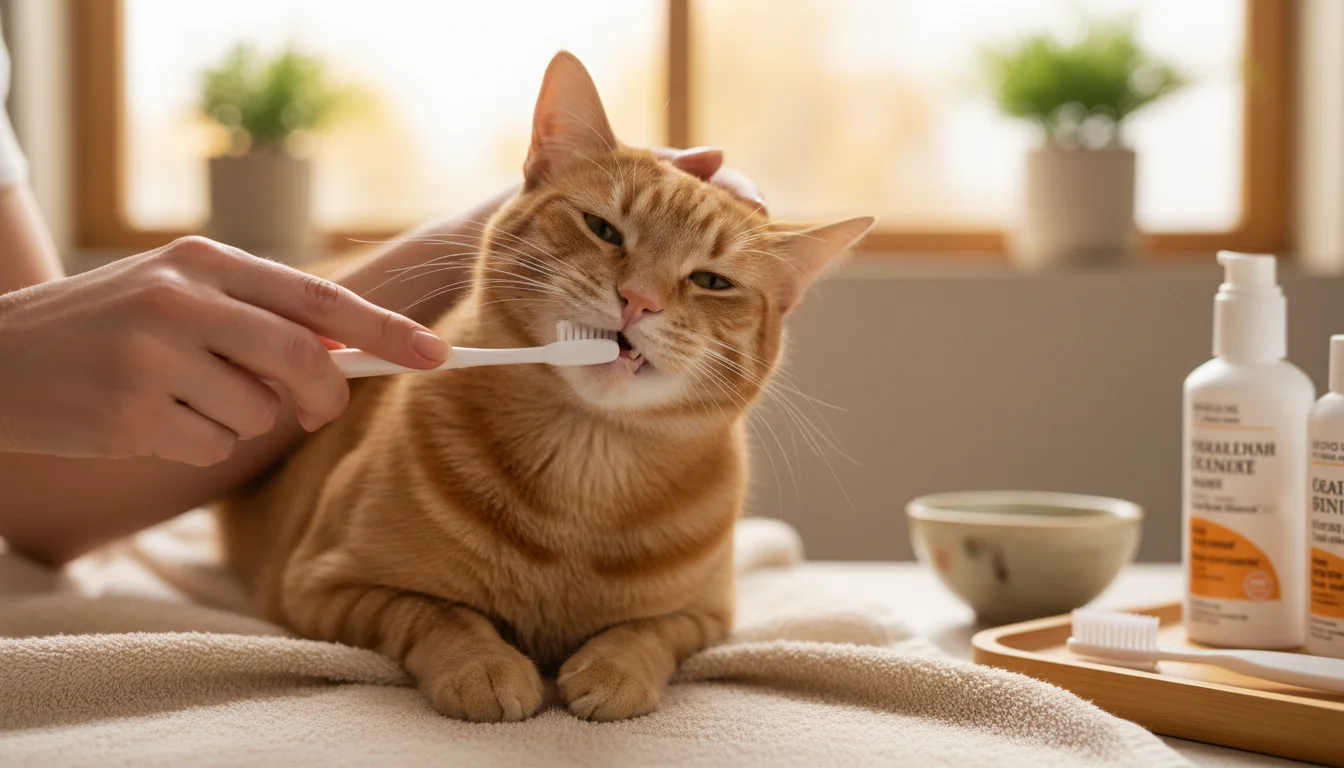
To make your routine more organized, consider creating the perfect cat grooming station where all your brushes are easily accessible.
| Grooming Tool | Best For | How It Works |
|---|---|---|
| Stainless Steel Greyhound Comb | Persians, Maine Coons, Himalayans | Features long teeth that penetrate past the topcoat down to the skin to catch early tangles and prevent mats in long-haired breeds. |
| Slicker Brush | All coat types (Short and Long) | Fine, closely spaced wire bristles effectively grab loose undercoat and smooth the topcoat. Excellent for daily maintenance. |
| Undercoat Rake | Siberians, Norwegian Forest Cats | Designed with a single or double row of smooth, rounded teeth to pull out dead undercoat without cutting the healthy top guard hairs. |
| Rubber Curry Brush / Grooming Mitt | Exotic Shorthairs, Russian Blues | Flexible rubber nubs massage the skin, distribute natural oils, and attract loose surface hair like a magnet. Very gentle for cats who hate metal brushes. |
| Deshedding Tool (e.g., FURminator) | Dense double coats (Use with caution) | Reaches through the topcoat to safely remove loose undercoat hair. Must be used gently and sparingly (once a week) to avoid causing bald spots or skin irritation. |
Step-by-Step Guide to Brushing Your Cat
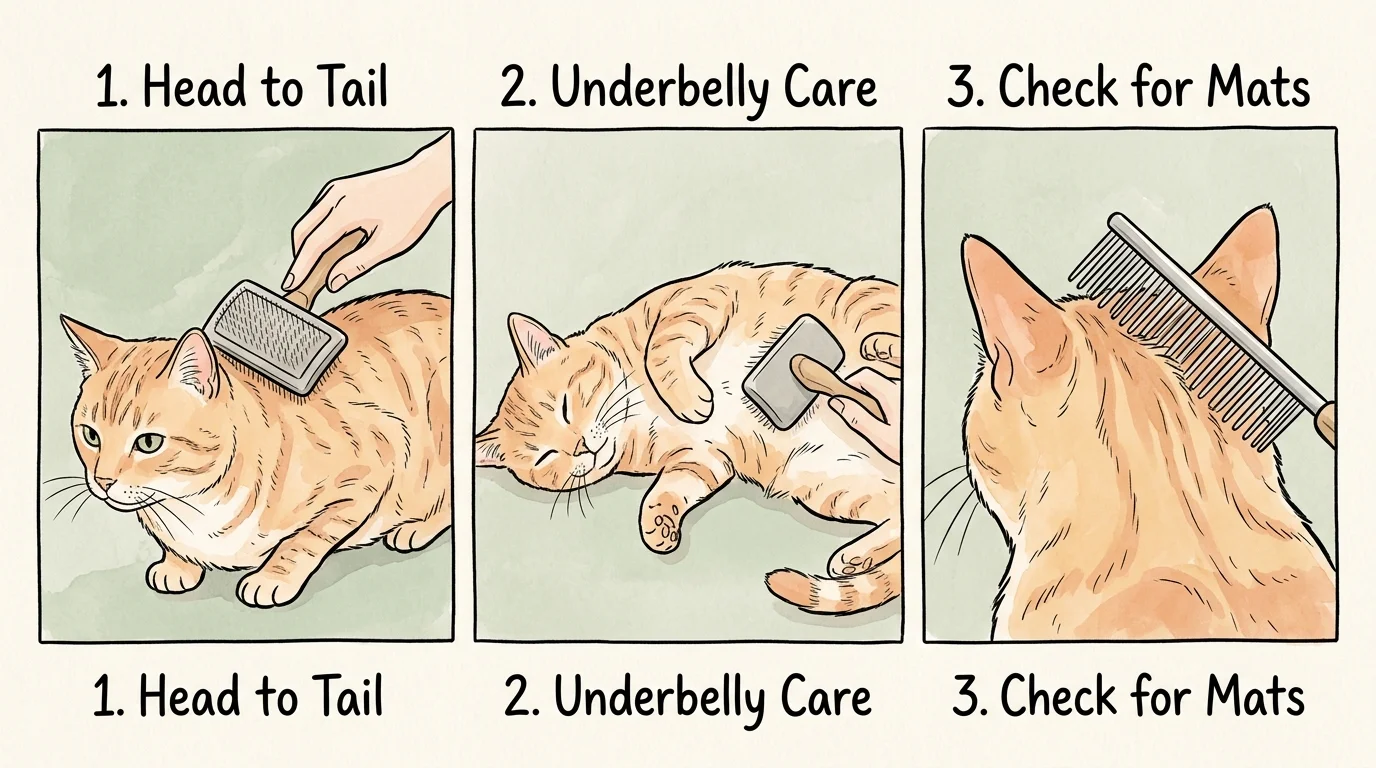
Many cats develop an aversion to grooming if they have experienced pulled hair or rough handling in the past. To maintain a heavy-shedding breed, you must make brushing a positive, rewarding experience. If you force the interaction, your cat will hide the moment they see the brush.
- Choose the Right Time: Approach your cat when they are already relaxed, such as after a meal or while they are napping in a sunny spot. Avoid initiating grooming when they are highly active or feeling playful.
- Start with Petting: Do not immediately start dragging a comb through their fur. Pet them with your hands first to relax them and feel for any tight knots or mats hidden beneath the surface.
- Introduce the Tool Slowly: Let your cat sniff the brush. Rub the back of the brush against their cheek to transfer their scent onto it. This makes the tool feel familiar and safe.
- Brush in the Direction of Hair Growth: Always move the brush in the direction the fur naturally lays. Brushing against the grain is highly uncomfortable for cats and can pull on their sensitive skin.
- Keep Sessions Short: If your cat is new to grooming, stop after two or three minutes. End the session *before* they get annoyed. Over time, you can gradually increase the duration of the grooming sessions.
- Reward Heavily: Offer high-value treats (like freeze-dried chicken or a lickable treat) during and immediately after the grooming session. This builds a positive association, turning grooming into a highly anticipated event.
For a helpful visual demonstration of gentle, stress-free grooming techniques, watch this instructional video:
Nutrition and Dietary Influence on Coat Health
You cannot fix a poor coat solely from the outside; true coat health begins in the food bowl. A dull, brittle, intensely shedding coat is frequently the first visible indicator that a cat’s nutritional needs are not being met.
Because hair is composed entirely of protein (specifically keratin), your cat requires a diet rich in high-quality, animal-based proteins to sustain healthy hair growth. Plant-based proteins simply do not provide the complete amino acid profile an obligate carnivore needs to thrive.
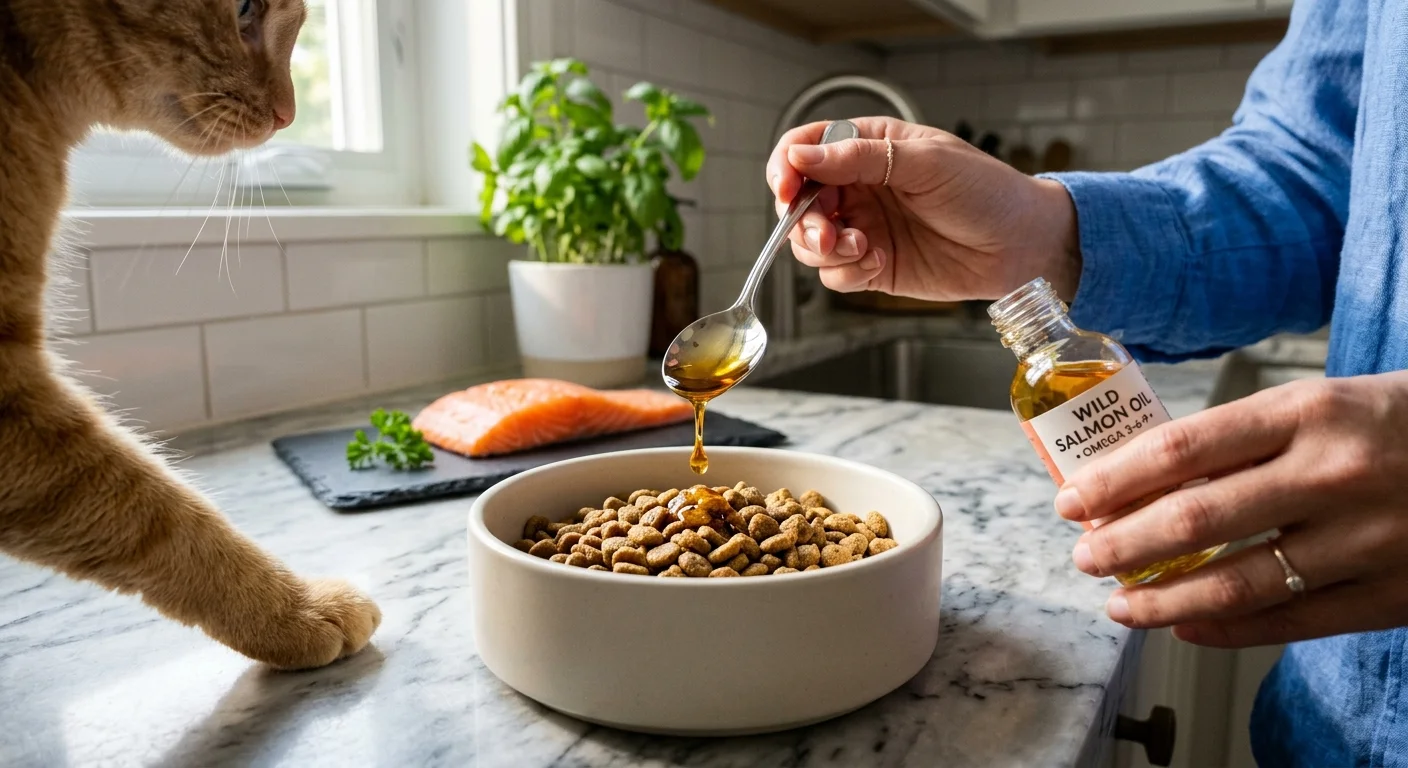
Equally critical are essential fatty acids. According to PetMD, diets appropriately balanced with Omega-3 and Omega-6 fatty acids are vital for maintaining a strong skin barrier, reducing dander, and promoting a glossy topcoat. Omega-3s, typically sourced from fish oil or krill oil, possess powerful anti-inflammatory properties that calm itchy skin and reduce excessive shedding triggered by dry skin. If your cat’s coat feels harsh or greasy, consult your veterinarian about incorporating a targeted Omega-3 supplement into their daily regimen.
Finally, ensure your cat remains adequately hydrated. Cats naturally have a low thirst drive, meaning they rarely drink enough standing water. Incorporating wet, canned food into their diet increases their moisture intake, keeping their skin supple and preventing hair from becoming brittle and breaking off prematurely.
When Excessive Shedding Signals a Health Problem
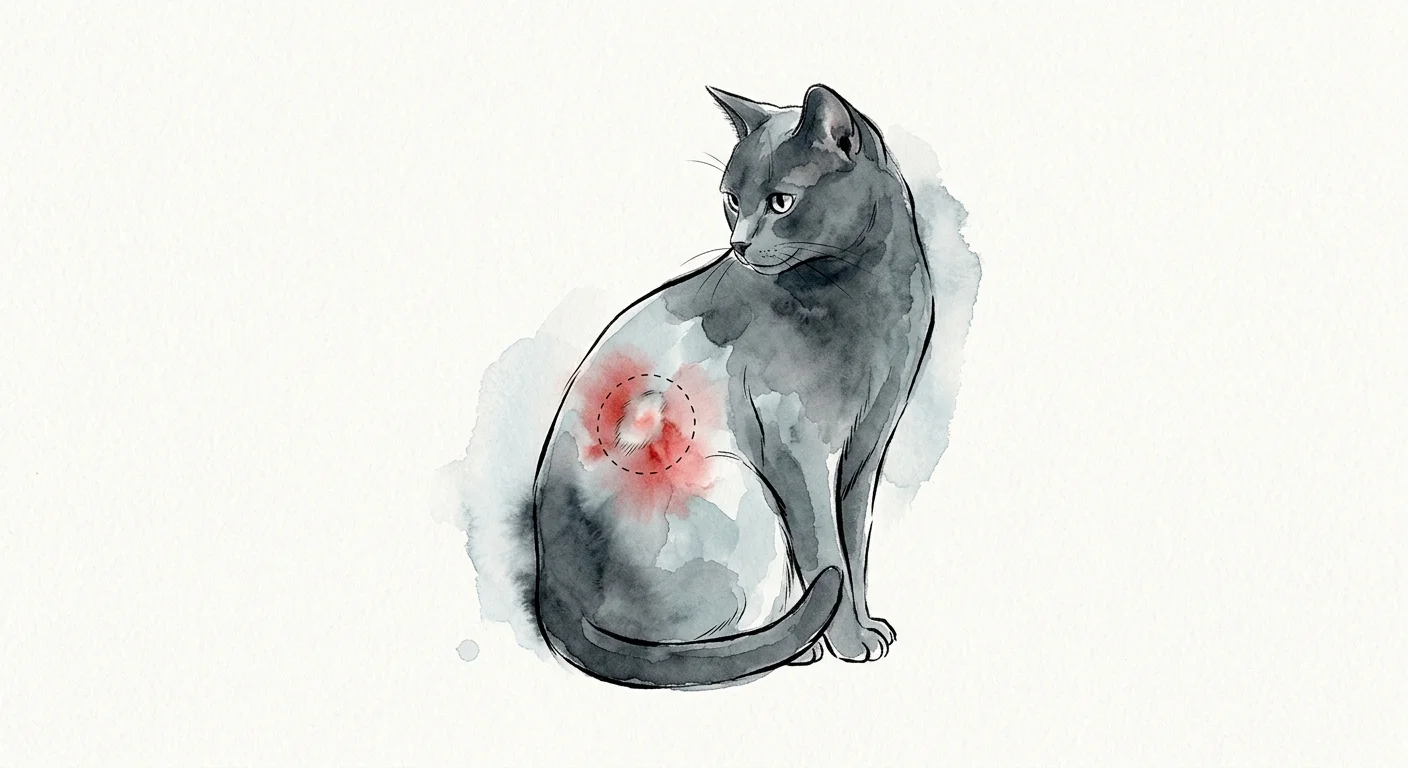
While heavy shedding is standard for breeds like the Maine Coon and Persian, a sudden, dramatic change in the volume or texture of your cat’s fur warrants immediate professional attention. There is a distinct line between normal physiological shedding and pathological hair loss (alopecia).
The Cat Fanciers’ Association (CFA) notes that while breed standards dictate coat thickness and natural shedding volumes, any sudden change in coat texture, development of bald patches, or red, inflamed skin indicates an underlying issue. If you observe your cat shedding in asymmetrical patches, aggressively over-grooming a specific area, or leaving large clumps of fur containing scabs around the house, contact your veterinarian.
Common medical causes for abnormal hair loss include:
- External Parasites: Fleas, ticks, and mites (such as Demodex or Cheyletiella) cause severe itching. The cat will bite and scratch at the affected areas, breaking the hair shafts and pulling out fur.
- Fungal Infections: Ringworm, a highly contagious fungal infection, typically presents as circular patches of broken hair and crusty skin, often starting on the face or paws.
- Systemic Illness: Endocrine disorders, particularly hyperthyroidism (common in older cats), significantly alter the cat’s metabolism, leading to an unkempt, matted, or thinning coat.
- Allergies: Feline atopy (environmental allergies to dust, pollen, or mold) or food allergies often manifest as severe skin irritation and subsequent hair loss from constant licking.
- Stress and Anxiety: Cats are highly sensitive creatures. A move to a new home, the introduction of a new pet, or even changes in your work schedule can trigger psychogenic alopecia, a condition where a cat compulsively grooms themselves bald as a self-soothing mechanism.
Frequently Asked Questions
Are there any truly hypoallergenic cat breeds?
No, there is no such thing as a 100% hypoallergenic cat. Allergies are typically triggered by the Fel d 1 protein found in a cat’s saliva, urine, and dander, not the hair itself. When a cat grooms, they spread this protein onto their fur, which is then shed into the environment. However, some breeds, such as the Siberian and the Balinese, naturally produce lower levels of this specific protein, making them more tolerable for mild allergy sufferers.
Should I shave my long-haired cat to stop the shedding?
Veterinarians strongly advise against shaving double-coated cats unless it is medically necessary (such as for severe, unmanageable matting or surgical procedures). A cat’s coat is a complex thermoregulation system; it keeps them warm in the winter and actually protects them from the heat and sunburn in the summer. Shaving them removes this protection and can permanently alter the texture of their coat when it grows back.
“Shaving a double-coated cat can permanently damage their fur’s natural texture and inhibit their ability to regulate body temperature. Regular, thorough brushing is always the safer, more effective choice.” — Dr. Jane Brunt, Feline Veterinary Specialist
Why does my cat shed heavily when we go to the vet?
This phenomenon is known as “stress shedding.” When a cat becomes acutely frightened or anxious—such as during a car ride or a veterinary exam—their sympathetic nervous system activates a “fight or flight” response. This causes the tiny arrector pili muscles attached to their hair follicles to contract, suddenly releasing all the hairs currently in the telogen (resting) phase. Once the cat calms down in a safe environment, this acute shedding will stop.
Can I use human shampoo to wash my heavy-shedding cat?
You should never use human shampoo on a cat. Feline skin has a significantly different pH level than human skin. Human hair products are far too acidic for cats and will strip the natural, protective oils from their skin, leading to severe dryness, flaking, and ultimately, increased shedding. If you must bathe your cat, use a gentle, fragrance-free shampoo formulated specifically for felines.
For expert pet care guidance, visit
Fear Free Pets, The Spruce Pets and Rover — Pet Care Blog.
Disclaimer: This article is for informational purposes only and is not a substitute for professional veterinary advice, diagnosis, or treatment. Always consult with a licensed veterinarian for medical concerns about your pet.
Leave a Reply