
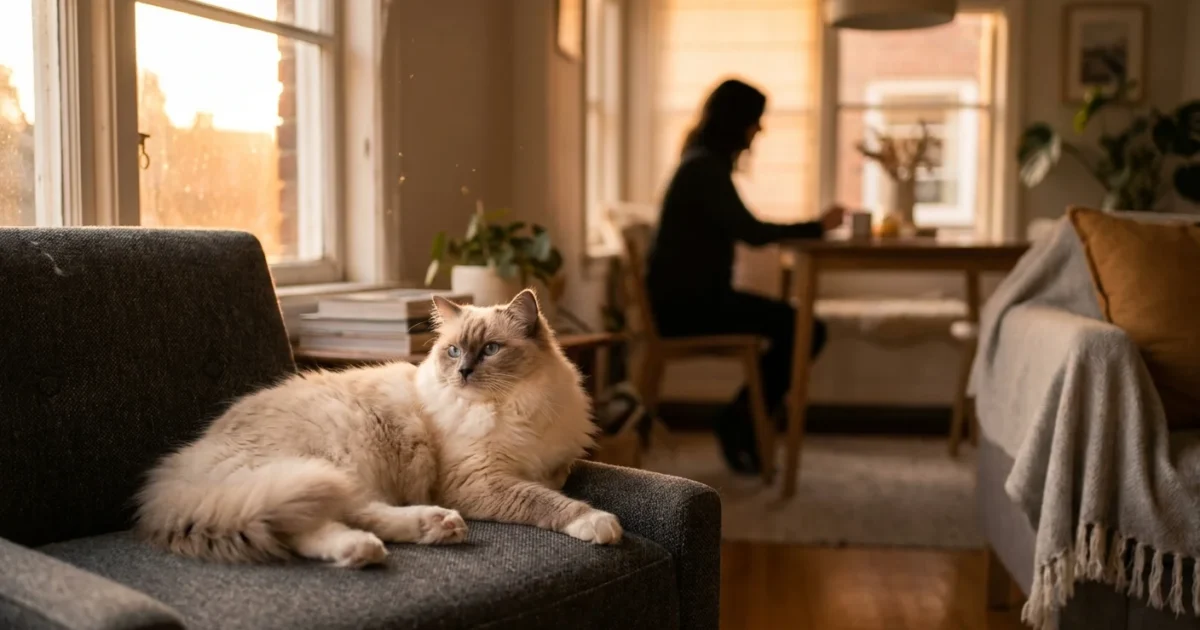
Finding a feline companion who loves to snuggle on your lap changes the dynamic of your home entirely. While cats often carry a reputation for independence and aloofness, many breeds actively seek out human interaction, thrive on physical affection, and form deep bonds with their families. Whether you want a constant shadow following you from room to room or a gentle purring machine to warm your bed at night, selecting the right breed makes all the difference. Understanding the distinct personality traits, energy levels, and social needs of these affectionate felines ensures you can provide the perfect environment for them to thrive. Here are ten cat breeds renowned for their exceptionally loving and sociable natures.
Understanding What Drives Feline Affection
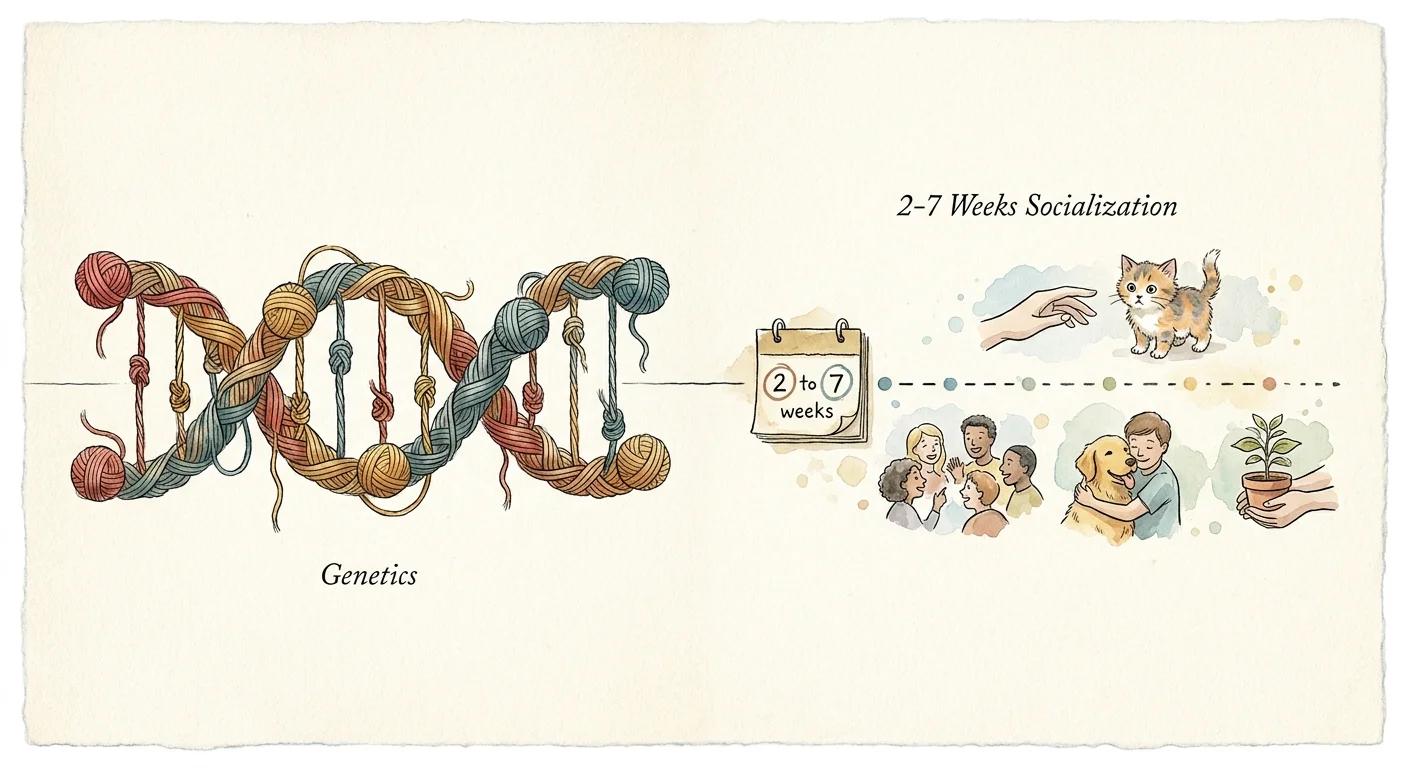
A cat’s capacity for affection stems from a delicate combination of genetics, early life experiences, and current environmental security. While mixed-breed cats can be incredibly loving, purebred cats are purposefully bred for generations to exhibit specific physical traits and predictable temperaments. When you seek out affectionate cat breeds, you are looking for genetic lines where sociability and human orientation have been prioritized.
According to breed standards documented by the Cat Fanciers’ Association (CFA), many of the most popular breeds are recognized specifically for their calm, people-pleasing dispositions. However, genetics only provide the foundation. A cat’s early socialization window—occurring roughly between two and seven weeks of age—plays a monumental role in their future friendliness. Kittens gently handled by humans during this critical period grow into confident adult cats who associate human touch with comfort and safety.
“Early socialization and consistent positive reinforcement are the building blocks of a confident, affectionate cat. Genetics load the behavioral gun, but environment pulls the trigger.”
Ragdoll: The Floppy Lap Cat
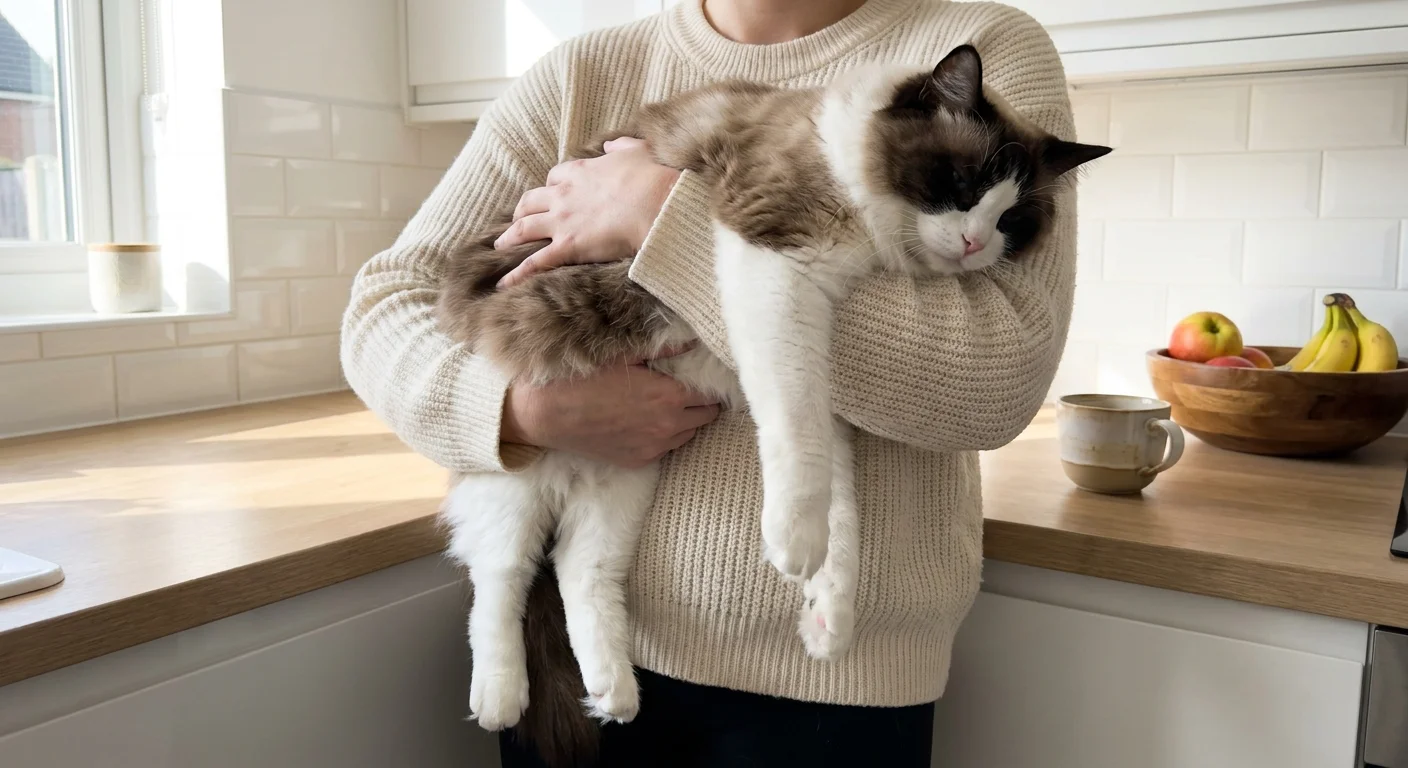
The Ragdoll stands as the undisputed champion of cuddly cat breeds. Named for their endearing tendency to go completely limp when picked up, these large, heavy-boned cats possess a docile and sweet-tempered nature. Ragdolls deeply crave human presence and will eagerly greet you at the door, follow you around the house, and seamlessly insert themselves into whatever activity you are doing.
Their affectionate behavior is matched by their striking appearance, featuring vivid blue eyes and a soft, semi-longhair coat. Despite their substantial size—males can weigh up to 20 pounds—they are incredibly gentle and make excellent companions for families with children or gentle dogs.
Care Considerations for Ragdolls:
- Grooming: Their plush coat lacks a dense undercoat, meaning it is less prone to matting, but they still require thorough combing twice a week.
- Health: Screen for Hypertrophic Cardiomyopathy (HCM) through regular veterinary echocardiograms.
- Environment: Ragdolls lack defensive instincts and should be kept strictly indoors to ensure their safety.
Maine Coon: The Gentle Giant
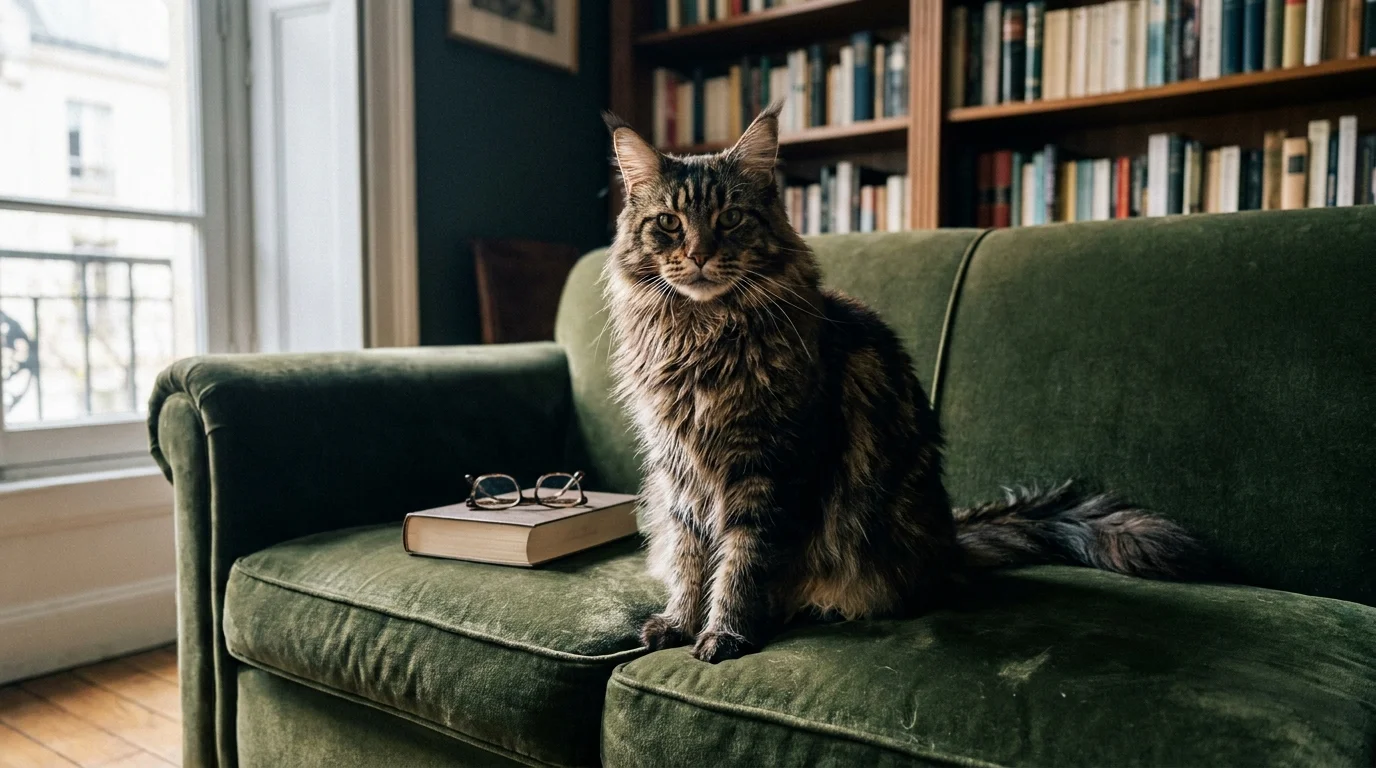
Often referred to as the “dogs of the cat world,” Maine Coons are robust, rugged-looking felines with deeply affectionate personalities. They are one of the best cat breeds for companionship if you want a pet that feels substantial but acts like a total softie. While they enjoy a good lap session, they are equally content just being in the same room with you, offering a quiet, supportive presence.
Before bringing one of these gentle giants into your life, make sure you know how to introduce a new cat to your living space correctly.
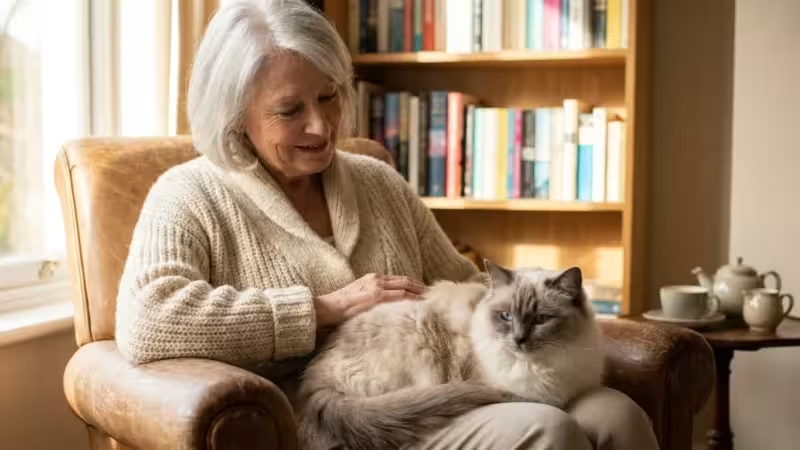
Due to their steady and patient nature, these giants are often recommended as ideal companions for senior households.
Maine Coons are highly intelligent and often enjoy playing fetch, learning tricks, and even walking on a harness. They communicate through adorable trills and chirps rather than traditional meows, using these sounds to check in with their favorite humans.
Care Considerations for Maine Coons:
- Grooming: Their water-resistant, tufted coats require regular brushing, paying special attention to the dense fur around their neck and britches.
- Activity: Provide large, sturdy cat trees that can support their heavy frames and satisfy their climbing instincts.
- Health: Monitor their joint health, as their large size can predispose them to hip dysplasia.
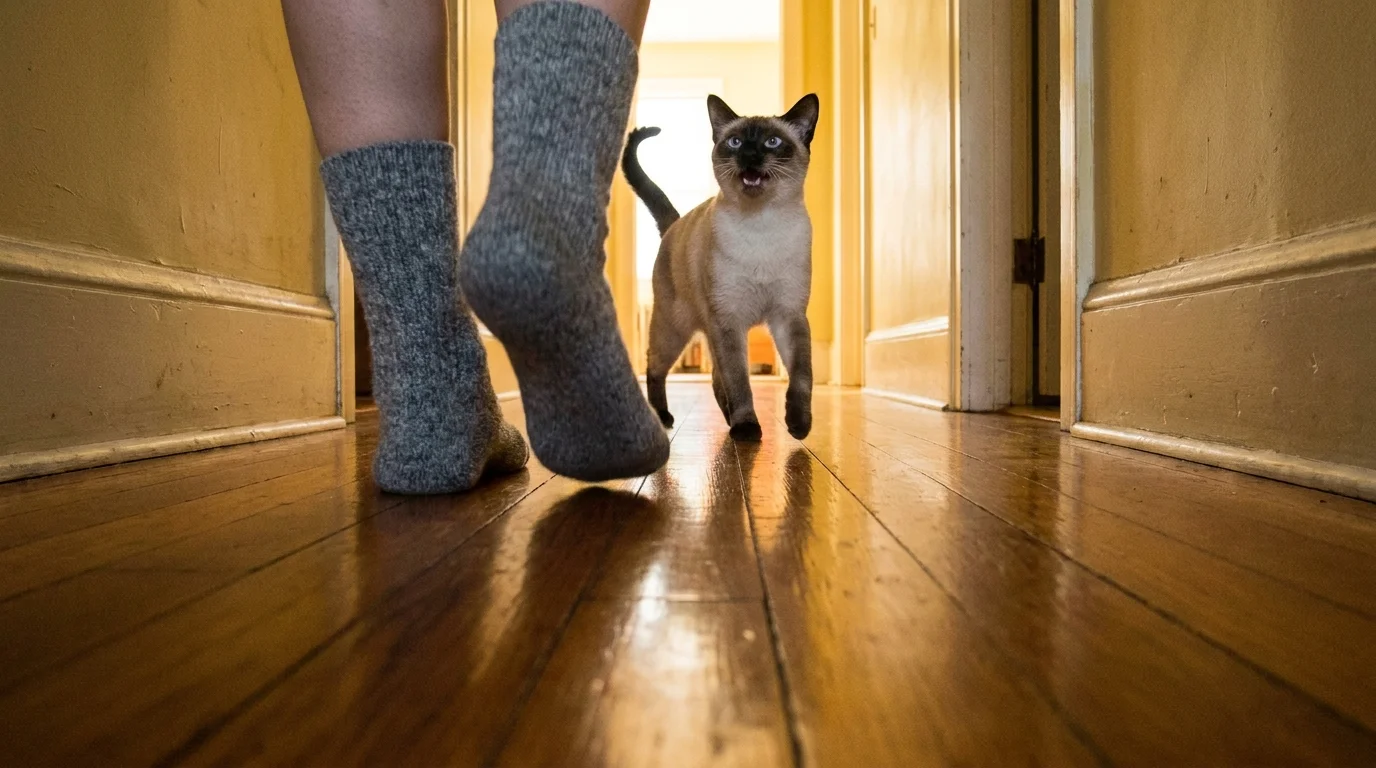
Siamese: The Vocal Shadow
If your idea of affection includes constant conversation, the Siamese is your perfect match. These elegant, striking cats form fiercely loyal bonds with their families and absolutely refuse to be ignored. A Siamese cat will tell you exactly how they feel about their day, your dinner, and their empty food bowl using a raspy, distinct vocalization.
Siamese cats thrive on interaction and often choose one specific person in the household to become deeply attached to. They are highly active, deeply intelligent, and demand to be part of your daily routine.
Care Considerations for Siamese Cats:
- Mental Stimulation: Provide interactive puzzle toys and daily play sessions to prevent boredom and destructive behavior.
- Socialization: Because they bond so tightly, they can suffer from separation anxiety. Consider adopting a pair if you work long hours.
- Grooming: Their short, fine coat requires minimal maintenance; a weekly brush with a rubber mitt keeps their fur sleek.
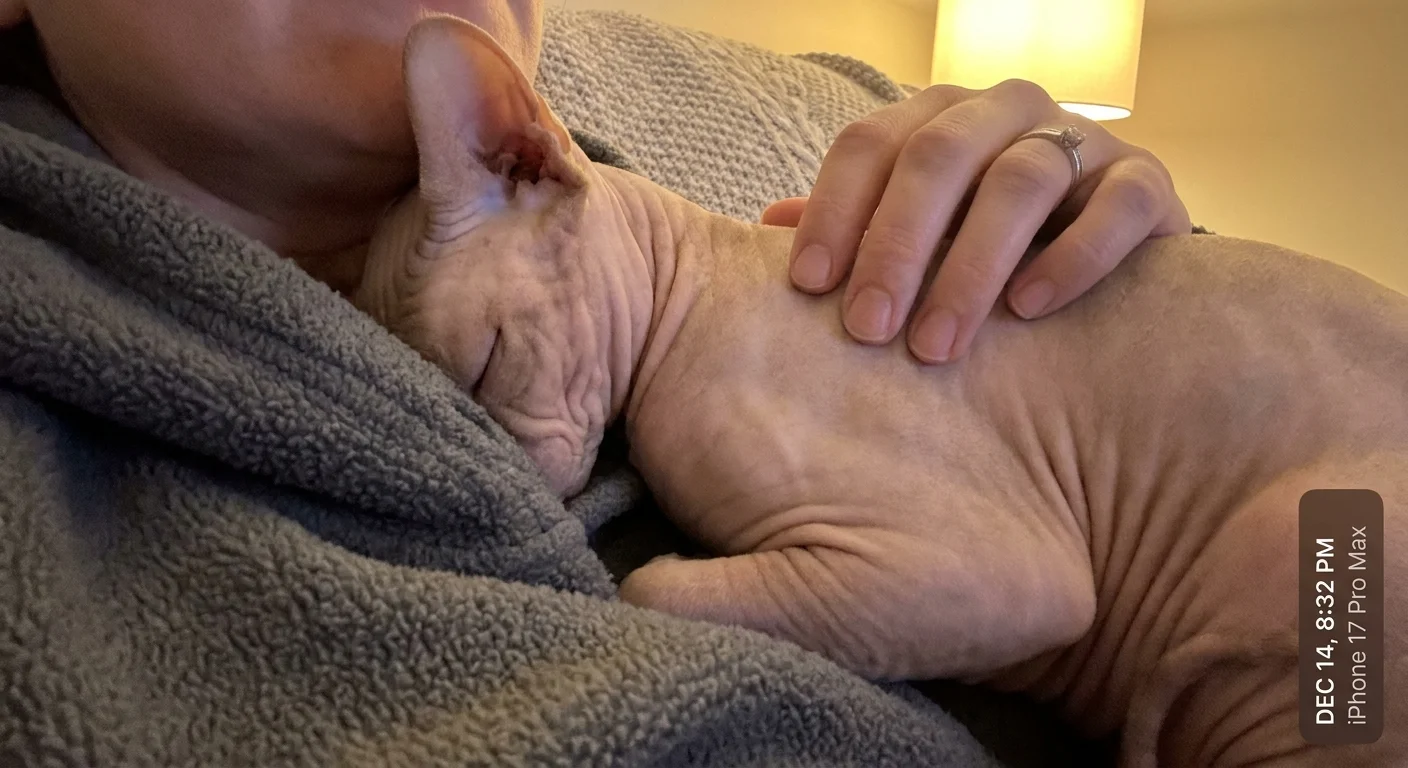
Sphynx: The Warm Velcro Cat
The Sphynx cat’s lack of fur drives them to seek out heat, and there is no better heat source than a human lap. This makes the Sphynx one of the most physically affectionate cat breeds available. They are unapologetically clingy, extroverted, and highly motivated to be touched, held, and cuddled under blankets.
Because they lack a traditional coat, understanding cat coat types and care needs is vital for maintaining their unique skin health.
Beyond their need for warmth, Sphynx cats possess a genuinely sweet and goofy temperament. They act like little monkeys, climbing on shoulders and entertaining their families with acrobatic antics before settling down for an hours-long cuddle session.
Care Considerations for the Sphynx:
- Skin Care: Lacking fur to absorb natural body oils, they require regular bathing (usually every 1-2 weeks) with a gentle, pet-safe shampoo.
- Temperature Regulation: Keep your home warm and provide heated pet beds and soft sweaters during colder months.
- Sun Protection: Limit direct sunlight exposure to prevent sunburn on their sensitive skin.
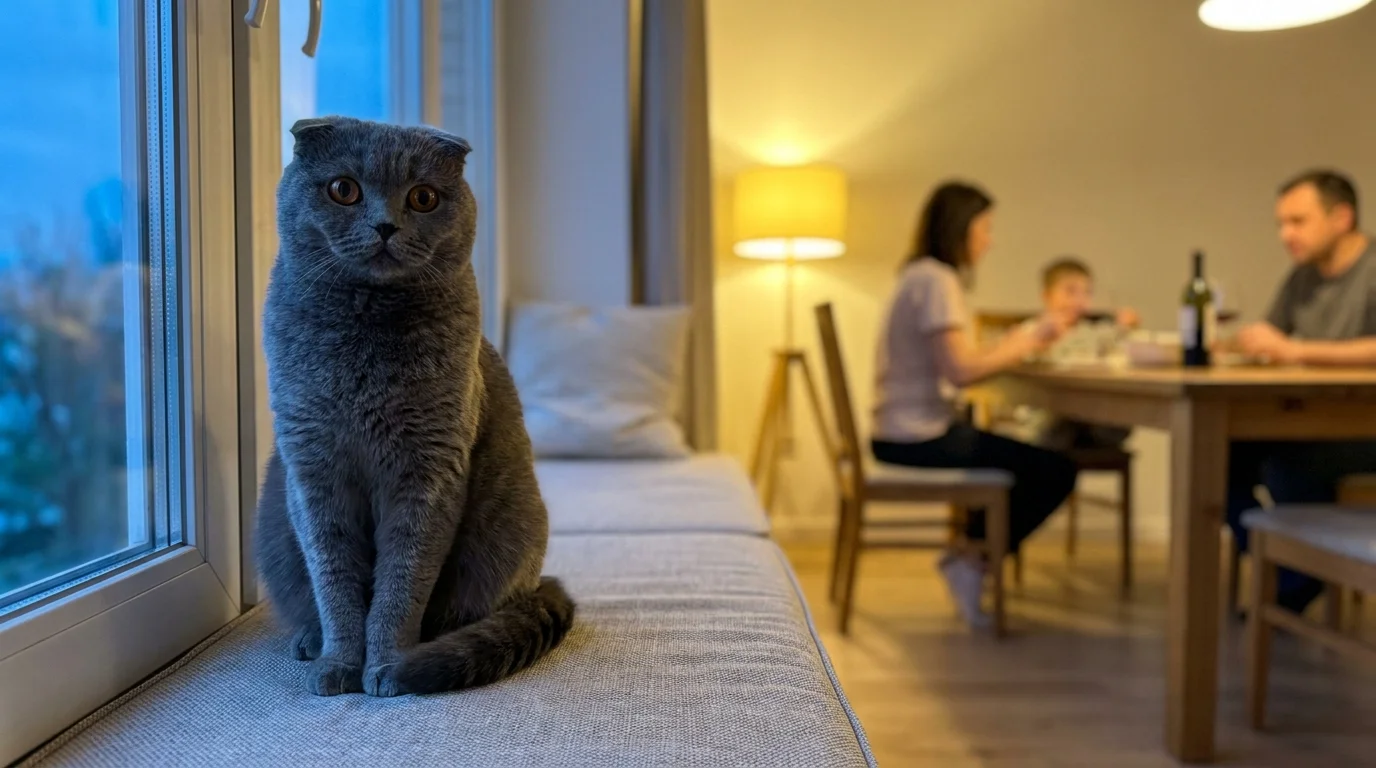
Scottish Fold: The Sweet Observer
Recognizable by their distinctive folded ears and large, owl-like eyes, Scottish Folds possess a temperament as sweet as their appearance. They are adaptable, easygoing cats that form strong attachments to their human families. While they love to be petted and stroked, they are not usually demanding; they are happy to quietly sit beside you on the sofa or sleep at the foot of your bed.
Folds are known for their charming quirks, such as sitting up on their hind legs like a prairie dog or lounging flat on their backs with their paws in the air.
Care Considerations for Scottish Folds:
- Health Monitoring: The genetic mutation that causes their ears to fold also affects cartilage throughout their body (osteochondrodysplasia). Regular veterinary checkups are essential to monitor for joint stiffness or arthritis.
- Handling: Handle their tails gently. If their tail feels stiff, it may be a sign of cartilage issues, and you should consult your vet immediately.
- Ear Care: Check and clean their folded ears weekly to prevent wax buildup and infections.
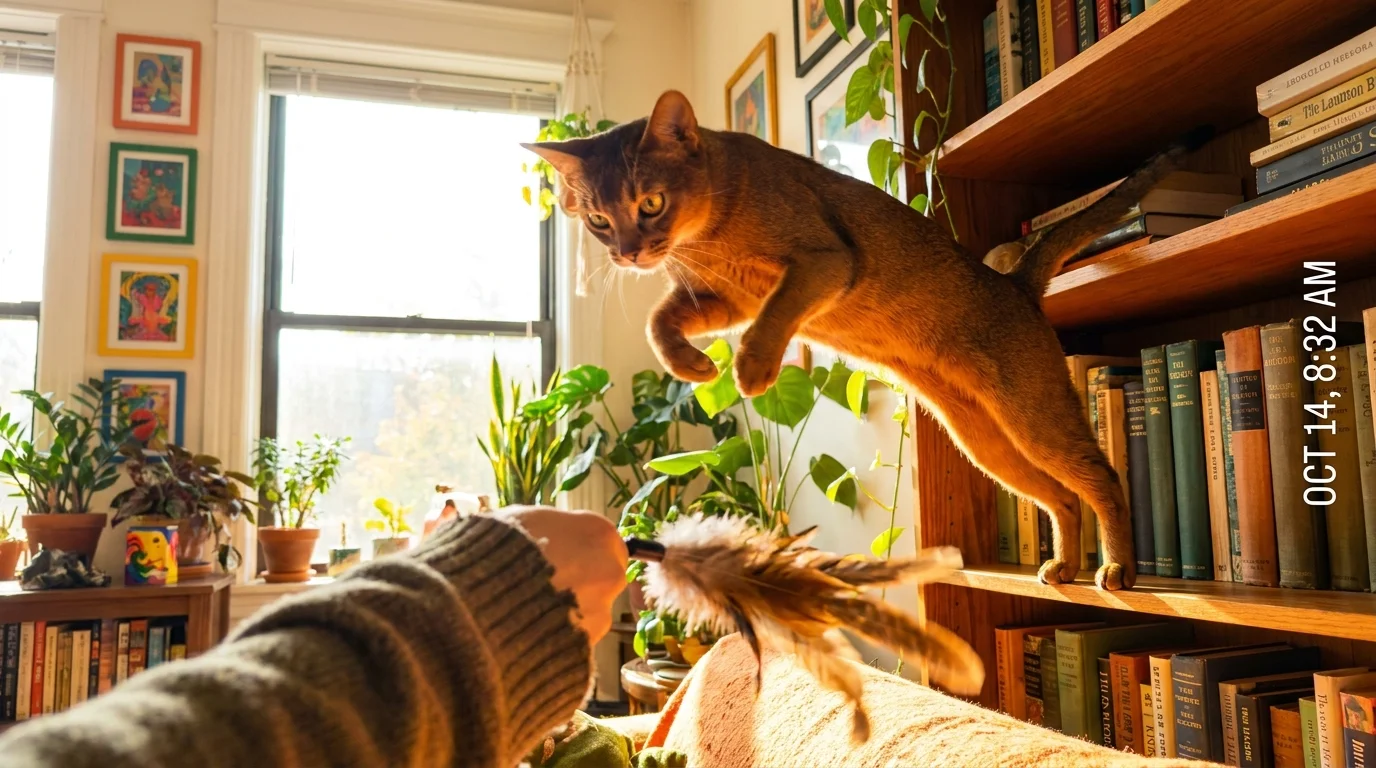
Abyssinian: The Playful Devotee
Affection looks different in every breed, and for the Abyssinian, love means wanting to play with you constantly. “Abys” are not traditional lap cats; they are high-energy, fiercely intelligent felines who express their affection through vigorous interaction. They will sit on your shoulder while you cook, weave through your legs while you walk, and bring you toys to initiate a game of fetch.
Since high-energy felines like the ‘Aby’ crave interaction, it is helpful to learn how to keep your cat entertained while you are busy during the day.
Their ticked coats give them a wild, cougar-like appearance, but their personalities are entirely domestic and deeply devoted. They thrive in active households where they receive plenty of attention and engagement.
Care Considerations for Abyssinians:
- Environment: Maximize vertical space in your home. Wall-mounted shelves and tall scratching posts are mandatory for these agile climbers.
- Companionship: They do poorly in isolation. If your home is empty for long periods, provide them with a feline or canine companion.
- Dental Care: Abyssinians are predisposed to periodontal disease. Implement a daily toothbrushing routine using pet-safe toothpaste.
Birman: The Balanced Companion
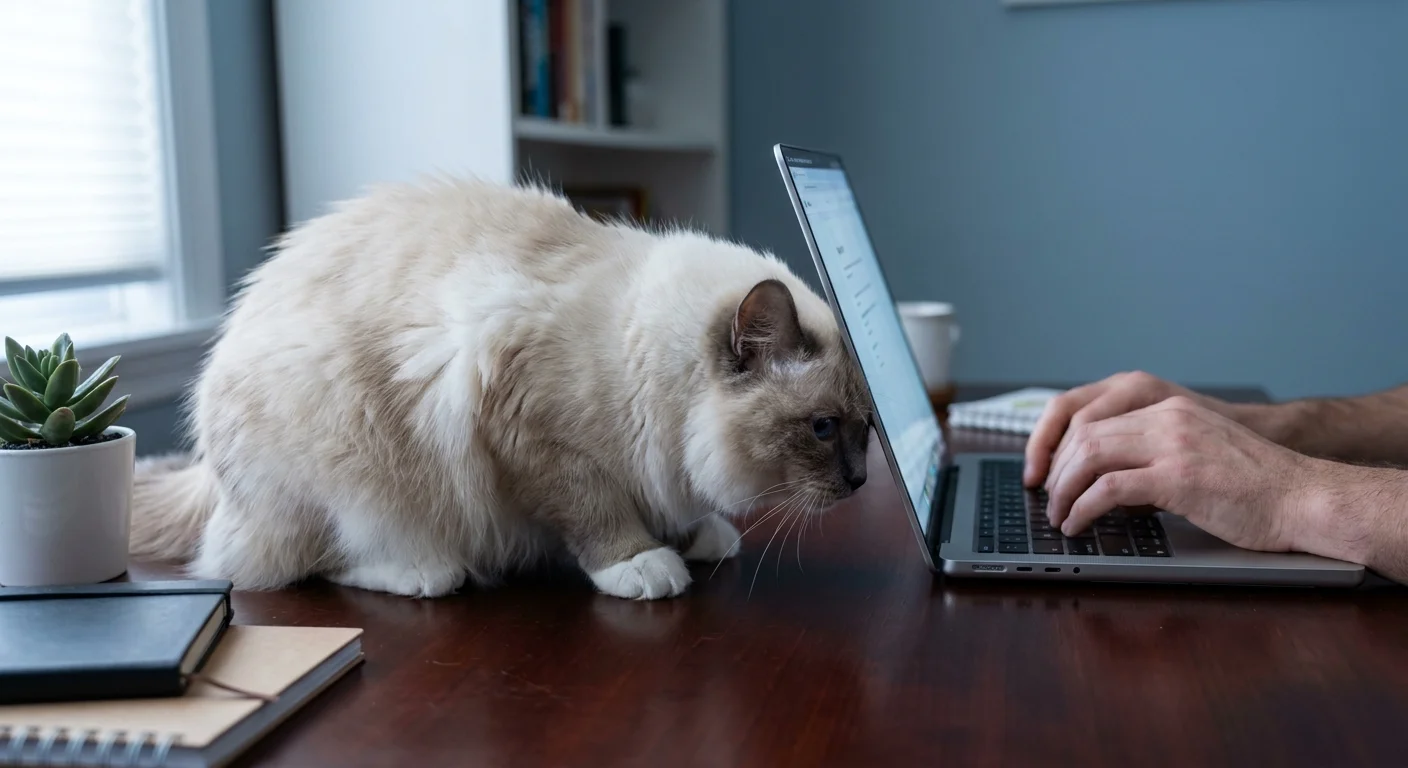
Legend has it that the Birman acquired its striking blue eyes and pristine white paws as a reward for loyalty from a goddess. In reality, their balanced, deeply loving personality is the result of careful breeding. Birmans hit the sweet spot of feline companionship: they are playful but not exhausting, affectionate but not overly demanding.
The Birman’s polite and adaptable personality makes them one of the best cat breeds for apartment living.
They are exceptionally patient and tolerant, making them one of the most family-friendly felines. A Birman will greet guests at the door, tolerate gentle handling from children, and happily accept any lap offered to them.
Care Considerations for Birmans:
- Grooming: Their silky, single-layer coat rarely mats, making grooming relatively easy. A thorough combing once or twice a week keeps them looking beautiful.
- Weight Management: Birmans have a sturdy build and can easily become overweight. Measure their food portions carefully and avoid free-feeding.
- Social Needs: Include them in family activities; they are highly curious and want to investigate whatever you are doing.
Burmese: The Social Butterfly
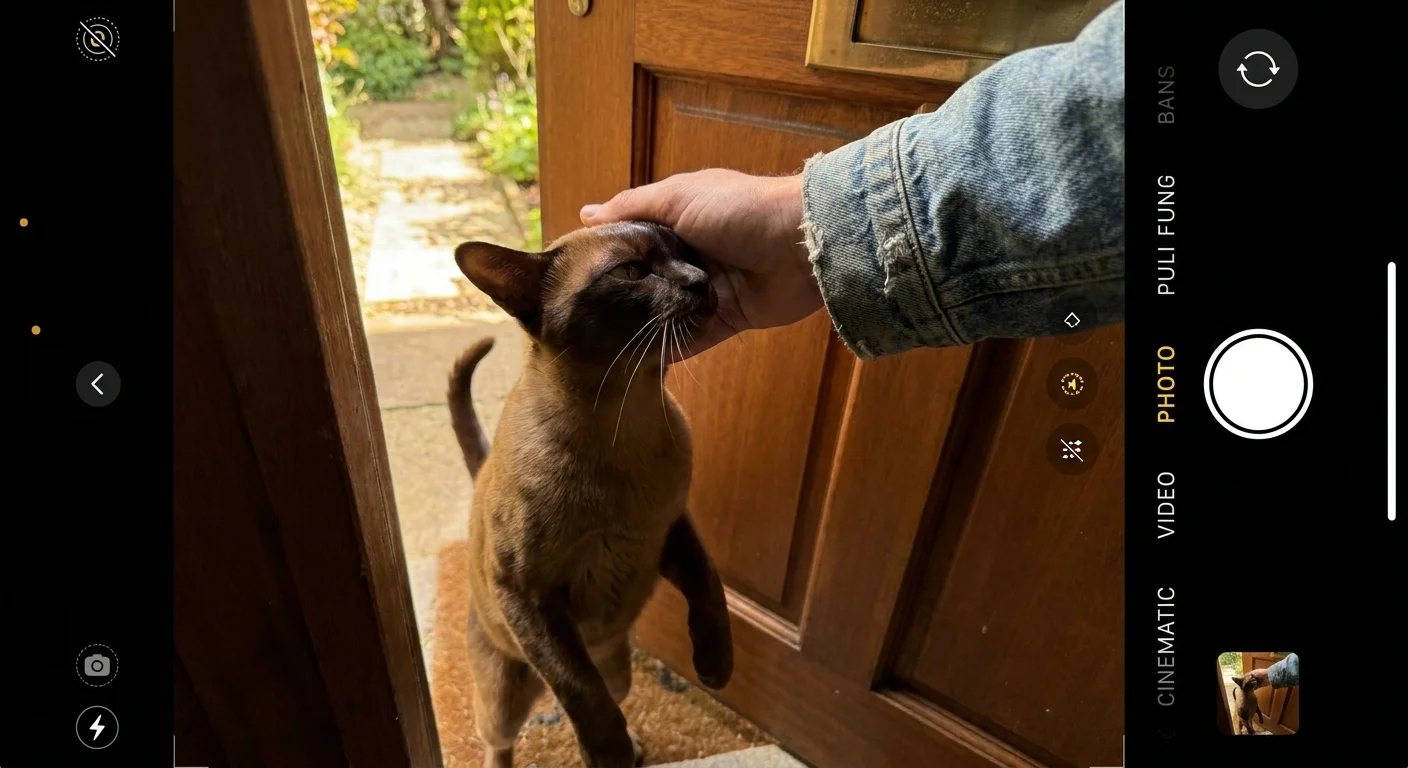
If you want a cat that truly believes they are human, look no further than the Burmese. Often described as “bricks wrapped in silk” due to their surprising weight and muscular build, these cats are incredibly tactile. They love to be held, carried around, and will aggressively nuzzle your hands and face to demand pets.
Burmese cats retain a kitten-like playfulness well into their senior years. They are entirely fearless and view every human they meet as a potential new best friend. Their intense desire for affection means they form very strong bonds with their primary caregivers.
Care Considerations for Burmese Cats:
- Attention: Be prepared for a lack of personal space. Burmese cats will demand your attention and can become depressed if ignored.
- Safety: Because they are so trusting and outgoing, they are at high risk of theft or injury if allowed outside unattended. Keep them indoors.
- Toys: Rotate their toys frequently to keep their sharp, intelligent minds engaged.
Persian: The Quiet Cuddler
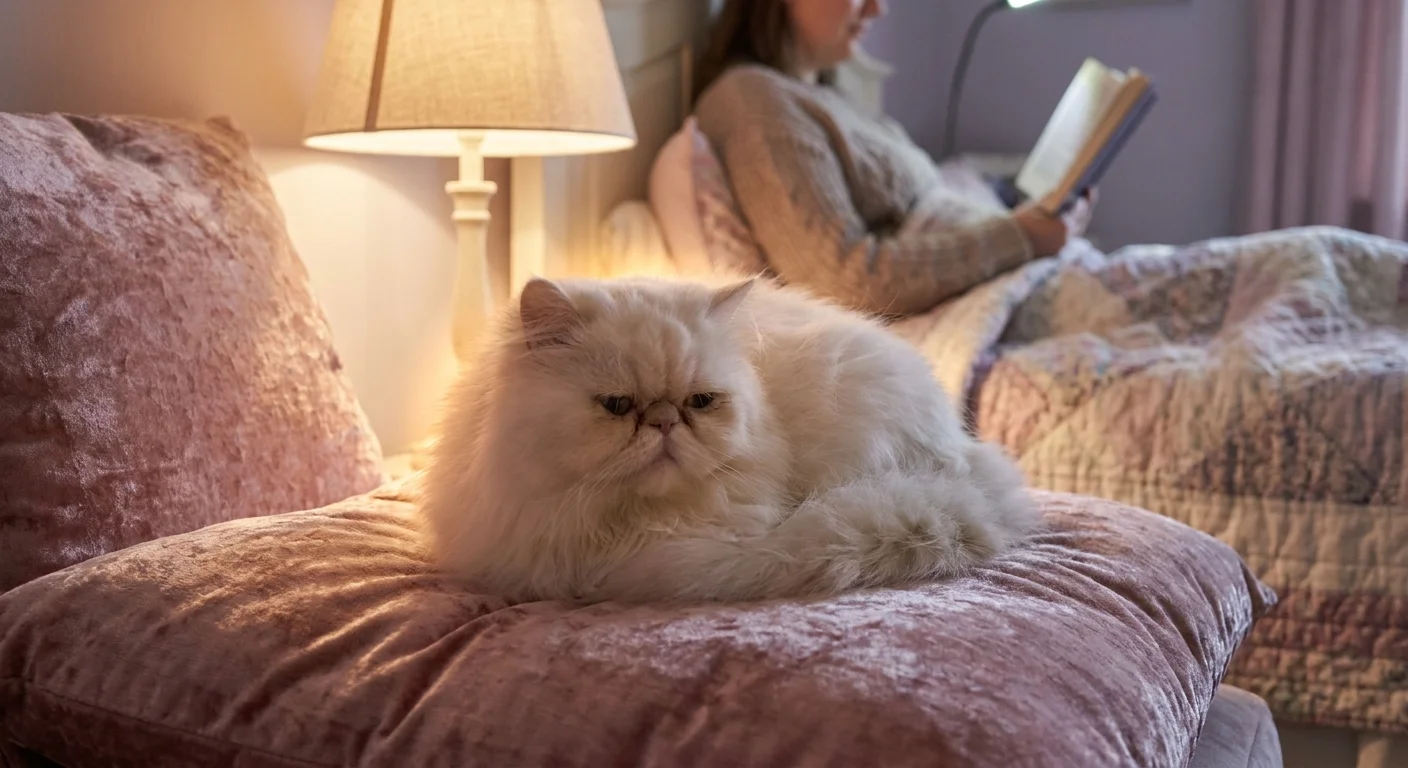
The Persian is the epitome of feline luxury and calm. These brachycephalic (flat-faced) cats with long, flowing coats are quiet, dignified, and exceptionally loving. They prefer a serene environment without loud noises or sudden disruptions. When you provide a peaceful home, a Persian will reward you by draped elegantly across your lap for hours.
They communicate their affection softly, using their large expressive eyes and quiet chirps rather than demanding meows. Persians are gentle souls who prefer to have all four paws on the ground rather than climbing to high places.
Care Considerations for Persians:
- Intense Grooming: Their profuse coats require daily combing to prevent painful mats from forming. Neglecting their coat is not an option.
- Facial Care: Due to their flat facial structure, their eyes often tear excessively. Wipe their face daily with a warm, damp cloth to prevent tear staining and skin fold infections.
- Breathing Monitoring: Keep them in cool, air-conditioned environments during the summer, as their shortened airways make them susceptible to heatstroke.
Tonkinese: The Affectionate Extrovert
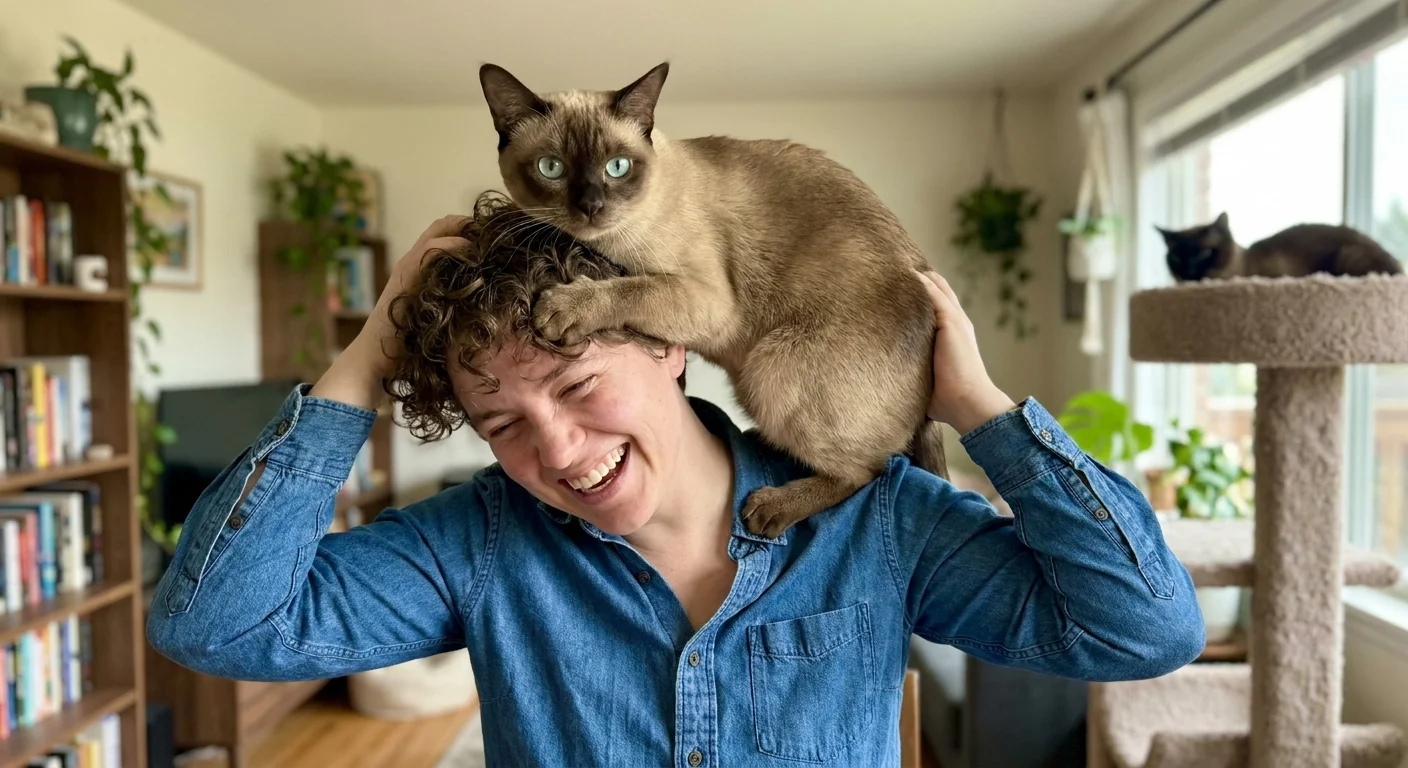
A cross between the Siamese and the Burmese, the Tonkinese inherits the best traits of both parent breeds. They are less vocal than the Siamese but just as intelligent, and they possess the physical affection of the Burmese without quite as much clinginess. Tonkinese cats are gregarious extroverts who love to entertain their families.
They are incredibly warm and loving, often jumping onto shoulders or organizing a game of fetch. They are highly adaptable and do well in lively households where there is always something going on.
Care Considerations for the Tonkinese:
- Companionship: Like their parent breeds, Tonkinese cats despise being alone. They thrive when they have another active cat to play with.
- Training: Harness their high intelligence through clicker training. They easily learn tricks and commands using positive reinforcement.
- Grooming: Their short, soft coat is low maintenance. A weekly brush is all they need.
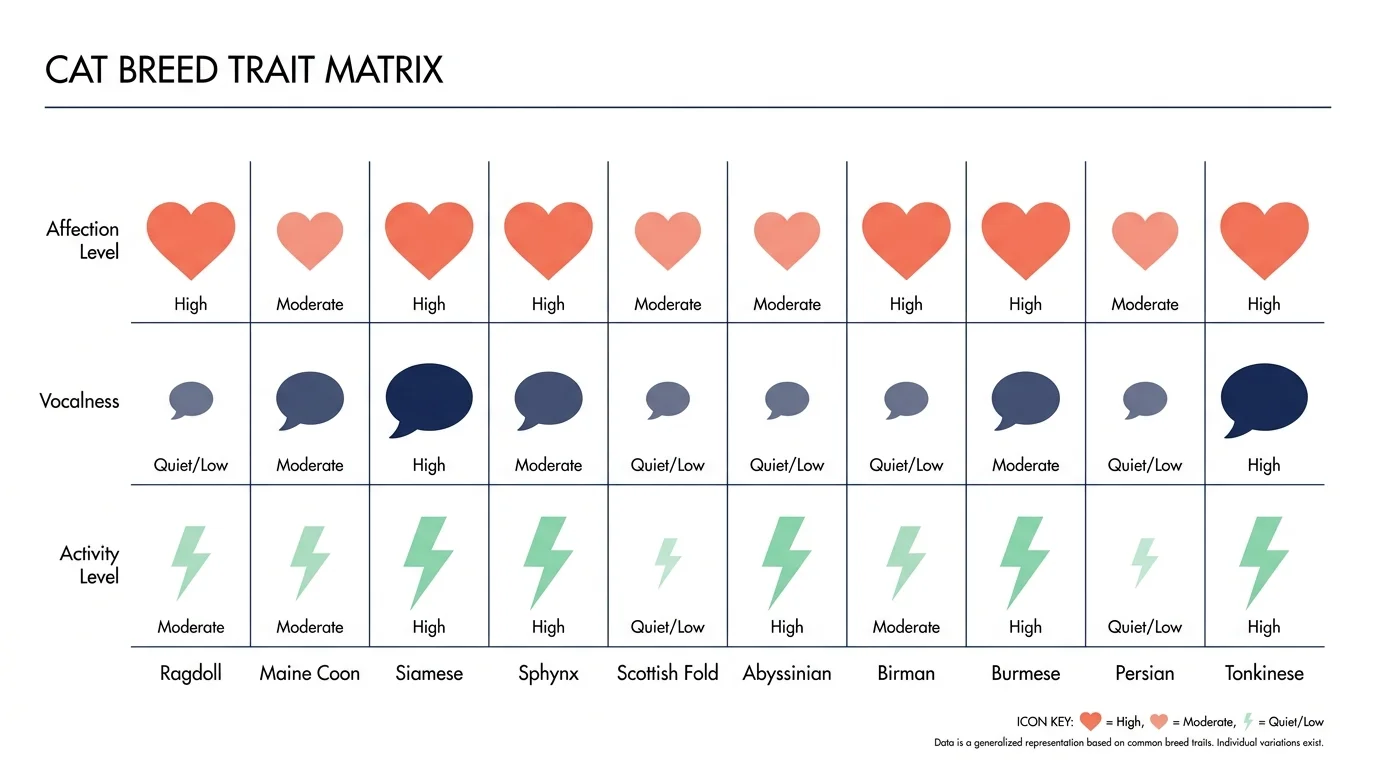
Breed Comparison Guide
To help you choose the best affectionate cat breed for your lifestyle, use this quick reference guide to compare their energy levels, grooming requirements, and vocalization tendencies.
| Breed | Energy Level | Grooming Needs | Vocalization |
|---|---|---|---|
| Ragdoll | Low – Moderate | Moderate (Bi-weekly) | Quiet |
| Maine Coon | Moderate | High (Frequent brushing) | Moderate (Trills/Chirps) |
| Siamese | High | Low | Very High |
| Sphynx | High | High (Regular bathing) | Moderate |
| Scottish Fold | Low | Moderate | Quiet |
| Abyssinian | Very High | Low | Moderate |
| Birman | Moderate | Moderate | Quiet |
| Burmese | High | Low | High |
| Persian | Very Low | Very High (Daily) | Quiet |
| Tonkinese | High | Low | Moderate – High |
How to Nurture Trust and Connection
Bringing home a friendly cat breed does not guarantee instant affection. Building a strong bond requires patience, respect for feline body language, and consistent positive reinforcement. Feline behavior experts at the Cornell University College of Veterinary Medicine emphasize that cats prefer to initiate contact on their own terms. Forcing physical interaction will only damage trust.
To encourage your cat to be more affectionate, implement these practical steps:
- Let Them Choose: Sit quietly on the floor or sofa and let the cat come to you. Extend a finger and allow them to sniff and rub against it before you attempt to pet them.
- Learn Their Spots: Most cats prefer being scratched around the base of the ears, under the chin, and on the cheeks where their scent glands are located. Avoid the belly, which many cats view as a vulnerable area.
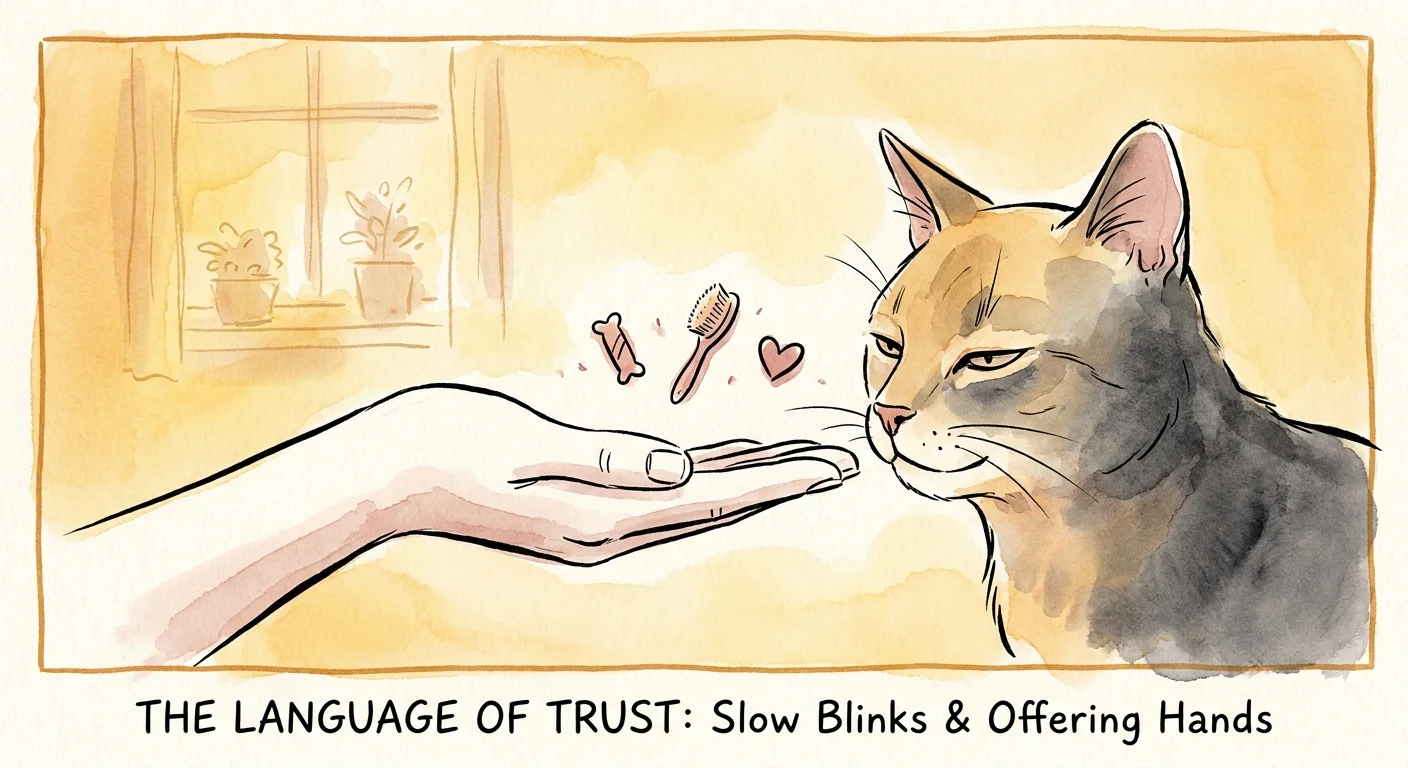
- Use the “Slow Blink”: In feline body language, a slow, relaxed blink signals trust and affection. If you catch your cat looking at you, soften your gaze and slowly close and open your eyes. Often, they will return the gesture.
- Reward Interaction: When your cat chooses to sit near you or accept pets, softly praise them and offer a high-value treat. They will quickly associate your proximity with positive experiences.
- Play Daily: Interactive play using wand toys builds confidence and strengthens the bond between you and your pet. It allows them to fulfill their predatory instincts in a safe, controlled way.
Frequently Asked Questions
Are male cats more affectionate than female cats?
Many cat owners and veterinarians note that male cats (toms) often present as more laid-back, goofy, and affectionate, while female cats (queens) can sometimes be more independent or cautious. However, this is a generalization. Spaying and neutering play a far larger role in stabilizing behavior. Once altered, a cat’s individual personality, genetics, and socialization history dictate their affection levels far more than their gender.
Can an adult shelter cat become affectionate?
Absolutely. While purebred cats have predictable traits, mixed-breed shelter cats can be just as loving. The ASPCA consistently notes that adult rescue cats often show immense gratitude and form profound bonds with their adopters once they feel safe. When adopting, look for adult cats that approach the front of their kennel, purr when spoken to, or lean into gentle pets through the bars.
Do affectionate cat breeds suffer from separation anxiety?
Yes, highly social breeds like the Siamese, Burmese, and Sphynx are prone to separation anxiety if left completely alone for long hours. They require interaction to thrive. If you work outside the home all day, consider adopting a bonded pair of kittens or introducing a second pet to keep them company. Providing puzzle toys and a stimulating environment also helps reduce stress.
Why does my cat bite me gently when we are cuddling?
These gentle nibbles are often called “love bites.” When a cat becomes overstimulated during a petting session, or when they are feeling extremely affectionate, they may give a soft, non-skin-breaking bite. It is a sign of intense emotion. If it bothers you, simply stop petting them for a few moments to let their arousal levels drop. Never punish your cat for this natural behavior.
For expert pet care guidance, visit
American Kennel Club (AKC), Cat Fanciers’ Association (CFA), ASPCA, The Humane Society of the United States and Cornell University College of Veterinary Medicine.
Disclaimer: This article is for informational purposes only and is not a substitute for professional veterinary advice, diagnosis, or treatment. Always consult with a licensed veterinarian for medical concerns about your pet.

Leave a Reply