
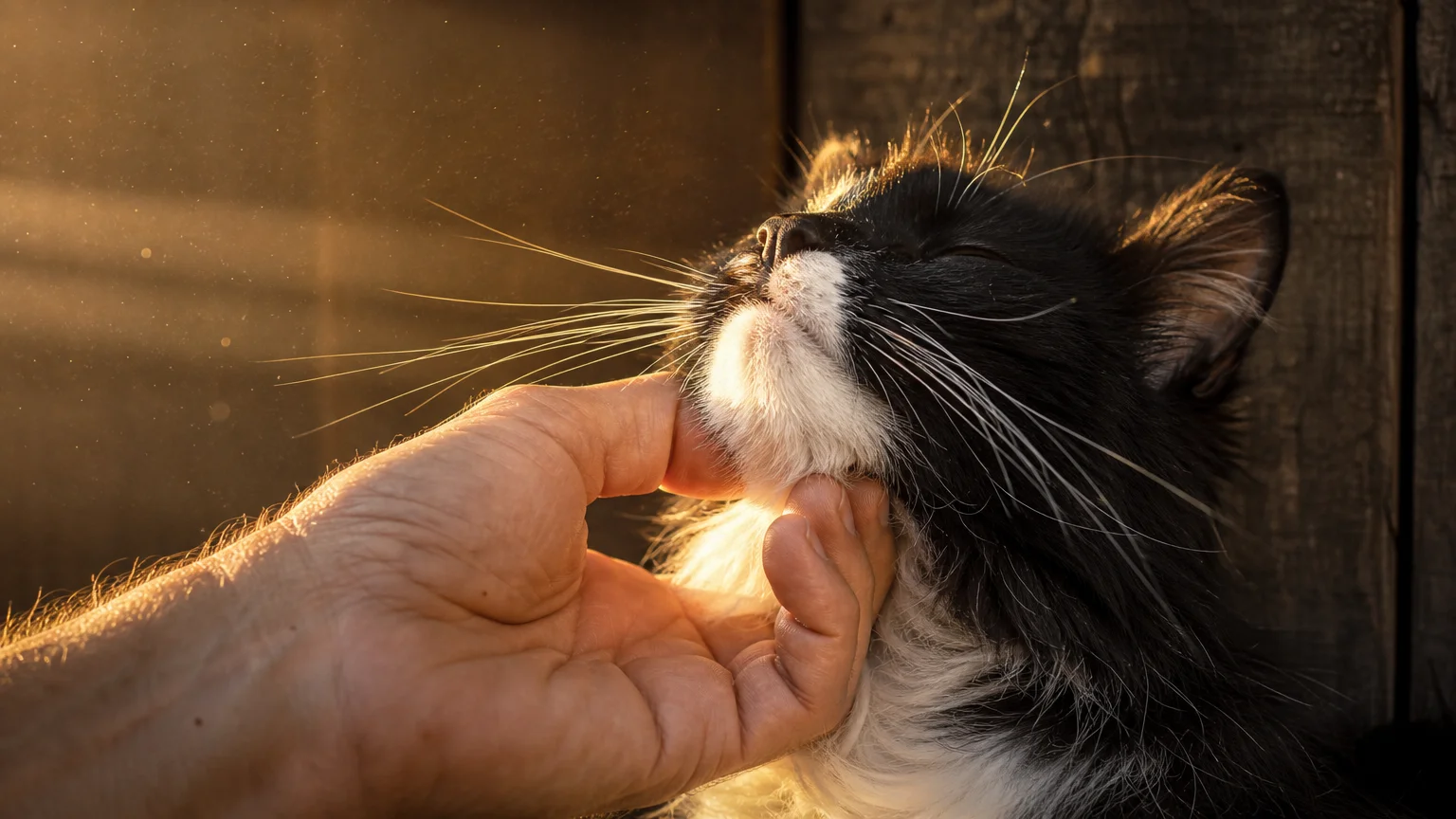
How to Respond When Your Cat Bunts
Because headbutting is a deep sign of affection, responding appropriately is an excellent way to reinforce your bond. However, cats are notorious for their boundaries, so your reaction should match their current mood.
When territorial stress overrides their comforting bunting behaviors, cats may start marking areas outside their tray, leading to frustrating litter box problems.
If your cat reacts defensively or aggressively whenever you try to interact, you might be dealing with underlying cat behavior problems that require professional help.
If your cat reacts defensively to petting, it is crucial to focus on understanding cat aggression to avoid triggering fear or discomfort.
When your cat initiates a headbutt, the best immediate response is gentle verbal praise accompanied by soft physical contact. Lightly scratch them precisely where their scent glands are located: behind the ears, under the chin, or along the base of the cheeks.
Many cats will lean heavily into your hand, effectively guiding your fingers to exactly where they want to be pet. If you are sitting on the floor or lying in bed, you can even gently lean your own forehead down to meet theirs. This physical reciprocation mimics how two bonded cats would interact in the wild.
It is equally important to know what not to do. Never force a headbutt. If you grab your cat’s head and pull it toward your face, you will likely trigger a defensive response, breaking the trust they just offered. Furthermore, observe what happens after the initial contact. Some cats will deliver a single, solid bunt and then confidently walk away.
This is not a rejection; it simply means their task of marking you is complete. Let them go. Over-petting a cat that only wanted a quick greeting can lead to overstimulation and defensive scratching.




Leave a Reply