
Headbutting vs. Head Pressing: A Vital Distinction
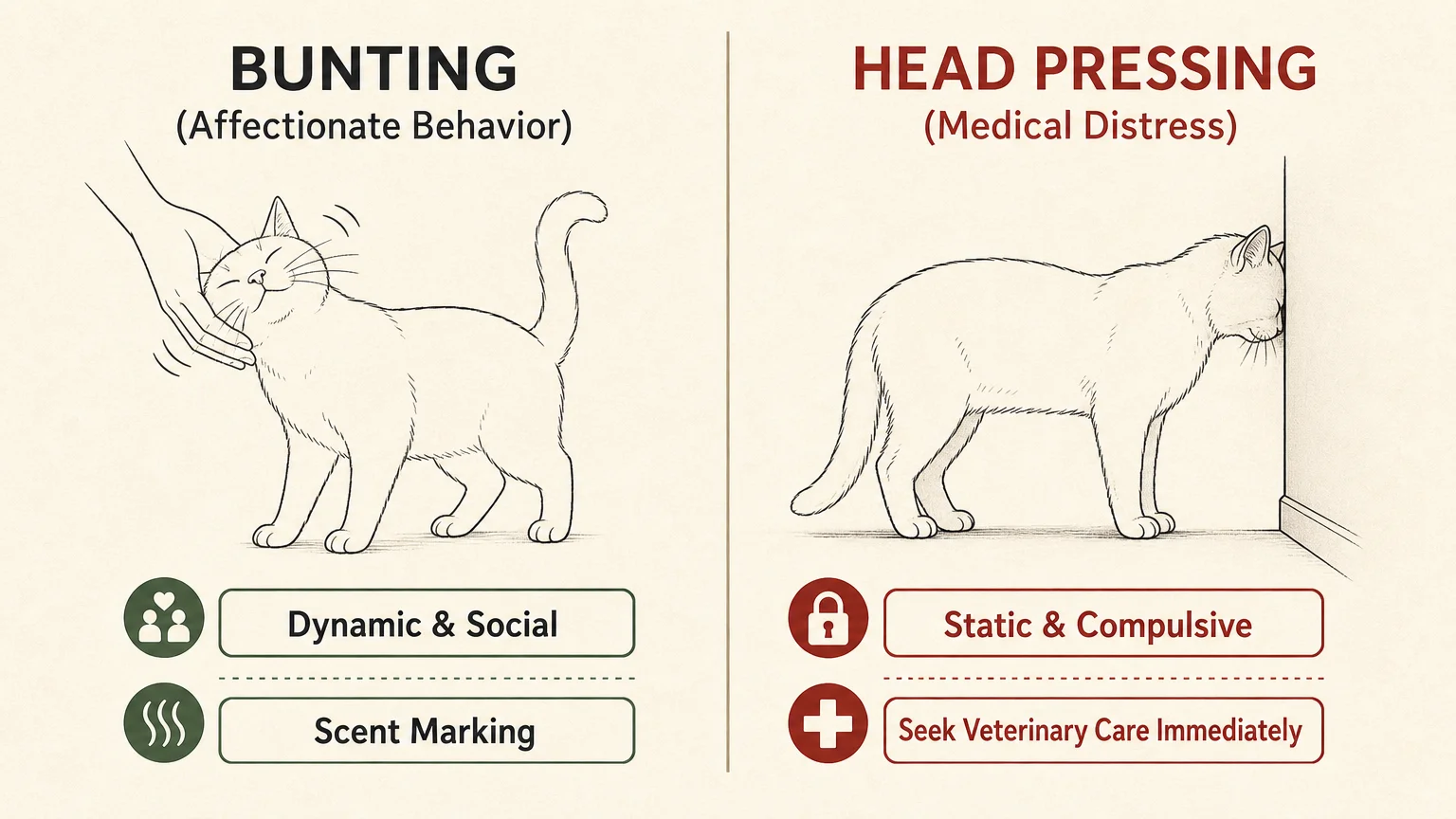
While bunting is a beautiful, affectionate behavior, there is a distinct and visually similar action that every pet owner must be aware of: head pressing. Knowing the difference between the two can quite literally save your cat’s life.
Bunting is a fluid, dynamic movement. The cat approaches you, rubs, bumps, and generally looks relaxed, often purring or meowing. In stark contrast, head pressing is a static, unyielding, and compulsive behavior.
A cat exhibiting head pressing will stand rigidly and push the top of their head flush against a wall, a corner, or a piece of heavy furniture. They will hold this unnatural posture for extended periods, completely unresponsive to their environment. They are not rubbing; they are stubbornly pressing.
“Head pressing is never a quirky behavioral choice; it is an urgent clinical sign of neurological damage or prosencephalon disease requiring immediate veterinary intervention.”
According to veterinary resources like PetMD, head pressing indicates severe distress in the forebrain or thalamus. The causes for this neurological emergency can range from brain tumors and toxic poisoning to severe liver disease (hepatic encephalopathy) or infectious swelling of the brain. A cat pressing their head against a wall is typically experiencing immense pain or profound confusion.
If you witness head pressing, do not wait to see if it resolves on its own. It is vital to seek emergency veterinary care immediately. Watch for secondary symptoms that frequently accompany head pressing, such as pacing in relentless circles, staring blankly at walls, sudden vision loss, or uncharacteristic vocalization.
By keeping a sharp eye on your cat’s body language, you can easily distinguish between a harmless display of affection and a critical medical emergency.







Leave a Reply