🐶🐱 Everyday With Pets.com
  • Dog Care
  • Cat Care
  • Pet Health
  • Lifestyle & Fun
  • Training & Behavior
  • Product Reviews

If Your Cat Headbutts You, This Is What It Really Means

June 16, 2026 · Training & Behavior

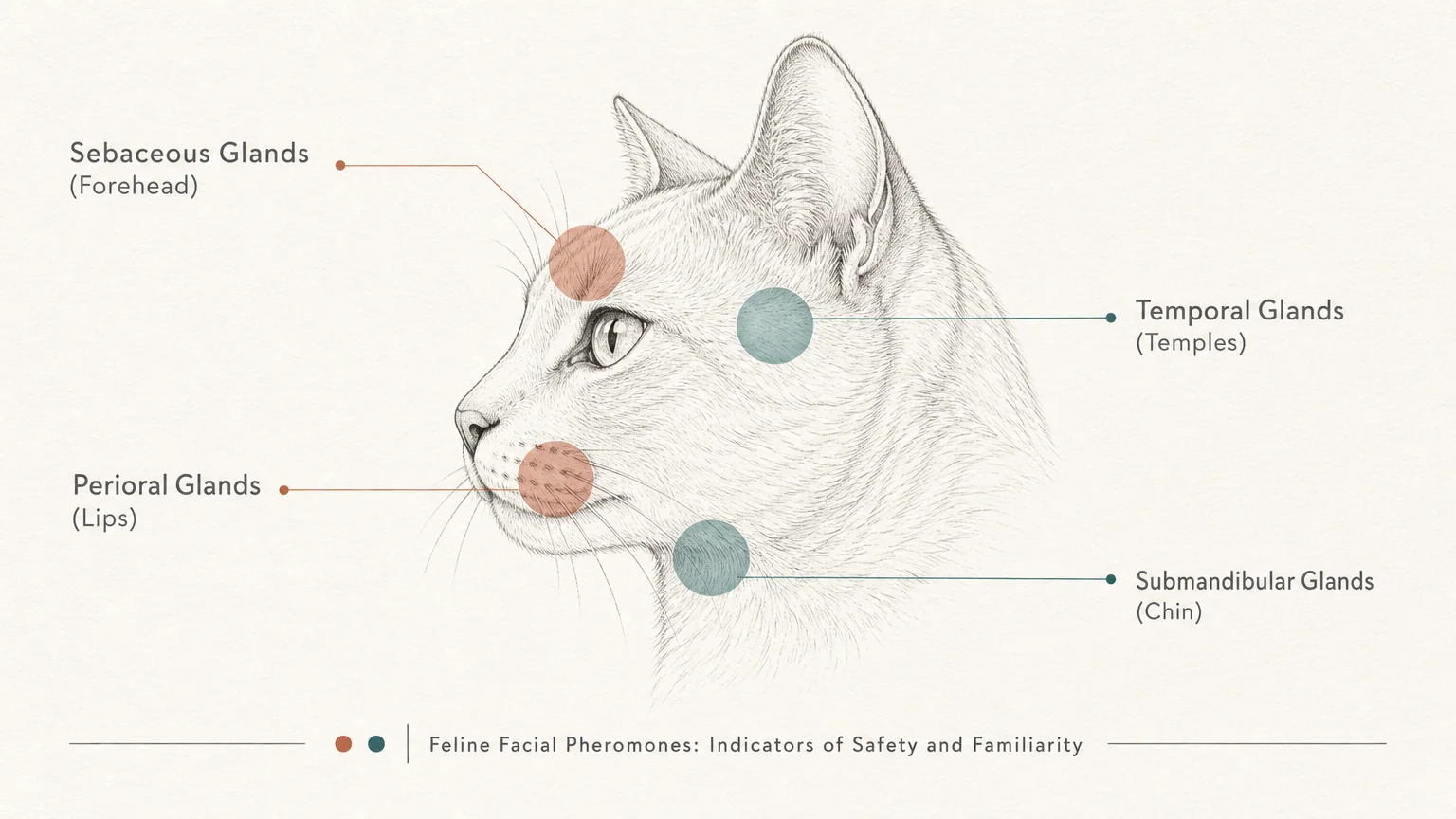
An anatomical diagram of a cat's head showing the locations of facial scent glands used for bunting.
This anatomical diagram illustrates the key facial scent glands cats use to mark you when bunting.

The Science of Bunting: What Exactly Is It?

To fully appreciate why your cat headbutts you, you need to understand the fascinating anatomy of feline scent glands. Cats possess specialized sebaceous glands located strategically across their bodies, with a high concentration clustered right on their heads.

While bunting leaves a positive scent marker, cats also use scratching to claim territory, which makes it crucial to know how to train your cat to use a scratching post rather than your furniture.

Recognizing how cats share communal scents is also incredibly useful when learning how to introduce a new cat to your home smoothly.

Understanding these scent-marking habits is a great starting point for owners looking for new ways to bond with your cat outside of traditional training.

You will find these microscopic glands along their cheeks, around their lips, beneath their chin, and right in the center of their forehead. When your cat rubs these specific areas against a person, an animal, or an object, they leave behind powerful chemical messengers known as pheromones.

Pheromones are entirely undetectable to the human nose, yet they dictate a massive portion of how cats interpret their environment. When a cat leaves their facial pheromones on something, they are essentially placing an invisible “safe” sticker on it.

According to researchers at the Cornell University College of Veterinary Medicine, feline facial pheromones promote a sense of familiarity, security, and well-being. By marking their environment, cats actively reduce their own stress levels and establish a comforting territory.

The physical act of pressing these head glands against you is called “bunting.” Unlike urine spraying or scratching—which cats often use to assert dominance or signal territorial anxiety to rival felines—bunting is an affiliative behavior.

It is reserved exclusively for people, pets, and places the cat feels completely secure around. Therefore, the next time your cat winds around your legs and drives their skull into your calf, recognize that they are engaging in a highly evolved biological process designed to weave your scents together.


Pages: 1 2 3 4 5 6 7

Share this article

Facebook Twitter Pinterest LinkedIn Email

Leave a Reply Cancel reply

Your email address will not be published. Required fields are marked *

Search

Latest Posts

  • Risograph illustration of a modern dog sitting in a living room, casting a shadow of its ancestor retrieving a duck. 10 Dog Breeds and What They Were Originally Bred To Do
  • A veterinarian sitting on her living room floor, sharing a warm, gentle moment with her wire-haired terrier dog in soft morning light. 10 Things I Would Never Do As a Veterinarian With My Dog
  • A German Shepherd search and rescue dog stands alert on a mossy log in a misty forest while its handler walks in the background. 10 Best Search and Rescue Dog Breeds
  • A retired man reading a book in a cozy armchair while his senior dog rests its head on his knee in a sunlit living room. 8 Reasons More Retirees Are Adopting Older Dogs
  • A close-up photograph of a tabby cat headbutting a woman's cheek in a warm, sunlit living room. If Your Cat Headbutts You, This Is What It Really Means
  • A ginger cat leans its head against a person's hand on a wooden table in a sunlit, cozy living room. 10 Pet Habits That Reveal Hidden Feelings
  • Close-up macro photograph of a vibrant Panther Chameleon with turquoise and red scales on a mossy branch. 10 Most Beautiful Color Changing Animals
  • A senior yellow Labrador Retriever resting on a rug in a sunlit room, looking slightly tired, captured in a candid home setting. 6 Symptoms of Insulin Deficiency in Dogs
  • A senior dog rests its head on a woman's knee in a sun-drenched room, symbolizing a deep, secure bond. 9 Behaviors That Reveal Strong Pet-Owner Bonds
  • A dog and a cat sitting together in a sunlit living room, subtly communicating through body language and proximity. 10 Ways Pets Quietly Communicate with Owners

Newsletter

Get the latest posts delivered to your inbox.

Related Articles

Positive Reinforcement Training: A Complete Beginner’s Guide - comprehensive guide

Positive Reinforcement Training: A Complete Beginner’s Guide

Learn positive reinforcement training for your pet with this complete beginner's guide, covering fundamentals, socialization,…

Read More →
How to Train Your Cat to Use a Scratching Post - comprehensive guide

How to Train Your Cat to Use a Scratching Post

Learn how to train your cat to use a scratching post with positive reinforcement, proper…

Read More →
Understanding Dog Aggression: Types and Solutions - comprehensive guide

Understanding Dog Aggression: Types and Solutions

Understand dog aggression types, triggers, and solutions with science-backed positive reinforcement tips for effective pet…

Read More →
Cat Behavior Problems: When to Call a Behaviorist - comprehensive guide

Cat Behavior Problems: When to Call a Behaviorist

Learn when to call a cat behaviorist for common problems like litter box issues, aggression,…

Read More →
15 Fun Tricks to Teach Your Dog - comprehensive guide

15 Fun Tricks to Teach Your Dog

Discover 15 fun tricks to teach your dog using positive reinforcement, building confidence and strengthening…

Read More →
12 Signs Your Dog Needs Professional Training Help - comprehensive guide

12 Signs Your Dog Needs Professional Training Help

Learn 12 crucial signs your dog needs professional training help, from aggression to anxiety, and…

Read More →
Understanding and Managing Dog Separation Anxiety - comprehensive guide

Understanding and Managing Dog Separation Anxiety

Learn to understand and manage dog separation anxiety with practical, evidence-based training tips, positive reinforcement,…

Read More →
Understanding Cat Aggression and Reducing It - comprehensive guide

Understanding Cat Aggression and Reducing It

Learn to understand and reduce cat aggression with science-backed pet training tips and environmental enrichment…

Read More →
How to Socialize Your Puppy: A Week-by-Week Plan - comprehensive guide

How to Socialize Your Puppy: A Week-by-Week Plan

Learn how to socialize your puppy effectively with a week-by-week plan, building confidence and preventing…

Read More →
🐶🐱 Everyday With Pets.com

Making Pet Care Simple, Every Day

Inedit Agency S.R.L.
Bucharest, Romania

contact@everydaywithpets.com

Trust & Legal

  • Home
  • About Us
  • Contact Us
  • Editorial Policy
  • Privacy Policy
  • Terms and Conditions
  • Subscribe
  • Unsubscribe
  • Request to Know
  • Request to Delete
  • CA Private Policy

Categories

  • Cat Care
  • Dog Care
  • Lifestyle & Fun
  • Pet Health
  • Product Reviews
  • Training & Behavior

© 2026 🐶🐱 Everyday With Pets.com. All rights reserved.