
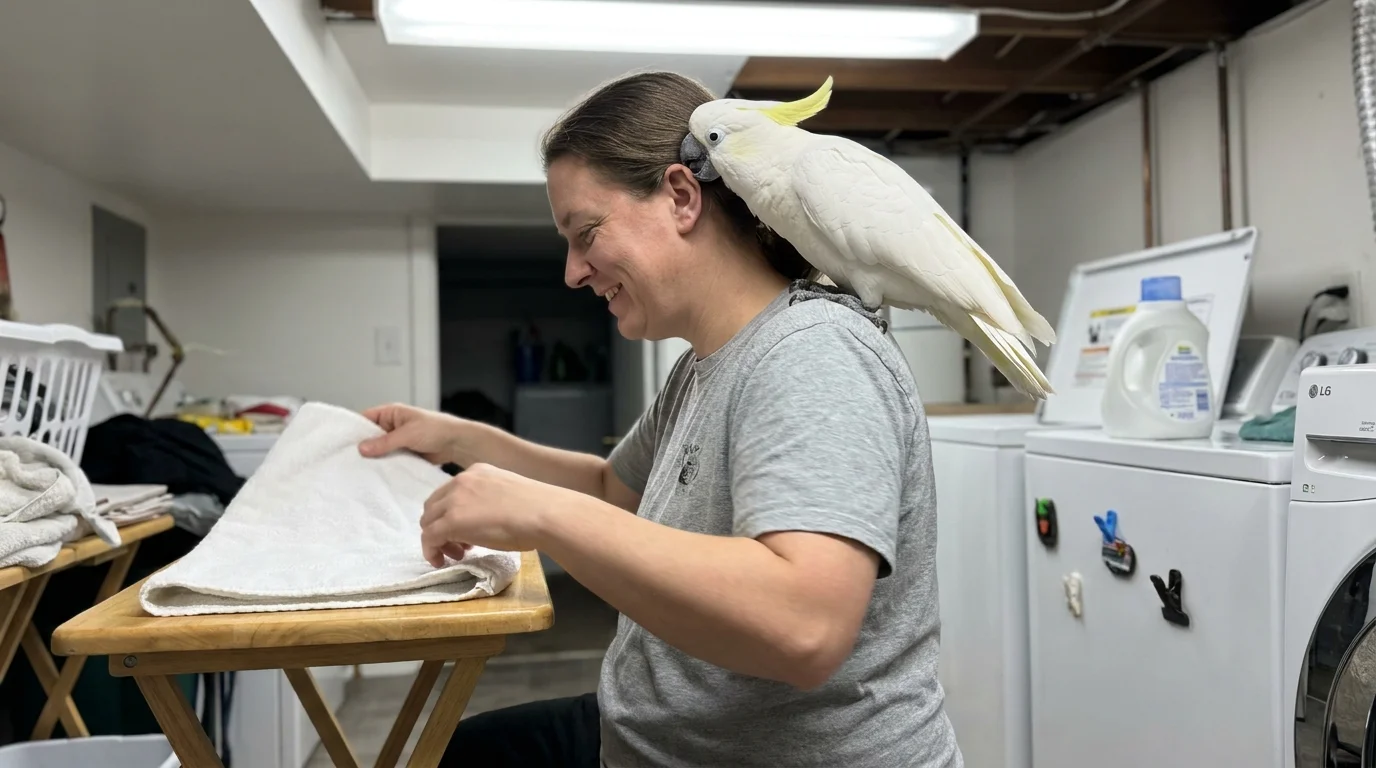
3. Cockatoos: The Avian Shadow
Companion birds are remarkably intelligent, but Cockatoos take the concept of attachment to an entirely different level. In the wild, Cockatoos are flock animals that rely on their family group for survival, foraging, and emotional support. When you bring a Cockatoo into your home, you become their flock. They do not naturally understand the concept of solitary independence; to a Cockatoo, isolation is unnatural and stressful.
Paying attention to their body language is vital, as there are many ways pets quietly communicate with owners when they need reassurance.
Due to their high intelligence and need for visual stimulation, some pets that love watching TV, including cockatoos, benefit from having a screen on for background entertainment.
Cockatoos love to ride on shoulders, assist with household chores by inspecting everything you touch, and demand physical affection. They are often referred to as “velcro birds” because they will quite literally cling to your clothing to avoid being put down. They crave head scratches, gentle cuddling, and constant verbal interaction.
While this deep bond is endearing, it requires careful management. A Cockatoo that becomes too dependent on an owner’s constant presence can quickly develop severe behavioral issues, such as excessive screaming, aggression, or feather destructive behavior (plucking) when left alone. Avian experts strongly recommend teaching Cockatoos independent play from a young age. Providing highly engaging foraging toys, establishing a predictable routine, and ensuring they have supervised out-of-cage time that does not always involve direct physical handling will help your avian shadow develop into a well-adjusted companion.



Leave a Reply