
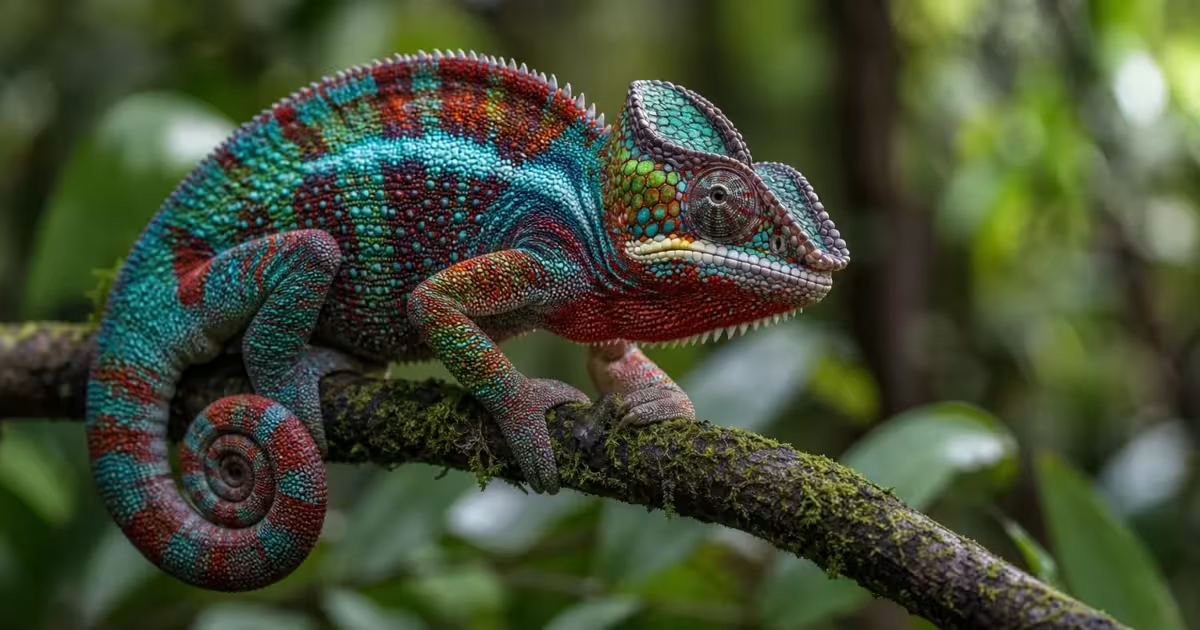
Nature offers endless fascination for animal lovers, but few adaptations capture our imagination quite like the ability to change color. While you might be familiar with the subtle coat shifts in your domestic pets, the wild world features creatures that transform their appearance in the blink of an eye. From masters of disguise evading predators to exotic reptiles communicating their moods, these remarkable species showcase the brilliance of evolutionary biology. Understanding these mechanisms not only deepens our appreciation for wildlife but also helps exotic pet owners provide better care for terrarium dwellers like chameleons and anoles. Explore the mechanisms behind these vibrant transformations and discover the ten most beautiful color-shifting animals on our planet.
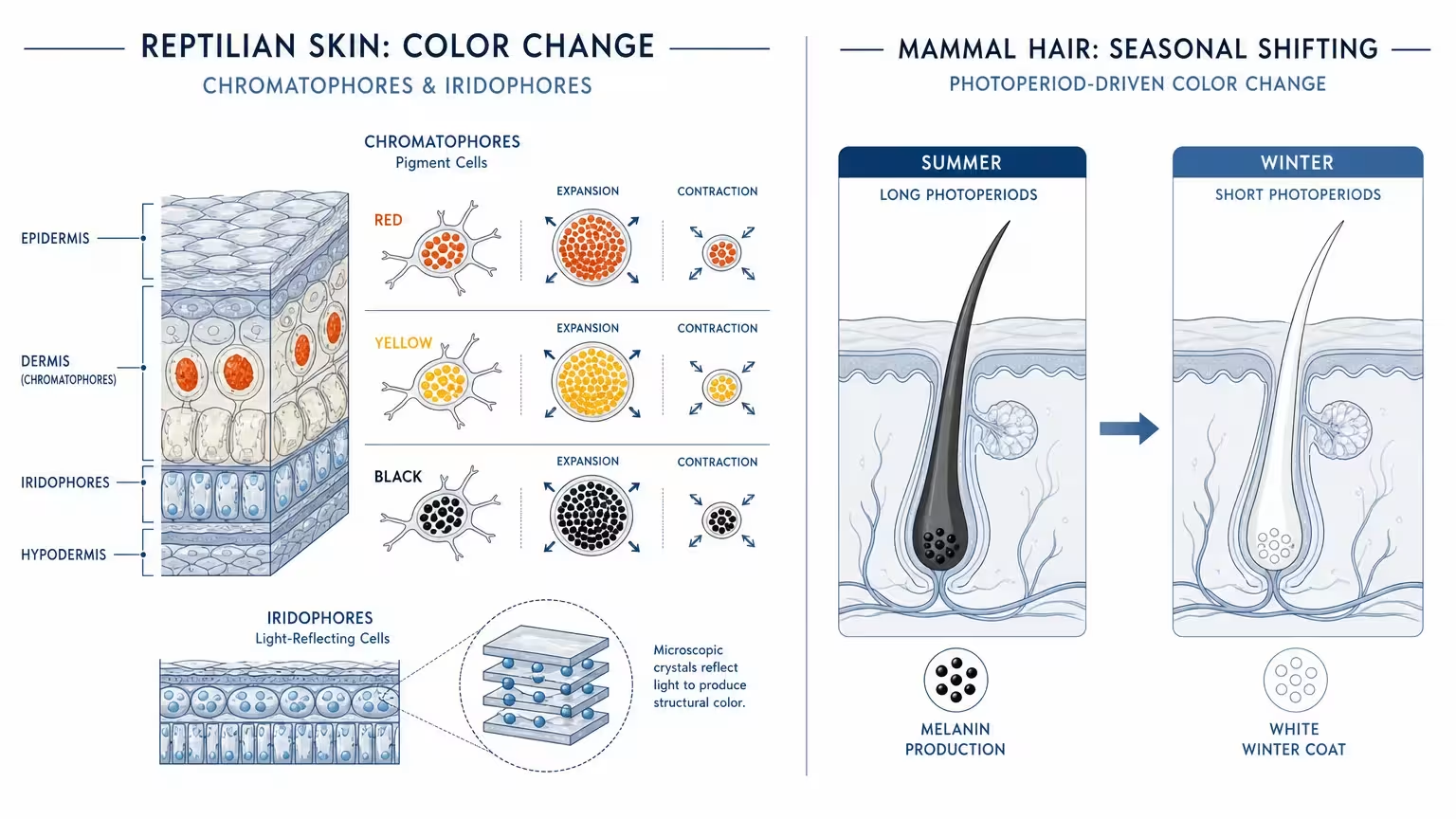
The Science of Color Shifting in the Animal Kingdom
Before examining specific animals, you need to understand exactly how these creatures alter their appearance. Animals generally use two entirely different biological pathways to change color: immediate cellular shifts and gradual seasonal molting.
While wild animals undergo dramatic physiological shifts, domestic companions also experience subtle physical indicators, such as certain body changes in dogs that are worth monitoring closely.
Reptiles, amphibians, and cephalopods rely on specialized skin cells called chromatophores. These remarkable cells contain distinct pigments—such as reds, yellows, and blacks. By expanding or contracting the microscopic sacs that hold these pigments, the animal brings different colors to the surface of its skin. Many of these animals also possess iridophores, which are cells containing microscopic crystals that reflect ambient light. When an animal flexes its muscles or experiences a shift in temperature, the spacing between these crystals changes; this instantly alters the wavelengths of light bouncing back to your eyes, creating vivid blues and greens.
Mammals and birds, on the other hand, rely on seasonal changes driven by photoperiods. As daylight hours shorten in the winter, their bodies halt the production of melanin. When they shed their summer coats or feathers, the new growth comes in completely white, offering pristine camouflage against the snow. Whether instantaneous or seasonal, these adaptations ensure survival in unforgiving environments.

Reptilian Wonders: Chameleons and Anoles
When you think of color-changing animals, reptiles likely come to mind first. These species dominate the exotic pet trade, meaning you might actually share your home with one of these fascinating creatures.
Because reptiles are notorious for hiding physical discomfort, learning to identify the subtle signs your pet is in pain is a vital skill for any keeper.
1. Panther Chameleon
Native to the lush jungles of Madagascar, the Panther Chameleon represents the pinnacle of reptilian color shifting. Males exhibit explosive displays of turquoise, vibrant red, and deep emerald green. Contrary to popular belief, chameleons do not change color to match their background. Instead, they shift hues to communicate with other chameleons, regulate their body temperature, or express stress. A dark, muted Panther Chameleon is often a cold or frightened animal, while bright, aggressive colors indicate territorial dominance.
2. Veiled Chameleon
Originating from the Arabian Peninsula, the Veiled Chameleon is a popular, albeit challenging, exotic pet. You can easily identify them by the tall casque—or helmet—on their heads. While resting, they typically maintain a pastel green hue. However, when provoked or excited, they erupt into brilliant bands of yellow, brown, and vivid blue. Because of their specialized needs, maintaining a stable environment is crucial for keeping their stress levels low and their colors healthy.
3. Green Anole
If you live in the southeastern United States, you have likely seen a Green Anole darting across your porch. Often incorrectly called “American Chameleons,” these small lizards shift seamlessly between a vivid leafy green and a dark, woody brown. This transformation happens in response to temperature fluctuations and emotional stress. According to exotic pet specialists at PetMD, a captive anole stuck in a persistent brown phase is usually suffering from inadequate habitat temperatures, poor lighting, or chronic stress.
Marine Masters: The Ocean’s Quickest Changers
The most dramatic color transformations occur beneath the waves. Marine cephalopods operate with a level of speed and neurological control that leaves land-dwelling animals far behind.
While marine animals use visual displays for communication and survival, some land-bound pets secretly love watching TV for their own entertainment.
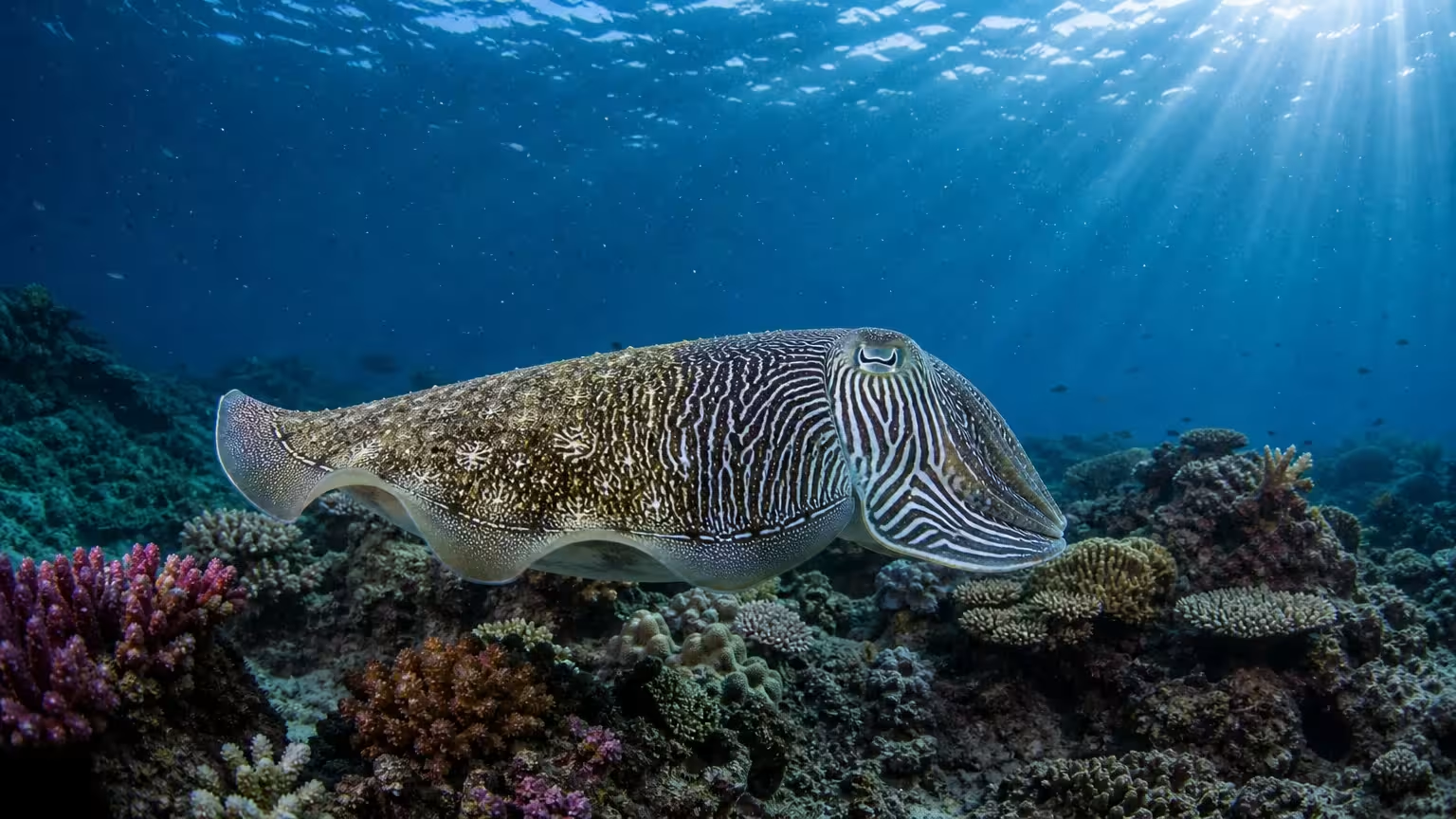
4. Broadclub Cuttlefish
The cuttlefish operates like a living, breathing television screen. Using millions of neurally controlled chromatophores, the Broadclub Cuttlefish can ripple pulsating bands of color across its entire body in a fraction of a second. This hypnotic display stuns prey—specifically crabs and small fish—allowing the cuttlefish to strike with its feeding tentacles. They can also texturize their skin to perfectly mimic the bumpy surface of coral reefs.
5. Mimic Octopus
Found in the waters of the Indo-Pacific, the Mimic Octopus takes camouflage a step further. It does not just change its color to blend in; it changes its color, shape, and behavior to impersonate highly venomous sea creatures. By altering its pigment and contorting its arms, it can masquerade as a banded sea snake, a lionfish, or a toxic flatfish to deter predators.
6. Peacock Flounder
While not a cephalopod, the Peacock Flounder possesses extraordinary camouflage capabilities. This flatfish features stunning, iridescent blue rings covering its body. When moving across the ocean floor, it can read the visual texture of the sand, gravel, or coral beneath it and rapidly adjust its pigmentation to become virtually invisible. If you place a Peacock Flounder on a checkerboard pattern, it will actively attempt to replicate the contrasting squares on its skin.
Seasonal Shifters: Mammals That Adapt
For animals living in extreme northern climates, surviving the changing seasons requires a complete wardrobe overhaul. These shifts take weeks rather than seconds, but the results are just as beautiful.
While wild animals adapt naturally to changing seasons, domestic pets rely on us for seasonal comfort, which is why choosing budget-friendly pet products can help you keep them cozy year-round.
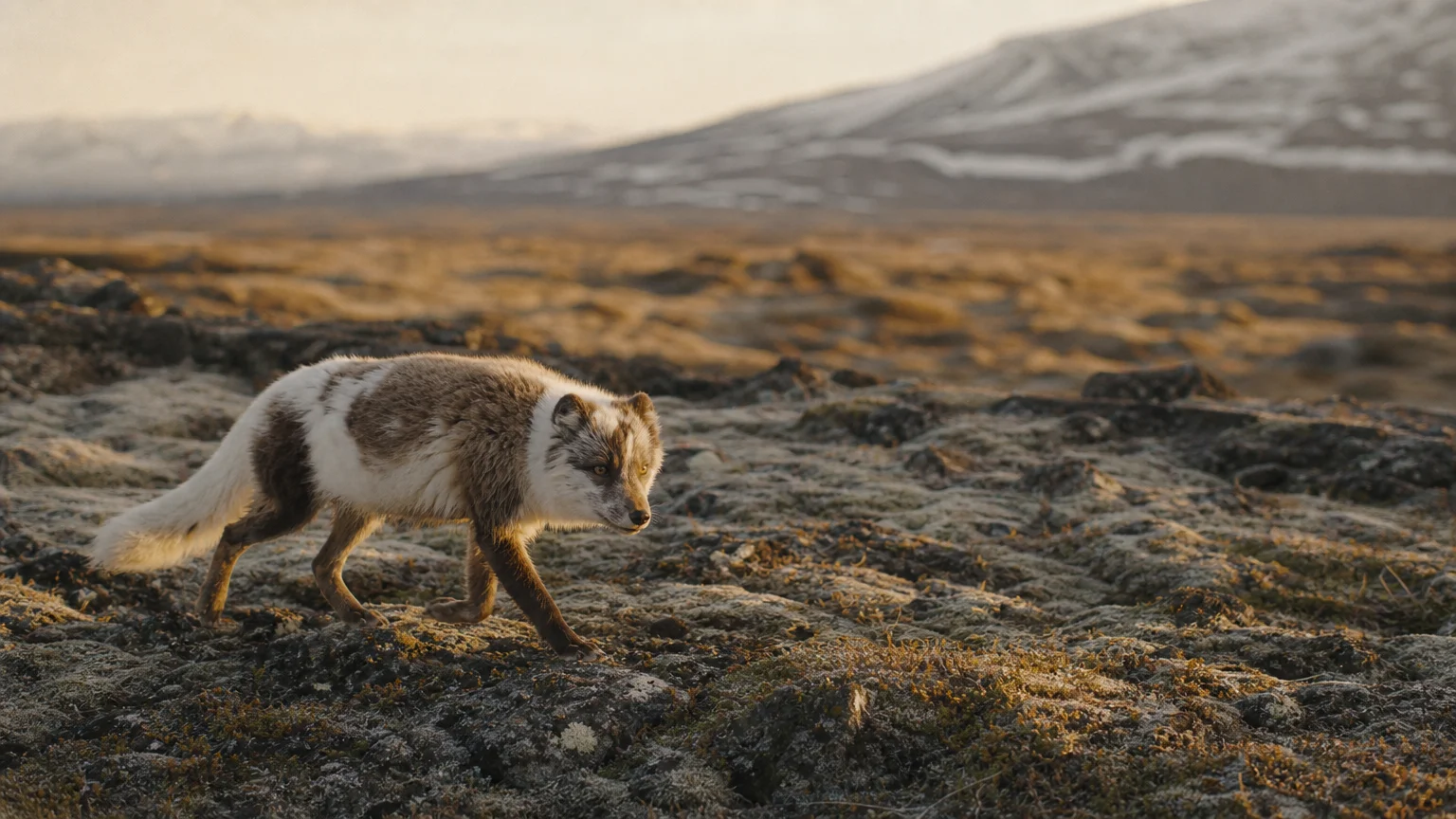
7. Arctic Fox
During the brief tundra summer, the Arctic Fox wears a thin coat of brown and gray fur, perfectly matching the rocky, dirt-covered landscape. As winter approaches and daylight dwindles, hormonal changes trigger a massive shed. The fox grows a dense, incredibly warm coat of pure, snowy white. This allows them to hunt lemmings undetected on the frozen ice packs.
8. Snowshoe Hare
The Snowshoe Hare undergoes a similar transformation. These prey animals rely entirely on remaining unseen to avoid lynxes, foxes, and eagles. In the summer, their reddish-brown fur blends into the forest floor. By mid-winter, they are completely white, save for the black tips of their ears. Interestingly, climate change currently threatens this adaptation; as snow melts earlier in the year, hares are left wearing white coats against brown, snowless ground, making them highly vulnerable.
Insects and Amphibians: Small But Spectacular
You do not need to be a large predator to possess incredible camouflage. The smallest creatures often rely on color shifting as their primary defense mechanism.
If you are lucky enough to spot these tiny creatures, applying basic pet photography tips will help you capture their incredible transitions.
9. Pacific Tree Frog
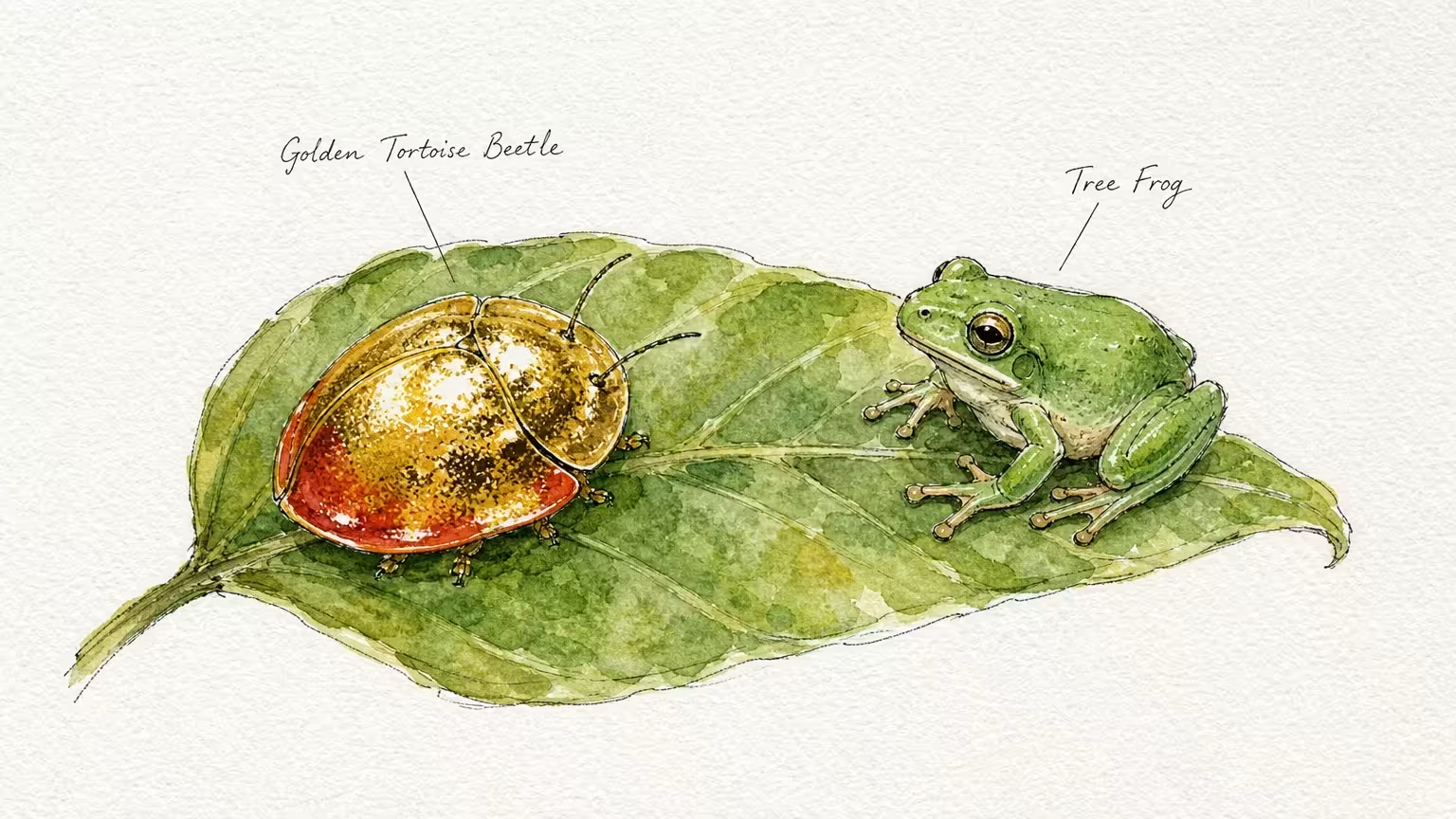
Unlike chameleons, the Pacific Tree Frog actually does change color to match its surroundings. Found along the western coast of North America, these tiny amphibians shift between vibrant green and muddy brown. The change takes a few hours and relies on the visual cues the frog receives from its environment. If it sits on a green leaf, it becomes green; if it hops onto a tree trunk, it shifts to brown.
10. Golden Tortoise Beetle
This remarkable insect, native to the Americas, looks exactly like a tiny droplet of liquid gold. However, when you disturb or frighten the beetle, it rapidly transforms into a dull, brownish-red color. The beetle achieves this by altering the flow of microscopic fluids within the layers of its transparent exoskeleton. When the fluid drains out, the reflective golden illusion vanishes instantly.
Ethical Considerations for Keeping Exotic Pets
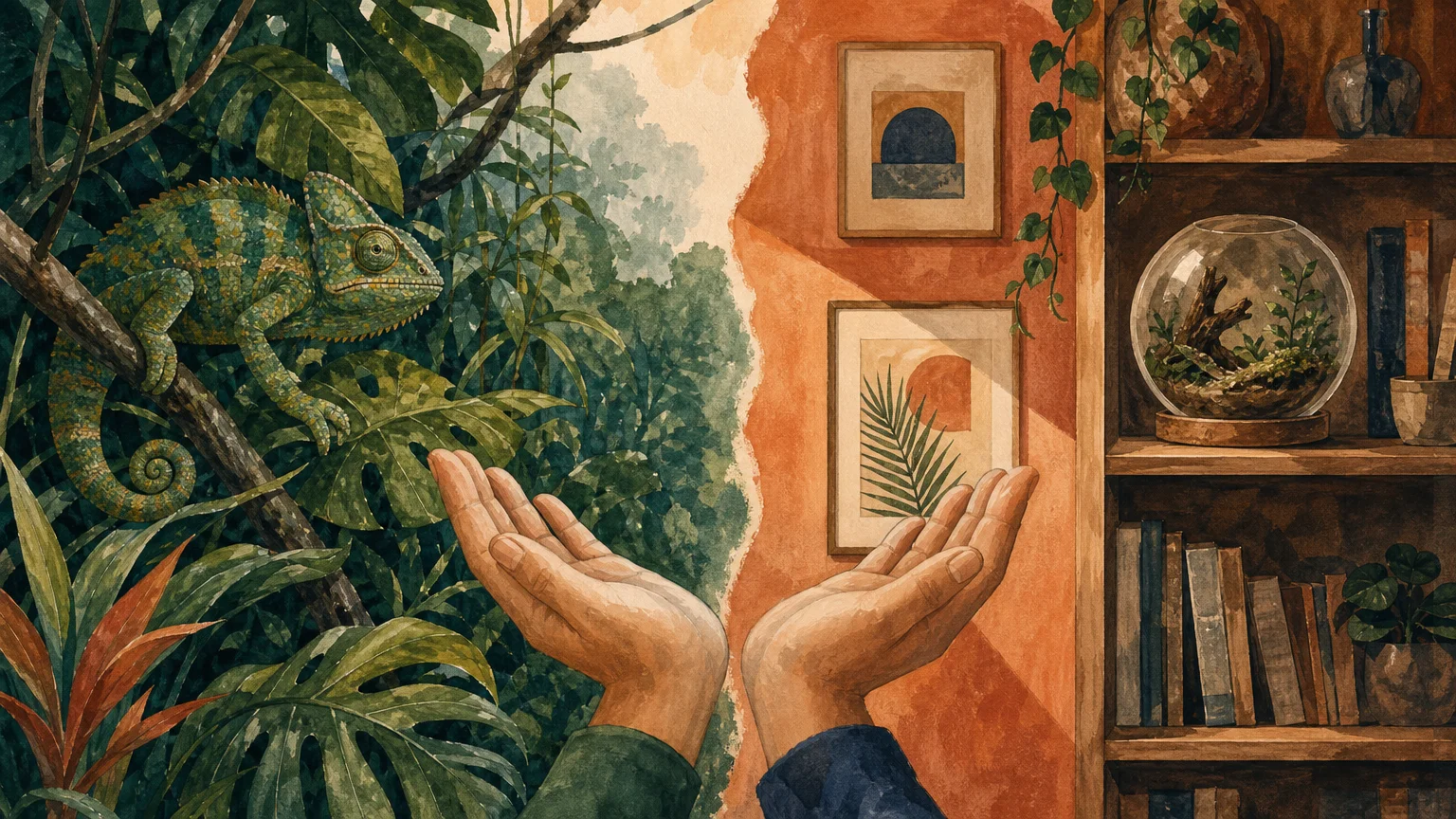
Reading about these incredible animals often sparks a desire to bring one home. However, keeping color-changing reptiles and amphibians requires a massive commitment to specialized care. These animals are not domestic pets; they possess wild instincts and delicate physiological needs.
It is also crucial to familiarize yourself with warning signs your pet needs a vet visit, as reptiles often mask symptoms of illness until they are severe.
If you decide to keep an animal like a chameleon or a tree frog, you must prioritize ethical sourcing. Always purchase captive-bred animals from reputable, highly vetted breeders rather than wild-caught specimens. Wild-caught animals suffer immense stress during transport, carry severe parasite loads, and deplete natural ecosystems.
According to the American Veterinary Medical Association (AVMA), prospective exotic pet owners must thoroughly research the species’ dietary, environmental, and spatial needs long before bringing the animal home. You must ensure you have the financial resources, the physical space, and the dedication to recreate a slice of their natural habitat in your living room.
Specialized Husbandry and Care Requirements
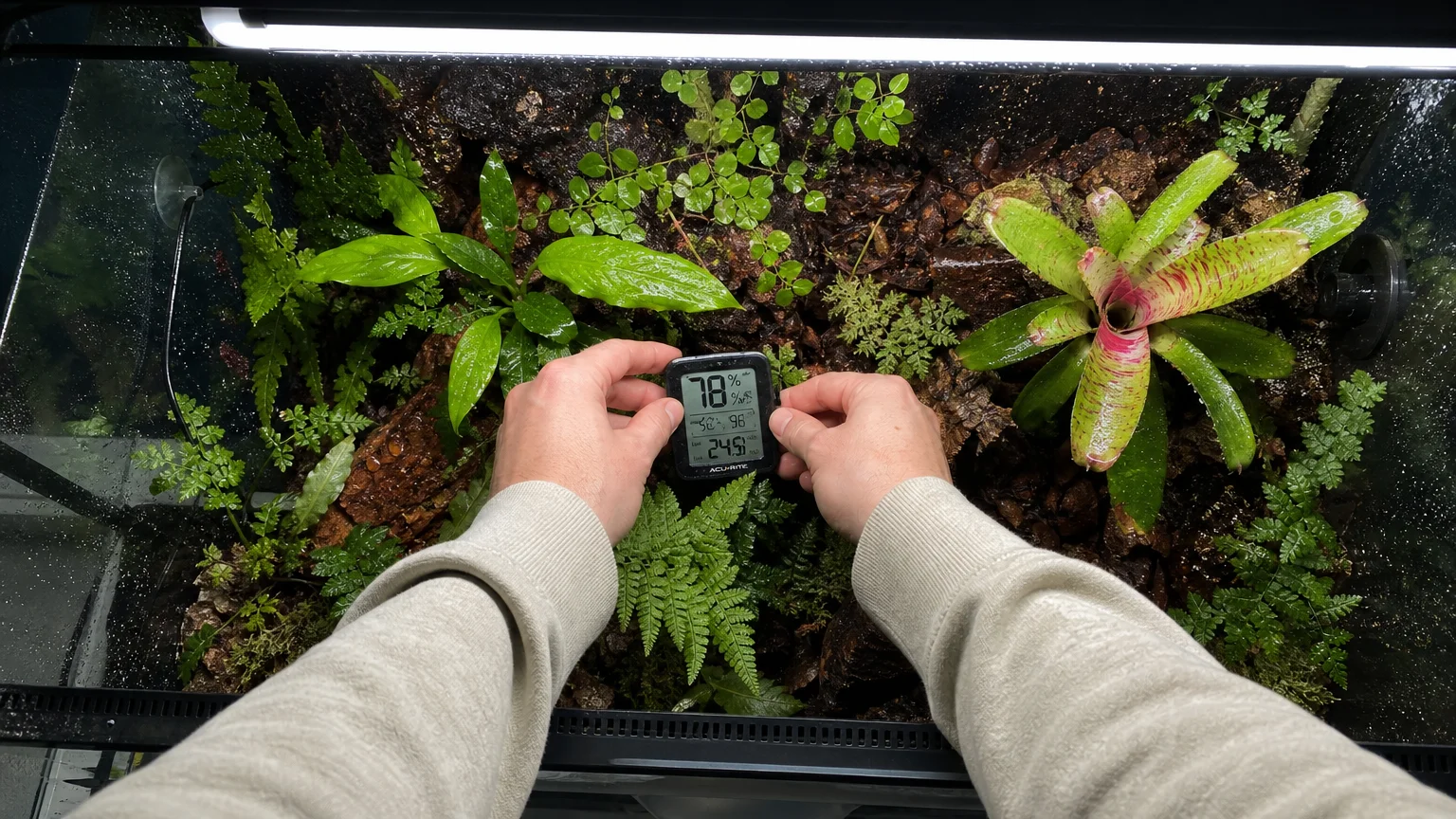
If you choose to care for a color-changing reptile, your terrarium setup becomes the animal’s life support system. Proper husbandry requires meticulous attention to detail.
Building customized climbing structures and hiding spots is one of many fun DIY pet projects you can undertake to enrich their specialized habitat.
To create a more engaging environment, you can experiment with DIY pet projects to build custom climbing structures or realistic hideouts.
You must provide specific temperature gradients, meaning one side of the enclosure must be significantly warmer than the other. This allows the animal to thermoregulate by moving between zones. Furthermore, reptiles require specialized UVB lighting to synthesize Vitamin D3; without it, they will develop Metabolic Bone Disease, a painful and fatal condition.
Here is a quick reference guide for the basic needs of common color-changing pets:
| Species | Basking Temperature | Ambient Temperature | Humidity Requirement | Primary Diet |
|---|---|---|---|---|
| Green Anole | 85°F – 90°F | 75°F – 80°F | 60% – 70% | Crickets, small roaches, mealworms |
| Veiled Chameleon | 85°F – 95°F | 72°F – 80°F | 50% – 60% | Gut-loaded insects, dark leafy greens |
| White’s Tree Frog | N/A (No intense basking) | 75°F – 85°F | 50% – 70% | Crickets, earthworms, moths |
Diet also plays a crucial role in maintaining your pet’s vibrant colors. You cannot simply feed them empty insects. You must “gut-load” the feeder insects by feeding them nutrient-dense vegetables, such as sweet potatoes and collard greens, for 24 hours before feeding them to your reptile.
“Proper husbandry prevents the vast majority of illnesses we see in exotic reptiles; your terrarium’s microclimate and strict temperature gradients are the single most important factors in their long-term survival.” — Dr. Jonathan Hayes, Exotic Animal Veterinarian
Recognizing Illness and Seeking Veterinary Care
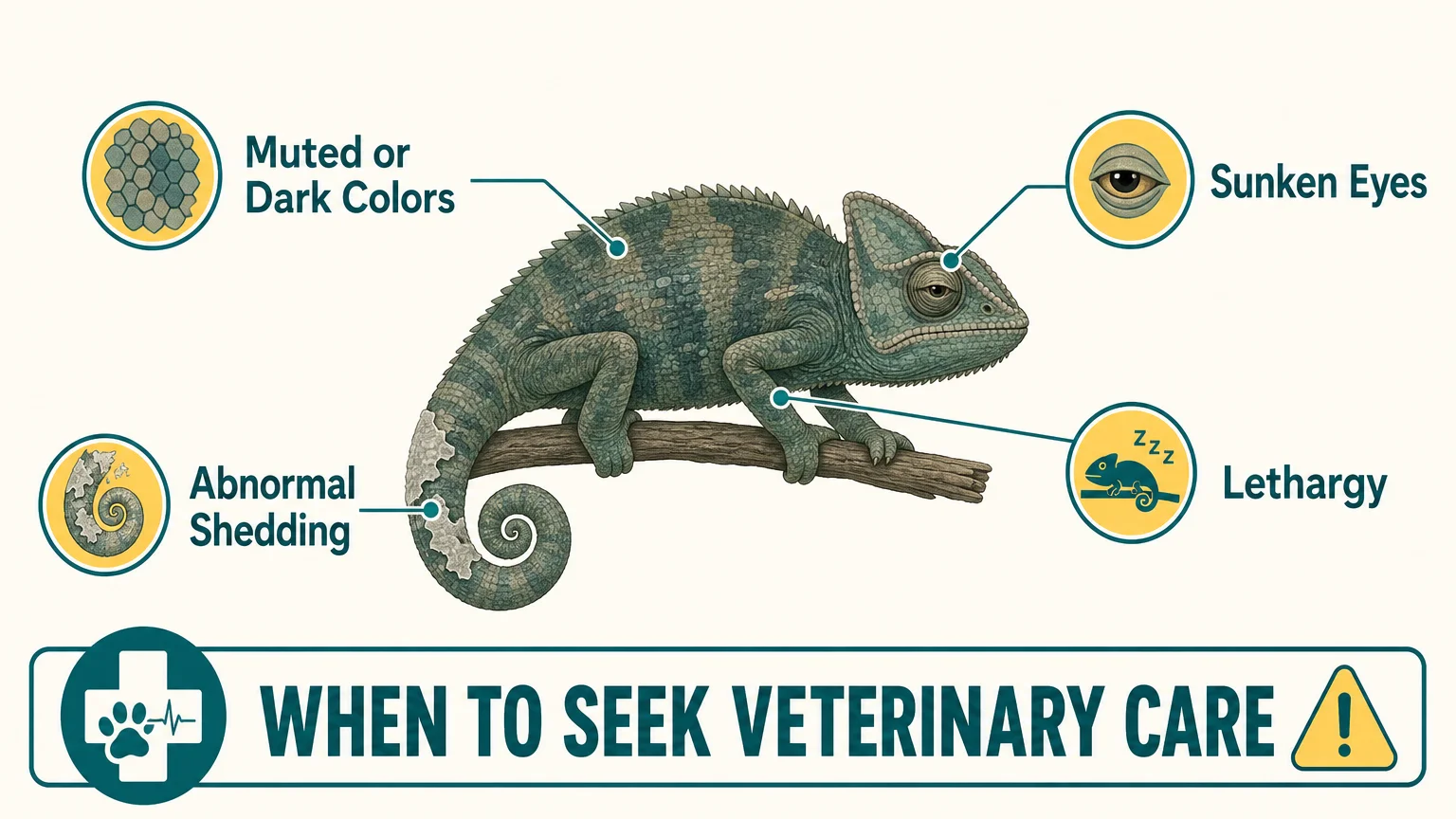
Reptiles and amphibians are masters of hiding their illnesses. In the wild, showing signs of weakness invites predation. By the time your chameleon or anole looks visibly sick, the illness has usually progressed to a critical stage.
Watch for subtle behavioral shifts. If your normally bright green chameleon remains a dull, dark brown for several days, they are actively communicating distress. Other warning signs include sunken eyes, a refusal to eat, open-mouth breathing, or lethargy.
Do not wait to see if the animal improves on its own. Research from the Cornell University College of Veterinary Medicine emphasizes that exotic pets require specialized veterinary intervention at the first sign of illness. Standard companion animal veterinarians often lack the necessary equipment and training to treat fragile reptiles. You must locate an accredited exotic animal veterinarian in your area before an emergency strikes.
Frequently Asked Questions
Do chameleons change color to match their background?
No, this is a very common myth. Chameleons change their color primarily to regulate their body temperature and communicate with other chameleons. A cold chameleon will turn dark to absorb more heat from the sun, while an angry or stressed chameleon will display bright, contrasting colors to ward off rivals.
Can I keep a color-changing octopus as a pet?
While cephalopods are incredibly fascinating, keeping an octopus as a pet is highly discouraged. They require massive aquariums, pristine water chemistry, and an endless supply of live food. Furthermore, they are notorious escape artists and have remarkably short lifespans—often living less than two years even under perfect conditions.
Why is my pet green anole turning brown and staying brown?
A green anole that remains consistently brown is likely suffering from environmental stress. You should immediately check your terrarium’s parameters. Ensure the basking spot is warm enough, check that your UVB bulbs have been replaced within the last six months, and verify that the humidity levels are adequate. If the environment is perfect, the lizard may be ill and requires an exotic vet examination.
How do animals like the Arctic Fox know when to change their coats?
Seasonal color changers do not consciously decide to alter their fur. The process is governed by the animal’s exposure to daylight. As the days grow shorter in the autumn, the reduced light triggers hormonal changes in the animal’s brain, which halts melanin production and initiates the shedding process.
Do color-changing reptiles need special lighting to maintain their colors?
Yes. Without proper broad-spectrum UVB lighting, reptiles cannot process calcium, leading to severe health issues that will dull their coloration. Additionally, bright, naturalistic full-spectrum lighting encourages natural behavior and helps them display their most vibrant, healthy hues.
For expert pet care guidance, visit
American College of Veterinary Behaviorists (ACVB), Pet Poison Helpline, FDA Center for Veterinary Medicine and PetMD.
Disclaimer: This article is for informational purposes only and is not a substitute for professional veterinary advice, diagnosis, or treatment. Always consult with a licensed veterinarian for medical concerns about your pet.







Leave a Reply