
Is It Love or Separation Anxiety?
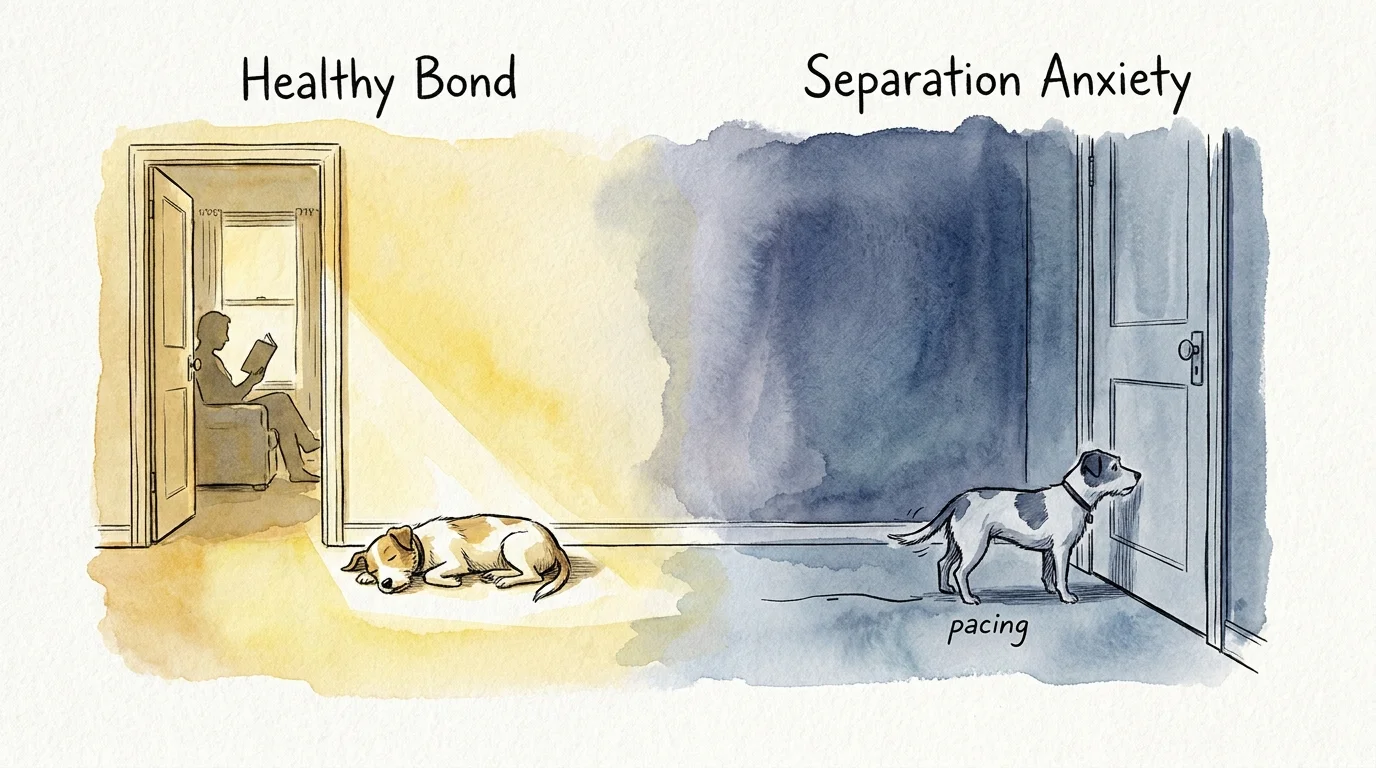
Having a pet that loves to be near you is wonderful, but it is vital to distinguish between a healthy, affectionate attachment and clinical separation anxiety. A pet with a healthy attachment follows you because they enjoy your company. They are relaxed, curious, and comfortable. When you leave the house, they might watch you go or wait by the door for a few minutes, but they quickly settle down to nap, play with toys, or eat their food.
Separation anxiety, on the other hand, is a serious behavioral condition rooted in panic. Veterinary behaviorists from the American College of Veterinary Behaviorists (ACVB) emphasize that true separation anxiety involves distress and panic, whereas healthy attachment simply involves a preference for your company. A pet suffering from separation anxiety goes into a state of severe distress the moment they realize you are leaving, or sometimes even just when you move out of their sightline within the home.
If you suspect your pet has separation anxiety, it is crucial to consult your veterinarian or a certified animal behaviorist. They can help you develop a desensitization plan and, if necessary, prescribe anti-anxiety medications to lower your pet’s panic threshold so they can learn to feel safe alone.
Use this table to help identify the differences in your pet’s behavior:
| Behavioral Indicator | Healthy Attachment (Velcro Pet) | Separation Anxiety |
|---|---|---|
| Body Language | Relaxed muscles, soft eyes, calm breathing while following you. | Pacing, panting, trembling, and hyper-vigilance. |
| When You Leave | Watches you leave, eventually settles down to sleep or play. | Vocalizes loudly (howling/screaming), attempts to escape, scratches doors. |
| While You Are Gone | Eats food, drinks water normally, uses the litter box or holds it appropriately. | Refuses food/treats, drools excessively, has destructive or elimination accidents. |
| When You Return | Happy, wiggly greeting, then returns to normal activity level. | Frantic, prolonged greeting, inability to calm down for several minutes. |
How to Encourage Independence Safely
Even the most securely attached pet needs to learn how to self-soothe and exist comfortably without constant physical contact. Teaching your pet independence does not mean pushing them away; it means building their confidence so they feel secure relaxing on their own. This is especially important for velcro dogs and clingy cats to prevent the development of separation anxiety.
“Fostering independence in a clingy pet isn’t about breaking the bond; it’s about building their confidence. A confident pet knows they are safe and loved, even when you aren’t in the same room.” — Certified Animal Behavior Consultant
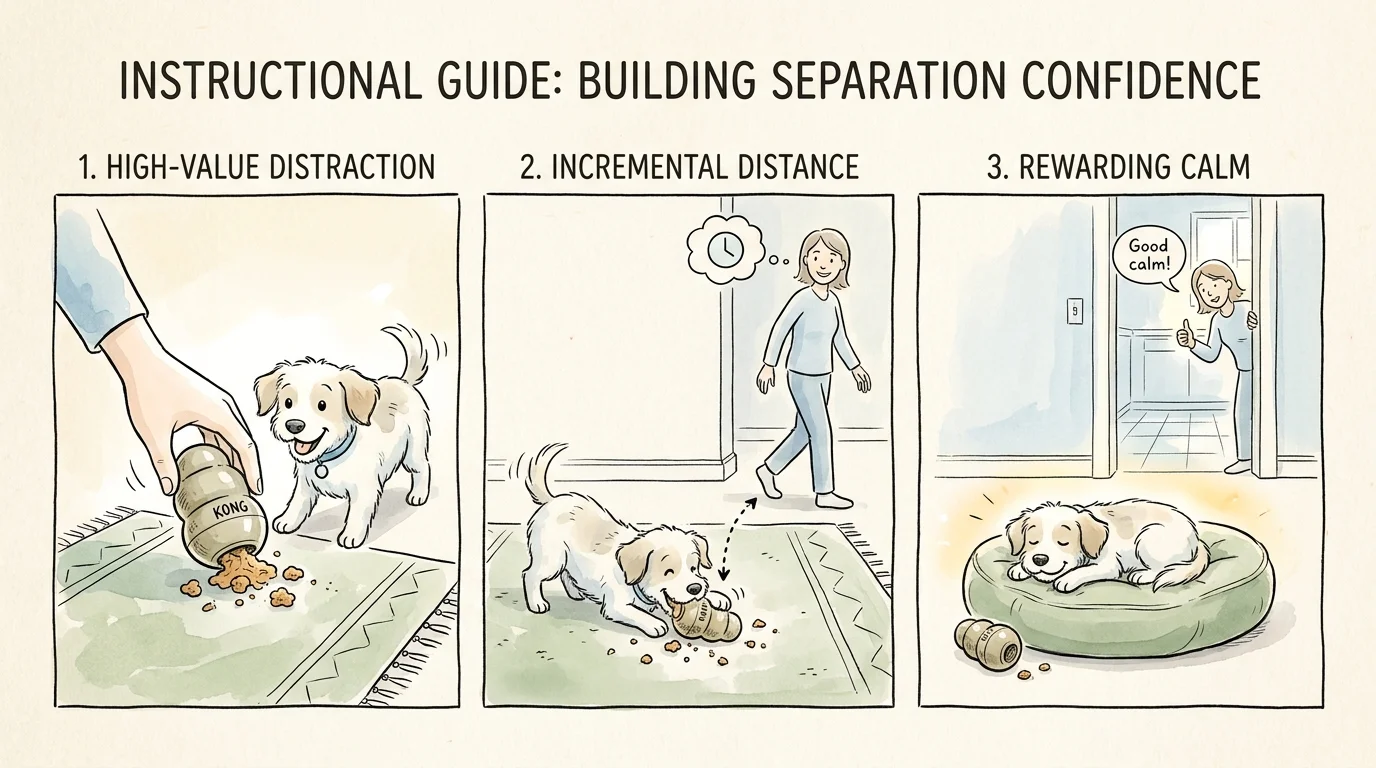
The most effective way to teach independence is through positive reinforcement and gradual distance building. Mat training, or teaching the “Place” command, is a foundational skill for this process.
- Select a comfortable spot: Choose a specific dog bed, mat, or blanket. Place it in the room where you spend a lot of time, but a few feet away from your exact location (like the sofa or desk).
- Reward for interactions: Lure your pet onto the mat with a high-value treat. As soon as all four paws are on the mat, say “Yes!” or click, and deliver the treat directly onto the mat.
- Encourage a settled posture: Wait for your pet to sit or lie down on the mat. Reward them for calm, relaxed body language. The goal is for them to associate the mat with positive feelings and relaxation.
- Build duration and distance: Slowly increase the time your pet stays on the mat before rewarding them. Then, start taking one step away from the mat, returning immediately to reward. Gradually increase the distance until you can walk across the room while they remain comfortably on their mat.
- Provide engaging distractions: When your pet is on their mat, provide a puzzle toy, a frozen Kong stuffed with peanut butter, or a snuffle mat. This keeps their brain engaged and creates a positive association with being slightly separated from you.
In addition to mat training, try to desensitize your pet to your departure cues. If your pet gets anxious when you put on your shoes or pick up your keys, start doing these actions randomly throughout the day without actually leaving the house. Put on your coat, sit on the couch for five minutes, and then take it off. This breaks the association between the cue and the anxiety of separation.
Frequently Asked Questions
Why does my pet follow me into the bathroom?
Bathrooms are inherently interesting to pets because they are full of novel scents and sounds. Furthermore, closed doors frustrate animals that are used to having free access to their territory and their favorite humans. When you go into the bathroom and close the door, your pet feels separated from their pack. Following you in is their way of ensuring you are safe and keeping the family unit together.
Should I ignore my pet if they are too clingy?
You should never strictly ignore a pet that is seeking comfort, as this can increase their anxiety. However, you should ignore pushy, demanding behaviors like nudging your hand aggressively or barking for attention. Wait for a moment of calm, then reward that calm behavior with your attention. Teach them that relaxed behavior earns affection, while demanding behavior does not.
Can a pet become too attached to one person?
Yes. Hyper-attachment to a single person can lead to resource guarding (where the pet growls at others who approach you) or severe separation anxiety when you are absent. To prevent this, ensure that other household members are equally involved in feeding, walking, and training the pet so they build positive associations with everyone in the home.
Do cats imprint on a single human like dogs do?
While the term “imprinting” is technically reserved for specific developmental stages in birds and livestock, cats absolutely form intense, preferred attachments to specific humans. A cat will often choose a “favorite” person based on who respects their boundaries, feeds them, and provides the type of play or physical affection they prefer most.
For expert pet care guidance, visit
Vetstreet, Fear Free Pets and The Spruce Pets.
Disclaimer: This article is for informational purposes only and is not a substitute for professional veterinary advice, diagnosis, or treatment. Always consult with a licensed veterinarian for medical concerns about your pet.

Leave a Reply