
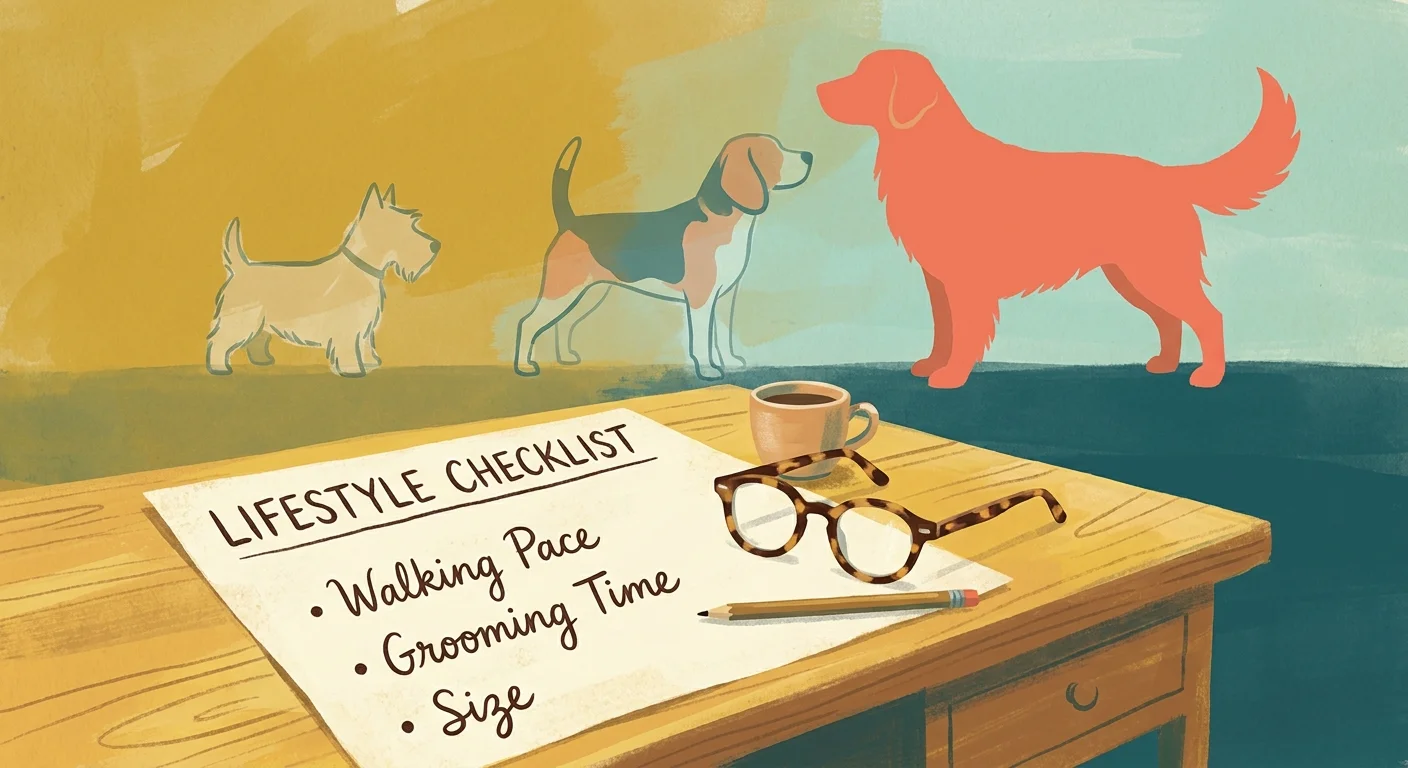
How To Choose The Right Dog For Your Lifestyle
Reading breed descriptions is a great starting point, but ensuring a successful match requires an honest assessment of your daily life, physical limitations, and home environment. A beautiful dog is wonderful, but a dog that seamlessly fits into your routine brings true peace of mind.
“Matching your energy level with a dog’s natural temperament is the single most important factor in a successful adoption. A calm dog brings peace to a quiet home.” — Dr. Sarah Mitchell, DVM
To choose the right dog, follow these practical evaluation steps:
- Assess your physical mobility: If you use a cane, walker, or experience balance issues, a larger dog that pulls on the leash poses a significant fall risk. Conversely, a tiny dog under 5 pounds might present a tripping hazard if they frequently dart underfoot. Medium-small dogs (10-20 pounds) often strike the perfect balance.
- Evaluate your living space: Do you live in a multi-story home with steep stairs? A dog with a long back and short legs, like a Dachshund or Corgi, may struggle with stairs as they age. If you live in an apartment with strict noise ordinances, avoid vocal breeds like Beagles or Miniature Schnauzers.
- Factor in your local climate: If you live in a hot, humid region, flat-faced breeds like Pugs and Shih Tzus will struggle to breathe outdoors during the summer. If you live in a very cold climate, delicate breeds like Greyhounds or Maltese will require extensive winter wardrobes.
- Consider your grooming tolerance: Be realistic about whether you want to brush a dog every single day. If arthritis makes brushing painful for your hands, prioritize a smooth-coated breed like a Greyhound or a Pug, or budget for a groomer to keep a long-haired dog in a short trim.
Take your time. Visit local breed rescues and reputable breeders. Spend time sitting with the dogs rather than just looking at photos. The right dog will often gravitate toward you naturally, showing a calm interest rather than hyperactive bouncing.

Adopting A Senior Dog Versus A Puppy
When bringing a new dog into your home, you must decide whether to adopt a puppy or an older dog. While puppies are undeniably adorable, they require a staggering amount of time, energy, and physical exertion. Potty training involves rushing outside every two hours, day and night. Teething puppies will chew on furniture, shoes, and sometimes fingers. They require extensive socialization and basic obedience training to become good citizens.
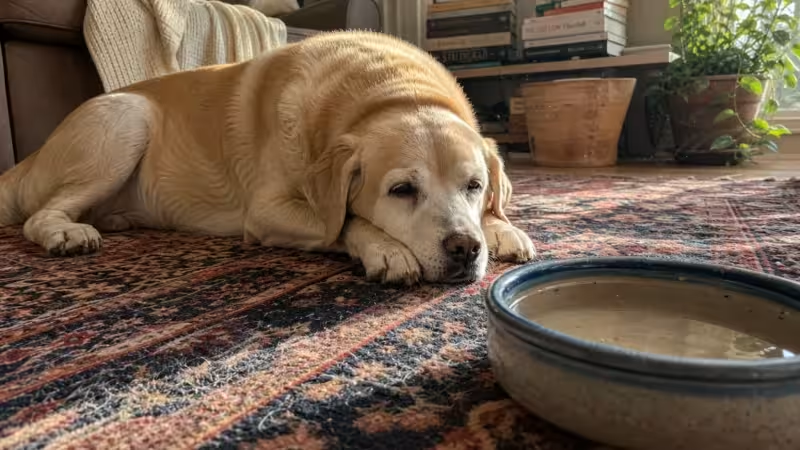
For a retiree living alone, adopting a senior dog (typically considered 7 years or older) is often a far more rewarding experience. Experts at the ASPCA often highlight that senior dogs are usually already housetrained, possess basic manners, and have established, predictable personalities. What you see is exactly what you get.
Senior dogs naturally have lower energy levels. They are past the destructive chewing phase and are generally content to snooze the afternoon away. Furthermore, older dogs in shelters are frequently overlooked in favor of puppies, meaning you have the opportunity to literally save a life. When you provide a soft bed, good food, and a quiet home to a senior dog, they reward you with an immediate, quiet gratitude that is deeply moving. Their life stage perfectly mirrors a relaxed retirement lifestyle.

Budgeting For Pet Care On A Fixed Income
Living on a fixed income during retirement means that budgeting is a necessary part of everyday life. Owning a dog involves consistent financial commitments, from daily meals to unexpected medical emergencies. Preparing for these costs ahead of time ensures that you can provide excellent care without causing yourself financial stress.
Start by calculating the routine costs. High-quality dog food, monthly heartworm, flea, and tick preventatives, and annual veterinary exams are non-negotiable expenses. Smaller dogs eat significantly less food and require smaller doses of medications, which makes them much more economical to maintain than large breeds.
To manage grooming costs, you can embrace DIY care. While a Poodle or Shih Tzu needs professional haircuts, you can easily handle their daily brushing, tooth brushing, and ear cleaning at home. Investing in a good pair of dog-safe nail clippers and learning how to trim their nails safely will also save you a monthly trip to the groomer.
For medical expenses, consider pet insurance. If you adopt a younger dog, locking in a good insurance rate early can protect you from catastrophic veterinary bills later. If you adopt a senior dog where insurance might be prohibitively expensive due to pre-existing conditions, open a dedicated savings account. Deposit a small amount each month specifically for veterinary care. Many clinics also offer wellness plans that break the cost of annual preventative care into manageable monthly payments.

Overcoming Common Challenges With A New Dog
Bringing a new dog home is exciting, but it also requires an adjustment period. Whether you adopt a rescue or purchase from a breeder, the dog will need time to understand your routines and feel safe in their new environment. Animal behaviorists often reference the “3-3-3 rule”: it takes three days for a dog to decompress, three weeks to learn your routine, and three months to truly feel at home.
During the first few weeks, you might encounter mild behavioral challenges. Housetraining accidents can happen due to stress, even in previously trained dogs. Keep your new companion on a strict feeding and bathroom schedule. Praise them warmly and offer a small treat immediately after they eliminate outside. Never punish a dog for an indoor accident; simply clean it up quietly with an enzyme cleaner and take them out more frequently.
If your dog barks excessively, pulls on the leash, or shows signs of anxiety when you leave the house, do not feel you have to solve the problem alone. Reaching out to a certified trainer through the Association of Professional Dog Trainers (APDT) ensures you use humane, positive reinforcement methods to correct the behavior. Professional trainers can provide you with easy, step-by-step exercises that strengthen the bond of trust between you and your new pet, making training an enjoyable activity rather than a chore.
Frequently Asked Questions
What is the absolute lowest maintenance dog breed for a retiree?
While no dog is entirely maintenance-free, the retired racing Greyhound and the smooth-coated Pug are incredibly low maintenance regarding grooming and exercise. For smaller spaces, a Cavalier King Charles Spaniel kept in a short trim offers a perfect balance of low exercise needs and minimal shedding if professionally groomed.
Should I adopt a male or female dog?
The dog’s individual temperament matters far more than their sex. Once a dog is spayed or neutered, behavioral differences between males and females become negligible. Focus your search on a dog’s energy level, friendliness, and how comfortably they interact with you during your initial meetings.
How do I make sure my dog is cared for if my health unexpectedly declines?
It is vital to have a contingency plan. Discuss your wishes with trusted family members or close friends and formally designate a caregiver for your pet in your estate planning documents. You can also establish a pet trust, which sets aside funds specifically for your dog’s ongoing care, ensuring they will never end up in a shelter if you can no longer provide for them.
Are small dogs always a better choice for retirees than large dogs?
Generally, small dogs are easier to manage physically and financially. However, some small terriers have incredibly high energy levels and a strong prey drive. Conversely, giant breeds like Greyhounds or older Mastiffs can be incredibly docile and lazy. While size is a major factor, evaluating the dog’s individual energy level is always the most important step.
For expert pet care guidance, visit
Pet Poison Helpline, FDA Center for Veterinary Medicine, PetMD, Vetstreet and Fear Free Pets.
Disclaimer: This article is for informational purposes only and is not a substitute for professional veterinary advice, diagnosis, or treatment. Always consult with a licensed veterinarian for medical concerns about your pet.

My daughter is an RN. She sees more injuries in elderly people caused by their little dogs. Evidently, seniors have more of a tendency to trip and fall over objects on the floor, resulting in broken hips, shoulders, wrists, etc. Smaller dogs are harder for them to see as they don’t always look down before walking.
especially if they’re dark furred,they’re invisable at nite!
I am a 73 year old womam who lost her 17 year old purebred pekingnese on Nov,30th, 2025. I miss her so much words cannot say. She was our 4th pekingnese, and our baby girl. A friend asked me too soon afterwards if I would consider getting another dog and I emphaticaally replied “no”, but I have changed my mind. Belle was a wonderful companion her whole life, and my husband adored her. Because of their grooming needs, and abounding energy, I am more interested at this time in my life for a small, loving, low energy dog who would fit my lifestyle. I would love another little girl. already potty trained and does not have to be a purebreed. I live all alone and do not drive.